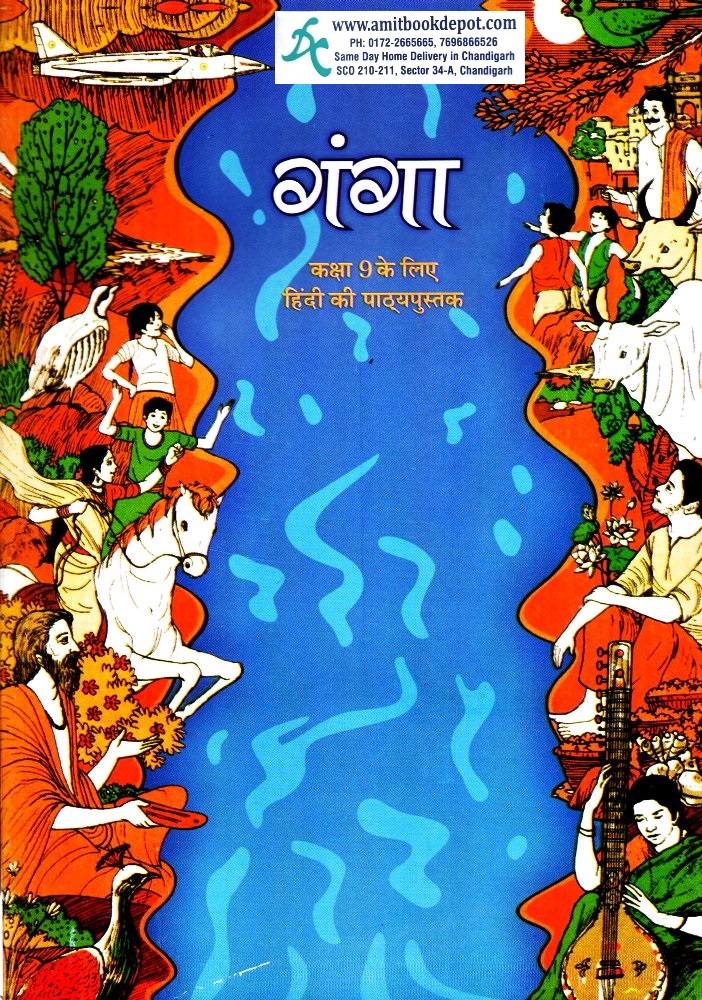
The textbook is divided into Gadya Bhag (Prose section) and Padya Bhag (Poetry section), covering stories, essays, and poems.
The prose supplementary section features Nirmal Jeet Singh Sekhon, encouraging students to read additional texts alongside the main curriculum.
‘Jhansi Ki Rani’ by Subhadra Kumari Chauhan, a stirring ballad about Rani Lakshmibai’s courage, is included in the Padya Bhag.
It provides chapter-end exercises aligned with CBSE patterns, aiding comprehension, grammar practice, and literary analysis for high exam scores.
Yes, ‘Ram-Lakshman-Parashuram Samvad’ from Tulsidas’s Ramcharitmanas is included, teaching dialogue and epic poetic tradition.
‘Kya Likhoon? ’ by Padumalal Punnalal Chhuti encourages students to think about purpose, creativity, and expression in writing.
It is ideal for CBSE and any state board following the NCERT curriculum for Class 9 Hindi, making it widely useful across India.
‘Pad’ is a devotional bhajan-style poem from the Bhakti tradition, focusing on spiritual love and social equality.
‘Reedh Ki Haddi’ (The Backbone) by Jagdishchandra Mathur uses metaphor to discuss strength, support, and resilience.
Yes, the poem ‘Bharati, Jay, Vijay Kare! ’ by Nirala is part of the Padya Bhag, celebrating patriotic fervor and national pride.
No Description Added
The textbook is divided into Gadya Bhag (Prose section) and Padya Bhag (Poetry section), covering stories, essays, and poems.
The prose supplementary section features Nirmal Jeet Singh Sekhon, encouraging students to read additional texts alongside the main curriculum.
‘Jhansi Ki Rani’ by Subhadra Kumari Chauhan, a stirring ballad about Rani Lakshmibai’s courage, is included in the Padya Bhag.
It provides chapter-end exercises aligned with CBSE patterns, aiding comprehension, grammar practice, and literary analysis for high exam scores.
Yes, ‘Ram-Lakshman-Parashuram Samvad’ from Tulsidas’s Ramcharitmanas is included, teaching dialogue and epic poetic tradition.
‘Kya Likhoon? ’ by Padumalal Punnalal Chhuti encourages students to think about purpose, creativity, and expression in writing.
It is ideal for CBSE and any state board following the NCERT curriculum for Class 9 Hindi, making it widely useful across India.
‘Pad’ is a devotional bhajan-style poem from the Bhakti tradition, focusing on spiritual love and social equality.
‘Reedh Ki Haddi’ (The Backbone) by Jagdishchandra Mathur uses metaphor to discuss strength, support, and resilience.
Yes, the poem ‘Bharati, Jay, Vijay Kare! ’ by Nirala is part of the Padya Bhag, celebrating patriotic fervor and national pride.