-
Mon-Fri: 10AM to 8PM 01722665665
-
My Account
-
-
0
Total :
₹ 0.00

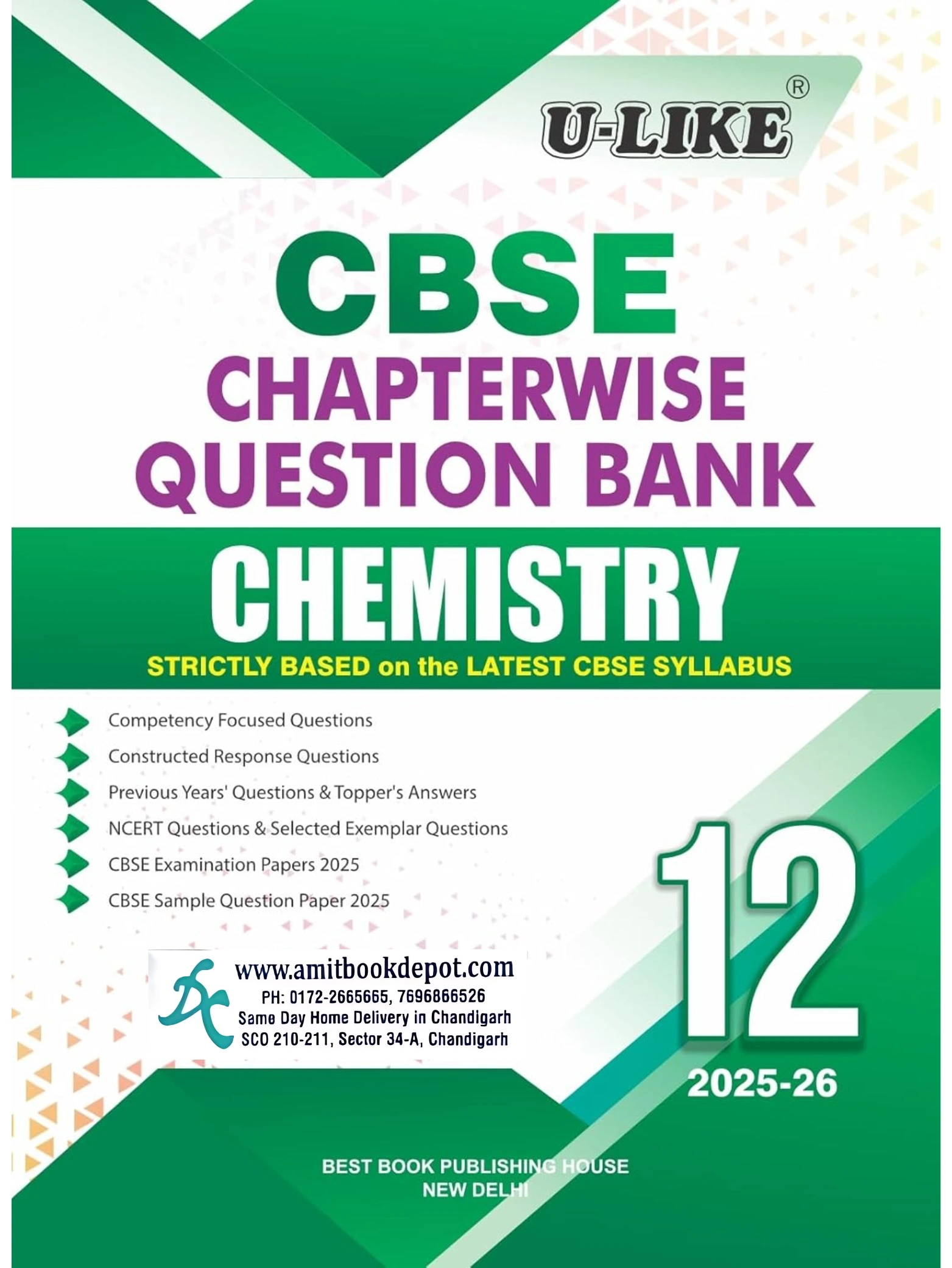
Yes, the book provides detailed, step-by-step solutions and answers for every question in both the chapterwise section and the solved examination papers.
Absolutely. The book is specifically tailored for the 2024-25 academic session and includes the CBSE Sample Question Paper 2025 and CBSE Examination Papers from 2025, ensuring it is fully up-to-date.
Yes, the book incorporates the latest CBSE question typologies, including case-based questions and assertion-reasoning type questions, to ensure students are well-prepared for every section of the paper.
The chapterwise approach breaks down complex units into manageable sections. Each chapter provides a wide range of questions that build from fundamental to advanced concepts, reinforcing learning through targeted practice.
Yes, the book comprehensively covers all important organic chemistry reactions and their mechanisms for chapters like Haloalkanes, Alcohols, Aldehydes, Ketones, and Amines, as specified in the NCERT syllabus.
No, the content is meticulously curated to adhere 100% to the latest CBSE NCERT syllabus. There is no irrelevant or extra-syllabus material, allowing for focused preparation.
Practicing different paper codes exposes you to a wider variety of questions and difficulty levels that can be asked on the same topic, making you prepared for any surprise in your actual board exam.
While its primary focus is the CBSE board exam, the strong conceptual foundation built through this book, especially in physical and organic chemistry, will be beneficial for the chemistry section of competitive entrance exams.
Yes, the Biomolecules chapter provides comprehensive coverage as per the NCERT syllabus, including topics on carbohydrates, proteins, enzymes, vitamins, and nucleic acids (DNA & RNA).
Definitely. The book places strong emphasis on numerical problems, providing a wide range of questions on topics like colligative properties, Van't Hoff factor, rate constant calculations, and the Arrhenius equation.
Yes, the book provides detailed, step-by-step solutions and answers for every question in both the chapterwise section and the solved examination papers.
Absolutely. The book is specifically tailored for the 2024-25 academic session and includes the CBSE Sample Question Paper 2025 and CBSE Examination Papers from 2025, ensuring it is fully up-to-date.
Yes, the book incorporates the latest CBSE question typologies, including case-based questions and assertion-reasoning type questions, to ensure students are well-prepared for every section of the paper.
The chapterwise approach breaks down complex units into manageable sections. Each chapter provides a wide range of questions that build from fundamental to advanced concepts, reinforcing learning through targeted practice.
Yes, the book comprehensively covers all important organic chemistry reactions and their mechanisms for chapters like Haloalkanes, Alcohols, Aldehydes, Ketones, and Amines, as specified in the NCERT syllabus.
No, the content is meticulously curated to adhere 100% to the latest CBSE NCERT syllabus. There is no irrelevant or extra-syllabus material, allowing for focused preparation.
Practicing different paper codes exposes you to a wider variety of questions and difficulty levels that can be asked on the same topic, making you prepared for any surprise in your actual board exam.
While its primary focus is the CBSE board exam, the strong conceptual foundation built through this book, especially in physical and organic chemistry, will be beneficial for the chemistry section of competitive entrance exams.
Yes, the Biomolecules chapter provides comprehensive coverage as per the NCERT syllabus, including topics on carbohydrates, proteins, enzymes, vitamins, and nucleic acids (DNA & RNA).
Definitely. The book places strong emphasis on numerical problems, providing a wide range of questions on topics like colligative properties, Van't Hoff factor, rate constant calculations, and the Arrhenius equation.