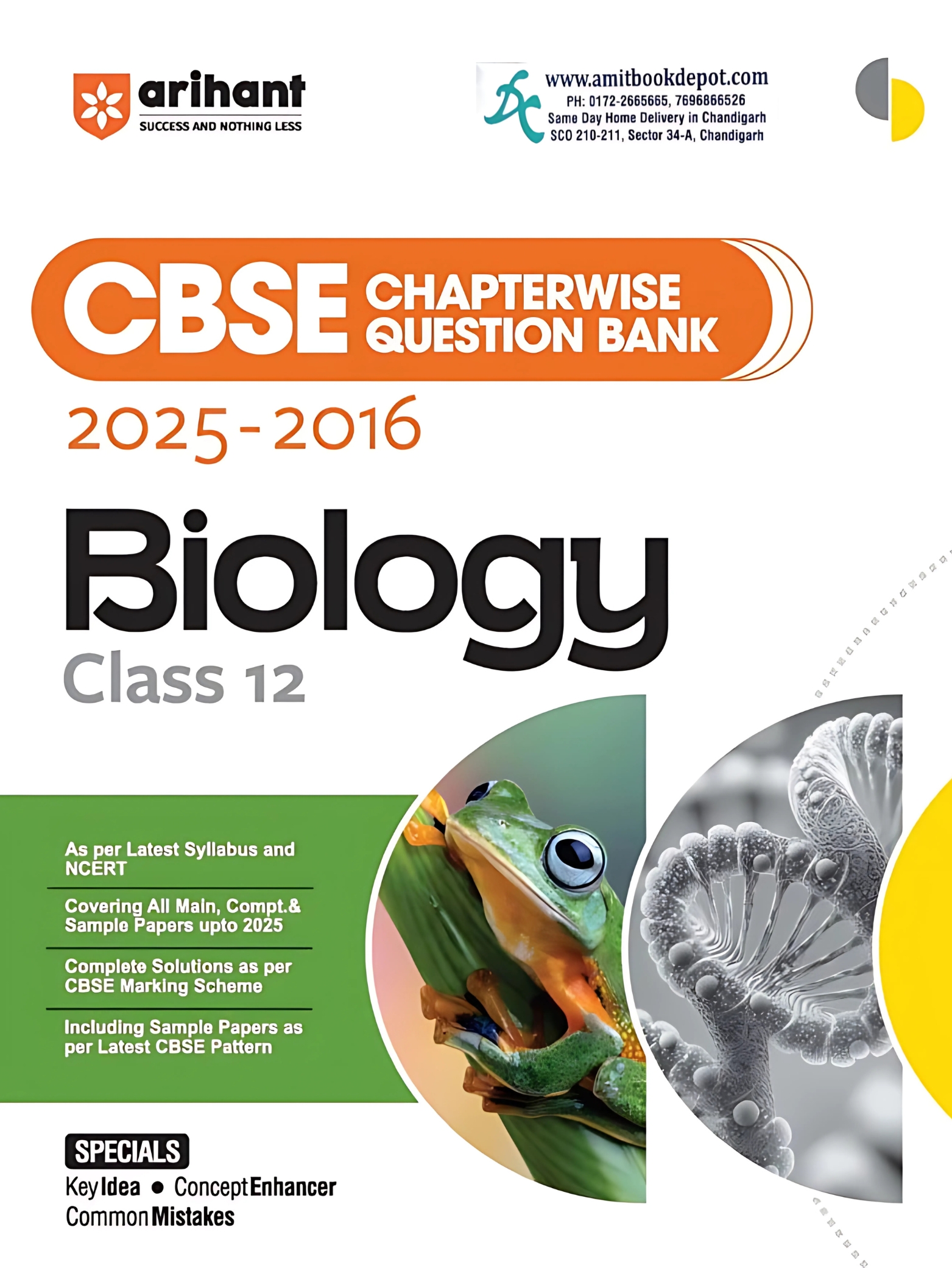
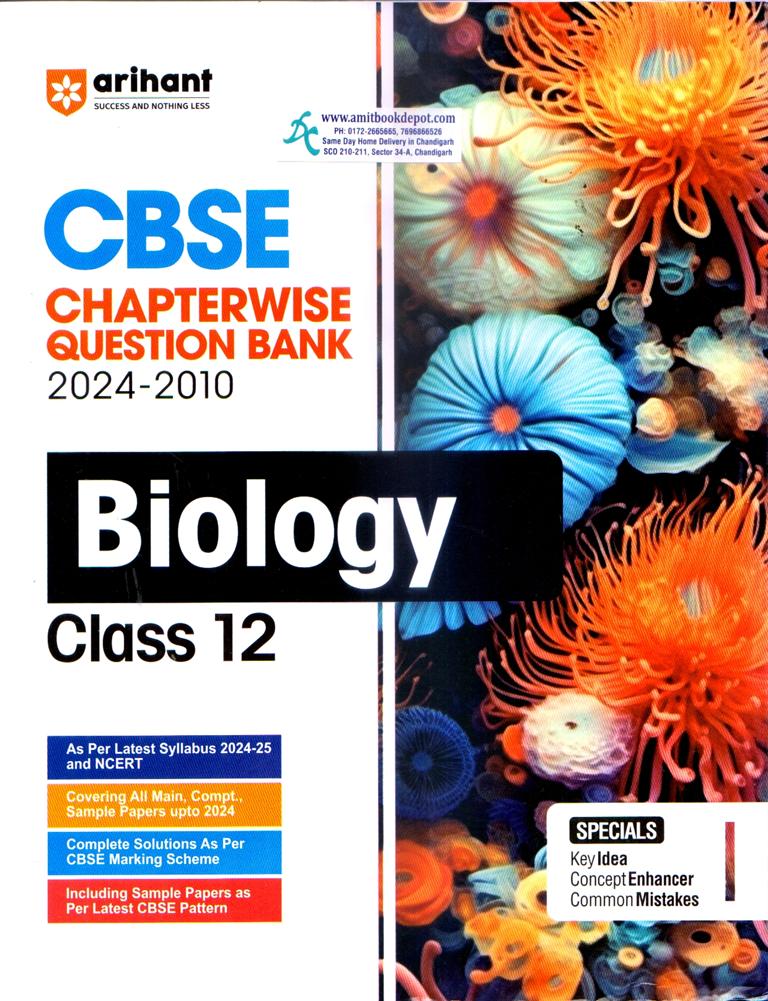
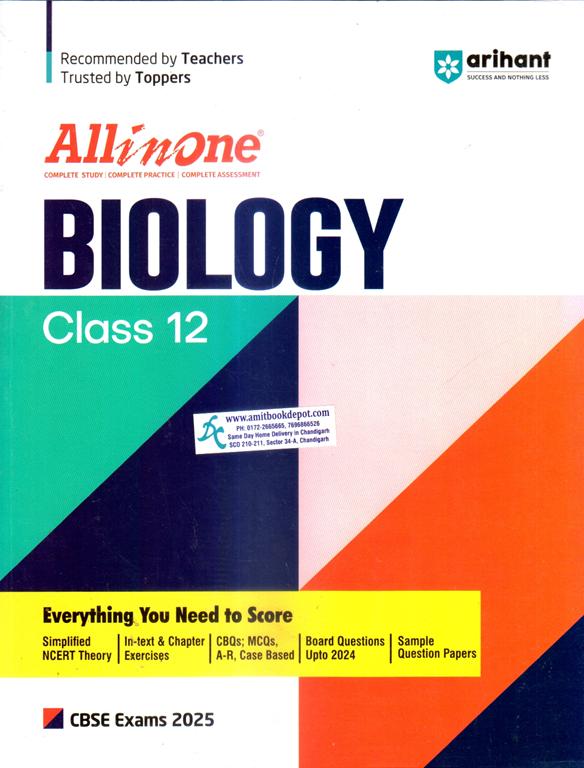
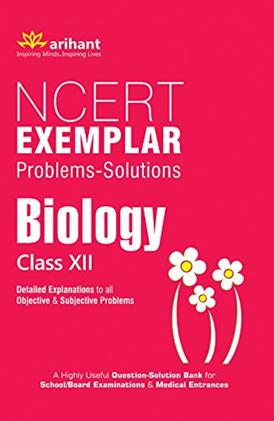
Yes, the book has been updated to include a variety of Competency-Based Questions, Case-Study Based Questions, and other formats as per the latest CBSE examination pattern.
The book includes a curated selection of Previous Years' Questions (PYQs) from several past CBSE board exams, highlighting important and recurring concepts.
Each chapter begins with concise yet comprehensive theory notes covering key concepts, terms, and diagrams, making it excellent for quick revision. However, for in-depth conceptual understanding, it is recommended to use it alongside your NCERT textbook.
Yes, all 13 chapters, including Human Reproduction and Reproductive Health, have dedicated and extensive chapter-wise question banks for focused practice.
Absolutely. Essential diagrams from each chapter are included within the theory summaries and are often required in the solutions, aiding in visual learning and exam preparation.
No, the book strictly adheres to the latest CBSE syllabus. Topics listed as excluded in the official syllabus are not covered, ensuring efficient and focused preparation.
While its primary focus is the CBSE board exam pattern and syllabus, the strong conceptual foundation it builds in core Biology topics like Genetics, Evolution, and Biotechnology can be beneficial for initial NEET preparation. However, for NEET-specific question patterns, a dedicated NEET guide is recommended.
Yes, it covers applications and related questions on GMOs, Bt crops, gene therapy, insulin production, and ethical issues like biosafety, biopiracy, and patents as per the CBSE syllabus.
Yes, the specially curated HOTS questions are designed to push analytical and application skills, providing the necessary challenge for students aiming for top scores.
Yes, the chapter-wise organization allows you to easily select and prepare chapters as per your term-wise syllabus division, making it flexible for both term exams and the final consolidated exam.
No Description Added
Yes, the book has been updated to include a variety of Competency-Based Questions, Case-Study Based Questions, and other formats as per the latest CBSE examination pattern.
The book includes a curated selection of Previous Years' Questions (PYQs) from several past CBSE board exams, highlighting important and recurring concepts.
Each chapter begins with concise yet comprehensive theory notes covering key concepts, terms, and diagrams, making it excellent for quick revision. However, for in-depth conceptual understanding, it is recommended to use it alongside your NCERT textbook.
Yes, all 13 chapters, including Human Reproduction and Reproductive Health, have dedicated and extensive chapter-wise question banks for focused practice.
Absolutely. Essential diagrams from each chapter are included within the theory summaries and are often required in the solutions, aiding in visual learning and exam preparation.
No, the book strictly adheres to the latest CBSE syllabus. Topics listed as excluded in the official syllabus are not covered, ensuring efficient and focused preparation.
While its primary focus is the CBSE board exam pattern and syllabus, the strong conceptual foundation it builds in core Biology topics like Genetics, Evolution, and Biotechnology can be beneficial for initial NEET preparation. However, for NEET-specific question patterns, a dedicated NEET guide is recommended.
Yes, it covers applications and related questions on GMOs, Bt crops, gene therapy, insulin production, and ethical issues like biosafety, biopiracy, and patents as per the CBSE syllabus.
Yes, the specially curated HOTS questions are designed to push analytical and application skills, providing the necessary challenge for students aiming for top scores.
Yes, the chapter-wise organization allows you to easily select and prepare chapters as per your term-wise syllabus division, making it flexible for both term exams and the final consolidated exam.