-
Mon-Fri: 10AM to 8PM 01722665665
-
My Account
-
-
0
Total :
₹ 0.00

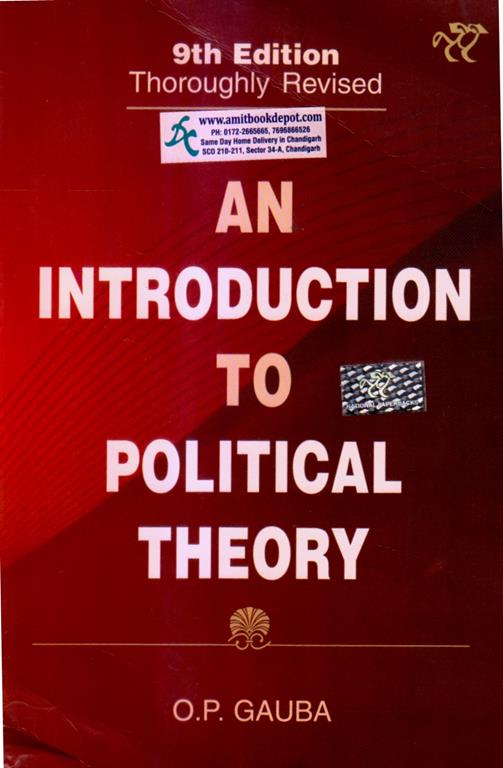
Absolutely. O. P. Gauba is known for his lucid writing style that starts from the very basics. The first chapter establishes the "Nature and Significance of Political Theory" before moving to complex ideas, making it ideal for students new to the subject .
Yes, this book is considered a foundational text for the UPSC optional. It covers the core concepts, thinkers, and theories required for the Mains syllabus. However, for a high-scoring approach, it should be supplemented with contemporary examples and possibly a second text for additional perspectives .
Yes, it is highly recommended for DU and other Indian universities. The content aligns perfectly with the core papers on political theory, covering concepts like liberty, equality, justice, and rights that are central to the undergraduate curriculum .
While the book's primary strength is in explaining concepts and theories (like those of Plato, Marx, or Rawls within those discussions), its focus is on "Political Theory" rather than a chronological "History of Political Thought." It uses thinkers' ideas to explain concepts like justice, state, and democracy .
Yes, it is an excellent resource for building conceptual clarity for UGC-NET. The detailed chapters on concepts like sovereignty, power, justice, and political obligation provide the depth required for both Paper II and Paper III.
The language is academic yet highly accessible. O. P. Gauba avoids unnecessarily complex jargon without diluting the quality of the concepts, making it easy for students to follow and retain information .
The book's strength lies in its coverage of fundamental concepts. While it addresses "Diverse Perspectives on the State" and "Contemporary Theory of Democracy," which touch upon modern critiques, it focuses more on foundational principles. It is best used as a base before moving to specialized texts on feminism or multiculturalism.
The book offers a comprehensive analysis by dedicating two chapters to justice: one on the general "Concept of Justice" and another on "Diverse Perspectives on Justice." This structure allows it to cover distributive justice, corrective justice, and the ideas of thinkers like John Rawls.
It strikes a perfect balance. For every concept—be it Liberty, Equality, or Democracy—the book not only explains the concept but also discusses various critiques and debates surrounding it, encouraging analytical thinking.
Yes, it is an ideal reference for writing assignments. The structured presentation of arguments, clear definitions, and coverage of different schools of thought provide students with ample material to construct well-argued essays .
No Description Added
Absolutely. O. P. Gauba is known for his lucid writing style that starts from the very basics. The first chapter establishes the "Nature and Significance of Political Theory" before moving to complex ideas, making it ideal for students new to the subject .
Yes, this book is considered a foundational text for the UPSC optional. It covers the core concepts, thinkers, and theories required for the Mains syllabus. However, for a high-scoring approach, it should be supplemented with contemporary examples and possibly a second text for additional perspectives .
Yes, it is highly recommended for DU and other Indian universities. The content aligns perfectly with the core papers on political theory, covering concepts like liberty, equality, justice, and rights that are central to the undergraduate curriculum .
While the book's primary strength is in explaining concepts and theories (like those of Plato, Marx, or Rawls within those discussions), its focus is on "Political Theory" rather than a chronological "History of Political Thought." It uses thinkers' ideas to explain concepts like justice, state, and democracy .
Yes, it is an excellent resource for building conceptual clarity for UGC-NET. The detailed chapters on concepts like sovereignty, power, justice, and political obligation provide the depth required for both Paper II and Paper III.
The language is academic yet highly accessible. O. P. Gauba avoids unnecessarily complex jargon without diluting the quality of the concepts, making it easy for students to follow and retain information .
The book's strength lies in its coverage of fundamental concepts. While it addresses "Diverse Perspectives on the State" and "Contemporary Theory of Democracy," which touch upon modern critiques, it focuses more on foundational principles. It is best used as a base before moving to specialized texts on feminism or multiculturalism.
The book offers a comprehensive analysis by dedicating two chapters to justice: one on the general "Concept of Justice" and another on "Diverse Perspectives on Justice." This structure allows it to cover distributive justice, corrective justice, and the ideas of thinkers like John Rawls.
It strikes a perfect balance. For every concept—be it Liberty, Equality, or Democracy—the book not only explains the concept but also discusses various critiques and debates surrounding it, encouraging analytical thinking.
Yes, it is an ideal reference for writing assignments. The structured presentation of arguments, clear definitions, and coverage of different schools of thought provide students with ample material to construct well-argued essays .