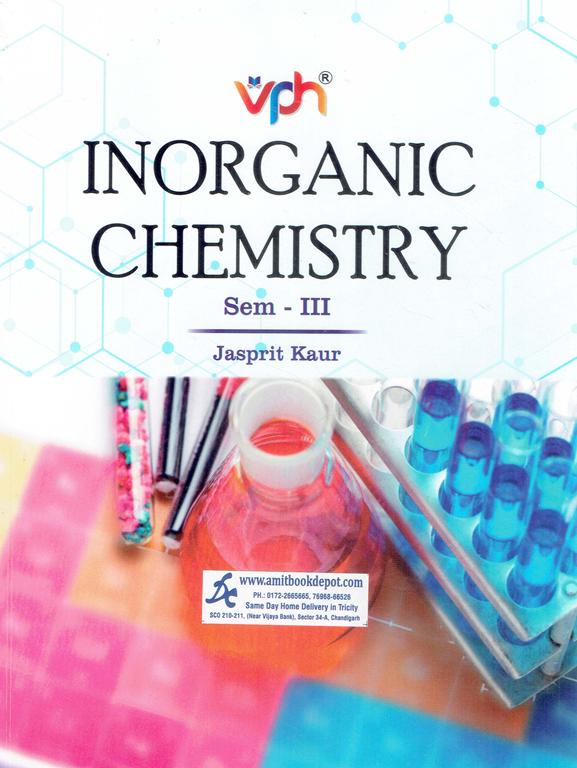
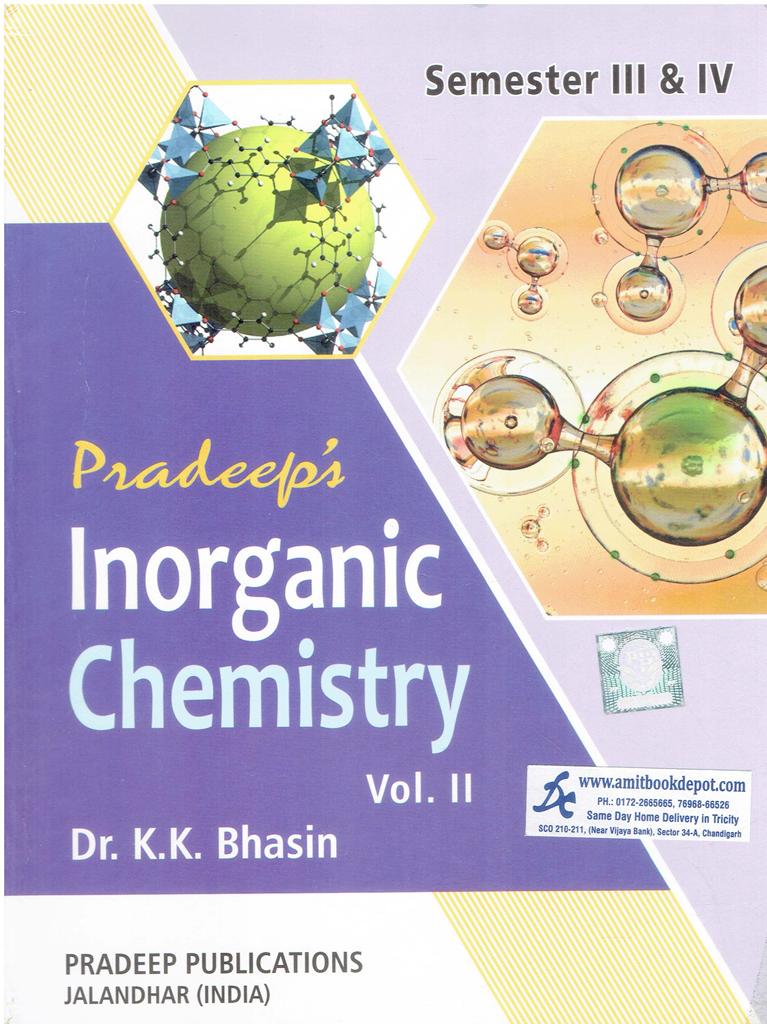
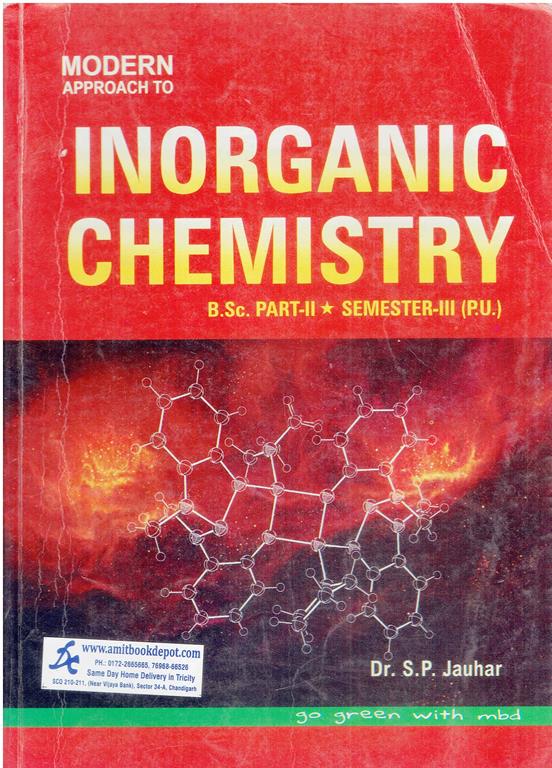
Inorganic Chemistry by Jasprit Kaur, published by Vohra Publishing House, is an essential textbook for BSc 2nd-year students at Punjab University, Chandigarh. This comprehensive resource covers critical topics in inorganic chemistry, providing a detailed exploration of transition series and coordination compounds. Written in clear English, it is designed to help students grasp complex concepts and enhance their understanding of the subject.
The book covers essential topics such as the chemistry of the first, second, and third transition series, as well as coordination compounds, providing a well-rounded foundation in inorganic chemistry.
The book breaks down complex ideas into manageable segments, using clear and accessible language, along with detailed explanations and examples to enhance student comprehension.
Yes, the book includes previous university papers, which serve as a valuable resource for students to practice and apply their knowledge in preparation for exams.
Absolutely! The clear presentation of content and practical examples make it suitable for self-study, allowing students to learn at their own pace.
The book features in-depth discussions on the properties, reactions, and applications of elements from the first, second, and third transition series, fostering a strong grasp of periodic trends.
There are dedicated sections exploring coordination compounds, including their structures, bonding, nomenclature, and isomerism, ensuring a thorough understanding of this critical area in inorganic chemistry.
Students can expect to develop a strong foundational knowledge of inorganic chemistry concepts, enhance their analytical skills, and improve their ability to apply these concepts in laboratory settings.
Yes, the book closely follows the syllabus set by Punjab University and the UGC module, ensuring that it meets the academic requirements for BSc chemistry courses.
Yes, instructors can use this book as a primary teaching resource in their courses, thanks to its structured content and alignment with the curriculum.
The comprehensive nature of the book, combined with its focus on fundamental concepts, prepares students for laboratory applications and encourages critical thinking about experimental results.
1.Chemistry of elements of first transition series
2.Chemistry of elements of second & third transition series
3.Coordination compounds-1
4.Coordination compounds-2
University papers
Unlock the secrets of the periodic table with Inorganic Chemistry by Jasprit Kaur, a crucial resource tailored for BSc 2nd year students at Punjab University, Chandigarh. Published by Vohra Publishing House, this comprehensive textbook is designed to deepen your understanding of inorganic chemistry as you navigate through the complexities of this essential subfield.
This textbook serves as an invaluable companion for students embarking on their third semester of BSc studies. It covers pivotal topics that allow learners to build a strong foundation in inorganic chemistry, thus preparing them for academic excellence. The book is structured to guide students step by step through various aspects of the subject.
Key Features:
1. Exploration of the Transition Series: The book opens with an in-depth exploration of the chemistry of elements in the first transition series, discussing their unique properties, reactions, and applications. Students will develop an appreciation for how these elements form the backbone of many chemical processes.
2. Second and Third Transition Series: Following the first series, students will delve into the chemistry of the second and third transition series. This section provides insights into the similarities and differences in behavior among these elements, enriching students' understanding of the periodic trends that govern inorganic chemistry.
3. Coordination Compounds: Two comprehensive sections are dedicated to coordination compounds, allowing students to explore their structures, bonding, and the significance of ligands. The text breaks down complex concepts into digestible segments, making it easier for students to grasp the intricate dynamics of coordination chemistry.
4. University Papers: To further aid in their academic journey, the book includes previous university papers, allowing students to apply their learning and better prepare for examinations. This feature is particularly beneficial for those looking to solidify their understanding and excel in their courses.
The content is presented in clear, accessible English, making it suitable for students at varying levels of comprehension. Jasprit Kaur's expertise shines through, as she meticulously crafts each chapter to engage students while providing the rigorous academic content necessary for their studies.

1.Chemistry of elements of first transition series
2.Chemistry of elements of second & third transition series
3.Coordination compounds-1
4.Coordination compounds-2
University papers
The book covers essential topics such as the chemistry of the first, second, and third transition series, as well as coordination compounds, providing a well-rounded foundation in inorganic chemistry.
The book breaks down complex ideas into manageable segments, using clear and accessible language, along with detailed explanations and examples to enhance student comprehension.
Yes, the book includes previous university papers, which serve as a valuable resource for students to practice and apply their knowledge in preparation for exams.
Absolutely! The clear presentation of content and practical examples make it suitable for self-study, allowing students to learn at their own pace.
The book features in-depth discussions on the properties, reactions, and applications of elements from the first, second, and third transition series, fostering a strong grasp of periodic trends.
There are dedicated sections exploring coordination compounds, including their structures, bonding, nomenclature, and isomerism, ensuring a thorough understanding of this critical area in inorganic chemistry.
Students can expect to develop a strong foundational knowledge of inorganic chemistry concepts, enhance their analytical skills, and improve their ability to apply these concepts in laboratory settings.
Yes, the book closely follows the syllabus set by Punjab University and the UGC module, ensuring that it meets the academic requirements for BSc chemistry courses.
Yes, instructors can use this book as a primary teaching resource in their courses, thanks to its structured content and alignment with the curriculum.
The comprehensive nature of the book, combined with its focus on fundamental concepts, prepares students for laboratory applications and encourages critical thinking about experimental results.