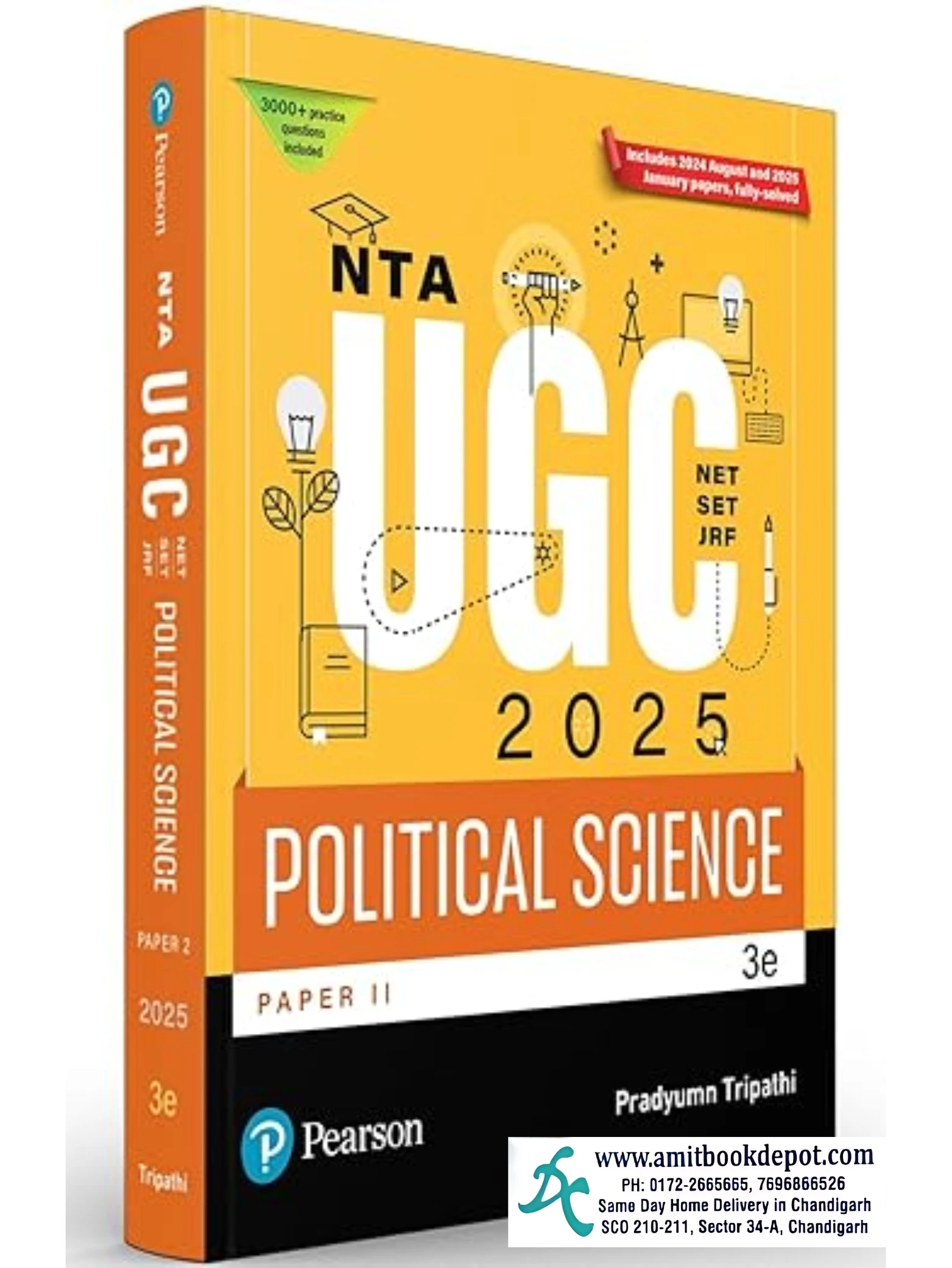
Master the UGC NET Political Science Examination with the Definitive Guide from Pearson.
Aspiring to build a prestigious career as a Junior Research Fellow (JRF) or Assistant Professor in Political Science? The Pearson NTA UGC NET SET JRF Political Science Paper 2 is your comprehensive and strategic companion, meticulously designed to empower you to conquer the examination. Authored by the esteemed Pradyuman Tripathi, this book is an indispensable resource that provides an in-depth, structured, and exam-centric approach to the entire political science syllabus.
This guide is specifically aligned with the latest pattern and curriculum prescribed by the National Testing Agency (NTA). It serves as an all-in-one solution, eliminating the need for multiple reference books. The content is systematically organized into logical units, ensuring a coherent and progressive learning experience that builds from fundamental concepts to advanced applications.
Key Features and Benefits:
1. Exhaustive Syllabus Coverage: The book provides complete coverage of all ten units specified by the NTA for Political Science Paper 2. This includes Political Theory, Political Thought, Indian Political Thought, Comparative Political Analysis, International Relations, India’s Foreign Policy, Political Institutions in India, Political Processes in India, Public Administration, and Governance and Public Policy in India. No topic is left unexplored.
2. Structured and Thematic Content Organization: Each unit is broken down into focused chapters that present complex topics with remarkable clarity. The logical flow from political theory to its practical application in the Indian and global context ensures a holistic understanding, which is crucial for both objective and descriptive answers.
3. Conceptual Clarity and Analytical Depth: This book moves beyond mere fact-listing. It is crafted to foster a deep conceptual understanding of political ideologies, institutions, and processes. This analytical depth is essential for tackling higher-order questions and for the research-oriented nature of the JRF.
4. Exam-Oriented Presentation: The content is tailored to meet the specific demands of the UGC NET exam. Key terms, important theorists, and seminal concepts are highlighted for quick revision. The language is precise and accessible, making it easier to grasp and retain vast amounts of information.
5. Authored by a Subject Matter Expert: Pradyuman Tripathi brings his extensive knowledge and understanding of the examination trends to this book. His expertise ensures that the material is not only academically sound but also strategically relevant, focusing on areas that carry significant weight in the exam.
6. Ideal for NET, SET, and JRF Aspirants: While primarily designed for the NTA UGC NET exam, this book is equally valuable for candidates preparing for State Eligibility Tests (SET) and other university-level entrance examinations in political science. Its comprehensive nature makes it a foundational text for any serious aspirant.
What You Will Find Inside:
The book is a complete journey through the landscape of political science. You will delve into the core principles of political theory with concepts like liberty, equality, justice, and sovereignty. You will traverse the history of political thought from the classical era to contemporary times, engaging with thinkers like Plato, Aristotle, Machiavelli, Hobbes, Locke, Marx, and Gandhi. The section on Indian political thought provides insightful analysis of traditions from Manu to Kautilya and modern thinkers like Tagore, Ambedkar, and Savarkar.
The units on comparative politics and international relations equip you with the tools to analyze different political systems and understand global power dynamics, theories of realism, liberalism, and critical approaches. A dedicated unit on India’s foreign policy offers a nuanced perspective on its principles, evolution, and key relationships.
Crucially, the book offers an unparalleled analysis of political institutions in India (the Constitution, Parliament, Executive, and Judiciary) and the dynamic political processes in India (party system, elections, social movements, and regional aspirations). Finally, it covers the principles of public administration and their application in governance and public policy in India, focusing on recent developments and challenges.
Invest in your future with the most trusted guide for UGC NET Political Science. With its authoritative content, structured approach, and exam-focused strategy, this book by Pearson is more than just a book; it is your definitive pathway to success.




.jpg)