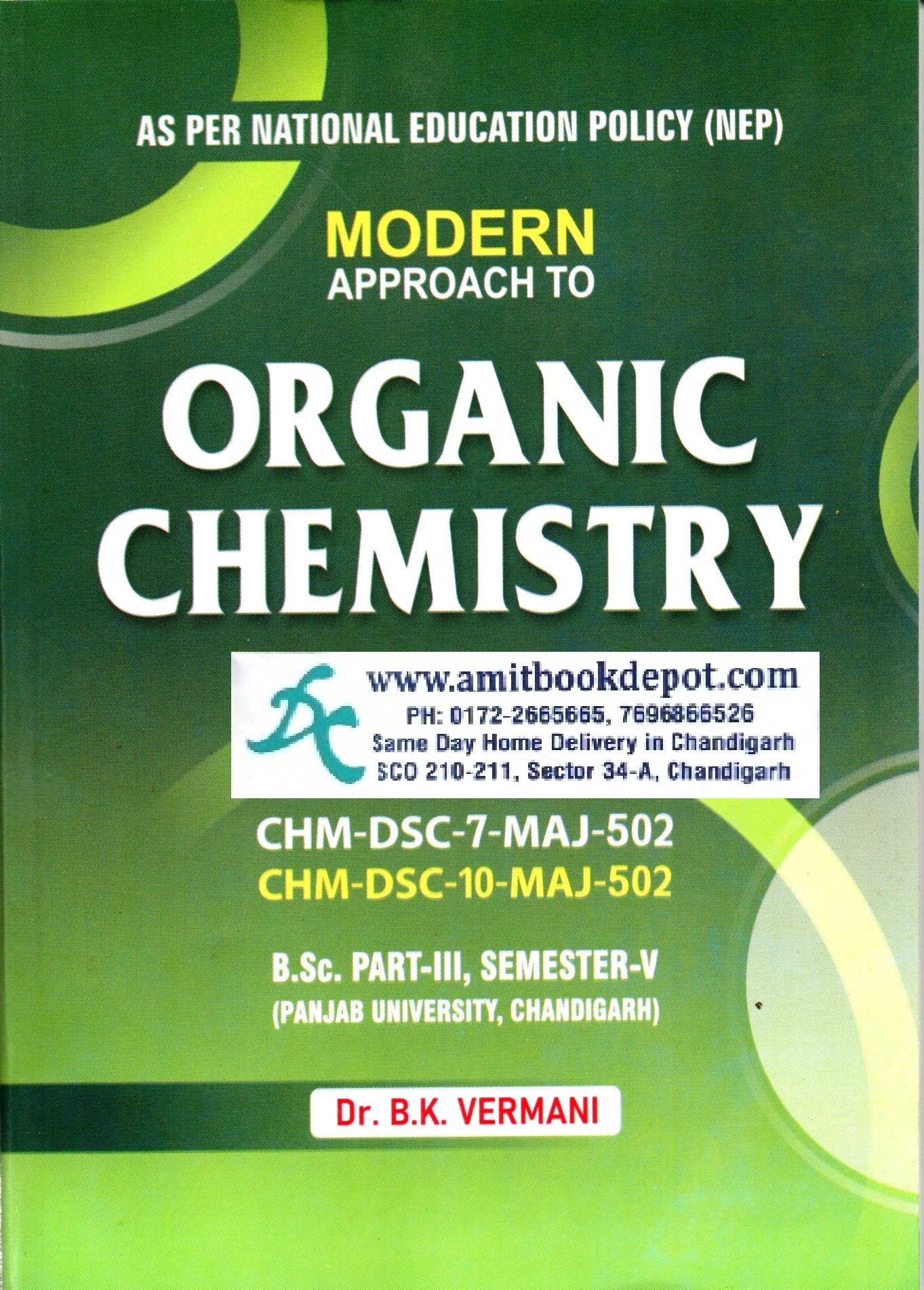
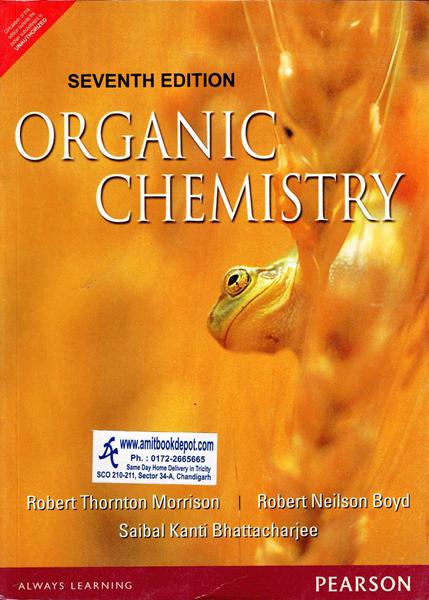
Nucleophilic substitutions (SN1, SN2), eliminations, and organometallic couplings. Detailed stereochemical and kinetic analysis included.
Yes. Chapter 9 specifically addresses nucleophilic aromatic substitution (SNAr reactions) with mechanisms and synthetic applications.
Two chapters – Part Four covers monosaccharides separately from disaccharides and polysaccharides, including stereochemistry and glycosidic linkages.
Integrated. Chapter 17 covers purification and identification using IR, NMR, and mass spectroscopy for functional group analysis.
Nanoparticles (size-dependent chemistry), molecular machines, and nanomachines – bridging organic chemistry with future device technology.
Yes, Chapter 22 covers synthetic dyes and macromolecules, linking laboratory synthesis to industrial manufacturing.
Alkaloids, prostaglandins, chemotherapeutic agents, and pharmacodynamic compounds are fully covered.
Yes, in Chapter 23 (Symphoria) including neighboring group effects and catalysis by transition metal complexes.
Yes, Chapter 19 includes classical and electroorganic synthesis methods for redox transformations.
Chapter 30 covers nucleotides, polynucleotides, and nucleosides – including DNA/RNA structure and base pairing.
No Description Added
Nucleophilic substitutions (SN1, SN2), eliminations, and organometallic couplings. Detailed stereochemical and kinetic analysis included.
Yes. Chapter 9 specifically addresses nucleophilic aromatic substitution (SNAr reactions) with mechanisms and synthetic applications.
Two chapters – Part Four covers monosaccharides separately from disaccharides and polysaccharides, including stereochemistry and glycosidic linkages.
Integrated. Chapter 17 covers purification and identification using IR, NMR, and mass spectroscopy for functional group analysis.
Nanoparticles (size-dependent chemistry), molecular machines, and nanomachines – bridging organic chemistry with future device technology.
Yes, Chapter 22 covers synthetic dyes and macromolecules, linking laboratory synthesis to industrial manufacturing.
Alkaloids, prostaglandins, chemotherapeutic agents, and pharmacodynamic compounds are fully covered.
Yes, in Chapter 23 (Symphoria) including neighboring group effects and catalysis by transition metal complexes.
Yes, Chapter 19 includes classical and electroorganic synthesis methods for redox transformations.
Chapter 30 covers nucleotides, polynucleotides, and nucleosides – including DNA/RNA structure and base pairing.