-
Mon-Fri: 10AM to 8PM 01722665665
-
My Account
-
-
0
Total :
₹ 0.00

.jpg)
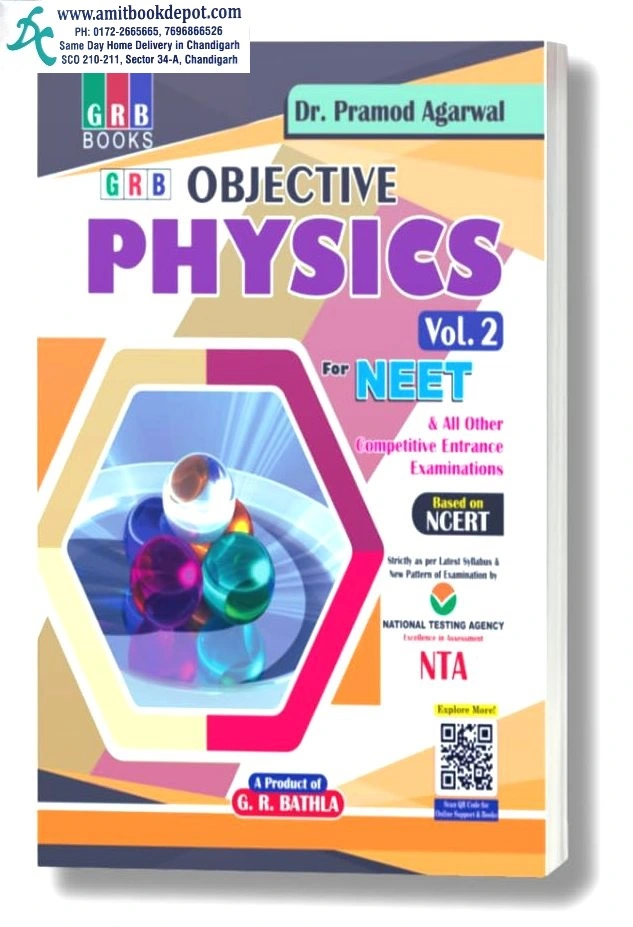
Yes. Chapter 29 on Electromagnetic Induction includes theoretical explanation followed by objective questions, including diagram-based problems for NEET-level practice.
Yes. Model Test Papers 7 to 21 cover the entire Class 11 & 12 syllabus, offering full-course revision and simulated exam practice.
Yes. Chapter 25 provides multiple circuit-based MCQs on Kirchhoff’s Laws and DC Circuits, including complex junction and loop problems.
Yes. Chapters 39 and 40 are dedicated to X-Rays and Radioactivity with numerical and conceptual objective questions for NEET.
Yes. Chapter 33 separately treats spherical mirrors and lenses, including sign convention, ray diagrams, and formula-based MCQs.
Yes. Chapter 42 covers solids and semiconductor devices like diodes and transistors with application-based MCQs.
Yes. Chapter 26 is exclusively on thermal and chemical effects, including Joule’s law and electrolysis-based MCQs.
Yes. Chapter 37 includes multiple graph-based MCQs on stopping potential, frequency, and kinetic energy relationships.
Yes. Chapter 30 covers AC circuits, impedance, resonance, and phasor-diagram-based objective questions.
Yes. Chapter 43 on Principles of Communication includes modulation, demodulation, and basic electronics-related MCQs.
No Description Added
Yes. Chapter 29 on Electromagnetic Induction includes theoretical explanation followed by objective questions, including diagram-based problems for NEET-level practice.
Yes. Model Test Papers 7 to 21 cover the entire Class 11 & 12 syllabus, offering full-course revision and simulated exam practice.
Yes. Chapter 25 provides multiple circuit-based MCQs on Kirchhoff’s Laws and DC Circuits, including complex junction and loop problems.
Yes. Chapters 39 and 40 are dedicated to X-Rays and Radioactivity with numerical and conceptual objective questions for NEET.
Yes. Chapter 33 separately treats spherical mirrors and lenses, including sign convention, ray diagrams, and formula-based MCQs.
Yes. Chapter 42 covers solids and semiconductor devices like diodes and transistors with application-based MCQs.
Yes. Chapter 26 is exclusively on thermal and chemical effects, including Joule’s law and electrolysis-based MCQs.
Yes. Chapter 37 includes multiple graph-based MCQs on stopping potential, frequency, and kinetic energy relationships.
Yes. Chapter 30 covers AC circuits, impedance, resonance, and phasor-diagram-based objective questions.
Yes. Chapter 43 on Principles of Communication includes modulation, demodulation, and basic electronics-related MCQs.











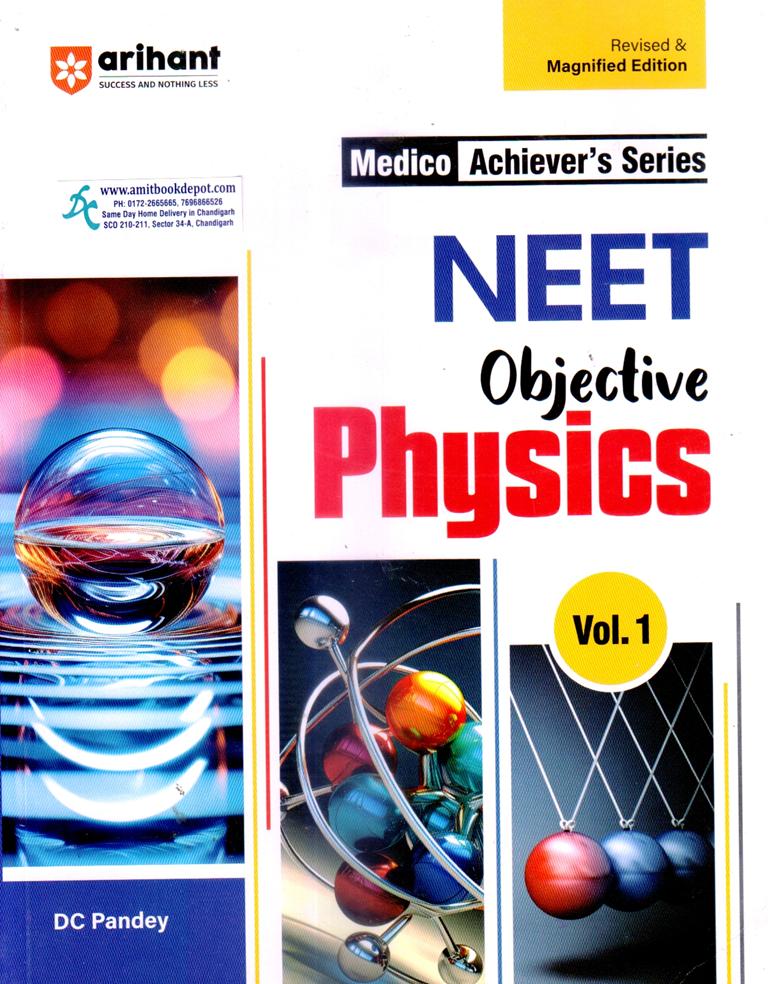
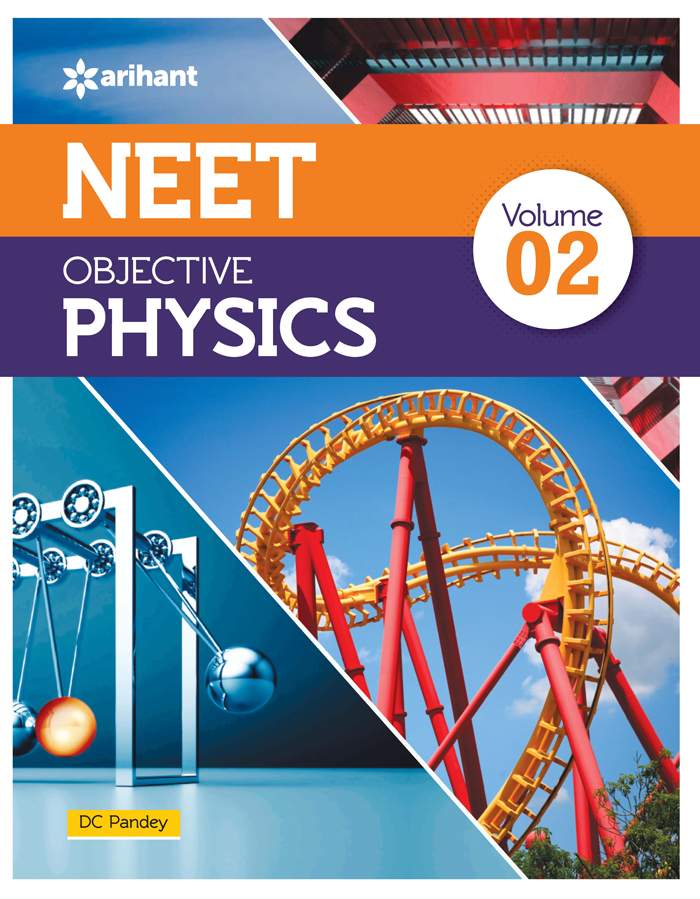
.jpg)