-
Mon-Fri: 10AM to 8PM 01722665665
-
My Account
-
-
0
Total :
₹ 0.00

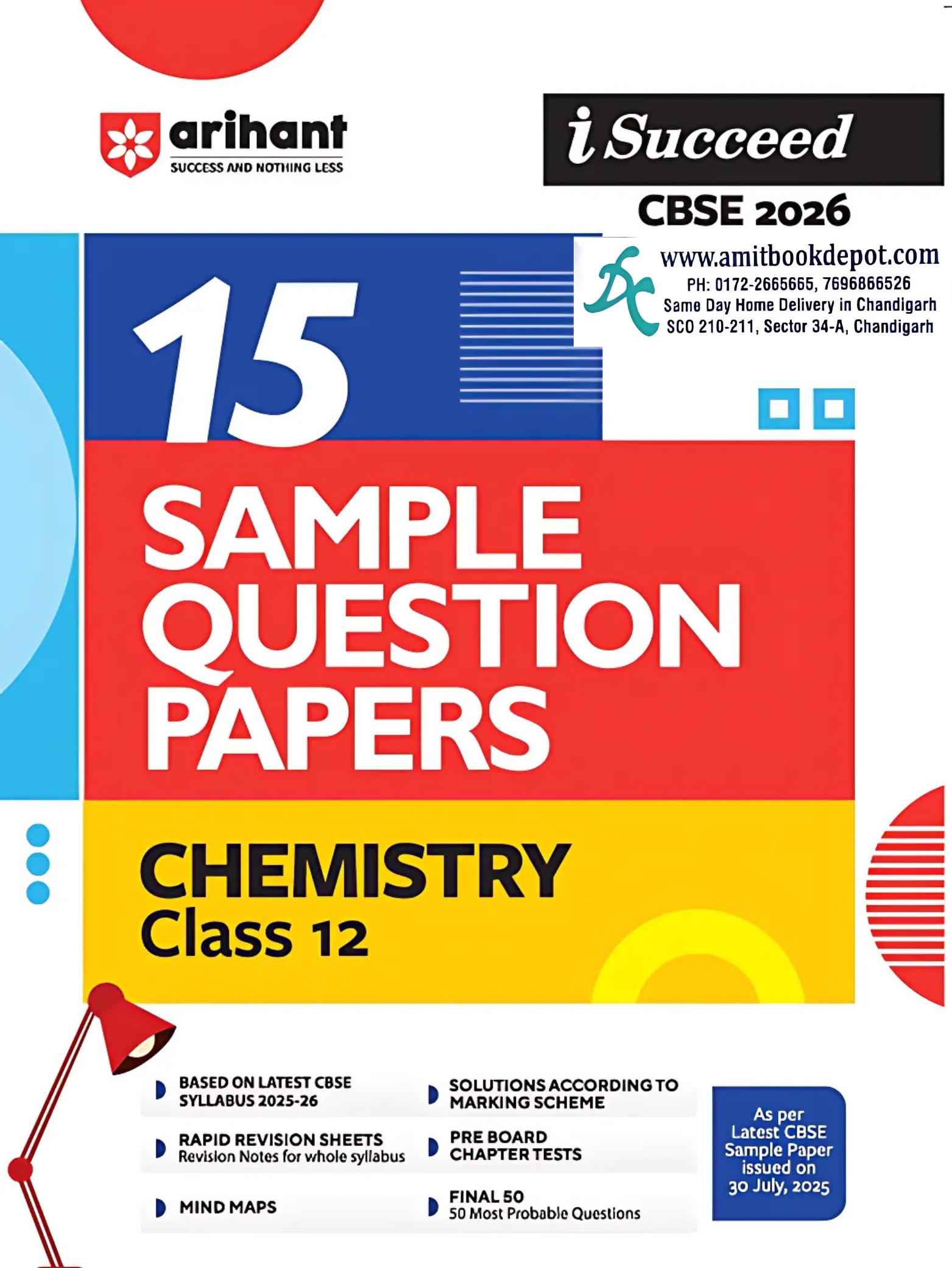


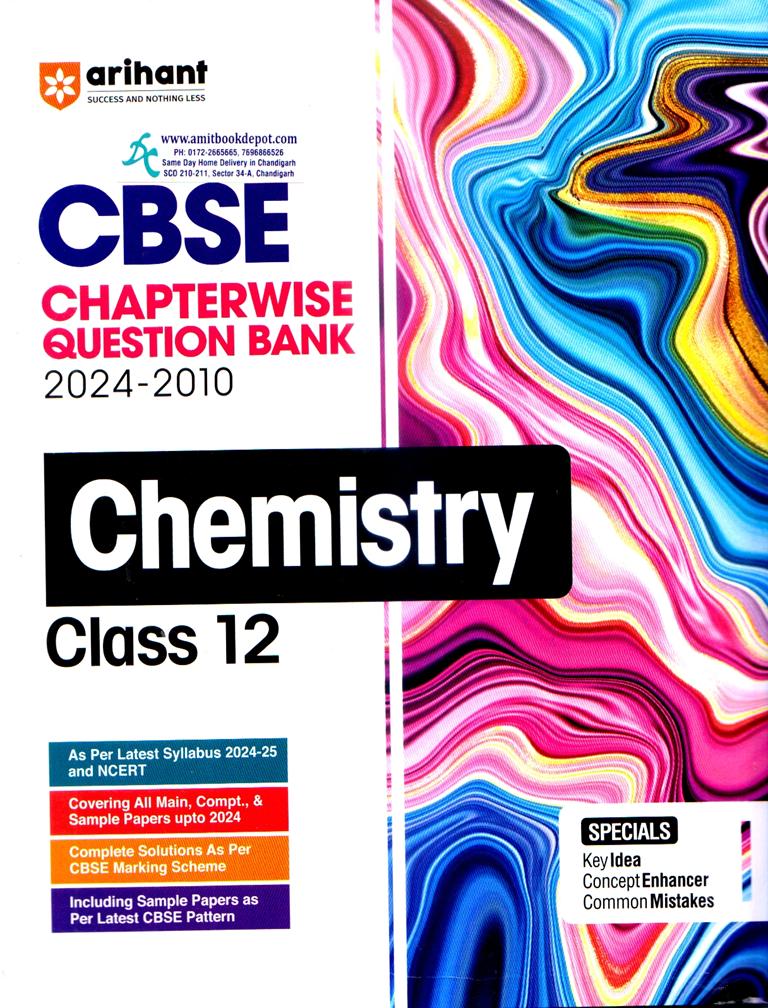
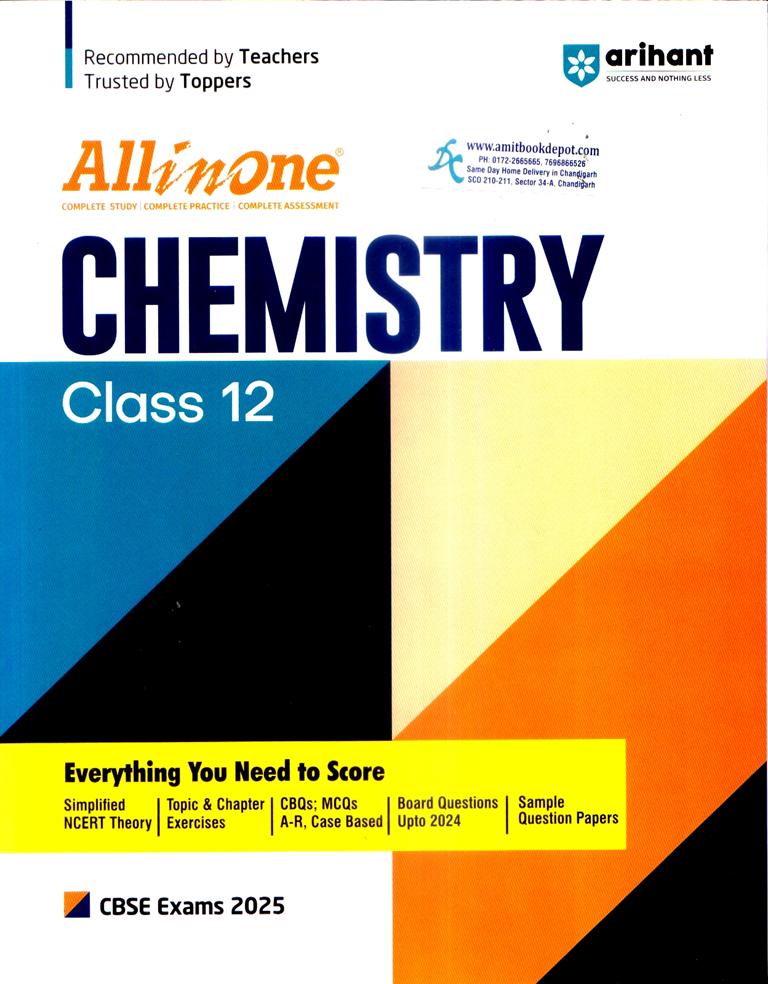
Yes, the 15 sample papers are meticulously crafted to align with the most recent CBSE syllabus and NCERT textbooks, ensuring all relevant topics and units are covered.
Yes, the papers follow the latest CBSE exam pattern, including the section-wise distribution of marks, typology of questions (VSA, SA, LA, value-based), and the overall design to simulate the real exam experience.
By practicing timed attempts of these full-length papers, you will learn to allocate time efficiently across sections, thereby increasing your answering speed and accuracy under exam conditions.
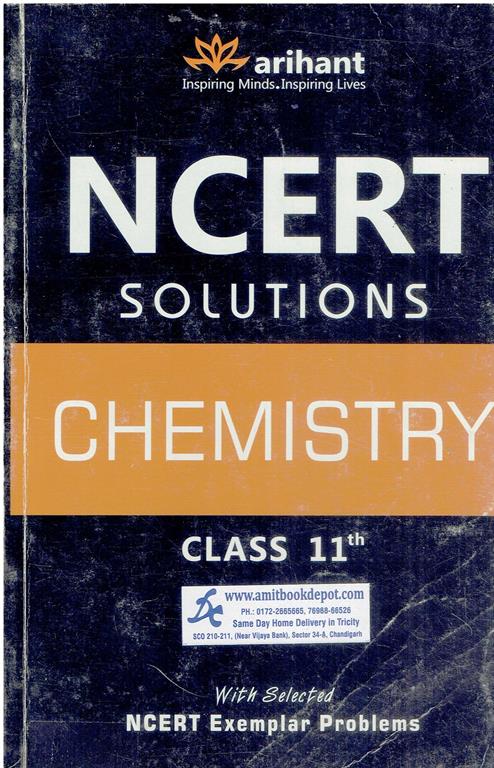
Yes, special emphasis is given to numerical applications in units like Electrochemistry, Solutions, and Chemical Kinetics, with a variety of problems to ensure thorough practice.
Definitely. Dedicated questions cover key organic chemistry chapters (Haloalkanes, Aldehydes, Amines, etc.), focusing on nomenclature, chemical properties, and important reaction mechanisms as per the syllabus.
Yes, Unit X: Biomolecules is comprehensively covered with questions on carbohydrates (glucose, fructose), proteins, enzymes, and nucleic acids, as per the CBSE syllabus.
Yes, the book includes significant practice on IUPAC nomenclature, Werner’s theory, and isomerism in Coordination Compounds, which are crucial for the board exam.
While its primary focus is the CBSE board exam, the strong conceptual foundation and problem-solving practice it provides can be a beneficial supplement for the Chemistry section of foundational competitive exams.
The sample papers include questions on general trends, properties of transition metals, and preparation/properties of important compounds like K₂Cr₂O₇ and KMnO₄, as outlined in the syllabus.
No, this is a practice and assessment tool. It is meant to be used alongside the NCERT textbook for Chemistry. Students should first complete their concepts from NCERT and then use this book for rigorous practice.
Yes, the 15 sample papers are meticulously crafted to align with the most recent CBSE syllabus and NCERT textbooks, ensuring all relevant topics and units are covered.
Yes, the papers follow the latest CBSE exam pattern, including the section-wise distribution of marks, typology of questions (VSA, SA, LA, value-based), and the overall design to simulate the real exam experience.
By practicing timed attempts of these full-length papers, you will learn to allocate time efficiently across sections, thereby increasing your answering speed and accuracy under exam conditions.
Yes, special emphasis is given to numerical applications in units like Electrochemistry, Solutions, and Chemical Kinetics, with a variety of problems to ensure thorough practice.
Definitely. Dedicated questions cover key organic chemistry chapters (Haloalkanes, Aldehydes, Amines, etc.), focusing on nomenclature, chemical properties, and important reaction mechanisms as per the syllabus.
Yes, Unit X: Biomolecules is comprehensively covered with questions on carbohydrates (glucose, fructose), proteins, enzymes, and nucleic acids, as per the CBSE syllabus.
Yes, the book includes significant practice on IUPAC nomenclature, Werner’s theory, and isomerism in Coordination Compounds, which are crucial for the board exam.
While its primary focus is the CBSE board exam, the strong conceptual foundation and problem-solving practice it provides can be a beneficial supplement for the Chemistry section of foundational competitive exams.
The sample papers include questions on general trends, properties of transition metals, and preparation/properties of important compounds like K₂Cr₂O₇ and KMnO₄, as outlined in the syllabus.
No, this is a practice and assessment tool. It is meant to be used alongside the NCERT textbook for Chemistry. Students should first complete their concepts from NCERT and then use this book for rigorous practice.