Categories
College Bookssss >
BA PU Chandigarh
BSC PU Chandigarh
MSC PU Chandigarh
BBA PU Chandigarh
MA PU Chandigarh
Medical Books
Engineering Books
Management Books
PGDCA Books
BCOM PU Chandigarh
MCOM PU Chandigarh
BCA PU Chandigarh
MCA PU Chandigarh
animate-books

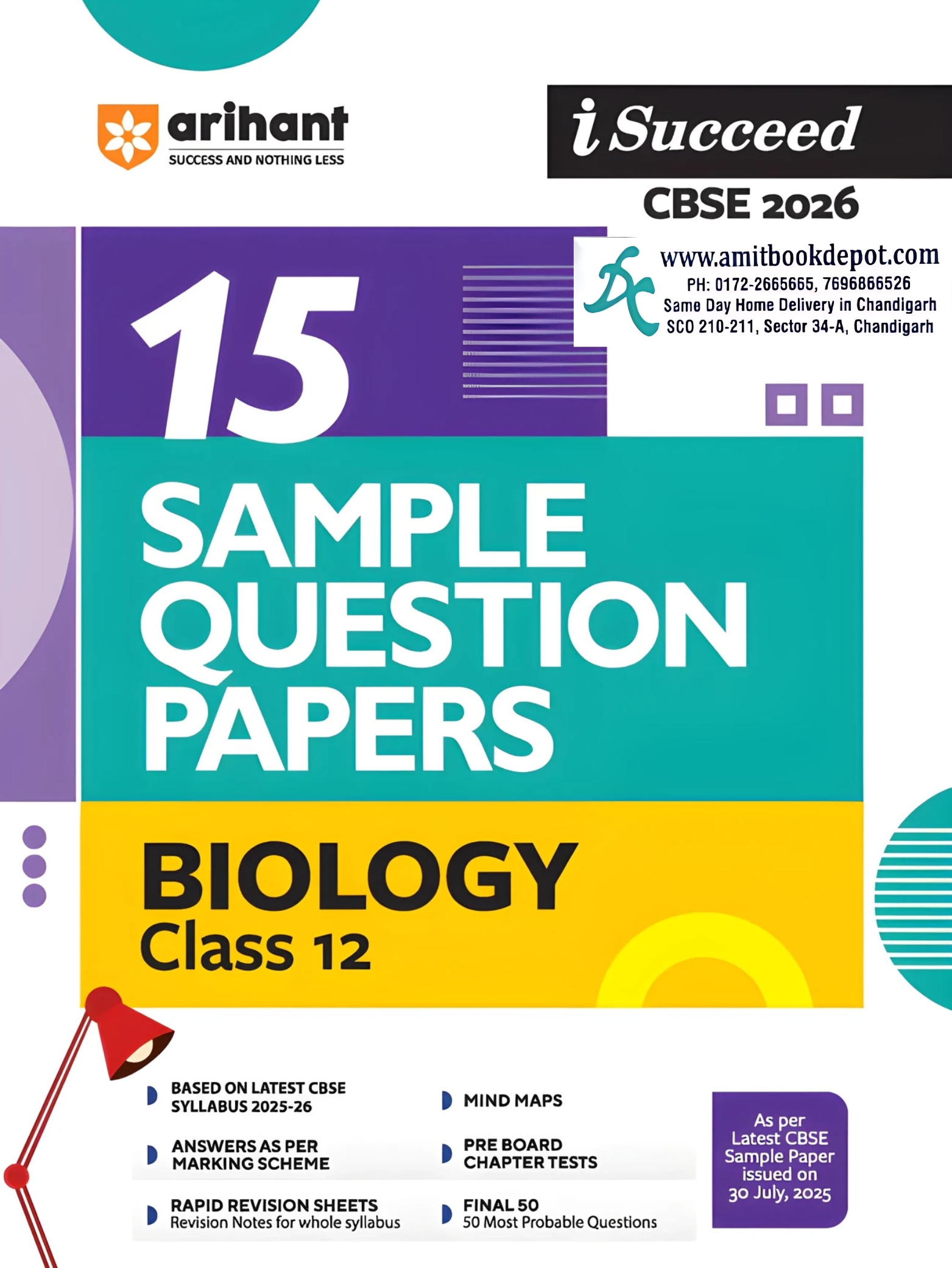
iSucceed 15 Sample Question Papers Biology for Class 12th

by Madhurima
₹275 ₹275.00(-/ off)

Rating & Reviews

23 Customer Review

iSucceed 15 Sample Question Papers Biology for Class 12th by Arihant Prakashan is the ultimate practice resource for CBSE board exam preparation. Strictly aligned with the latest NCERT syllabus and exam pattern, this book provides 15 full-length sample papers with detailed, step-by-step solutions. It is designed to enhance time management, strengthen core concepts from chapters like Genetics, Reproduction, and Biotechnology, and enable effective self-assessment. Ideal for thorough revision and performance analysis, this guide helps students build confidence and aim for high scores in their Class 12 Biology exam. Your key to success is here.

Have Doubts Regarding This Product ? Ask Your Question

  • Q1
    Are the sample papers in this book based on the latest CBSE curriculum and NCERT syllabus for Class 12 Biology?
    A1

    Yes, all 15 sample papers are meticulously crafted to align with the most recent CBSE syllabus and follow the NCERT Class 12 Biology textbook.

  • Q2
    Does the book cover all chapters, including the recently added or modified topics in the CBSE syllabus?
    A2

    Absolutely. The book comprehensively covers all units and chapters, including Reproduction, Genetics & Evolution, Biotechnology, and Ecology, as per the latest CBSE syllabus provided.

  • Q3
    Is this book useful for preparing for competitive exams like NEET, or is it strictly for CBSE Board exams?
    A3

    While primarily designed for the CBSE Board exam pattern, the strong conceptual foundation it builds through solved papers is highly beneficial for the Biology section of competitive exams like NEET.

  • Q4
    Does the book include questions based on the new CBSE typology (e.g., case-based, assertion-reason)?
    A4

    Yes, the sample papers incorporate a variety of question formats, including case-based questions, assertion-reasoning, and different weightage questions (VSA, SA, LA) as per the latest CBSE guidelines.

  • Q5
    Are diagrams and illustrative answers provided for topics that require them, like life cycles or biological processes?
    A5

    Yes, the solutions include well-labeled diagrams and flowcharts where necessary, such as for topics like gametogenesis, ecosystem energy flow, or recombinant DNA technology, which is crucial for scoring high marks.

  • Q6
    Can this book help me identify my weak areas in Biology?
    A6

    Definitely. After attempting each paper and comparing your answers with the detailed solutions, you can perform a self-assessment to pinpoint specific chapters or concepts that need more revision.

  • Q7
    Is the paper difficulty level comparable to the actual CBSE Board exam?
    A7

    The papers are designed to match the standard and difficulty level of the actual CBSE Board exam, with a mix of easy, moderate, and challenging questions to thoroughly prepare you.

  • Q8
    If I solve all 15 papers diligently, what kind of improvement can I expect in my preparation?
    A8

    Consistent practice with these papers will significantly boost your confidence, solidify your understanding of the entire syllabus, improve your answer-writing speed and presentation, and greatly enhance your overall readiness to score high marks in the board exam.

  • Q9
    Are the solutions verified for accuracy by subject experts?
    A9

    Yes, the content is carefully developed and reviewed by experienced educators and subject matter experts to ensure 100% accuracy and relevance.

  • Q10
    Does it include a separate section for quick revision of important concepts or formulas?
    A10

    The book focuses on practice through sample papers. For quick revision, we recommend using it alongside your NCERT textbook and notes, as the solutions themselves serve as excellent revision material.

0.00

0 Overall Rating
  • 5
    0
  • 4
    0
  • 3
    0
  • 2
    0
  • 1
    0

Try this product & share your review & thoughts

1. Sexual Reproduction in Flowering Plants
2. Human Reproduction
3. Reproductive Health
4. Principles of Inheritance and Variation
5. Molecular Basis of Inheritance
6. Evolution
7. Human Health and Diseases
8. Microbes in Human Welfare
9. Biotechnology: Principles and Processes
10. Biotechnology and Its Applications
11. Organisms and Populations
12. Ecosystem
13. Biodiversity and Its Conservation

LATEST CBSE Syllabus NCERT Biology Textbook For Class 12th


Unit VI: Reproduction

Chapter 1: Sexual Reproduction in Flowering Plants
Flower structure; development of male and female gametophytes; pollination—types, agencies, and examples; outbreeding devices; pollen-pistil interaction; double fertilization; post-fertilization events—development of endosperm and embryo, development of seed, and formation of fruit; special modes—apomixis, parthenocarpy, polyembryony; significance of seed dispersal and fruit formation.

Chapter 2: Human Reproduction
Male and female reproductive systems; microscopic anatomy of testis and ovary; gametogenesis—spermatogenesis and oogenesis; menstrual cycle; fertilization, embryo development up to blastocyst formation, implantation; pregnancy and placenta formation (elementary idea); parturition (elementary idea); lactation (elementary idea).

Chapter 3: Reproductive Health
Need for reproductive health and prevention of sexually transmitted diseases (STDs); birth control—need and methods, contraception, and medical termination of pregnancy (MTP); amniocentesis; infertility and assisted reproductive technologies—IVF, ZIFT, GIFT (elementary idea for general awareness)

Unit VII: Genetics and Evolution

Chapter 4: Principles of Inheritance and Variation
Heredity and variation: Mendelian inheritance; deviations from Mendelism—incomplete dominance, codominance, multiple alleles, and inheritance of blood groups; pleiotropy; an elementary idea of polygenic inheritance; the chromosome theory of inheritance; chromosomes and genes; Sex determination—in humans, birds, and honeybees; linkage and crossing over; sex-linked inheritance—hemophilia, color blindness; Mendelian disorders in humans: thalassemia, chromosomal disorders in humans, Down's syndrome, Turner's syndrome, and Klinefelter's syndrome.

Chapter 5: Molecular Basis of Inheritance
Search for genetic material and DNA as genetic material; structure of DNA and RNA; DNA packaging; DNA replication; central dogma; transcription, genetic code, translation; gene expression and regulation—lac operon; Genome, human and rice genome projects; DNA fingerprinting.

Chapter 6: Evolution
Origin of life; biological evolution and evidence for biological evolution (paleontology, comparative anatomy, embryology, and molecular evidence); Darwin's contribution; modern synthetic theory of evolution; mechanism of evolution—variation (mutation and recombination) and natural selection with examples, types of natural selection; gene flow and genetic drift; Hardy-Weinberg's principle; adaptive radiation; human evolution.

Unit VIII: Biology and Human Welfare

Chapter 7: Human Health and Diseases
Pathogens: parasites causing human diseases (malaria, dengue, chikungunya, filariasis, ascariasis, typhoid, pneumonia, common cold, amoebiasis, ringworm) and their control; Basic concepts of immunology—vaccines, cancer, HIV, and AIDS. Adolescence—drug and alcohol abuse.

Chapter 8: Microbes in Human Welfare
Microbes in food processing, industrial production, sewage treatment, energy generation, and microbes as biocontrol agents and biofertilizers. Antibiotics: production and judicious use.

Unit IX: Biotechnology and its Applications

Chapter 9: Biotechnology—Principles and Processes
Genetic Engineering (Recombinant DNA Technology).

Chapter 10: Biotechnology and Its Applications
Application of biotechnology in health and agriculture: human insulin and vaccine production, stem cell technology, gene therapy, genetically modified organisms (Bt crops), transgenic animals, biosafety issues, biopiracy, and patents.

Unit X: Ecology and Environment

Chapter 11: Organisms and Populations
Population interactions—mutualism, competition, predation, parasitism; population attributes—growth, birth rate and death rate, age distribution. (Topics excluded: Organism and its Environment, Major Abiotic Factors, Responses to Abiotic Factors, Adaptations)

Chapter 12: Ecosystem
Ecosystems: Patterns, components; productivity and decomposition; energy flow; pyramids of number, biomass, and energy (topics excluded: ecological succession and nutrient cycles).

Chapter 13: Biodiversity and its Conservation
Biodiversity: concept, patterns, importance; loss of biodiversity; biodiversity conservation; hotspots, endangered organisms, extinction, Red Data Book, sacred groves, biosphere reserves, national parks, wildlife sanctuaries, and Ramsar sites.

Master the CBSE Class 12 Biology curriculum and excel in your board examinations with iSucceed 15 Sample Question Papers Biology for Class 12th by Arihant Prakashan. This meticulously crafted guide is an indispensable resource for every Class 12 student aiming for academic success. Designed to provide comprehensive exam preparation, this book aligns perfectly with the latest NCERT syllabus and CBSE examination pattern, ensuring you focus precisely on what matters.

The core of this book lies in its 15 full-length sample papers. These papers are structured to simulate the actual CBSE board exam, providing you with authentic practice. Engaging with these papers helps in time management, a critical skill for completing the three-hour exam efficiently. By practicing under timed conditions, you can develop effective strategies to allocate time to different sections, reducing exam-day anxiety and boosting confidence. Each paper is designed to cover the entire syllabus comprehensively, ensuring no topic is left unrevised.

Beyond mere practice, this book serves as an all-in-one CBSE biology guide. The detailed solutions provided for every question are a cornerstone of its effectiveness. These are not just answer keys but step-by-step explanations that clarify the reasoning and concept behind each solution. This approach is crucial for concept strengthening, allowing you to move beyond rote memorization to a deeper, application-based understanding of topics like Molecular Basis of Inheritance, Principles of Inheritance and Variation, and Human Reproduction. Understanding the 'why' and 'how' is essential for tackling high-order thinking questions that are increasingly prevalent in board exams.

The content is systematically organized according to the official CBSE Class 12 Biology Syllabus, which is divided into key units: Reproduction, Genetics and Evolution, Biology and Human Welfare, Biotechnology, and Ecology. The book thoroughly covers every chapter, from Sexual Reproduction in Flowering Plants and Reproductive Health to Biotechnology and its Applications, Ecosystem, and Biodiversity Conservation. This structured progression ensures a logical and complete revision journey.

A significant feature of this Arihant sample paper book is its emphasis on self-assessment. After attempting each paper, students can evaluate their performance against the provided solutions, identifying areas of strength and weakness. This continuous performance analysis is vital for targeted revision. Whether it's a complex process like DNA replication and transcription from the Molecular Basis of Inheritance or applying the Hardy-Weinberg principle in Evolution, focused practice helps in ironing out difficulties.

The book also acts as an excellent tool for last-minute revision. The syllabus-based index and the exam-oriented presentation of questions allow for quick reviews of critical diagrams, processes, and definitions. Important topics such as the Lac Operon, pollen-pistil interaction, double fertilization, the menstrual cycle, and the working of various biotechnological tools are reinforced through repeated and varied questioning.

For students targeting not just passing but achieving high scores, this collection of CBSE Board exam sample papers is a goldmine. It familiarizes you with the question typology—be it very short answer (VSA), short answer (SA), long answer (LA), or case-based questions. Practicing a diverse set of questions on Human Health and Diseases, Microbes in Human Welfare, and Organisms and Populations ensures you are prepared for any twist the actual paper might present.

Published by the trusted name in educational resources, Arihant Prakashan, the "iSucceed" series is synonymous with quality and reliability. This biology practice book is more than just a question bank; it is a strategic partner in your exam preparation. By integrating syllabus-complete coverage, realistic paper practice, and detailed conceptual solutions, it empowers you to approach your Class 12 Biology board exam with unparalleled preparedness and confidence, paving your way to top results.

1. Sexual Reproduction in Flowering Plants
2. Human Reproduction
3. Reproductive Health
4. Principles of Inheritance and Variation
5. Molecular Basis of Inheritance
6. Evolution
7. Human Health and Diseases
8. Microbes in Human Welfare
9. Biotechnology: Principles and Processes
10. Biotechnology and Its Applications
11. Organisms and Populations
12. Ecosystem
13. Biodiversity and Its Conservation

Have Doubts Regarding This Product ? Ask Your Question

  • Q1
    Are the sample papers in this book based on the latest CBSE curriculum and NCERT syllabus for Class 12 Biology?
    A1

    Yes, all 15 sample papers are meticulously crafted to align with the most recent CBSE syllabus and follow the NCERT Class 12 Biology textbook.

  • Q2
    Does the book cover all chapters, including the recently added or modified topics in the CBSE syllabus?
    A2

    Absolutely. The book comprehensively covers all units and chapters, including Reproduction, Genetics & Evolution, Biotechnology, and Ecology, as per the latest CBSE syllabus provided.

  • Q3
    Is this book useful for preparing for competitive exams like NEET, or is it strictly for CBSE Board exams?
    A3

    While primarily designed for the CBSE Board exam pattern, the strong conceptual foundation it builds through solved papers is highly beneficial for the Biology section of competitive exams like NEET.

  • Q4
    Does the book include questions based on the new CBSE typology (e.g., case-based, assertion-reason)?
    A4

    Yes, the sample papers incorporate a variety of question formats, including case-based questions, assertion-reasoning, and different weightage questions (VSA, SA, LA) as per the latest CBSE guidelines.

  • Q5
    Are diagrams and illustrative answers provided for topics that require them, like life cycles or biological processes?
    A5

    Yes, the solutions include well-labeled diagrams and flowcharts where necessary, such as for topics like gametogenesis, ecosystem energy flow, or recombinant DNA technology, which is crucial for scoring high marks.

  • Q6
    Can this book help me identify my weak areas in Biology?
    A6

    Definitely. After attempting each paper and comparing your answers with the detailed solutions, you can perform a self-assessment to pinpoint specific chapters or concepts that need more revision.

  • Q7
    Is the paper difficulty level comparable to the actual CBSE Board exam?
    A7

    The papers are designed to match the standard and difficulty level of the actual CBSE Board exam, with a mix of easy, moderate, and challenging questions to thoroughly prepare you.

  • Q8
    If I solve all 15 papers diligently, what kind of improvement can I expect in my preparation?
    A8

    Consistent practice with these papers will significantly boost your confidence, solidify your understanding of the entire syllabus, improve your answer-writing speed and presentation, and greatly enhance your overall readiness to score high marks in the board exam.

  • Q9
    Are the solutions verified for accuracy by subject experts?
    A9

    Yes, the content is carefully developed and reviewed by experienced educators and subject matter experts to ensure 100% accuracy and relevance.

  • Q10
    Does it include a separate section for quick revision of important concepts or formulas?
    A10

    The book focuses on practice through sample papers. For quick revision, we recommend using it alongside your NCERT textbook and notes, as the solutions themselves serve as excellent revision material.

LATEST CBSE Syllabus NCERT Biology Textbook For Class 12th


Unit VI: Reproduction

Chapter 1: Sexual Reproduction in Flowering Plants
Flower structure; development of male and female gametophytes; pollination—types, agencies, and examples; outbreeding devices; pollen-pistil interaction; double fertilization; post-fertilization events—development of endosperm and embryo, development of seed, and formation of fruit; special modes—apomixis, parthenocarpy, polyembryony; significance of seed dispersal and fruit formation.

Chapter 2: Human Reproduction
Male and female reproductive systems; microscopic anatomy of testis and ovary; gametogenesis—spermatogenesis and oogenesis; menstrual cycle; fertilization, embryo development up to blastocyst formation, implantation; pregnancy and placenta formation (elementary idea); parturition (elementary idea); lactation (elementary idea).

Chapter 3: Reproductive Health
Need for reproductive health and prevention of sexually transmitted diseases (STDs); birth control—need and methods, contraception, and medical termination of pregnancy (MTP); amniocentesis; infertility and assisted reproductive technologies—IVF, ZIFT, GIFT (elementary idea for general awareness)

Unit VII: Genetics and Evolution

Chapter 4: Principles of Inheritance and Variation
Heredity and variation: Mendelian inheritance; deviations from Mendelism—incomplete dominance, codominance, multiple alleles, and inheritance of blood groups; pleiotropy; an elementary idea of polygenic inheritance; the chromosome theory of inheritance; chromosomes and genes; Sex determination—in humans, birds, and honeybees; linkage and crossing over; sex-linked inheritance—hemophilia, color blindness; Mendelian disorders in humans: thalassemia, chromosomal disorders in humans, Down's syndrome, Turner's syndrome, and Klinefelter's syndrome.

Chapter 5: Molecular Basis of Inheritance
Search for genetic material and DNA as genetic material; structure of DNA and RNA; DNA packaging; DNA replication; central dogma; transcription, genetic code, translation; gene expression and regulation—lac operon; Genome, human and rice genome projects; DNA fingerprinting.

Chapter 6: Evolution
Origin of life; biological evolution and evidence for biological evolution (paleontology, comparative anatomy, embryology, and molecular evidence); Darwin's contribution; modern synthetic theory of evolution; mechanism of evolution—variation (mutation and recombination) and natural selection with examples, types of natural selection; gene flow and genetic drift; Hardy-Weinberg's principle; adaptive radiation; human evolution.

Unit VIII: Biology and Human Welfare

Chapter 7: Human Health and Diseases
Pathogens: parasites causing human diseases (malaria, dengue, chikungunya, filariasis, ascariasis, typhoid, pneumonia, common cold, amoebiasis, ringworm) and their control; Basic concepts of immunology—vaccines, cancer, HIV, and AIDS. Adolescence—drug and alcohol abuse.

Chapter 8: Microbes in Human Welfare
Microbes in food processing, industrial production, sewage treatment, energy generation, and microbes as biocontrol agents and biofertilizers. Antibiotics: production and judicious use.

Unit IX: Biotechnology and its Applications

Chapter 9: Biotechnology—Principles and Processes
Genetic Engineering (Recombinant DNA Technology).

Chapter 10: Biotechnology and Its Applications
Application of biotechnology in health and agriculture: human insulin and vaccine production, stem cell technology, gene therapy, genetically modified organisms (Bt crops), transgenic animals, biosafety issues, biopiracy, and patents.

Unit X: Ecology and Environment

Chapter 11: Organisms and Populations
Population interactions—mutualism, competition, predation, parasitism; population attributes—growth, birth rate and death rate, age distribution. (Topics excluded: Organism and its Environment, Major Abiotic Factors, Responses to Abiotic Factors, Adaptations)

Chapter 12: Ecosystem
Ecosystems: Patterns, components; productivity and decomposition; energy flow; pyramids of number, biomass, and energy (topics excluded: ecological succession and nutrient cycles).

Chapter 13: Biodiversity and its Conservation
Biodiversity: concept, patterns, importance; loss of biodiversity; biodiversity conservation; hotspots, endangered organisms, extinction, Red Data Book, sacred groves, biosphere reserves, national parks, wildlife sanctuaries, and Ramsar sites.

0.00

0 Overall Rating
  • 5
    0
  • 4
    0
  • 3
    0
  • 2
    0
  • 1
    0

Try this product & share your review & thoughts

Top Trending Product

Related Product

Related Product

Related Blog Posts

Latest Blogs

Latest Blogs

blog-img
Classic Literature Reimagined: Discuss modern twists on classic novels.
Lorem ipsum dolor sit amet, consectetur adipiscing elit, sed do eiusmod tempor incididunt ut labore et dolore magna aliqua. Ut enim ad minim veniam, quis nostrud exercitation ullamco Lorem ipsum dolor sit amet, consectetur adipiscing elit, sed do eiusmod tempor incididunt ut labore et dolore magna aliqua. Utenim ad minim veniam, quis nostrud exercitation ullamco Lorem ipsum dolor sit amet, consecte...
Read more
Author name | 10 jan, 2025
blog-img
Classic Literature Reimagined: Discuss modern twists on classic novels.
Lorem ipsum dolor sit amet, consectetur adipiscing elit, sed do eiusmod tempor incididunt ut labore et dolore magna aliqua. Ut enim ad minim veniam, quis nostrud exercitation ullamco Lorem ipsum dolor sit amet, consectetur adipiscing elit, sed do eiusmod tempor incididunt ut labore et dolore magna aliqua. Utenim ad minim veniam, quis nostrud exercitation ullamco Lorem ipsum dolor sit amet, consecte...
Read more
Author name | 10 jan, 2025
blog-img
Classic Literature Reimagined: Discuss modern twists on classic novels.
Lorem ipsum dolor sit amet, consectetur adipiscing elit, sed do eiusmod tempor incididunt ut labore et dolore magna aliqua. Ut enim ad minim veniam, quis nostrud exercitation ullamco Lorem ipsum dolor sit amet, consectetur adipiscing elit, sed do eiusmod tempor incididunt ut labore et dolore magna aliqua. Utenim ad minim veniam, quis nostrud exercitation ullamco Lorem ipsum dolor sit amet, consecte...
Read more
Author name | 10 jan, 2025
blog-img
Classic Literature Reimagined: Discuss modern twists on classic novels.
Lorem ipsum dolor sit amet, consectetur adipiscing elit...
Read more
Author Name | 10 Jan, 2025
blog-img
Classic Literature Reimagined: Discuss modern twists on classic novels.
Lorem ipsum dolor sit amet, consectetur adipiscing elit...
Read more
Author Name | 10 Jan, 2025
blog-img
Classic Literature Reimagined: Discuss modern twists on classic novels.
Lorem ipsum dolor sit amet, consectetur adipiscing elit...
Read more
Author Name | 10 Jan, 2025
blog-img
Classic Literature Reimagined: Discuss modern twists on classic novels.
Lorem ipsum dolor sit amet, consectetur adipiscing elit...
Read more
Author Name | 10 Jan, 2025
blog-img
Classic Literature Reimagined: Discuss modern twists on classic novels.
Lorem ipsum dolor sit amet, consectetur adipiscing elit...
Read more
Author Name | 10 Jan, 2025
blog-img
Classic Literature Reimagined: Discuss modern twists on classic novels.
Lorem ipsum dolor sit amet, consectetur adipiscing elit...
Read more
Author Name | 10 Jan, 2025
blog-img
Classic Literature Reimagined: Discuss modern twists on classic novels.
Lorem ipsum dolor sit amet, consectetur adipiscing elit...
Read more
Author Name | 10 Jan, 2025
blog-img
Classic Literature Reimagined: Discuss modern twists on classic novels.
Lorem ipsum dolor sit amet, consectetur adipiscing elit...
Read more
Author Name | 10 Jan, 2025
blog-img
Classic Literature Reimagined: Discuss modern twists on classic novels.
Lorem ipsum dolor sit amet, consectetur adipiscing elit...
Read more
Author Name | 10 Jan, 2025