-
Mon-Fri: 10AM to 8PM 01722665665
-
My Account
-
-
0
Total :
₹ 0.00

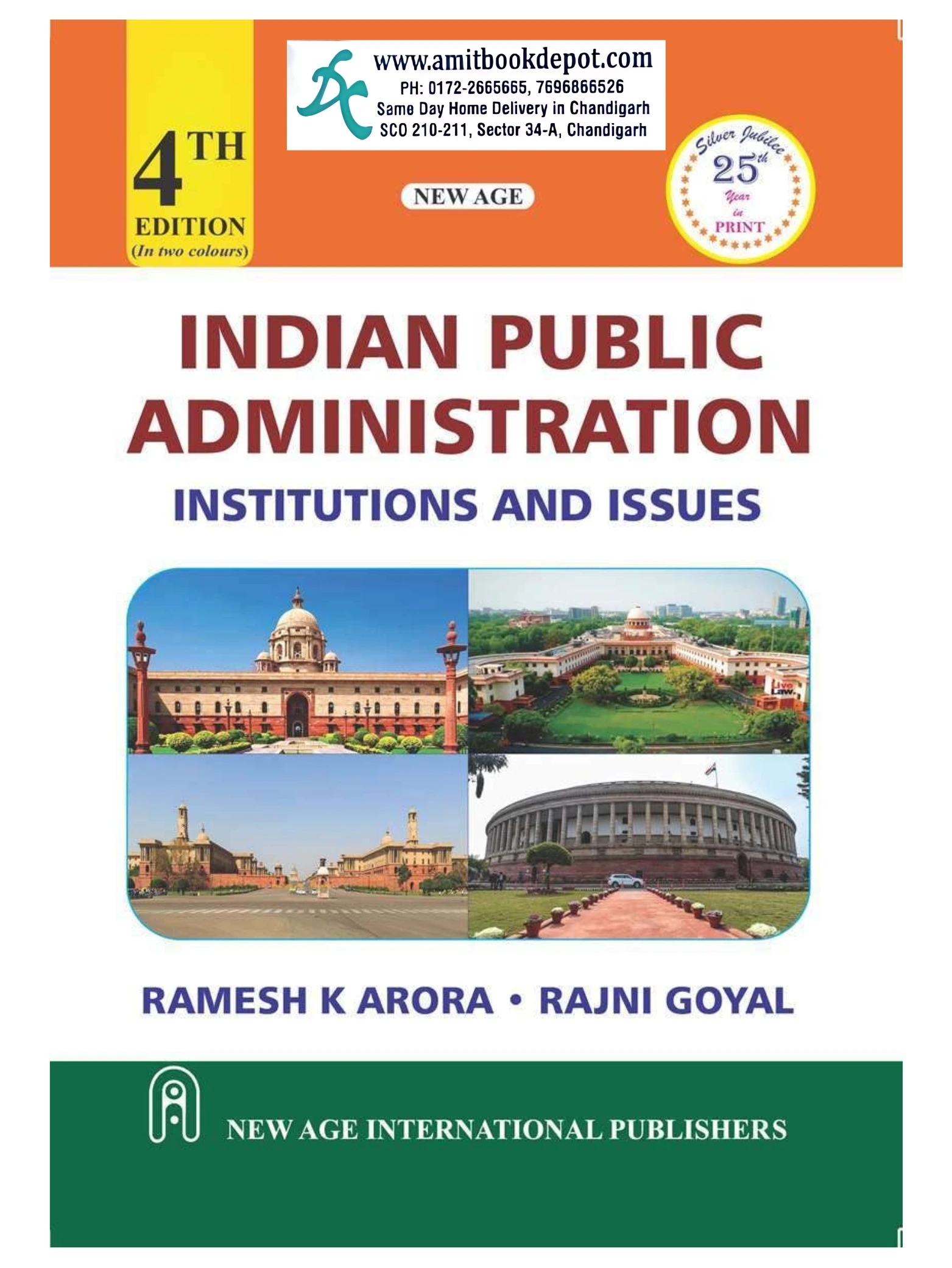
The book examines Kautilya’s administrative state, Mughal governance, and British rule, providing a historical foundation for understanding India’s contemporary public administration institutions.
It analyses constitutional provisions, legislative and administrative dimensions, and fiscal dynamics, highlighting areas of cooperation and conflict between the central and state governments.
The book explains the President’s constitutional, discretionary, and emergency powers, along with the real political position as a formal head of state.
The text analyses the Collector’s multi-faceted role as revenue officer, magistrate, development coordinator, and the changing relevance in contemporary governance.
It traces constitutional amendments, structural variations across states, and the struggle for effectiveness in grassroots planning and service delivery.
It examines NITI Aayog as the successor to the Planning Commission, focusing on cooperative federalism, state-led planning, and policy innovation.
It contrasts the dominance of generalist administrators with technical specialists, exploring issues of compatibility, hierarchy, and policy effectiveness.
The Comptroller and Auditor General is presented as the guardian of public purse, ensuring financial accountability through audit reports to Parliament.
The text analyses strategies like MGNREGA, watershed development, and poverty alleviation schemes, focusing on implementation gaps and outcomes.
It reviews major reform commissions, from the Administrative Reforms Commission to recent initiatives, assessing progress and pending challenges.
No Description Added
The book examines Kautilya’s administrative state, Mughal governance, and British rule, providing a historical foundation for understanding India’s contemporary public administration institutions.
It analyses constitutional provisions, legislative and administrative dimensions, and fiscal dynamics, highlighting areas of cooperation and conflict between the central and state governments.
The book explains the President’s constitutional, discretionary, and emergency powers, along with the real political position as a formal head of state.
The text analyses the Collector’s multi-faceted role as revenue officer, magistrate, development coordinator, and the changing relevance in contemporary governance.
It traces constitutional amendments, structural variations across states, and the struggle for effectiveness in grassroots planning and service delivery.
It examines NITI Aayog as the successor to the Planning Commission, focusing on cooperative federalism, state-led planning, and policy innovation.
It contrasts the dominance of generalist administrators with technical specialists, exploring issues of compatibility, hierarchy, and policy effectiveness.
The Comptroller and Auditor General is presented as the guardian of public purse, ensuring financial accountability through audit reports to Parliament.
The text analyses strategies like MGNREGA, watershed development, and poverty alleviation schemes, focusing on implementation gaps and outcomes.
It reviews major reform commissions, from the Administrative Reforms Commission to recent initiatives, assessing progress and pending challenges.