-
Mon-Fri: 10AM to 8PM 01722665665
-
My Account
-
-
0
Total :
₹ 0.00

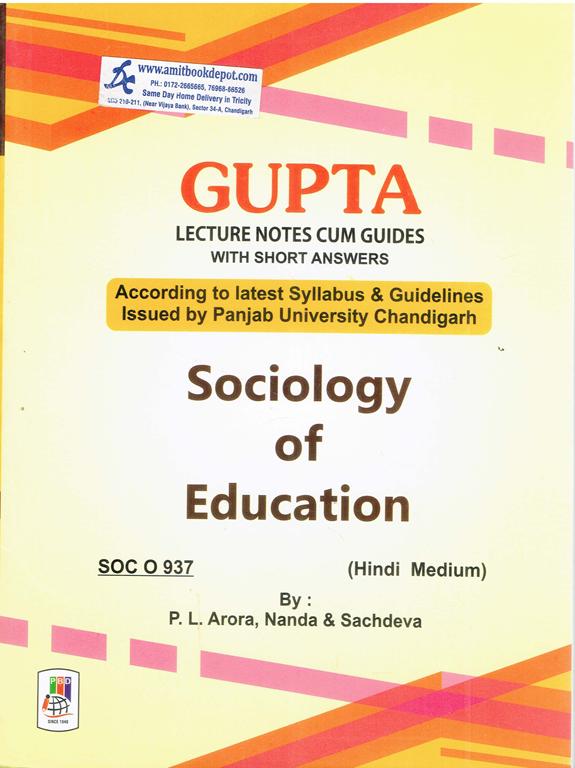

Yes, this book is specifically compiled and updated to cover the latest syllabus prescribed by Panjab University, Chandigarh, for the SOC O 937 paper.
Absolutely. This book is authored and published specifically for Hindi-medium students, ensuring that complex sociological terminology and theories are explained in clear, accessible Hindi.
Yes, it provides dedicated and detailed chapters on Gandhian, Functionalist, Conflict, and Postmodern theoretical approaches to the sociology of education.
Yes, Unit III of the book includes specific chapters on the crises in Indian higher education and the expansion of professional education and the private sector, as per the syllabus.
Yes, Unit IV is entirely dedicated to this, with separate chapters analyzing the relationship between education and caste, gender, class, as well as social mobility and equality of opportunity.
Yes, Chapter 9 in Unit II specifically deals with the role of education in empowering SCs, STs, and women, providing substantial content for detailed answers.
Yes, Chapter 4 in Unit I is dedicated to explaining these key sociological concepts within the context of education.
While it comprehensively covers the theoretical syllabus, it also encourages critical thinking by presenting different theoretical approaches and analyzing contemporary issues and crises in education.
Certainly. Unit II focuses entirely on this theme, exploring the role of education in social and human development from emerging perspectives.
Chapter 13 in Unit III is specifically dedicated to the UEE, discussing its goals, challenges, and significance within the Indian educational framework.
Yes, this book is specifically compiled and updated to cover the latest syllabus prescribed by Panjab University, Chandigarh, for the SOC O 937 paper.
Absolutely. This book is authored and published specifically for Hindi-medium students, ensuring that complex sociological terminology and theories are explained in clear, accessible Hindi.
Yes, it provides dedicated and detailed chapters on Gandhian, Functionalist, Conflict, and Postmodern theoretical approaches to the sociology of education.
Yes, Unit III of the book includes specific chapters on the crises in Indian higher education and the expansion of professional education and the private sector, as per the syllabus.
Yes, Unit IV is entirely dedicated to this, with separate chapters analyzing the relationship between education and caste, gender, class, as well as social mobility and equality of opportunity.
Yes, Chapter 9 in Unit II specifically deals with the role of education in empowering SCs, STs, and women, providing substantial content for detailed answers.
Yes, Chapter 4 in Unit I is dedicated to explaining these key sociological concepts within the context of education.
While it comprehensively covers the theoretical syllabus, it also encourages critical thinking by presenting different theoretical approaches and analyzing contemporary issues and crises in education.
Certainly. Unit II focuses entirely on this theme, exploring the role of education in social and human development from emerging perspectives.
Chapter 13 in Unit III is specifically dedicated to the UEE, discussing its goals, challenges, and significance within the Indian educational framework.