Categories
College Bookssss >
BA PU Chandigarh
BSC PU Chandigarh
MSC PU Chandigarh
BBA PU Chandigarh
MA PU Chandigarh
Medical Books
Engineering Books
Management Books
PGDCA Books
BCOM PU Chandigarh
MCOM PU Chandigarh
BCA PU Chandigarh
MCA PU Chandigarh
animate-books

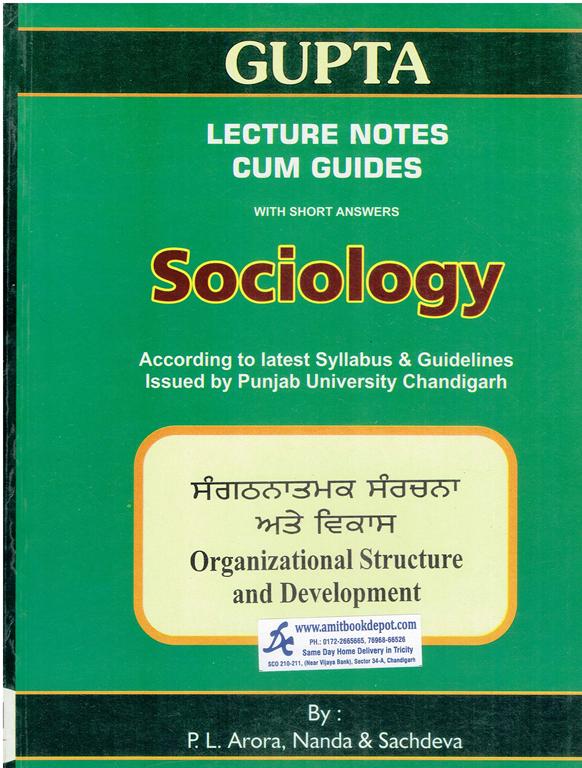
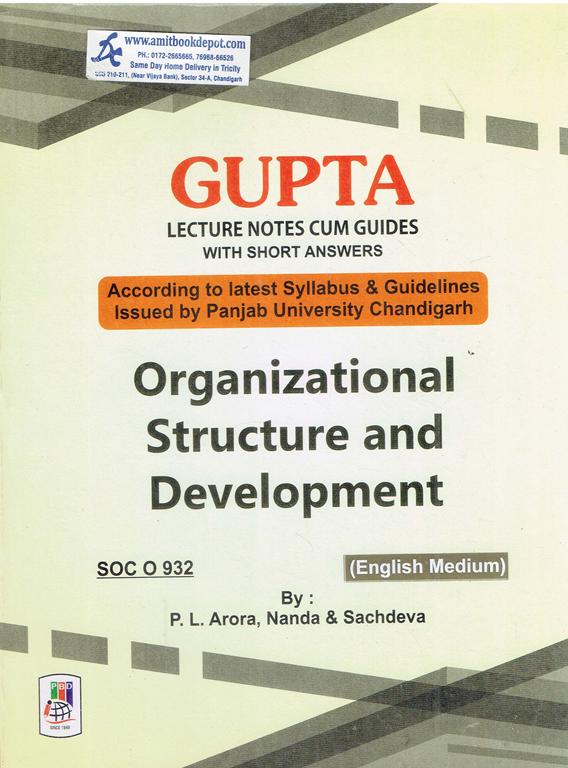
Gupta Organizational Structure and Development for MA Sociology 3rd Semester Panjab University Chandigarh (Punjabi Medium)

by Madhurima
₹300 ₹300.00(-/ off)

Rating & Reviews

23 Customer Review

Gupta Organizational Structure and Development is the definitive Punjabi-medium book for MA Sociology, 3rd Semester students of Panjab University, Chandigarh (Syllabus SOC O 932). Authored by P.L. Arora, Nanda, and Sachdeva, and published by Pepsu Book Depot, it provides complete coverage of all four units: Organizational Structure & Goals, Leadership & Power, Communication & IT, and Organizational Development. Designed for exam success, it includes key topics like bureaucratization, Weber's authority, Etzioni's compliance, formal/informal networks, and OD techniques, along with short answer questions. This book is an essential, syllabus-specific resource for mastering the course and excelling in exams.
Have Doubts Regarding This Product ? Ask Your Question

  • Q1
    Is this book strictly according to the latest MA Sociology 3rd Semester syllabus of Panjab University, Chandigarh?
    A1

    Yes, this book, "Gupta Organizational Structure and Development," is meticulously crafted to cover 100% of the latest prescribed syllabus for paper SOC O 932 for Punjabi-medium students.

  • Q2
    Is the entire text of the book written in Punjabi?
    A2

    Absolutely. This book is specifically published in the Punjabi medium, with all concepts, theories, and explanations presented in clear and academic Punjabi language.

  • Q3
    How are the chapters organized? Do they follow the university's unit pattern?
    A3

    The book is divided precisely into the four units outlined in the PU syllabus. The table of contents lists chapters under Unit-I to Unit-IV, ensuring structured and syllabus-aligned study.

  • Q4
    Are the theories of Max Weber and Amitai Etzioni covered in detail?
    A4

    Yes, Unit-II has specific chapters dedicated to "Authority: Weber" and "Power and Compliance: Etzioni," providing an in-depth analysis of these key sociological perspectives on power in organizations.

  • Q5
    Does this book cover contemporary topics like Information Technology's role in organizations?
    A5

    Yes, Unit-III is entirely devoted to "Communication and Information Technology in Organizations," including a full chapter on the role of IT in modern organizations.

  • Q6
    Is the topic of Organizational Development (OD) explained with its techniques?
    A6

    Yes, Unit-IV comprehensively covers Planned Change and OD, including its definition, nature, approaches, and specifically details both systemic and interpersonal techniques of OD.

  • Q7
    Is this book useful for private candidates of Panjab University?
    A7

    Yes, it is equally useful for private candidates. The book covers the entire theory syllabus required for the 80-mark paper, which is essential for private students.

  • Q8
    Does the book help in understanding complex terms like goal succession, bureaucratization, and formal networks?
    A8

    Yes, the book breaks down complex sociological concepts into understandable explanations in Punjabi, with dedicated chapters on each of these topics for clear conceptual clarity.

  • Q9
    Can this book be used as the sole primary text for preparing for the exam?
    A9

    Yes, it is designed as a comprehensive, self-contained guide that covers all theoretical aspects and exam-oriented questions as per the PU syllabus for this specific paper.

  • Q10
    Does the content address the paper pattern mentioned in the syllabus instructions?
    A10

    While the book provides the content knowledge, its unit-wise division and inclusion of short & long answer topics directly equip students to answer the 9-question exam pattern with internal choice.

0.00

0 Overall Rating
  • 5
    0
  • 4
    0
  • 3
    0
  • 2
    0
  • 1
    0

Try this product & share your review & thoughts

UNIT - I

1. Organizational Structure and Goals
2. Structural Dimensions—Complexity
3. Centralization and Bureaucratization
4. Professionalization
5. Organizational Goals and Types
6. Goal Multiplicity & Goal Conflict
7. Goal Succession and Displacement

UNIT - II

8. Organizational Regime and Environment
9. Leadership
10. Power in Organizations Authority: Weber
11. Power and Compliance: Etzioni
12. Environment: Definition and Types

UNIT - III

13. Communication and Information Technology in Organizations
14. Communication—Formal and Informal Networks
15. Role of Information Technology (IT) in Modern Organizations

UNIT - IV

16. Planned Change and Organizational Development (OD)
17. Organizational Development—Definition, Nature, and Approaches
18. Systemic Process and Techniques of Organizational Development
19. Interpersonal Process and Techniques of Organizational Development

Short Answer Type Questions

Latest Syllabus of Organizational Structure and Development for MA Sociology 3rd Semester Panjab University (PU) Chandigarh (Punjabi Medium)


SOC O 932: ORGANIZATIONAL STRUCTURE AND DEVELOPMENT

Objective

This course focuses on a) the structural dimensions of organization; b) the phenomena of organizational power and environment; c) the emerging salience of information technology in organizational communication; and d) the processes of organizational change and development.

INSTRUCTIONS FOR THE PAPER-SETTER AND THE CANDIDATES

(i) The theory question paper will be of 80 marks, and 20 marks will be for internal assessment. The duration of the paper will be 3 hours.
(ii) For private candidates, who have not been assessed earlier for internal assessment, the marks secured by them in the theory paper will proportionately be increased to the maximum marks of the paper in lieu of internal assessment.

The paper setter must put note (ii) in the question paper.

The syllabus has been divided into four units.
There shall be 9 questions in all. The first question is compulsory and shall be a short answer type containing 10 short questions spread over the whole syllabus to be answered in about 30 to 35 words each, carrying 20 marks, i.e., 2 marks each. The rest of the paper shall contain 4 units. Each unit shall have two long questions, and the candidates shall be given an internal choice of attempting one question from each unit—4 in all. Each question will carry 15 marks.

Course Outline

Unit-I

Organizational Structure and Goals:
Structural Dimensions—Complexity, Centralization, Bureaucratization, Professionalization;
Goals – Types, Goal Multiplicity and Goal Conflict, Goal Succession and Displacement

Unit II

Organizational Regime and Environment:
Leadership—Definition, Theories, and Styles
Power in Organizations – Authority (Weber)
Power and Compliance (Etzioni)
Environment—Definition and Types

Unit III

Communication and Information Technology in Organizations:
Communication—Formal and Informal Networks
Role of Information Technology (IT) in Modern Organizations

Unit IV

Planned Change and Organizational Development (OD):
Definition, Nature, and Approaches
The Process and Techniques of OD—Systemic and Interpersonal 

Product Name: Gupta Organizational Structure and Development for MA Sociology 3rd Semester (Punjabi Medium)

Authors: P. L. Arora, Nanda, Sachdeva

Publisher: Pepsu Book Depot

Course: MA Sociology, Semester III, Panjab University, Chandigarh

Book Code: SOC O 932


A Comprehensive, Syllabus-Specific book for Panjab University MA Sociology Students


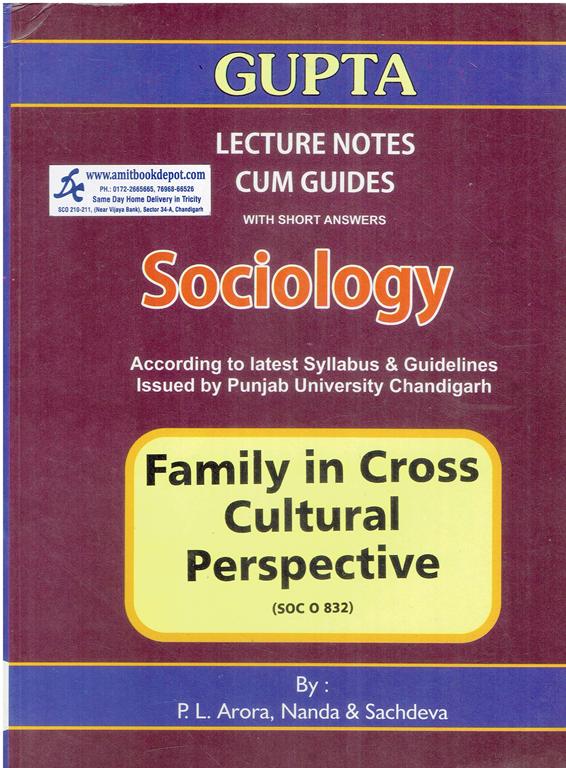
This book, "Gupta Organizational Structure and Development," authored by P.L. Arora, Nanda, and Sachdeva, is an authoritative and meticulously crafted book designed exclusively for the MA Sociology, 3rd Semester students of Panjab University (PU), Chandigarh, studying in the Punjabi medium. Published by Pepsu Book Depot, it stands as an indispensable resource that aligns perfectly with the latest prescribed syllabus (SOC O 932). It provides a complete, structured, and in-depth exploration of the theories, dimensions, and dynamics of modern organizations, tailored to meet the specific academic and examination requirements of Punjabi-medium students.


Exhaustive Coverage of the Prescribed Syllabus


The content is systematically organized into four distinct units, mirroring the university's course outline. This ensures that students can methodically prepare for their examinations without referring to multiple sources.


- Unit I delves into the foundational concepts of organizational structure and goals. It offers detailed chapters on key structural dimensions such as complexity, centralization, bureaucratization, and professionalization. It further explores organizational goals, analyzing their types, multiplicity, conflict, succession, and displacement, providing a solid theoretical base.


- Unit II examines the human and external factors influencing organizations. It covers organizational regime and environment, with dedicated chapters on leadership (including its definitions, theories, and styles), power in organizations (featuring Weber's concept of authority and Etzioni's compliance theory), and a thorough analysis of the organizational environment—its definition and various types.


- Unit III addresses the critical role of communication and information technology in organizations. It distinguishes between formal and informal communication networks and comprehensively discusses the transformative role of information technology (IT) in modern organizations, a vital topic in today's digital age.


- Unit IV focuses on evolution and improvement within organizations. It covers Planned Change and Organizational Development (OD), detailing its definition, nature, and approaches. The unit meticulously explains both the systemic process and techniques and the interpersonal process and techniques of organizational development, equipping students with knowledge about practical interventions.


Designed for Academic Excellence and Exam Success


This book is engineered not just for learning but for achieving high marks. It includes a dedicated section of short answer type questions that help students prepare for the compulsory first question in the exam paper, which carries 20 marks. The content presentation is clear, conceptual, and in fluent Punjabi, making complex sociological theories accessible. The language is academic yet student-friendly, ensuring clarity of concepts like bureaucratization, goal succession, power-compliance, and OD techniques.


Key Features of the Book:


1. 100% Syllabus Coverage: Fully updated to the latest Panjab University MA Sociology Semester 3 syllabus for Organizational Structure and Development (SOC O 932).

2. Punjabi Medium Focus: Written entirely in Punjabi, catering specifically to the linguistic needs of the students.

3. Structured Unit-Wise Presentation: Content is divided into four units as per the PU syllabus, facilitating easy and organized study.

4. Examination-Oriented Content: Includes short answer-type questions and covers all potential long-answer topics as per the paper pattern (9-question format with internal choice).

5. Authored by Experts: Written by seasoned academics P.L. Arora, Nanda, and Sachdeva, ensuring reliability and depth.

6. Trusted Publisher: Published by Pepsu Book Depot, a reputed name in academic publishing for Panjab University.

7. Theoretical and Applied Knowledge: Balances classic theories (Weber, Etzioni) with contemporary topics (IT in Organizations, OD Techniques).


For any student pursuing an MA in Sociology from Panjab University, Chandigarh, in the Punjabi medium, this book is the definitive guide. It is more than a book; it is a comprehensive study companion that bridges the gap between the university syllabus and successful exam performance, ensuring a thorough understanding of organizational structure, development, communication networks, and planned change.

UNIT - I

1. Organizational Structure and Goals
2. Structural Dimensions—Complexity
3. Centralization and Bureaucratization
4. Professionalization
5. Organizational Goals and Types
6. Goal Multiplicity & Goal Conflict
7. Goal Succession and Displacement

UNIT - II

8. Organizational Regime and Environment
9. Leadership
10. Power in Organizations Authority: Weber
11. Power and Compliance: Etzioni
12. Environment: Definition and Types

UNIT - III

13. Communication and Information Technology in Organizations
14. Communication—Formal and Informal Networks
15. Role of Information Technology (IT) in Modern Organizations

UNIT - IV

16. Planned Change and Organizational Development (OD)
17. Organizational Development—Definition, Nature, and Approaches
18. Systemic Process and Techniques of Organizational Development
19. Interpersonal Process and Techniques of Organizational Development

Short Answer Type Questions

Have Doubts Regarding This Product ? Ask Your Question

  • Q1
    Is this book strictly according to the latest MA Sociology 3rd Semester syllabus of Panjab University, Chandigarh?
    A1

    Yes, this book, "Gupta Organizational Structure and Development," is meticulously crafted to cover 100% of the latest prescribed syllabus for paper SOC O 932 for Punjabi-medium students.

  • Q2
    Is the entire text of the book written in Punjabi?
    A2

    Absolutely. This book is specifically published in the Punjabi medium, with all concepts, theories, and explanations presented in clear and academic Punjabi language.

  • Q3
    How are the chapters organized? Do they follow the university's unit pattern?
    A3

    The book is divided precisely into the four units outlined in the PU syllabus. The table of contents lists chapters under Unit-I to Unit-IV, ensuring structured and syllabus-aligned study.

  • Q4
    Are the theories of Max Weber and Amitai Etzioni covered in detail?
    A4

    Yes, Unit-II has specific chapters dedicated to "Authority: Weber" and "Power and Compliance: Etzioni," providing an in-depth analysis of these key sociological perspectives on power in organizations.

  • Q5
    Does this book cover contemporary topics like Information Technology's role in organizations?
    A5

    Yes, Unit-III is entirely devoted to "Communication and Information Technology in Organizations," including a full chapter on the role of IT in modern organizations.

  • Q6
    Is the topic of Organizational Development (OD) explained with its techniques?
    A6

    Yes, Unit-IV comprehensively covers Planned Change and OD, including its definition, nature, approaches, and specifically details both systemic and interpersonal techniques of OD.

  • Q7
    Is this book useful for private candidates of Panjab University?
    A7

    Yes, it is equally useful for private candidates. The book covers the entire theory syllabus required for the 80-mark paper, which is essential for private students.

  • Q8
    Does the book help in understanding complex terms like goal succession, bureaucratization, and formal networks?
    A8

    Yes, the book breaks down complex sociological concepts into understandable explanations in Punjabi, with dedicated chapters on each of these topics for clear conceptual clarity.

  • Q9
    Can this book be used as the sole primary text for preparing for the exam?
    A9

    Yes, it is designed as a comprehensive, self-contained guide that covers all theoretical aspects and exam-oriented questions as per the PU syllabus for this specific paper.

  • Q10
    Does the content address the paper pattern mentioned in the syllabus instructions?
    A10

    While the book provides the content knowledge, its unit-wise division and inclusion of short & long answer topics directly equip students to answer the 9-question exam pattern with internal choice.

Latest Syllabus of Organizational Structure and Development for MA Sociology 3rd Semester Panjab University (PU) Chandigarh (Punjabi Medium)


SOC O 932: ORGANIZATIONAL STRUCTURE AND DEVELOPMENT

Objective

This course focuses on a) the structural dimensions of organization; b) the phenomena of organizational power and environment; c) the emerging salience of information technology in organizational communication; and d) the processes of organizational change and development.

INSTRUCTIONS FOR THE PAPER-SETTER AND THE CANDIDATES

(i) The theory question paper will be of 80 marks, and 20 marks will be for internal assessment. The duration of the paper will be 3 hours.
(ii) For private candidates, who have not been assessed earlier for internal assessment, the marks secured by them in the theory paper will proportionately be increased to the maximum marks of the paper in lieu of internal assessment.

The paper setter must put note (ii) in the question paper.

The syllabus has been divided into four units.
There shall be 9 questions in all. The first question is compulsory and shall be a short answer type containing 10 short questions spread over the whole syllabus to be answered in about 30 to 35 words each, carrying 20 marks, i.e., 2 marks each. The rest of the paper shall contain 4 units. Each unit shall have two long questions, and the candidates shall be given an internal choice of attempting one question from each unit—4 in all. Each question will carry 15 marks.

Course Outline

Unit-I

Organizational Structure and Goals:
Structural Dimensions—Complexity, Centralization, Bureaucratization, Professionalization;
Goals – Types, Goal Multiplicity and Goal Conflict, Goal Succession and Displacement

Unit II

Organizational Regime and Environment:
Leadership—Definition, Theories, and Styles
Power in Organizations – Authority (Weber)
Power and Compliance (Etzioni)
Environment—Definition and Types

Unit III

Communication and Information Technology in Organizations:
Communication—Formal and Informal Networks
Role of Information Technology (IT) in Modern Organizations

Unit IV

Planned Change and Organizational Development (OD):
Definition, Nature, and Approaches
The Process and Techniques of OD—Systemic and Interpersonal 

0.00

0 Overall Rating
  • 5
    0
  • 4
    0
  • 3
    0
  • 2
    0
  • 1
    0

Try this product & share your review & thoughts

Top Trending Product

Related Product

Related Product

Related Blog Posts

Latest Blogs

Latest Blogs

blog-img
Classic Literature Reimagined: Discuss modern twists on classic novels.
Lorem ipsum dolor sit amet, consectetur adipiscing elit, sed do eiusmod tempor incididunt ut labore et dolore magna aliqua. Ut enim ad minim veniam, quis nostrud exercitation ullamco Lorem ipsum dolor sit amet, consectetur adipiscing elit, sed do eiusmod tempor incididunt ut labore et dolore magna aliqua. Utenim ad minim veniam, quis nostrud exercitation ullamco Lorem ipsum dolor sit amet, consecte...
Read more
Author name | 10 jan, 2025
blog-img
Classic Literature Reimagined: Discuss modern twists on classic novels.
Lorem ipsum dolor sit amet, consectetur adipiscing elit, sed do eiusmod tempor incididunt ut labore et dolore magna aliqua. Ut enim ad minim veniam, quis nostrud exercitation ullamco Lorem ipsum dolor sit amet, consectetur adipiscing elit, sed do eiusmod tempor incididunt ut labore et dolore magna aliqua. Utenim ad minim veniam, quis nostrud exercitation ullamco Lorem ipsum dolor sit amet, consecte...
Read more
Author name | 10 jan, 2025
blog-img
Classic Literature Reimagined: Discuss modern twists on classic novels.
Lorem ipsum dolor sit amet, consectetur adipiscing elit, sed do eiusmod tempor incididunt ut labore et dolore magna aliqua. Ut enim ad minim veniam, quis nostrud exercitation ullamco Lorem ipsum dolor sit amet, consectetur adipiscing elit, sed do eiusmod tempor incididunt ut labore et dolore magna aliqua. Utenim ad minim veniam, quis nostrud exercitation ullamco Lorem ipsum dolor sit amet, consecte...
Read more
Author name | 10 jan, 2025
blog-img
Classic Literature Reimagined: Discuss modern twists on classic novels.
Lorem ipsum dolor sit amet, consectetur adipiscing elit...
Read more
Author Name | 10 Jan, 2025
blog-img
Classic Literature Reimagined: Discuss modern twists on classic novels.
Lorem ipsum dolor sit amet, consectetur adipiscing elit...
Read more
Author Name | 10 Jan, 2025
blog-img
Classic Literature Reimagined: Discuss modern twists on classic novels.
Lorem ipsum dolor sit amet, consectetur adipiscing elit...
Read more
Author Name | 10 Jan, 2025
blog-img
Classic Literature Reimagined: Discuss modern twists on classic novels.
Lorem ipsum dolor sit amet, consectetur adipiscing elit...
Read more
Author Name | 10 Jan, 2025
blog-img
Classic Literature Reimagined: Discuss modern twists on classic novels.
Lorem ipsum dolor sit amet, consectetur adipiscing elit...
Read more
Author Name | 10 Jan, 2025
blog-img
Classic Literature Reimagined: Discuss modern twists on classic novels.
Lorem ipsum dolor sit amet, consectetur adipiscing elit...
Read more
Author Name | 10 Jan, 2025
blog-img
Classic Literature Reimagined: Discuss modern twists on classic novels.
Lorem ipsum dolor sit amet, consectetur adipiscing elit...
Read more
Author Name | 10 Jan, 2025
blog-img
Classic Literature Reimagined: Discuss modern twists on classic novels.
Lorem ipsum dolor sit amet, consectetur adipiscing elit...
Read more
Author Name | 10 Jan, 2025
blog-img
Classic Literature Reimagined: Discuss modern twists on classic novels.
Lorem ipsum dolor sit amet, consectetur adipiscing elit...
Read more
Author Name | 10 Jan, 2025