-
Mon-Fri: 10AM to 8PM 01722665665
-
My Account
-
-
0
Total :
₹ 0.00

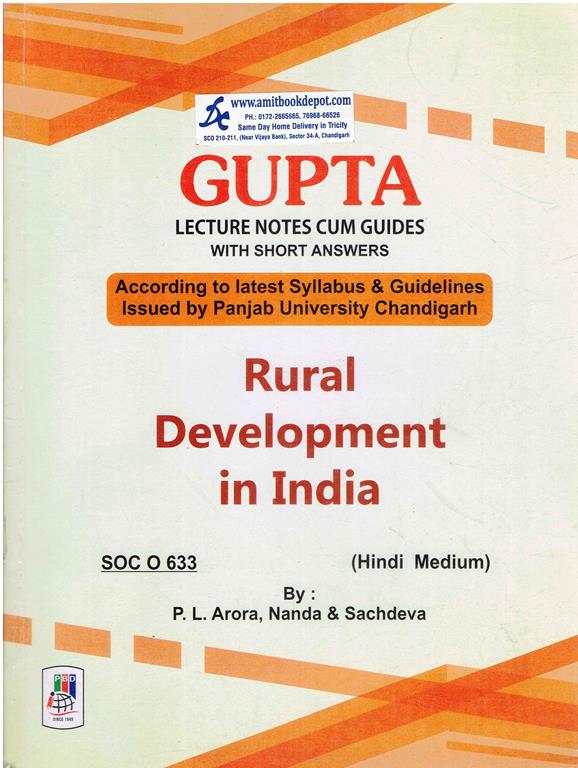
Yes, this book is based on the latest syllabus for SOC C 633 and is structured keeping the prescribed paper pattern in mind.
Yes, Unit-III and IV contain detailed and analytical chapters on these topics, helping to understand modern challenges in rural development.
Yes, this book serves as an excellent foundational reference for units related to Rural Sociology, Agrarian Sociology, and Social Change in India.
Yes, the entire text is in Hindi. Key sociological concepts and terminology are explained in simple and clear Hindi language.
Yes, Unit-III offers a comprehensive historical analysis of peasant movements from pre-independence to the present, providing essential context for understanding contemporary farmers' movements.
Yes, Unit-II contains dedicated chapters on major rural development and poverty alleviation schemes, analyzing their role and impact.
Yes, a dedicated chapter examines the evolving role and significance of Panchayati Raj Institutions in rural development and local governance.
It goes beyond basic theory. The book presents different perspectives (Liberal, Marxist, Gandhian) and critically analyzes policies, movements, and market impacts.
Yes, Unit-IV explicitly links market forces, policies, and marginalization to the challenges of achieving sustainable rural development, addressing core issues of farmer distress.
While tailored for PU syllabus, the core content covers universal themes of Indian rural development—perspectives, state policy, movements, and globalization—making it broadly useful for any student of the subject in Hindi.
No Description Added
Yes, this book is based on the latest syllabus for SOC C 633 and is structured keeping the prescribed paper pattern in mind.
Yes, Unit-III and IV contain detailed and analytical chapters on these topics, helping to understand modern challenges in rural development.
Yes, this book serves as an excellent foundational reference for units related to Rural Sociology, Agrarian Sociology, and Social Change in India.
Yes, the entire text is in Hindi. Key sociological concepts and terminology are explained in simple and clear Hindi language.
Yes, Unit-III offers a comprehensive historical analysis of peasant movements from pre-independence to the present, providing essential context for understanding contemporary farmers' movements.
Yes, Unit-II contains dedicated chapters on major rural development and poverty alleviation schemes, analyzing their role and impact.
Yes, a dedicated chapter examines the evolving role and significance of Panchayati Raj Institutions in rural development and local governance.
It goes beyond basic theory. The book presents different perspectives (Liberal, Marxist, Gandhian) and critically analyzes policies, movements, and market impacts.
Yes, Unit-IV explicitly links market forces, policies, and marginalization to the challenges of achieving sustainable rural development, addressing core issues of farmer distress.
While tailored for PU syllabus, the core content covers universal themes of Indian rural development—perspectives, state policy, movements, and globalization—making it broadly useful for any student of the subject in Hindi.