-
Mon-Fri: 10AM to 8PM 01722665665
-
My Account
-
-
0
Total :
₹ 0.00

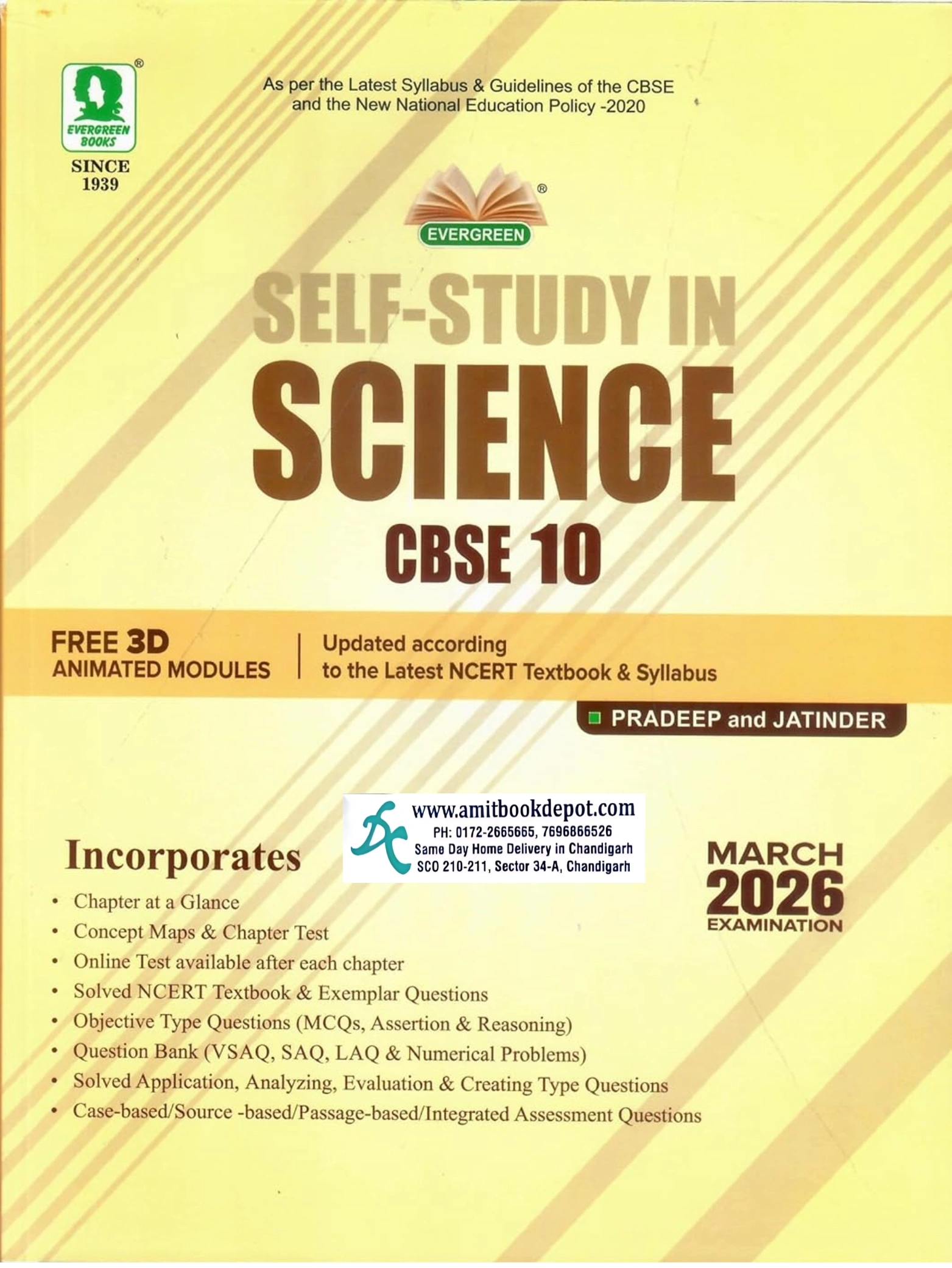




Absolutely. The book is strictly based on the latest CBSE syllabus and course structure prescribed for the academic year 2025-26.
The book includes a dedicated section of HOTS questions at the end of each chapter, which challenge students to apply concepts to new situations, a crucial skill for scoring high marks.
Yes, all diagrams are drawn clearly and accurately with proper labeling, making them easy for students to understand and replicate in their board examinations.
Yes, the book is comprehensively structured into the five official CBSE themes: Materials, The World of the Living, Natural Phenomena, How Things Work, and Natural Resources.
While its primary focus is the CBSE board exam, the strong conceptual foundation and inclusion of HOTS questions make it a good starting resource for competitive exams like NTSE.
Each chapter includes value-based questions that test the student's ability to connect scientific concepts with ethical and social values, a key component of the CBSE question paper.
Yes, topics like Electricity, Light, and others contain numerous solved numerical examples that explain the application of formulas like Ohm's Law, Lens Formula, and Mirror Formula.
The language is deliberately kept clear, concise, and student-friendly to ensure self-study is effective without constant external help.
Yes, the chapter on Chemical Reactions and Equations, and others, focus on presenting balanced chemical equations and categorizing reactions in a structured, easy-to-learn manner.
Yes, the chapter on Heredity provides a clear and concise explanation of Mendel's contributions and the laws of inheritance, tailored for the Class 10 level.
Absolutely. The book is strictly based on the latest CBSE syllabus and course structure prescribed for the academic year 2025-26.
The book includes a dedicated section of HOTS questions at the end of each chapter, which challenge students to apply concepts to new situations, a crucial skill for scoring high marks.
Yes, all diagrams are drawn clearly and accurately with proper labeling, making them easy for students to understand and replicate in their board examinations.
Yes, the book is comprehensively structured into the five official CBSE themes: Materials, The World of the Living, Natural Phenomena, How Things Work, and Natural Resources.
While its primary focus is the CBSE board exam, the strong conceptual foundation and inclusion of HOTS questions make it a good starting resource for competitive exams like NTSE.
Each chapter includes value-based questions that test the student's ability to connect scientific concepts with ethical and social values, a key component of the CBSE question paper.
Yes, topics like Electricity, Light, and others contain numerous solved numerical examples that explain the application of formulas like Ohm's Law, Lens Formula, and Mirror Formula.
The language is deliberately kept clear, concise, and student-friendly to ensure self-study is effective without constant external help.
Yes, the chapter on Chemical Reactions and Equations, and others, focus on presenting balanced chemical equations and categorizing reactions in a structured, easy-to-learn manner.
Yes, the chapter on Heredity provides a clear and concise explanation of Mendel's contributions and the laws of inheritance, tailored for the Class 10 level.