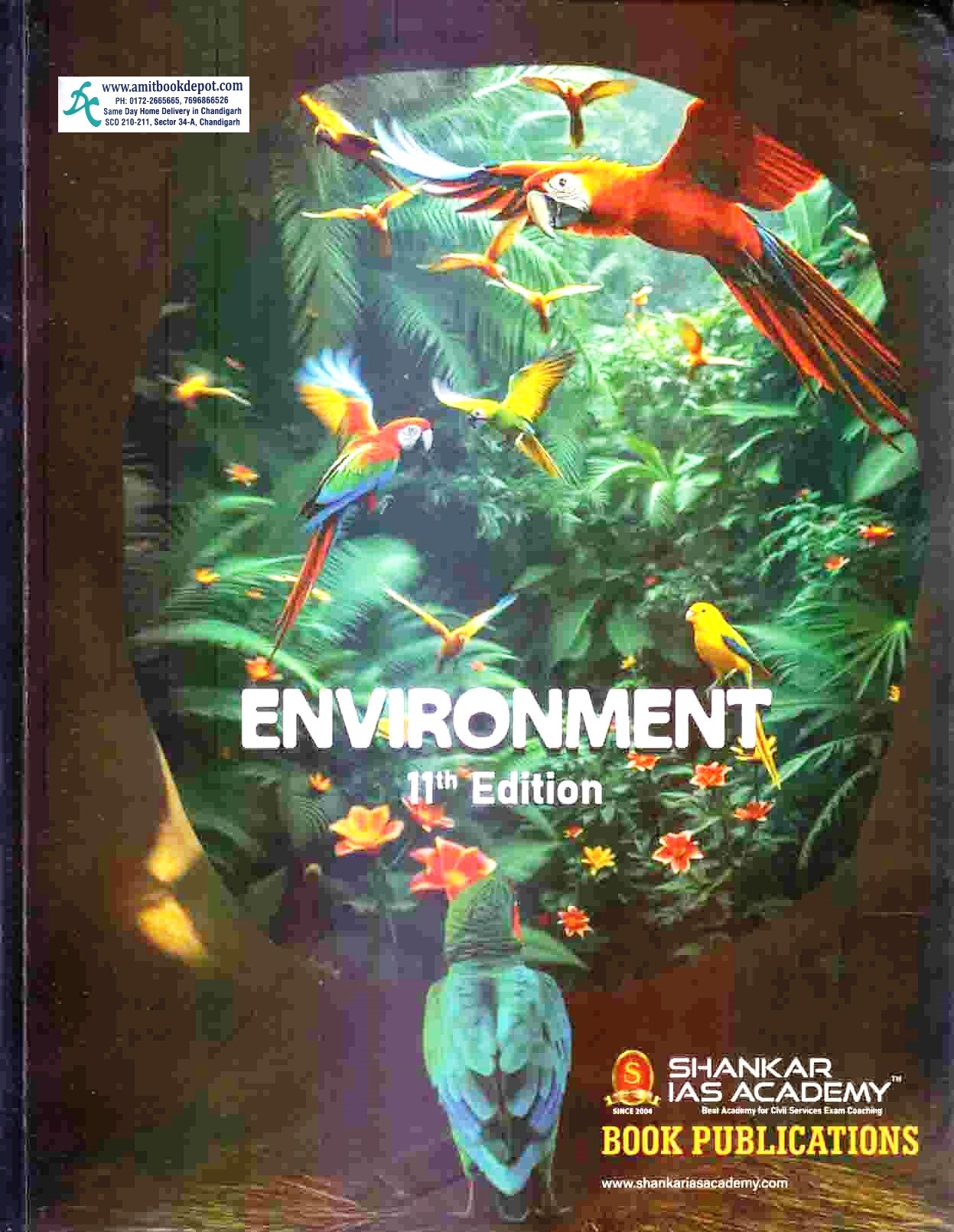
Shankar Environment for Competitive Exams (11th Edition) by Shankar IAS Academy is a comprehensive guide designed for UPSC, State PSCs, and other competitive examinations. This book is an authoritative resource covering all critical aspects of environmental studies, ecology, biodiversity, climate change, legislation, and sustainable development, aligning with the latest exam patterns and syllabi.
Key Features of the Book
1. Structured Content: Divided into six well-organized parts, ensuring systematic learning.
2. Updated Information: Includes the latest developments in environmental policies, international conventions, and climate change initiatives.
3. Exam-Oriented Approach: Covers previous year questions (PYQs) and important topics frequently asked in UPSC Prelims and Mains.
4. Illustrative Maps and Diagrams: Enhances understanding of geographical and ecological concepts.
5. Concise and Clear Language: Simplifies complex topics for easy comprehension and quick revision.
Part 1: Ecology
This section introduces fundamental concepts of ecology and ecosystems, including terrestrial and aquatic ecosystems. It covers environmental pollution, its causes, effects, and mitigation strategies, along with Environmental Impact Assessment (EIA) processes.
Part 2: Biodiversity
A detailed exploration of India’s rich plant and animal diversity, this section discusses biodiversity conservation, threats to species, and national/international efforts to protect wildlife. Topics like endangered species, biosphere reserves, and conservation programs are extensively covered.
Part 3: Climate Change
This part provides an in-depth analysis of climate change, its global impacts, and mitigation strategies. It includes international agreements like the Paris Agreement, Kyoto Protocol, and India’s role in climate action.
Part 4: Legislations, Conventions, and Organizations
A crucial section for UPSC aspirants, it details important environmental laws, international conventions (Ramsar, CITES, CBD), and national policies (Wildlife Protection Act, Forest Conservation Act, etc.).
Part 5: Sustainable Development
Focuses on Sustainable Development Goals (SDGs), India’s progress, and sustainable agricultural practices. It aligns with global environmental governance frameworks.
Part 6: Annexure
Includes state-wise ecological maps and previous year questions (PYQs) for practice, helping students assess their preparation.
Why Choose Shankar Environment Book?
1. Trusted by UPSC Toppers: Recommended by successful candidates for its accuracy and relevance.
2. Complete Coverage: No need for additional resources on environment and ecology.
3. Latest Updates: Incorporates recent government policies, COP meetings, and environmental summits.
4. User-Friendly Format: Bullet points, tables, and highlighted keywords for quick revision.
This book is a must-have for civil service aspirants, environmental science students, and professionals preparing for competitive exams. It ensures a strong conceptual foundation while keeping learners updated with current environmental issues.









.jpg)