-
Mon-Fri: 10AM to 8PM 01722665665
-
My Account
-
-
0
Total :
₹ 0.00

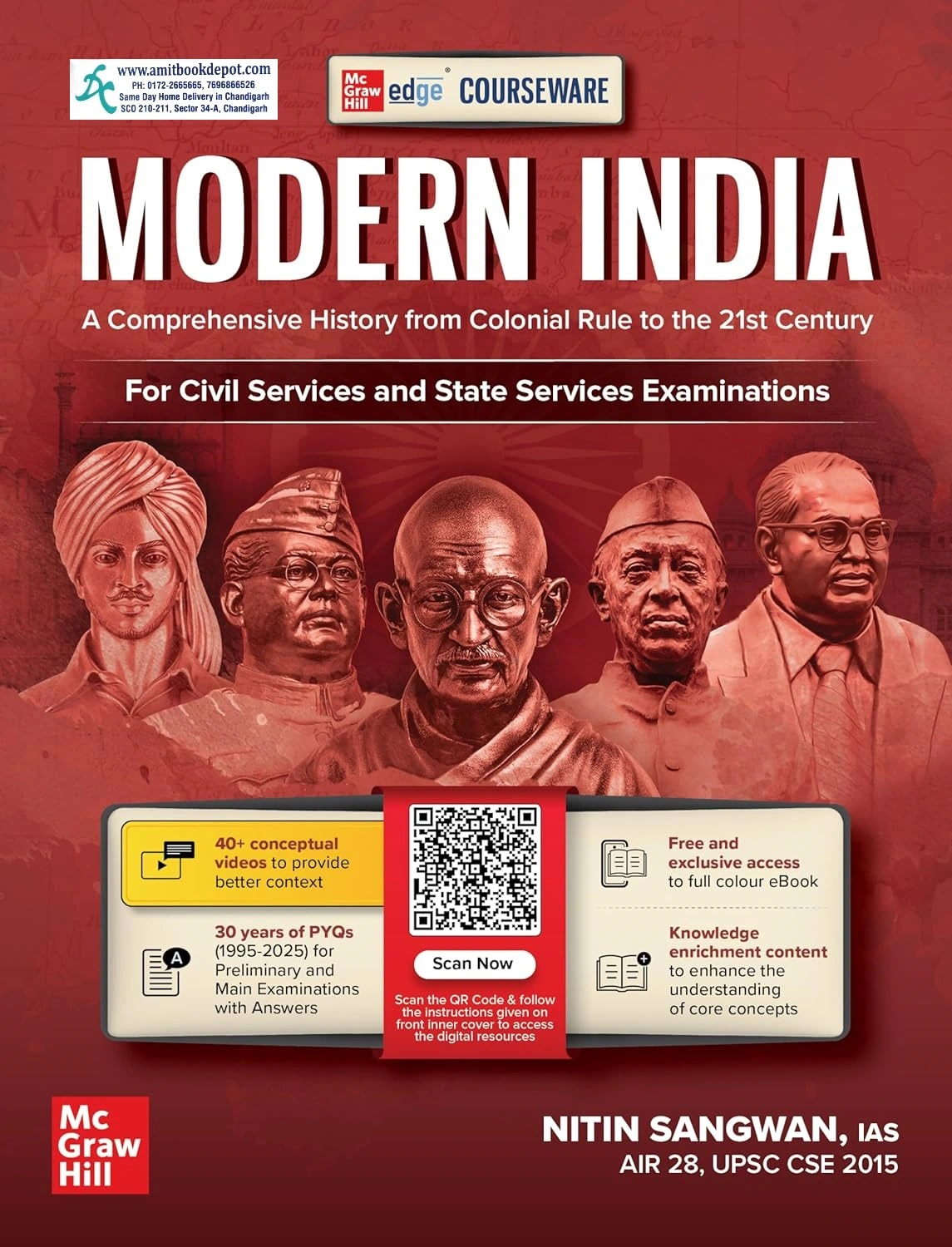

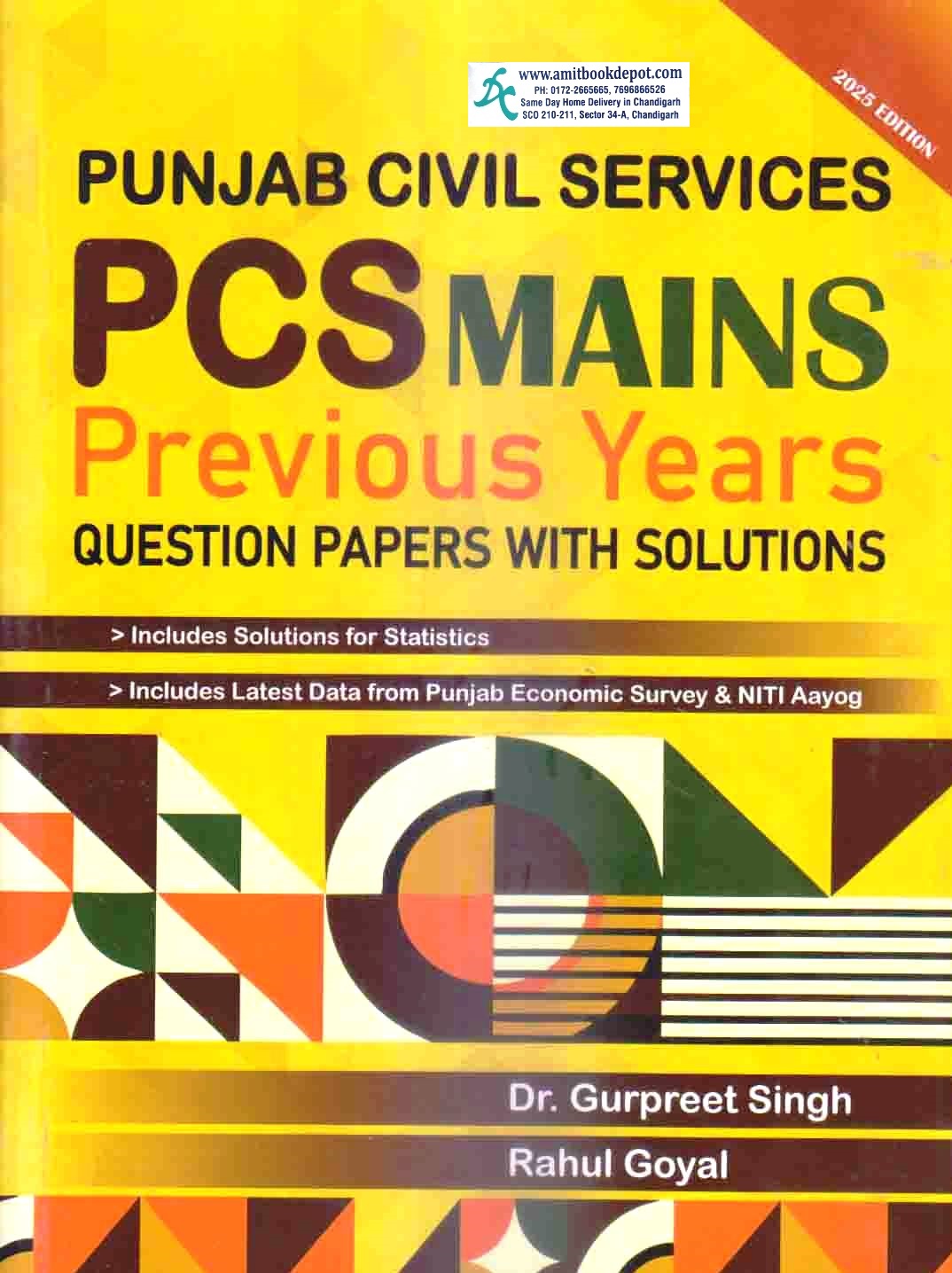
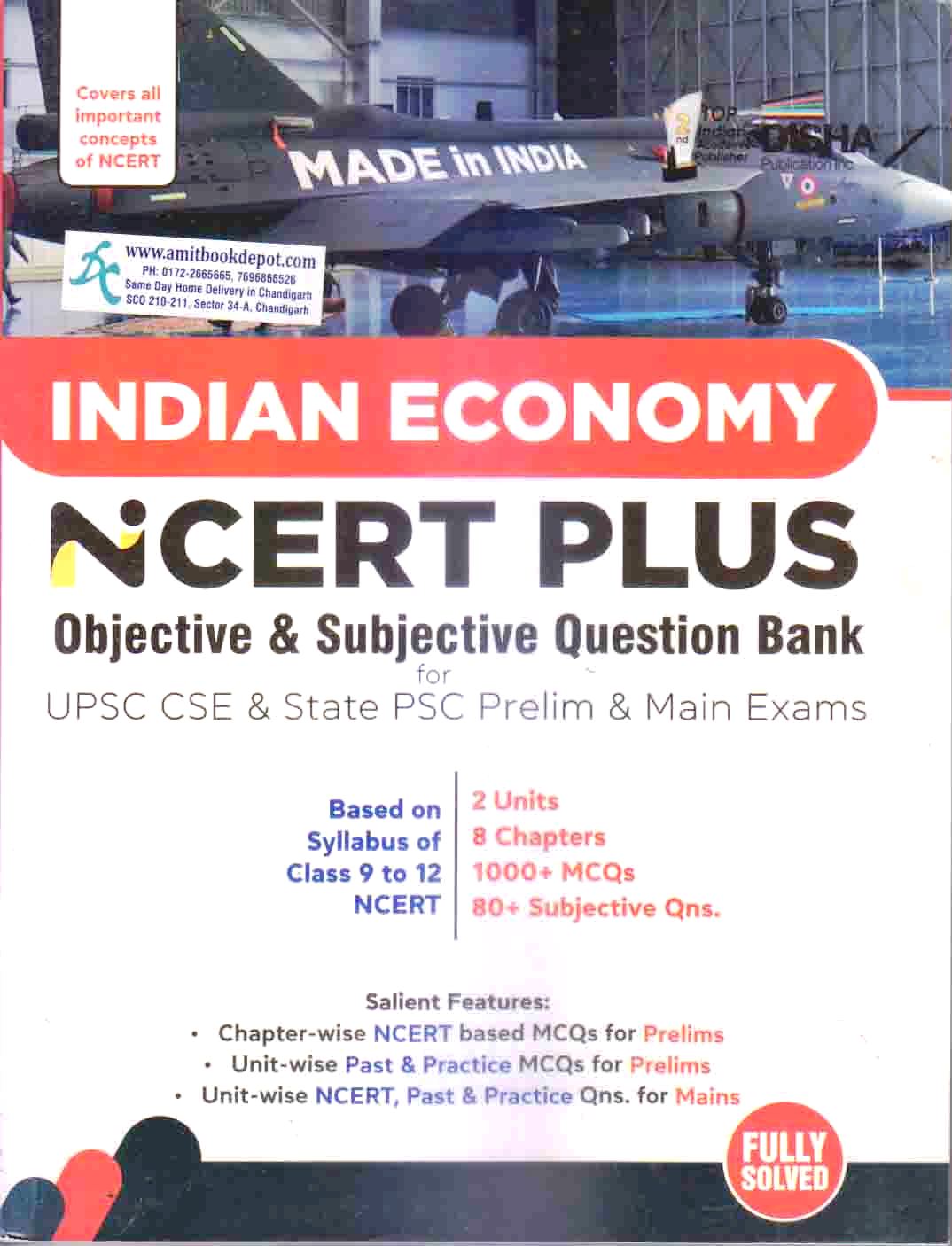
Modern India by Nitin Singhania (McGraw-Hill). It spans colonial rule, nationalism, independence, and post-1991 economic changes.
Yes. Chapters 13–16 cover independence, nation consolidation, post-Nehru India, and liberalisation—unlike many books ending at 1947.
Appendix III provides a detailed chronology of constitutional acts from Regulating Act 1773 to Government of India Act 1935.
Chapter 10 details Gandhian politics (Non-Cooperation, Dandi). Chapter 11 covers revolutionary and leftist streams outside Gandhi’s influence.
Appendix IV lists all Governor-Generals (1773–1858) and Viceroys (1858–1947) with their key events—ideal for quick memory recall.
Chapter 7 covers deindustrialisation, drain of wealth, land revenue systems (Permanent, Ryotwari, Mahalwari), and famine causation.
Chapter 5 (Social Uprising) and Chapter 6 (Religion, Caste and Society) discuss Brahmo Samaj, Arya Samaj, and anti-caste movements.
Yes. Appendix V provides a sequential list of Congress session presidents from 1885 to post-independence, useful for modern history MCQs.
Chapter 14 covers integration of princely states, linguistic reorganisation, and framing of the Constitution—critical for post-1947 papers.
Yes. Chapter 16 covers economic reforms, LPG (Liberalisation, Privatisation, Globalisation) policy effects, and contemporary India for UPSC.
No Description Added
Modern India by Nitin Singhania (McGraw-Hill). It spans colonial rule, nationalism, independence, and post-1991 economic changes.
Yes. Chapters 13–16 cover independence, nation consolidation, post-Nehru India, and liberalisation—unlike many books ending at 1947.
Appendix III provides a detailed chronology of constitutional acts from Regulating Act 1773 to Government of India Act 1935.
Chapter 10 details Gandhian politics (Non-Cooperation, Dandi). Chapter 11 covers revolutionary and leftist streams outside Gandhi’s influence.
Appendix IV lists all Governor-Generals (1773–1858) and Viceroys (1858–1947) with their key events—ideal for quick memory recall.
Chapter 7 covers deindustrialisation, drain of wealth, land revenue systems (Permanent, Ryotwari, Mahalwari), and famine causation.
Chapter 5 (Social Uprising) and Chapter 6 (Religion, Caste and Society) discuss Brahmo Samaj, Arya Samaj, and anti-caste movements.
Yes. Appendix V provides a sequential list of Congress session presidents from 1885 to post-independence, useful for modern history MCQs.
Chapter 14 covers integration of princely states, linguistic reorganisation, and framing of the Constitution—critical for post-1947 papers.
Yes. Chapter 16 covers economic reforms, LPG (Liberalisation, Privatisation, Globalisation) policy effects, and contemporary India for UPSC.