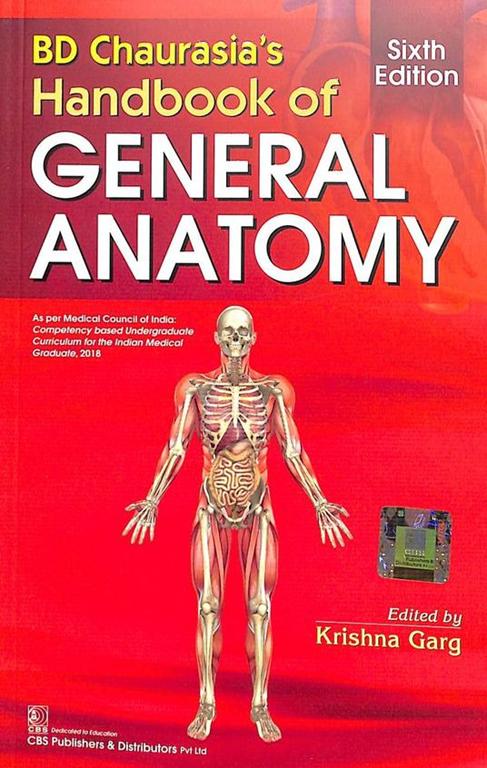
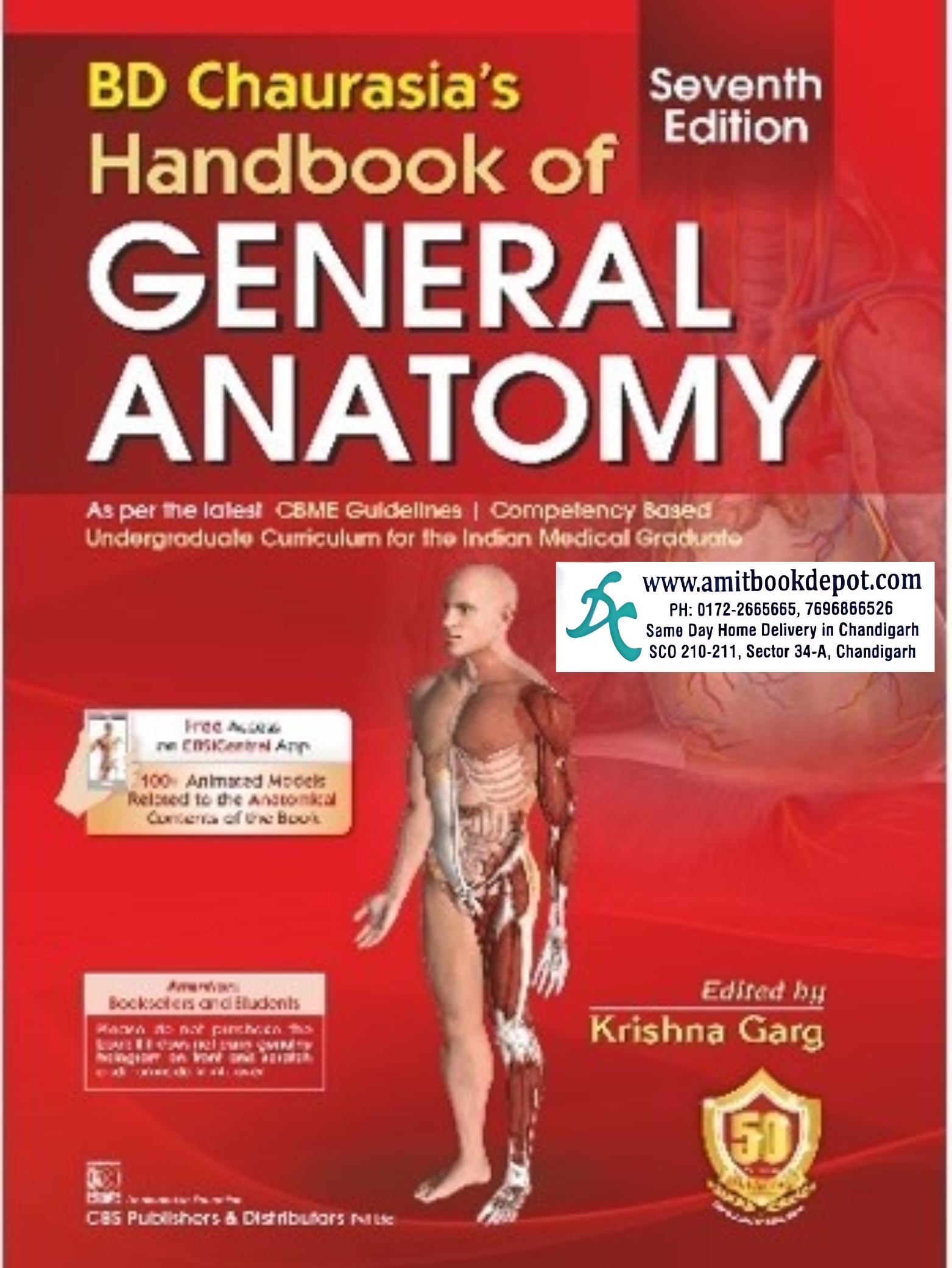
Yes, absolutely. This handbook is specifically designed as a fundamental textbook for first-year MBBS students, covering all essential topics of General and Gross Anatomy as per the standard curriculum.
Yes, the 7th Edition features an "Index of Competencies" at the beginning, aligning its content with the modern CBME pattern followed by medical institutes.
Yes, Chapter 7 provides a comprehensive overview of the Nervous System, including the Central & Peripheral Nervous Systems, Autonomic Nervous System, and relevant Clinical Anatomy.
Yes, Chapter 16, "Principles of Radiography," covers diagnostic techniques including X-rays, MRI, and PET scans, explaining their anatomical basis.
Yes, Chapter 17 is dedicated to "Genetics," covering chromosomes, DNA, and molecular regulation of development, connecting basic anatomy with its genetic foundations.
Certainly. The book covers all general anatomical principles that are a crucial part of the BDS curriculum, making it an excellent resource for dental students.
Yes, Chapter 5 on the Circulatory System details arteries, veins, capillaries, anastomoses, and angiosomes, complete with its clinical anatomy.
Yes, Chapter 12, "Sensory Organs," provides anatomical descriptions of the Tongue, Nose, Ear, and Eye.
Yes, it is highly recommended for Physiotherapy students. Its detailed coverage of the musculoskeletal system (bones, joints, muscles), nervous system, and surface anatomy is directly relevant to their coursework.
Yes, the book is well-known for its clear, concise, and accurately labeled illustrations and diagrams that greatly aid in visualizing and understanding anatomical structures.
No Description Added
Yes, absolutely. This handbook is specifically designed as a fundamental textbook for first-year MBBS students, covering all essential topics of General and Gross Anatomy as per the standard curriculum.
Yes, the 7th Edition features an "Index of Competencies" at the beginning, aligning its content with the modern CBME pattern followed by medical institutes.
Yes, Chapter 7 provides a comprehensive overview of the Nervous System, including the Central & Peripheral Nervous Systems, Autonomic Nervous System, and relevant Clinical Anatomy.
Yes, Chapter 16, "Principles of Radiography," covers diagnostic techniques including X-rays, MRI, and PET scans, explaining their anatomical basis.
Yes, Chapter 17 is dedicated to "Genetics," covering chromosomes, DNA, and molecular regulation of development, connecting basic anatomy with its genetic foundations.
Certainly. The book covers all general anatomical principles that are a crucial part of the BDS curriculum, making it an excellent resource for dental students.
Yes, Chapter 5 on the Circulatory System details arteries, veins, capillaries, anastomoses, and angiosomes, complete with its clinical anatomy.
Yes, Chapter 12, "Sensory Organs," provides anatomical descriptions of the Tongue, Nose, Ear, and Eye.
Yes, it is highly recommended for Physiotherapy students. Its detailed coverage of the musculoskeletal system (bones, joints, muscles), nervous system, and surface anatomy is directly relevant to their coursework.
Yes, the book is well-known for its clear, concise, and accurately labeled illustrations and diagrams that greatly aid in visualizing and understanding anatomical structures.