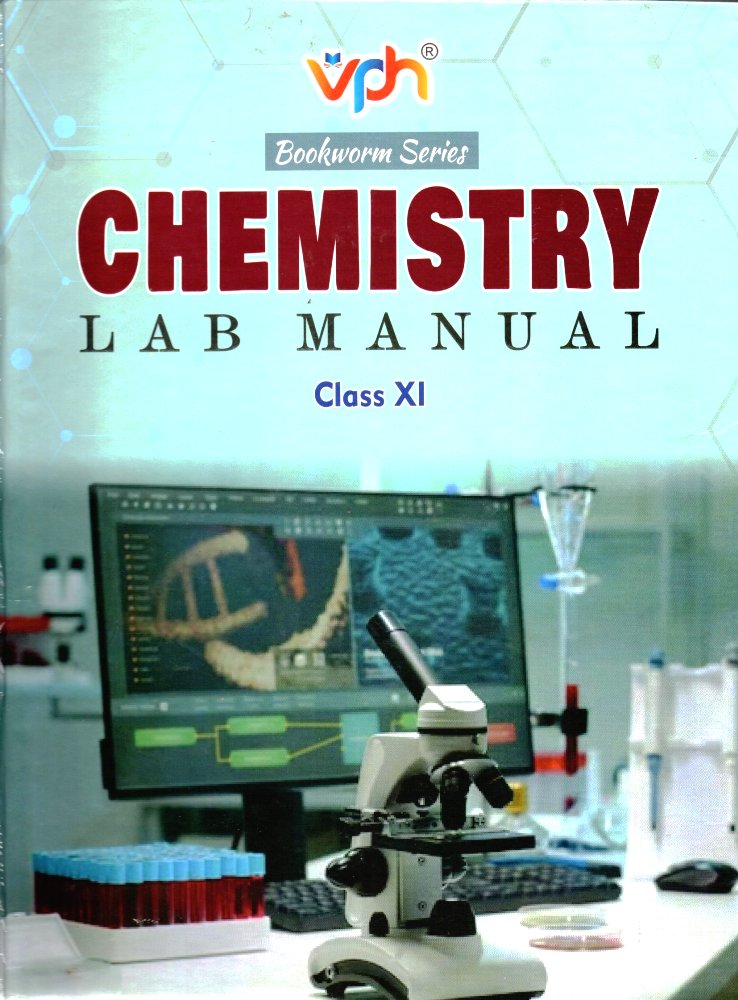
Vohra bookworm series chemistry lab manual class 11th
Vohra bookworm series chemistry lab manual class 11th
by Madhurima
₹275₹275.00(-/
off)
Rating & Reviews
23 Customer Review
The Vohra Bookworm Series Chemistry Lab Manual Class 11 by Ms Tejinder Sondhi (Vohra Publishing House) is a comprehensive guide for CBSE practical exams. It covers basic laboratory techniques, purification via crystallisation, pH experiments, chemical equilibrium, quantitative estimation (titration), and qualitative analysis of salts and organic compounds. Includes 8 investigatory projects on water testing, soap foaming, and juice acidity. Ideal for mastering melting point, boiling point, and titration skills. A must-have for systematic lab preparation.
Product: Vohra Bookworm Series Chemistry Lab Manual Class 11
Author: Ms Tejinder Sondhi
Publisher: Vohra Publishing House
The Vohra Bookworm Series Chemistry Lab Manual Class 11 is a meticulously crafted, curriculum-aligned resource designed to build foundational laboratory skills and conceptual clarity for Class 11 students. Authored by Ms Tejinder Sondhi and published by Vohra Publishing House, this manual serves as an indispensable guide for performing practical experiments as per the latest syllabus while also encouraging scientific enquiry through structured investigatory projects.
This lab manual is structured to progressively introduce students to essential techniques. Section A focuses on basic laboratory techniques, including cutting and bending a glass tube, rounding off its edges, drawing a jet, and boring a cork. Mastery of these core skills ensures safe and precise handling of equipment, forming the bedrock for all advanced chemistry practicals.
Moving into Section B, the manual delves into the characterisation and purification of chemical substances. Students learn to determine the melting point and boiling point of organic compounds—critical parameters for identifying purity. Detailed procedures for the crystallisation of impure samples are provided, covering potash alum, copper sulphate (blue vitriol), and benzoic acid, reinforcing the concept of purification through hands-on learning.
Section C is dedicated to pH experiments, a vital area in analytical chemistry. Using pH paper and a universal indicator, students determine the pH of fruit juices, acids, bases, and salt solutions. The manual further guides learners through comparing the pH of strong versus weak acids, studying pH changes during titration of HCl with NaOH, and observing the common ion effect on weak acids and bases. These experiments build a strong foundation in acid-base chemistry and equilibrium concepts.
Section D explores chemical equilibrium. Through experiments involving the shift in equilibrium between ferric and thiocyanate ions and between cobalt and chloride ions, students observe Le Chatelier’s principle in action by changing ion concentrations. This visual, hands-on approach demystifies dynamic equilibrium.
For quantitative estimation (Section E), the manual provides step-by-step methods to prepare standard solutions of oxalic acid and sodium carbonate. Subsequently, students determine the strength of given NaOH and HCl solutions through titration against these primary standards. This section develops precision in volumetric analysis, a key skill for higher classes and competitive exams.
Section F covers qualitative analysis. Part I details the systematic detection of one cation (from Pb²⁺, Cu²⁺, Al³⁺, Fe³⁺, etc.) and one anion (such as Cl⁻, Br⁻, CO₃²⁻, NO₃⁻) in a given salt. Part II introduces detection of elements—nitrogen, sulphur, and chlorine—in organic compounds using Lassaigne’s test.
A standout feature is the dedicated investigatory projects section. Eight carefully chosen projects, including checking bacterial contamination in drinking water, studying water purification methods, testing water hardness, foaming capacity of soaps, evaporation rates, acidity of tea, effects of acids and bases on fibre tensile strength, and analysis of fruit juices, encourage students to apply conceptual knowledge to real-world scenarios. This aligns with the syllabus requirement for open-ended, enquiry-based learning.
Aligned fully with the practical syllabus, this manual emphasises microchemical methods wherever possible. Every experiment is presented with clear aim, apparatus, procedure, observation table, and viva-voce questions. The Vohra Bookworm Series Chemistry Lab Manual Class 11 is an essential resource for achieving excellence in practical examinations and developing a genuine scientific temper.
Does this manual cover glass tube cutting and bending?
A1
Yes, Section A details cutting glass tubes, rounding edges, bending at angles, drawing jets, and boring corks—essential basic laboratory techniques for Class 11.
Q2
Which purification method is explained for impure samples?
A2
Crystallization. Experiments for potash alum, copper sulphate, and benzoic acid are provided to purify crude samples effectively.
Q3
How does this book teach pH determination?
A3
Using pH paper and universal indicator, it covers pH of juices, acids, bases, and salts, plus strong vs. weak acid comparison and titration pH changes.
Q4
Does the manual cover chemical equilibrium shifts?
A4
Yes. Experiments show equilibrium shifts between ferric-thiocyanate ions and cobalt-chloride ions by changing ion concentration.
Q5
How do I prepare a standard oxalic acid solution?
A5
Experiment 5.1 provides step-by-step method to prepare 250 mL of 0.1 M oxalic acid solution using a mechanical or electronic balance.
Q6
Can I learn titration of NaOH and HCl from this book?
A6
Yes. Experiment 5.2 determines NaOH strength against oxalic acid; Experiment 5.4 determines HCl strength against sodium carbonate.
Q7
Does it teach detection of elements in organic compounds?
A7
Experiment 6.2 covers detection of nitrogen, sulphur, and chlorine in organic compounds via Lassaigne’s test.
Q8
Does it teach detection of elements in organic compounds?
A8
Experiment 6.2 covers detection of nitrogen, sulphur, and chlorine in organic compounds via Lassaigne’s test.
Q9
Does this manual explain water hardness testing?
A9
Project 3 covers testing hardness, iron, fluoride, and chloride in drinking water based on regional variations.
Q10
Does the book cover the effect of acids and bases on fibres?
A10
Project 7 studies the effects of acids and bases on the tensile strength of fibres—a unique applied chemistry experiment.
0.00
0 Overall Rating
5
0
4
0
3
0
2
0
1
0
Try this product & share your review &
thoughts
SECTION - A
Experiment 1.1: To cut a glass tube and round off its edges.
Experiment 1.2: To bend a glass tube at a certain angle.
Experiment 1.3: To draw a jet from a glass tube.
Experiment 1.4: To bore a cork and fit a glass tube into it.
SECTION - B
Part I: Melting point and boiling point
Experiment 2.1: To determine the melting point of a given solid organic compound.
Experiment 2.2: To determine the boiling point of a given organic compound liquid.
Part II: Crystallisation of Impure Samples
Experiment 2.3: To prepare crystals of potash alum [K₂SO₄, Al₂(SO₄)₃·24H₂O] from the crude sample.
Experiment 2.4: To prepare the crystals of copper sulphate (CuSO₄·5H₂O) from the given sample of blue vitriol.
Experiment 2.5: To prepare the crystals of benzoic acid (CH₃COOH) from the given impure sample of benzoic acid.
SECTION - C
Experiment 3.1: To determine the pH values of the given samples of vegetable and fruit juices, acids, bases and salt solutions of known and varied concentration using pH paper and universal indicator.
Experiment 3.2 To compare the pH of the solutions of strong and weak acids having concentration.
Experiment 3.3: To study the change in pH in the titration of 0.1 M HCl with 0.1 M NaOH solution with the help of a universal indicator.
Experiment 3.4 To study the pH change by common ion effect in the case of weak acids and weak bases
SECTION D
Experiment 4.1: The shift in equilibrium between ferric ions and thiocyanate ions by increasing the concentration of the
Experiment 4.2 To study the shift in equilibrium between cobalt (Co) and chloride ions (Cl) by changing the concentration of either of the ions.
SECTION E
Experiment 5.1: To prepare 250 ml of 0.1 M oxalic acid solution.
Experiment-5.2 solution. To determine the strength of the given NaOH solution (0.1 M) by titrating against 0.1 M oxalic acid
Experiment 5.3: To prepare 250 mL of 0.1 M sodium carbonate solution.
Experiment-5.4 To determine the strength of a given solution of hydrochloric acid by titrating it against 0.1 M sodium carbonate solution.
SECTION - F
Part 1: Detection of one cation and one anion in the given salt
Experiment 6.1: To analyse the acid and basic radicals in the given salt.
Part II: Detection of elements in organic compounds
Experiment 6.2: To detect the presence of nitrogen, sulphur and chlorine in the given organic compounds.
INVESTIGATORY PROJECTS
Project-01 Checking Bacterial Contamination in Drinking Water
Project-02 Study of Methods of Purification of Water
Project-03: Testing the hardness, presence of iron, fluoride and chloride in drinking water.
Project-04 To study the foaming capacity of soaps.
Project-05 To study the rate of evaporation of different liquids
Project-06: Study of Acidity of Different Samples of Tea.
Project-07: Study the effects of acids and bases on the tensile strength of fibres.
Project-08 Analysis of Vegetable and Fruit Juices.
PRACTICAL SYLLABUS
Microchemical methods are available for several of the practical experiments; wherever possible, such techniques should be used:
A. Basic Laboratory Techniques
1. Cutting glass tube and glass rod
2. Bending a glass tube
3. Drawing out a glass jet
4. Boring a cork
B. Characterization and Purification of Chemical Substances
1. Determination of the melting point of an organic compound.
2. Determination of boiling point of an organic compound.
3. Crystallization of an impure sample of any one of the following: alum, copper sulfate, or benzoic acid.
C. Experiments based on pH
1. Any one of the following experiments:
- Determination of pH of some solutions obtained from fruit juices and solutions of known and varied concentrations of acids, bases, and salts using pH paper or universal indicator.
- Comparing the pH of solutions of strong and weak acids of the same concentration.
- Study the pH change in the titration of a strong base using a universal indicator.
2. Study the pH change by common ion in the case of weak acids and weak bases.
D. Chemical Equilibrium
- One of the following experiments:
(a) Study the shift in equilibrium between ferric ions by increasing/decreasing the concentration of either of the ions.
(b) Study the shift in equilibrium between [Co(H₂O)₆]²⁺ and chloride ions by changing the concentration of the ions.
E. Quantitative Estimation
(i) Using a mechanical balance/electronic balance.
(ii) Preparation of standard solution of oxalic acid.
(iii) Determination of the strength of a given solution of sodium hydroxide by titrating it against a standard solution of oxalic acid.
(iv) Preparation of standard solution of sodium carbonate.
(v) Determination of strength of a given solution of hydrochloric acid by titrating it against standard
F. Qualitative Analysis
(a) Determination of one anion and one cation in a given salt
(b) Detection of nitrogen, sulfur, and chlorine in organic compounds.
(c) Projects
Scientific investigations involving laboratory testing and collecting information from other sources.
PROJECTS
A Few Suggested Projects.
- Checking the bacterial contamination in drinking water by testing sulphide ion.
- Study of the methods of purification of water.
- Testing the hardness, presence of iron, fluoride, chloride, etc., depending upon the regional variation in drinking water and study of causes of presence of these ions above the permissible limit (if any).
- Investigation of the foaming capacity of different washing soaps and the effect of the addition of sodium carbonate on it.
- Study the acidity of different samples of tea leaves.
- Determination of the rate of evaporation of different liquids.
- Study the effect of acids and bases on the tensile strength of fibers.
- Study of acidity of fruit and vegetable juices.
Note: Any other investigatory project, which involves about 10 periods of work, can be chosen with the approval of the teacher.
Product: Vohra Bookworm Series Chemistry Lab Manual Class 11
Author: Ms Tejinder Sondhi
Publisher: Vohra Publishing House
The Vohra Bookworm Series Chemistry Lab Manual Class 11 is a meticulously crafted, curriculum-aligned resource designed to build foundational laboratory skills and conceptual clarity for Class 11 students. Authored by Ms Tejinder Sondhi and published by Vohra Publishing House, this manual serves as an indispensable guide for performing practical experiments as per the latest syllabus while also encouraging scientific enquiry through structured investigatory projects.
This lab manual is structured to progressively introduce students to essential techniques. Section A focuses on basic laboratory techniques, including cutting and bending a glass tube, rounding off its edges, drawing a jet, and boring a cork. Mastery of these core skills ensures safe and precise handling of equipment, forming the bedrock for all advanced chemistry practicals.
Moving into Section B, the manual delves into the characterisation and purification of chemical substances. Students learn to determine the melting point and boiling point of organic compounds—critical parameters for identifying purity. Detailed procedures for the crystallisation of impure samples are provided, covering potash alum, copper sulphate (blue vitriol), and benzoic acid, reinforcing the concept of purification through hands-on learning.
Section C is dedicated to pH experiments, a vital area in analytical chemistry. Using pH paper and a universal indicator, students determine the pH of fruit juices, acids, bases, and salt solutions. The manual further guides learners through comparing the pH of strong versus weak acids, studying pH changes during titration of HCl with NaOH, and observing the common ion effect on weak acids and bases. These experiments build a strong foundation in acid-base chemistry and equilibrium concepts.
Section D explores chemical equilibrium. Through experiments involving the shift in equilibrium between ferric and thiocyanate ions and between cobalt and chloride ions, students observe Le Chatelier’s principle in action by changing ion concentrations. This visual, hands-on approach demystifies dynamic equilibrium.
For quantitative estimation (Section E), the manual provides step-by-step methods to prepare standard solutions of oxalic acid and sodium carbonate. Subsequently, students determine the strength of given NaOH and HCl solutions through titration against these primary standards. This section develops precision in volumetric analysis, a key skill for higher classes and competitive exams.
Section F covers qualitative analysis. Part I details the systematic detection of one cation (from Pb²⁺, Cu²⁺, Al³⁺, Fe³⁺, etc.) and one anion (such as Cl⁻, Br⁻, CO₃²⁻, NO₃⁻) in a given salt. Part II introduces detection of elements—nitrogen, sulphur, and chlorine—in organic compounds using Lassaigne’s test.
A standout feature is the dedicated investigatory projects section. Eight carefully chosen projects, including checking bacterial contamination in drinking water, studying water purification methods, testing water hardness, foaming capacity of soaps, evaporation rates, acidity of tea, effects of acids and bases on fibre tensile strength, and analysis of fruit juices, encourage students to apply conceptual knowledge to real-world scenarios. This aligns with the syllabus requirement for open-ended, enquiry-based learning.
Aligned fully with the practical syllabus, this manual emphasises microchemical methods wherever possible. Every experiment is presented with clear aim, apparatus, procedure, observation table, and viva-voce questions. The Vohra Bookworm Series Chemistry Lab Manual Class 11 is an essential resource for achieving excellence in practical examinations and developing a genuine scientific temper.
SECTION - A
Experiment 1.1: To cut a glass tube and round off its edges.
Experiment 1.2: To bend a glass tube at a certain angle.
Experiment 1.3: To draw a jet from a glass tube.
Experiment 1.4: To bore a cork and fit a glass tube into it.
SECTION - B
Part I: Melting point and boiling point
Experiment 2.1: To determine the melting point of a given solid organic compound.
Experiment 2.2: To determine the boiling point of a given organic compound liquid.
Part II: Crystallisation of Impure Samples
Experiment 2.3: To prepare crystals of potash alum [K₂SO₄, Al₂(SO₄)₃·24H₂O] from the crude sample.
Experiment 2.4: To prepare the crystals of copper sulphate (CuSO₄·5H₂O) from the given sample of blue vitriol.
Experiment 2.5: To prepare the crystals of benzoic acid (CH₃COOH) from the given impure sample of benzoic acid.
SECTION - C
Experiment 3.1: To determine the pH values of the given samples of vegetable and fruit juices, acids, bases and salt solutions of known and varied concentration using pH paper and universal indicator.
Experiment 3.2 To compare the pH of the solutions of strong and weak acids having concentration.
Experiment 3.3: To study the change in pH in the titration of 0.1 M HCl with 0.1 M NaOH solution with the help of a universal indicator.
Experiment 3.4 To study the pH change by common ion effect in the case of weak acids and weak bases
SECTION D
Experiment 4.1: The shift in equilibrium between ferric ions and thiocyanate ions by increasing the concentration of the
Experiment 4.2 To study the shift in equilibrium between cobalt (Co) and chloride ions (Cl) by changing the concentration of either of the ions.
SECTION E
Experiment 5.1: To prepare 250 ml of 0.1 M oxalic acid solution.
Experiment-5.2 solution. To determine the strength of the given NaOH solution (0.1 M) by titrating against 0.1 M oxalic acid
Experiment 5.3: To prepare 250 mL of 0.1 M sodium carbonate solution.
Experiment-5.4 To determine the strength of a given solution of hydrochloric acid by titrating it against 0.1 M sodium carbonate solution.
SECTION - F
Part 1: Detection of one cation and one anion in the given salt
Experiment 6.1: To analyse the acid and basic radicals in the given salt.
Part II: Detection of elements in organic compounds
Experiment 6.2: To detect the presence of nitrogen, sulphur and chlorine in the given organic compounds.
INVESTIGATORY PROJECTS
Project-01 Checking Bacterial Contamination in Drinking Water
Project-02 Study of Methods of Purification of Water
Project-03: Testing the hardness, presence of iron, fluoride and chloride in drinking water.
Project-04 To study the foaming capacity of soaps.
Project-05 To study the rate of evaporation of different liquids
Project-06: Study of Acidity of Different Samples of Tea.
Project-07: Study the effects of acids and bases on the tensile strength of fibres.
Project-08 Analysis of Vegetable and Fruit Juices.
Does this manual cover glass tube cutting and bending?
A1
Yes, Section A details cutting glass tubes, rounding edges, bending at angles, drawing jets, and boring corks—essential basic laboratory techniques for Class 11.
Q2
Which purification method is explained for impure samples?
A2
Crystallization. Experiments for potash alum, copper sulphate, and benzoic acid are provided to purify crude samples effectively.
Q3
How does this book teach pH determination?
A3
Using pH paper and universal indicator, it covers pH of juices, acids, bases, and salts, plus strong vs. weak acid comparison and titration pH changes.
Q4
Does the manual cover chemical equilibrium shifts?
A4
Yes. Experiments show equilibrium shifts between ferric-thiocyanate ions and cobalt-chloride ions by changing ion concentration.
Q5
How do I prepare a standard oxalic acid solution?
A5
Experiment 5.1 provides step-by-step method to prepare 250 mL of 0.1 M oxalic acid solution using a mechanical or electronic balance.
Q6
Can I learn titration of NaOH and HCl from this book?
A6
Yes. Experiment 5.2 determines NaOH strength against oxalic acid; Experiment 5.4 determines HCl strength against sodium carbonate.
Q7
Does it teach detection of elements in organic compounds?
A7
Experiment 6.2 covers detection of nitrogen, sulphur, and chlorine in organic compounds via Lassaigne’s test.
Q8
Does it teach detection of elements in organic compounds?
A8
Experiment 6.2 covers detection of nitrogen, sulphur, and chlorine in organic compounds via Lassaigne’s test.
Q9
Does this manual explain water hardness testing?
A9
Project 3 covers testing hardness, iron, fluoride, and chloride in drinking water based on regional variations.
Q10
Does the book cover the effect of acids and bases on fibres?
A10
Project 7 studies the effects of acids and bases on the tensile strength of fibres—a unique applied chemistry experiment.
PRACTICAL SYLLABUS
Microchemical methods are available for several of the practical experiments; wherever possible, such techniques should be used:
A. Basic Laboratory Techniques
1. Cutting glass tube and glass rod
2. Bending a glass tube
3. Drawing out a glass jet
4. Boring a cork
B. Characterization and Purification of Chemical Substances
1. Determination of the melting point of an organic compound.
2. Determination of boiling point of an organic compound.
3. Crystallization of an impure sample of any one of the following: alum, copper sulfate, or benzoic acid.
C. Experiments based on pH
1. Any one of the following experiments:
- Determination of pH of some solutions obtained from fruit juices and solutions of known and varied concentrations of acids, bases, and salts using pH paper or universal indicator.
- Comparing the pH of solutions of strong and weak acids of the same concentration.
- Study the pH change in the titration of a strong base using a universal indicator.
2. Study the pH change by common ion in the case of weak acids and weak bases.
D. Chemical Equilibrium
- One of the following experiments:
(a) Study the shift in equilibrium between ferric ions by increasing/decreasing the concentration of either of the ions.
(b) Study the shift in equilibrium between [Co(H₂O)₆]²⁺ and chloride ions by changing the concentration of the ions.
E. Quantitative Estimation
(i) Using a mechanical balance/electronic balance.
(ii) Preparation of standard solution of oxalic acid.
(iii) Determination of the strength of a given solution of sodium hydroxide by titrating it against a standard solution of oxalic acid.
(iv) Preparation of standard solution of sodium carbonate.
(v) Determination of strength of a given solution of hydrochloric acid by titrating it against standard
F. Qualitative Analysis
(a) Determination of one anion and one cation in a given salt
(b) Detection of nitrogen, sulfur, and chlorine in organic compounds.
(c) Projects
Scientific investigations involving laboratory testing and collecting information from other sources.
PROJECTS
A Few Suggested Projects.
- Checking the bacterial contamination in drinking water by testing sulphide ion.
- Study of the methods of purification of water.
- Testing the hardness, presence of iron, fluoride, chloride, etc., depending upon the regional variation in drinking water and study of causes of presence of these ions above the permissible limit (if any).
- Investigation of the foaming capacity of different washing soaps and the effect of the addition of sodium carbonate on it.
- Study the acidity of different samples of tea leaves.
- Determination of the rate of evaporation of different liquids.
- Study the effect of acids and bases on the tensile strength of fibers.
- Study of acidity of fruit and vegetable juices.
Note: Any other investigatory project, which involves about 10 periods of work, can be chosen with the approval of the teacher.
0.00
0 Overall Rating
5
0
4
0
3
0
2
0
1
0
Try this product & share your review &
thoughts
Top Trending Product
Related
Product
Related Product
Related Blog Posts
Latest Blogs
Latest Blogs
Classic Literature Reimagined: Discuss modern twists on classic novels.
Lorem ipsum dolor sit amet, consectetur adipiscing elit, sed
do
eiusmod tempor incididunt ut labore et dolore magna aliqua. Ut enim ad minim
veniam, quis nostrud exercitation ullamco Lorem ipsum dolor sit amet,
consectetur adipiscing elit, sed do eiusmod tempor incididunt ut labore et
dolore magna aliqua. Utenim ad minim veniam, quis nostrud exercitation
ullamco
Lorem ipsum dolor sit amet, consecte...
Classic Literature Reimagined: Discuss modern twists on classic novels.
Lorem ipsum dolor sit amet, consectetur adipiscing elit, sed
do
eiusmod tempor incididunt ut labore et dolore magna aliqua. Ut enim ad minim
veniam, quis nostrud exercitation ullamco Lorem ipsum dolor sit amet,
consectetur adipiscing elit, sed do eiusmod tempor incididunt ut labore et
dolore magna aliqua. Utenim ad minim veniam, quis nostrud exercitation
ullamco
Lorem ipsum dolor sit amet, consecte...
Classic Literature Reimagined: Discuss modern twists on classic novels.
Lorem ipsum dolor sit amet, consectetur adipiscing elit, sed
do
eiusmod tempor incididunt ut labore et dolore magna aliqua. Ut enim ad minim
veniam, quis nostrud exercitation ullamco Lorem ipsum dolor sit amet,
consectetur adipiscing elit, sed do eiusmod tempor incididunt ut labore et
dolore magna aliqua. Utenim ad minim veniam, quis nostrud exercitation
ullamco
Lorem ipsum dolor sit amet, consecte...