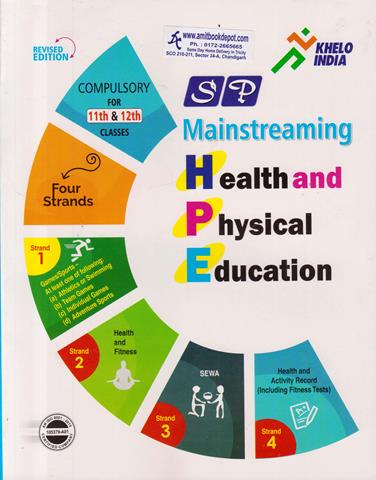
SP Mainstreaming Health and Physical Education (Class 11 & 12) by Dr. Manu Sood – A Comprehensive Guide to Holistic Student Development
The "SP Mainstreaming Health and Physical Education" book, meticulously authored by Dr. Manu Sood and published by SP Books, is the definitive educational resource for students in Classes 11 and 12. This book is meticulously designed to align with the latest curriculum mandates, moving beyond traditional physical training to foster holistic development. It empowers students with the knowledge, skills, and attitudes necessary for a healthy, active, and fulfilling life, making it an indispensable tool for both students and educators.
A Paradigm Shift in Education: Beyond the Playing Field
This book represents a significant evolution in the approach to Health and Physical Education (HPE). It is structured around a comprehensive framework that recognizes HPE as a crucial, mainstream academic discipline, equivalent in importance to any other subject. The content is crafted to develop not just physical prowess but also critical life skills, including leadership, teamwork, problem-solving, and social responsibility. It addresses the complete well-being of the adolescent student, encompassing physical, mental, emotional, and social health.
Structured Around the Four Core Strands for Deep Learning
The book is logically organized into four core strands, as prescribed by the curriculum, ensuring a systematic and in-depth understanding of each component:
Strand 1: Games/Sports: This section goes beyond the rules of the game. It delves into the strategic, technical, and historical aspects of various sports and indigenous games. The focus is on developing proficiency, understanding the benefits of regular participation, and inculcating values such as sportsmanship, discipline, and perseverance.
Strand 2: Health and Fitness: This is a critical component that addresses the pressing health education needs of senior secondary students. It covers vital topics such as nutrition, wellness, disease prevention, mental health, substance abuse awareness, and adolescent health issues. It provides practical knowledge for students to make informed decisions about their physical fitness and overall well-being, creating a foundation for a healthy lifestyle.
Strand 3: SEWA (Social Empowerment through Work Education and Action): This unique strand integrates social responsibility with education. It guides students through the concept of community service, encouraging them to engage in projects that address local health and environmental issues. This fosters empathy, civic sense, and a connection between classroom learning and real-world application, promoting holistic development.
Strand 4: Health and Activity Record: This strand emphasizes the importance of documentation and self-reflection. It provides a structured format for students to maintain a personal record of their physical activities, health metrics, and participation, encouraging ownership of their health journey and allowing for self-assessment.
Essential Pedagogical Support for Effective Teaching and Learning
Understanding the practical challenges of implementing this broad curriculum, the book includes dedicated chapters on pedagogy and evaluation:
- Transactional Strategies: This chapter provides educators with a wealth of innovative and effective teaching methodologies. It offers practical lesson plans, activity ideas, and classroom management techniques specifically tailored for the HPE curriculum, making the teaching process more engaging and effective.
- Assessment Techniques: Moving past a purely performance-based model, this section outlines a robust and continuous comprehensive evaluation framework. It details various assessment tools for evaluating student performance across all strands, including practical demonstrations, project work for SEWA, and portfolio assessment for the Health and Activity Record.
Key Features and Benefits:
1. Curriculum-Aligned Content: Fully covers the syllabus for Classes 11 and 12, ensuring complete exam preparedness.
2. Student-Centric Approach: Written in a clear, accessible language with illustrations, diagrams, and real-life examples to enhance understanding.
3. Promotes Active Learning: Encourages participation, critical thinking, and hands-on experience through its structured activities and SEWA projects.
4. Holistic Focus: Bridges the gap between physical health and mental/social well-being, crucial for adolescent development.
5. Empowers Educators: Serves as a complete resource for teachers, reducing planning time and providing reliable instructional strategies.
The "SP Mainstreaming Health and Physical Education" book is more than just a textbook; it is a blueprint for building a healthier, more responsible, and empowered generation. It is an essential purchase for every Class 11 and Class 12 student, physical education teacher, and school library dedicated to providing a comprehensive and modern education.






.jpg)