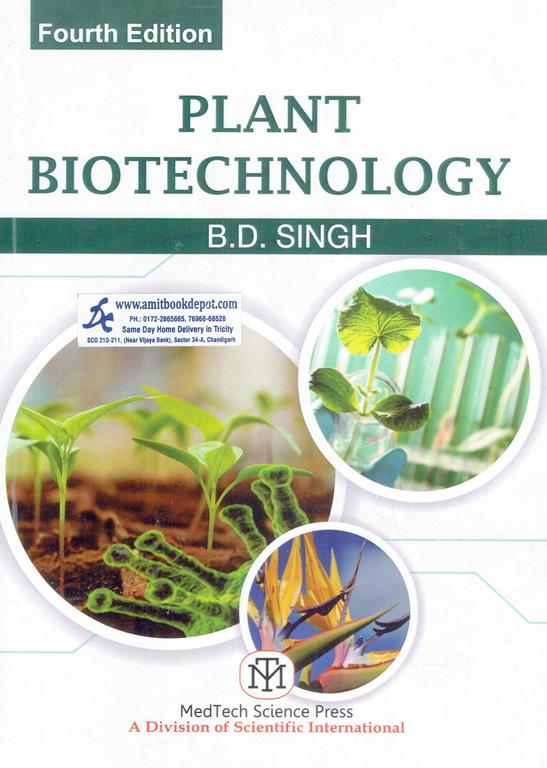
Plant Biotechnology by B. D. Singh is a comprehensive and authoritative textbook designed for students, researchers, and professionals in the fields of plant biotechnology, genetic engineering, and agricultural sciences. This book provides an in-depth exploration of modern biotechnological techniques, their applications in crop improvement, and the latest advancements in genetic modification, gene editing, and molecular breeding.
Key Features:
1. Extensive Coverage: The book systematically covers fundamental concepts, methodologies, and applications of plant biotechnology, including plant tissue culture, micropropagation, recombinant DNA technology, transgenic plants, and molecular markers.
2. Updated Content: It includes contemporary topics such as gene editing (CRISPR), genome mapping, genomics, molecular farming, and biosafety regulations for genetically modified (GM) crops.
3. Practical Applications: Detailed discussions on haploid production, somatic hybridization, somaclonal variation, and germplasm conservation provide insights into their role in crop breeding and genetic improvement.
4. Industry-Relevant Knowledge: Chapters on intellectual property rights (IPR) and biosafety concerns address regulatory and ethical aspects of biotechnology applications in agriculture.
5. Structured Learning: Well-organized chapters with clear explanations, diagrams, and appendices enhance understanding for students and researchers.
Why Choose This Book?
1. Comprehensive Resource: Covers both fundamental and advanced topics in plant biotechnology.
2. Up-to-Date Information: Includes CRISPR-Cas9, genome editing, and molecular farming.
3. Balanced Approach: Discusses scientific advancements along with ethical, regulatory, and IPR concerns.
4. Pedagogical Aids: Well-structured with an index and appendices for quick reference.








.jpg)