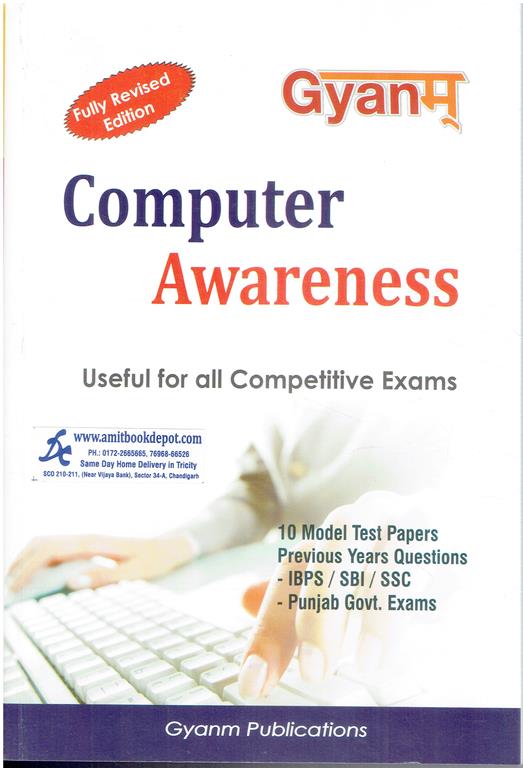
Gyanm Computer Awareness is a comprehensive and exam-oriented guide meticulously designed for aspirants preparing for various competitive examinations. This book is particularly tailored for candidates targeting state-level exams, including but not limited to Punjab Police, Patwari, Clerk, Banking, SSC, Railway, and other government recruitment tests where computer knowledge is a key section. The publication by Gyanm College of Competitions ensures that the content is curated by experienced educators who understand the pattern and difficulty level of real competitive exams.
Structured for Success:
The book is organized into 19 distinct chapters and sections, covering every essential domain of computer science from fundamental to advanced levels. It begins with a foundational introduction to computers and progresses logically through input-output & secondary storage devices, data representation and number systems (binary, decimal, octal, and hexadecimal), and computer memory (primary & secondary, RAM, ROM, and cache). This structured flow ensures that even a novice candidate can build a robust conceptual base.
In-Depth Syllabus Coverage:
Aspirants will find dedicated modules on computer languages (machine, assembly, and high-level); operating system functions and types; and DBMS (database management system) with SQL basics. The book extensively covers networks & network technologies (LAN, MAN, WAN, topologies, and protocols), computer viruses & security, and a full section on MS Office (Word, PowerPoint, and Excel)—a high-scoring area in most exams.
To address modern examination trends, the title includes contemporary topics like Internet & Technology, Cyber Security & I.T. Act, E-mail protocols (SMTP, POP3, IMAP), and Current Trends in Information Technology (Cloud Computing, AI, IoT, Big Data). This ensures that candidates are prepared for both traditional and emerging question types.
Exclusive Exam-Centric Features:
One of the standout features of this book is the Inventors of Computers section, providing a ready-to-revise list of key contributors. The Glossary of Computer Terms serves as a quick reference for hundreds of definitions. For Punjab-centric exam preparation, the book offers two dedicated chapters: Punjab Previous Years' Exams - MCQs (2021-22) and Punjab Previous Years' Exams - MCQs (2018-20). To cap it off, 5 model test papers simulate the actual exam environment, allowing candidates to practice time management and self-assessment.
Keywords Integrated: Competitive exam preparation, computer awareness book, Punjab Police computer notes, Patwari exam computer syllabus, number system conversion, memory hierarchy, DBMS for exams, network topologies, MS Office MCQ, internet protocols, cyber law IT Act, email configuration, current trends in IT, inventors of computers, glossary of computer terms, previous years' solved papers, model test papers, Gyanm publication.
Why Choose This Book?
- Complete Syllabus: Covers all topics asked in major competitive exams.
- Exam-Focused: MCQs and model papers mirror actual question patterns.
- Punjab Special: Contains previous years' papers (2018-2022) specifically for Punjab state exams.
- Quick Revision: Glossary and inventor lists help in last-minute preparation.
- Updated Content: Includes current IT trends like cybersecurity, cloud computing, and e-governance.
This product is ideal for any candidate seeking a single-source solution for computer awareness that balances theory, practice, and previous years' question exposure.






.jpg)