-
Mon-Fri: 10AM to 8PM 01722665665
-
My Account
-
-
0
Total :
₹ 0.00

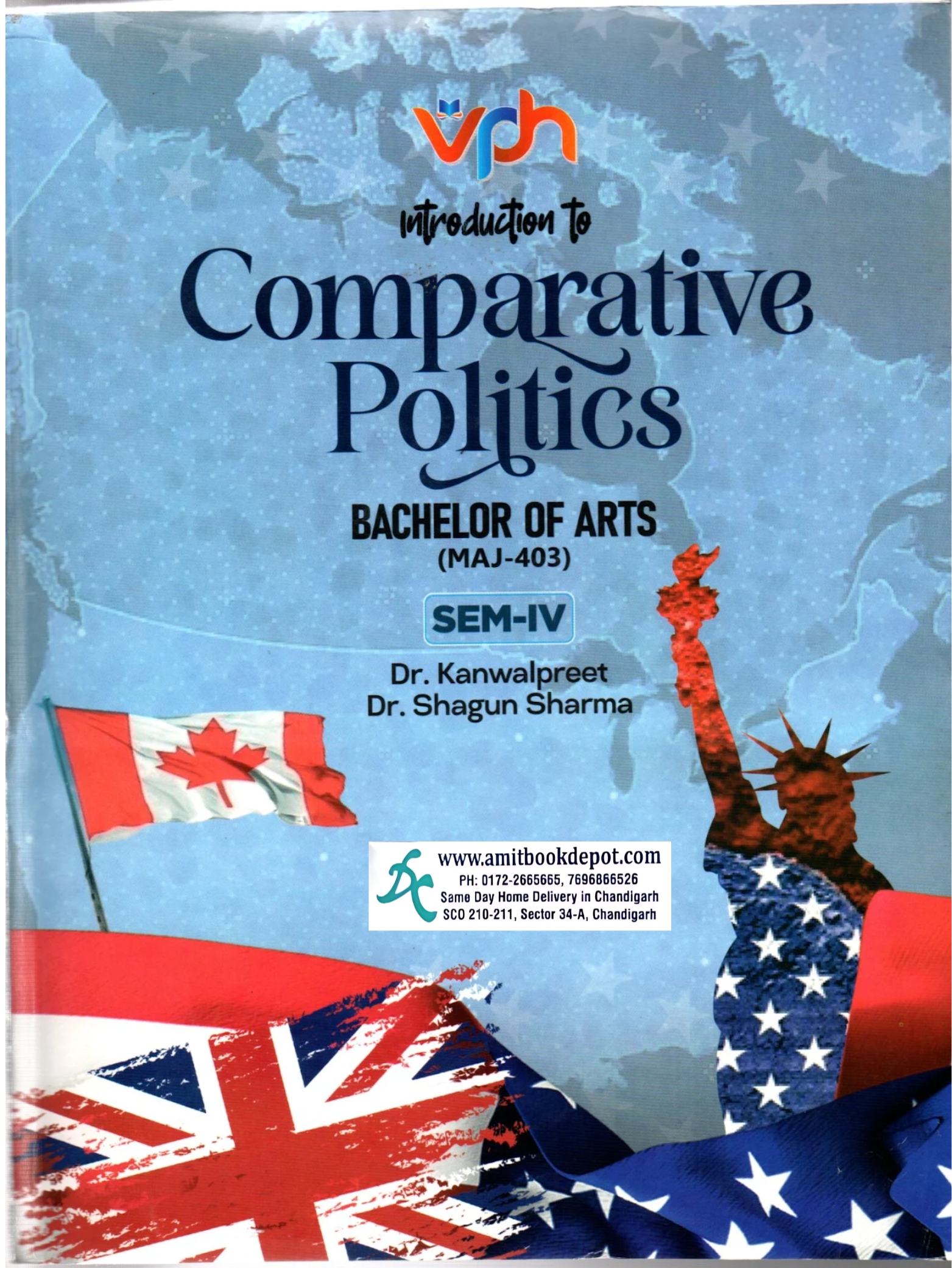

Yes, this book is meticulously crafted to align 100% with the latest syllabus of Panjab University, Chandigarh, for the paper HSS-POL-DSC5(MAJ/MIN)-401 under the New Education Policy (NEP).
Absolutely. The course code HSS-POL-DSC5(MAJ/MIN)-401 indicates this book is designed for both Major and Minor students in the 4th Semester.
Yes, the book contains a dedicated appendix with detailed comparative tables on institutions like the Supreme Courts, Legislatures, and Executives of the US, UK, and Canada, which is a unique highlight.
Yes, Unit I includes a specific chapter on the Political System marked "(Only for G.N.D.U.)", making it a useful resource for students following that curriculum as well.
Yes, Unit IV separately covers Political Parties and Interest/Pressure Groups for the United Kingdom, America, and Canada in a comparative framework.
Yes, a full chapter in Unit I is dedicated to explaining the Comparative Method, which is crucial for the analytical approach of the paper.
The book covers the constitutional, historical, and functional aspects of these institutions as per the academic syllabus, providing a timeless structural and procedural understanding.
Yes, there is a dedicated chapter on the "Separation of Powers and Principle of Checks and Balances" in the American context in Unit II.
Yes, Unit II explicitly covers the Parliamentary System (UK) and the Presidential System (USA) in a comparative spirit, as stated in the syllabus.
Yes, Unit III on Comparing Political Regimes classifies regimes and clearly outlines the types and features of Authoritarian and Democratic systems.
No Description Added
Yes, this book is meticulously crafted to align 100% with the latest syllabus of Panjab University, Chandigarh, for the paper HSS-POL-DSC5(MAJ/MIN)-401 under the New Education Policy (NEP).
Absolutely. The course code HSS-POL-DSC5(MAJ/MIN)-401 indicates this book is designed for both Major and Minor students in the 4th Semester.
Yes, the book contains a dedicated appendix with detailed comparative tables on institutions like the Supreme Courts, Legislatures, and Executives of the US, UK, and Canada, which is a unique highlight.
Yes, Unit I includes a specific chapter on the Political System marked "(Only for G.N.D.U.)", making it a useful resource for students following that curriculum as well.
Yes, Unit IV separately covers Political Parties and Interest/Pressure Groups for the United Kingdom, America, and Canada in a comparative framework.
Yes, a full chapter in Unit I is dedicated to explaining the Comparative Method, which is crucial for the analytical approach of the paper.
The book covers the constitutional, historical, and functional aspects of these institutions as per the academic syllabus, providing a timeless structural and procedural understanding.
Yes, there is a dedicated chapter on the "Separation of Powers and Principle of Checks and Balances" in the American context in Unit II.
Yes, Unit II explicitly covers the Parliamentary System (UK) and the Presidential System (USA) in a comparative spirit, as stated in the syllabus.
Yes, Unit III on Comparing Political Regimes classifies regimes and clearly outlines the types and features of Authoritarian and Democratic systems.