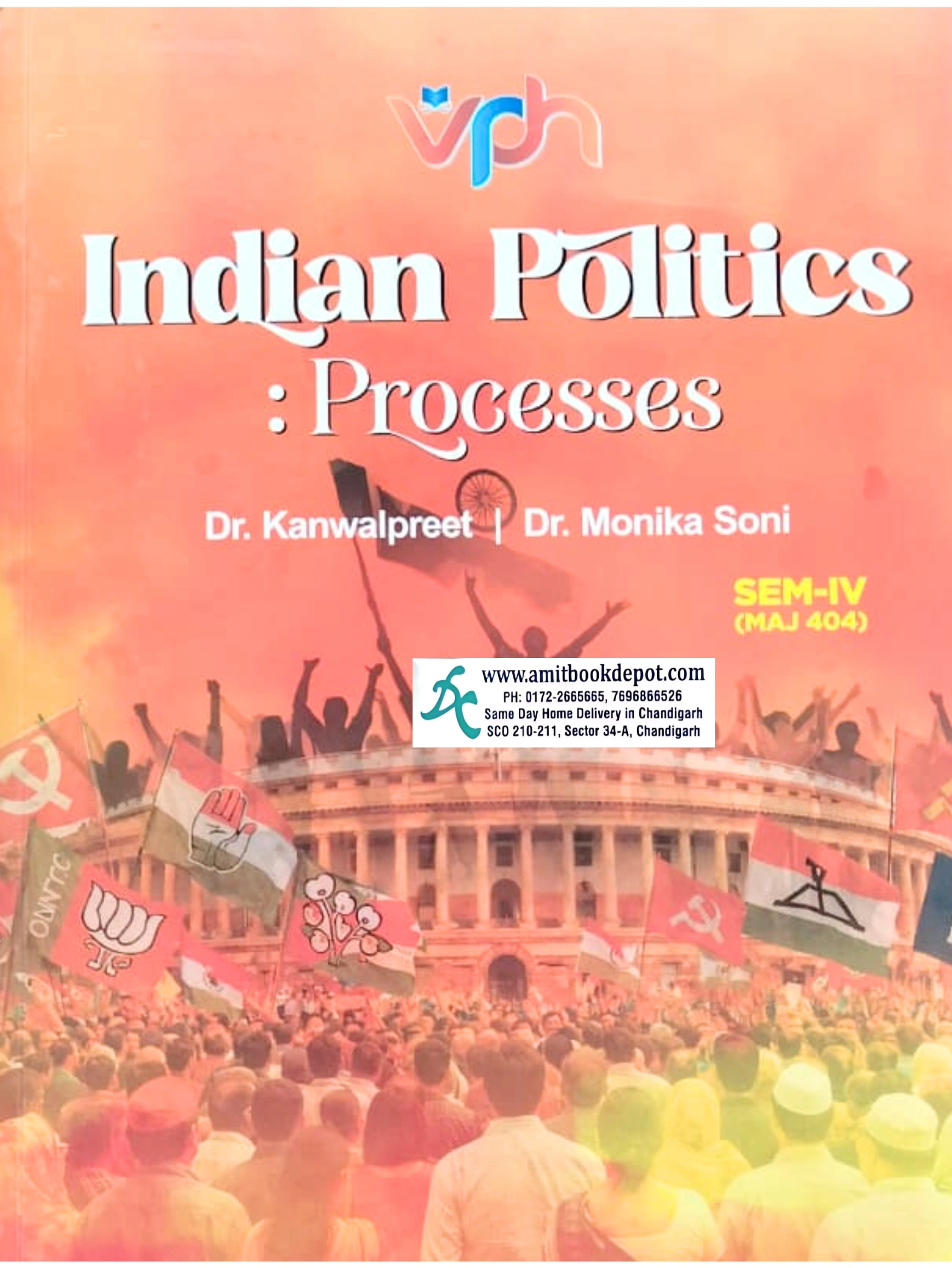
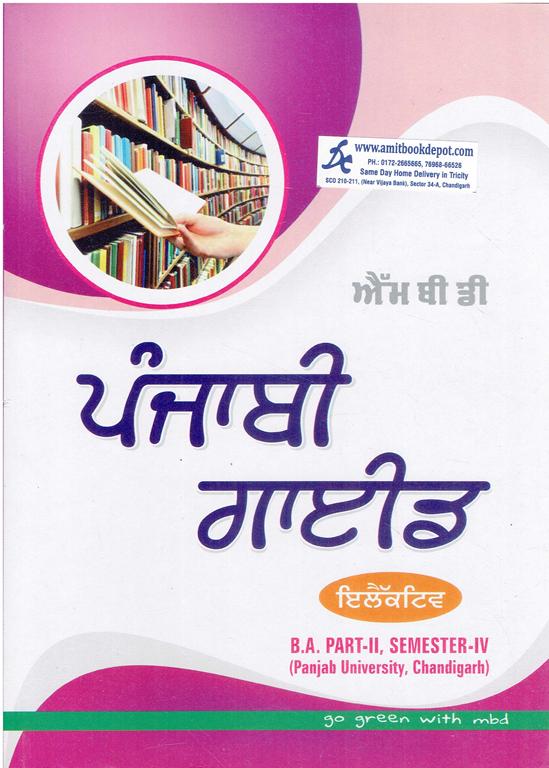
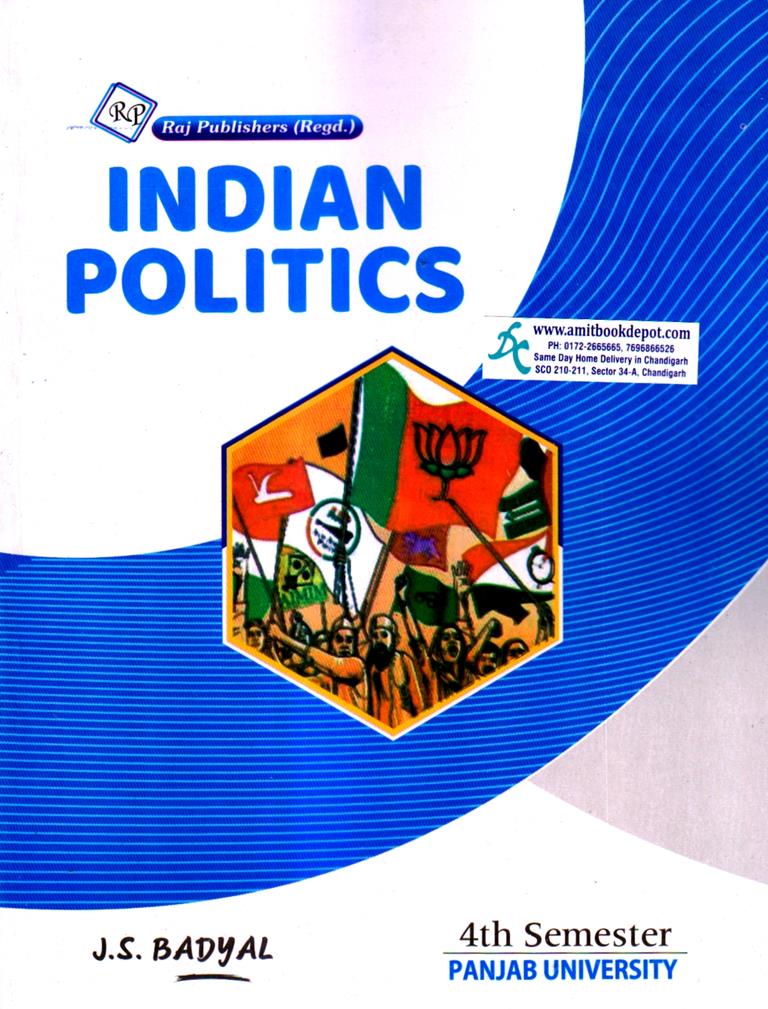
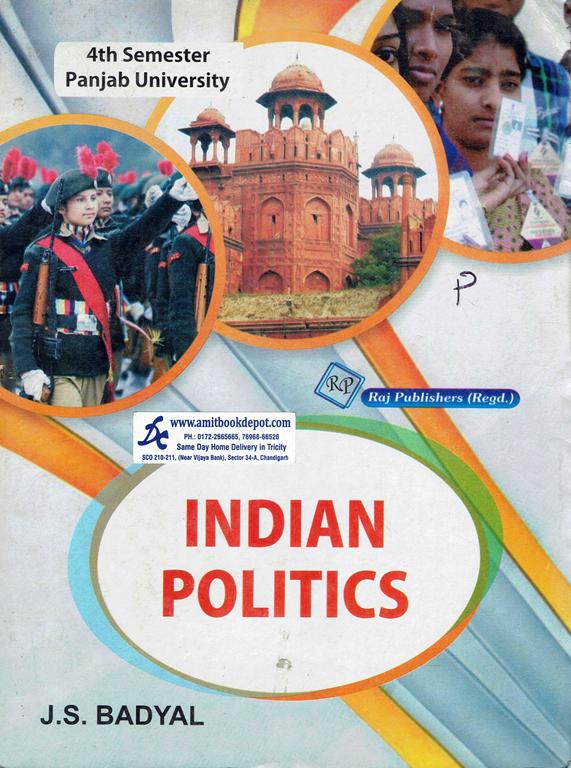
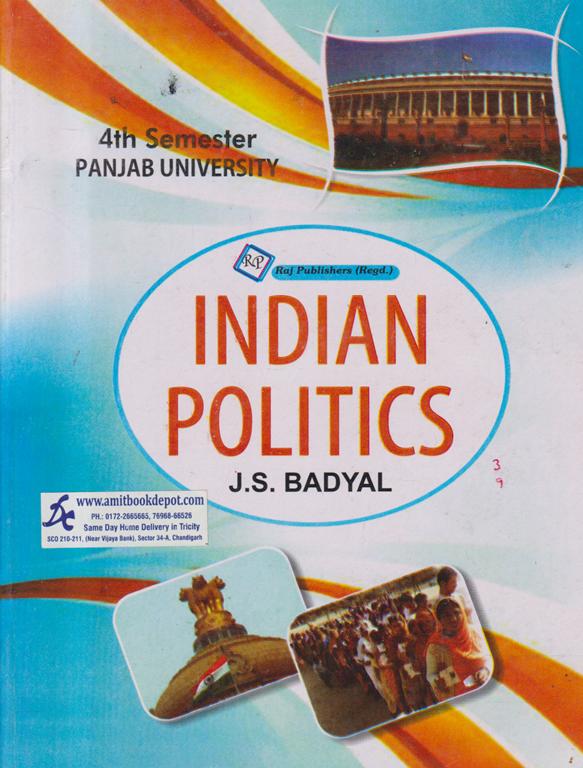
Yes, this textbook is meticulously crafted to align 100% with the latest syllabus for POL-DSC-8(MAJ)-404: Indian Politics: Processes under the NEP for BA 4th Semester at Panjab University, Chandigarh.
Yes, Unit I provides a detailed analysis of the phases of the Indian party system, including a comprehensive section on the One-Party Dominant System.
Absolutely. Unit II is dedicated to National Political Parties, with detailed chapters analyzing the Ideology, Strategy, and Support Base of both the Indian National Congress (INC) and the Bharatiya Janata Party (BJP).
Yes, Unit IV is entirely devoted to Identities and Power Structure, with separate chapters examining the political role of Religion, Caste, and Gender.
While the book focuses on theory, it follows the syllabus pedagogy which includes internal assessment based on unit tests, assignments, and participation, as outlined in the preface/syllabus section.
Yes, the evolution of the party system in Unit I covers the latest Phases and Trends, including an analysis of the emerging Second Dominant Party System.
Certainly. Unit III on Regions and Regionalization explicitly deals with the federalization of politics and the rise of regional parties.
While tailored for PU, the comprehensive coverage of Indian political processes, party systems, and identity politics makes it a valuable resource for any student of Political Science across universities.
Yes, the content is directly structured to meet the course objectives and learning outcomes, ensuring students grasp electoral democracy, party ideologies, and identity-based mobilization in India.
Yes, the book contains a dedicated section of Short Answer Type Questions to help students prepare for the specific pattern of the university examination.
No Description Added
Yes, this textbook is meticulously crafted to align 100% with the latest syllabus for POL-DSC-8(MAJ)-404: Indian Politics: Processes under the NEP for BA 4th Semester at Panjab University, Chandigarh.
Yes, Unit I provides a detailed analysis of the phases of the Indian party system, including a comprehensive section on the One-Party Dominant System.
Absolutely. Unit II is dedicated to National Political Parties, with detailed chapters analyzing the Ideology, Strategy, and Support Base of both the Indian National Congress (INC) and the Bharatiya Janata Party (BJP).
Yes, Unit IV is entirely devoted to Identities and Power Structure, with separate chapters examining the political role of Religion, Caste, and Gender.
While the book focuses on theory, it follows the syllabus pedagogy which includes internal assessment based on unit tests, assignments, and participation, as outlined in the preface/syllabus section.
Yes, the evolution of the party system in Unit I covers the latest Phases and Trends, including an analysis of the emerging Second Dominant Party System.
Certainly. Unit III on Regions and Regionalization explicitly deals with the federalization of politics and the rise of regional parties.
While tailored for PU, the comprehensive coverage of Indian political processes, party systems, and identity politics makes it a valuable resource for any student of Political Science across universities.
Yes, the content is directly structured to meet the course objectives and learning outcomes, ensuring students grasp electoral democracy, party ideologies, and identity-based mobilization in India.
Yes, the book contains a dedicated section of Short Answer Type Questions to help students prepare for the specific pattern of the university examination.