-
Mon-Fri: 10AM to 8PM 01722665665
-
My Account
-
-
0
Total :
₹ 0.00

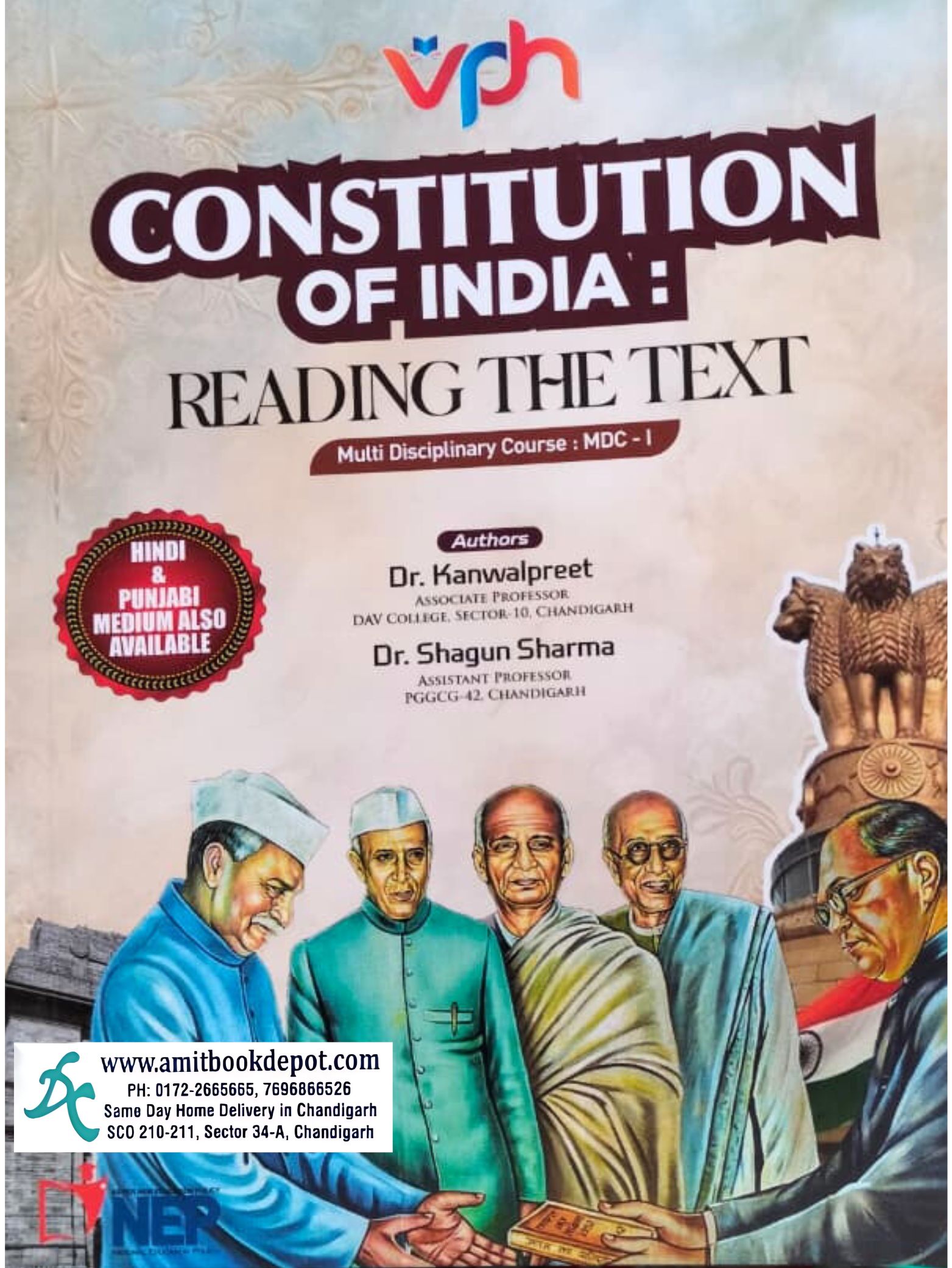


Yes, this book is meticulously crafted to provide 100% coverage of the prescribed syllabus for the MDC 1 course offered by Panjab University Chandigarh.
While the book provides the core knowledge required for all assessments, the internal assessment marks are typically based on class performance, assignments, and tests conducted by the college. This book serves as the primary study material for that preparation.
Absolutely. A key feature of this book is the section "Watershed Cases in Easy Language," which breaks down complex judicial pronouncements into simple, student-friendly explanations.
The book contains a dedicated section titled "Short Answer Type Questions" spread across the syllabus, which is specifically designed to help students prepare for the first compulsory question containing 10 short answers.
Yes, Chapter 2, "Legacy of Nationalist Movement," is entirely dedicated to the Motilal Nehru Committee Report of 1928, as required by the syllabus.
Yes, Chapter 6 specifically covers Directive Principles of State Policy with reference to Articles 36 to 51 of the Indian Constitution.
Yes, Chapter 5, "Preamble: Philosophy of the Constitution," delves into the ideological and philosophical foundations embedded within the Preamble.
The content is structured for easy comprehension. It avoids unnecessary legal complexity and presents information in a clear, logical flow suitable for undergraduate students.
While it provides a strong foundational knowledge of the Indian Constitution, which is beneficial for any competitive exam, its primary focus is to cater to the specific syllabus and examination pattern of Panjab University's BA Semester 1.
The historical unit (Unit I) is crucial as it provides the context for why certain features were included in the Indian Constitution. Understanding the colonial legacy helps in appreciating the innovations and changes made by the Constituent Assembly.
No Description Added
Yes, this book is meticulously crafted to provide 100% coverage of the prescribed syllabus for the MDC 1 course offered by Panjab University Chandigarh.
While the book provides the core knowledge required for all assessments, the internal assessment marks are typically based on class performance, assignments, and tests conducted by the college. This book serves as the primary study material for that preparation.
Absolutely. A key feature of this book is the section "Watershed Cases in Easy Language," which breaks down complex judicial pronouncements into simple, student-friendly explanations.
The book contains a dedicated section titled "Short Answer Type Questions" spread across the syllabus, which is specifically designed to help students prepare for the first compulsory question containing 10 short answers.
Yes, Chapter 2, "Legacy of Nationalist Movement," is entirely dedicated to the Motilal Nehru Committee Report of 1928, as required by the syllabus.
Yes, Chapter 6 specifically covers Directive Principles of State Policy with reference to Articles 36 to 51 of the Indian Constitution.
Yes, Chapter 5, "Preamble: Philosophy of the Constitution," delves into the ideological and philosophical foundations embedded within the Preamble.
The content is structured for easy comprehension. It avoids unnecessary legal complexity and presents information in a clear, logical flow suitable for undergraduate students.
While it provides a strong foundational knowledge of the Indian Constitution, which is beneficial for any competitive exam, its primary focus is to cater to the specific syllabus and examination pattern of Panjab University's BA Semester 1.
The historical unit (Unit I) is crucial as it provides the context for why certain features were included in the Indian Constitution. Understanding the colonial legacy helps in appreciating the innovations and changes made by the Constituent Assembly.