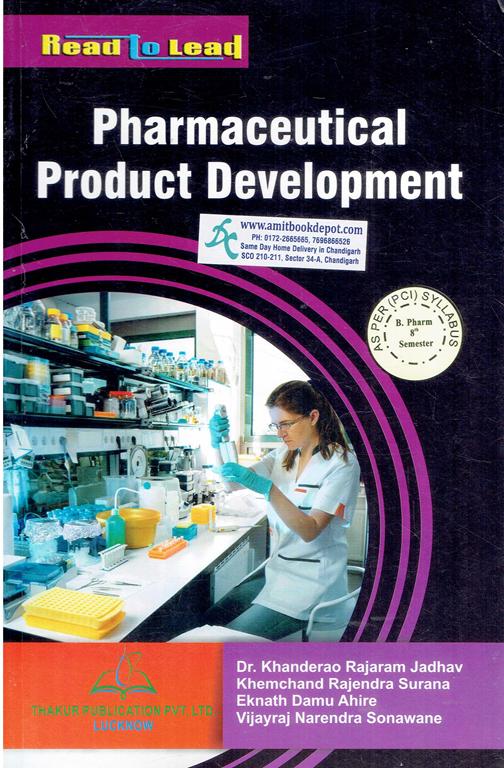
Module 1: Pharmaceutical Product Development
1.1. Pharmaceutical Product Development
1.1.1. Introduction
1.1.2. Objectives
1.1.3. Qualities of Product Development
1.1.4. Consideration of Product Design
1.1.5. Product
1.1.5.1. Levels of Product
1.1.5.2. Quality Level
1.1.5.3. Features for Pharmaceutical Products
1.1.5.4. Dosage Form
1.1.5.5. Brand Name
1.1.5.6. Packaging
1.1.6. Product Classification
1.1.6.1. Prescription Products
1.1.6.2. OTC Products
1.1.7. Product Line Decisions
1.1.8. Product Mix Decisions
1.2. New-Product Development
1.2.1. Molecule Identification
1.2.2. Molecule Screening
1.2.3. Sourcing of Raw Material
1.2.4. Pilot Batch Manufacturing
1.2.5. Marketing Strategy Development
1.2.6. Test Marketing/Clinical Trial/User Trial
1.2.7. Commercialization
1.3. Product Life-Cycle Strategies
1.4. Stages of Product Development and Optimization
1.4.1. Preformulation
1.4.1.1. Organoleptic Properties
1.4.1.2. Purity of API and Excipients
1.4.1.3. Analytical Method
1.4.1.4. Solubility
1.4.1.5. Hygroscopicity
1.4.1.6. Dissociation/Ionization Constant
1.4.1.7. Partition Coefficient (LOG P)
1.4.1.8. Dissolution Behavior
1.4.1.9. Crystallinity and Polymorphism
1.4.1.10. Particle Size, Shape, and Surface Area
1.4.1.11. Bulk Density
1.4.1.12. Powder Flow Property
1.4.1.13. Stability
1.4.1.14. Drug-Excipient Compatibility Study
1.4.2. Formulation Development
1.4.2.1. Components of the Drug Product
1.4.2.2. Manufacturing Process Development
1.4.3. Stability Assessment
1.4.3.1. Importance of Stability Studies
1.4.3.2. Types of Stability Studies on Drug Substances
1.4.3.3. Stability Testing Methods
1.5. Manufacturing of Different Dosage Forms
1.5.1. Solid Dosage Forms
1.5.2. Semisolid Dosage Forms
1.5.3. Liquid Dosage Forms
1.5.3.1. Monophasic Liquid Dosage Forms
1.5.3.2. Biphasic Liquid Dosage Forms
1.6. Quality Control Testing of Pharmaceutical Dosage Forms
1.6.1. Evaluation of Tablets
1.6.1.1. Effervescent Tablets
1.6.1.2. Buccal Tablets
1.6.1.3. Orally Disintegrating Tablets
1.6.1.4. Sustained Controlled Release Dosage Forms
1.6.2. Evaluation of Capsules
1.6.3. Evaluation of Granules
1.6.4. Evaluation of Powders
1.6.5. Evaluation of Ointments
1.6.6. Evaluation of Creams
1.6.7. Evaluation of Suppositories
1.6.8. Evaluation of Syrups
1.6.9. Evaluation of Elixirs
1.6.10. Evaluation of Suspensions
1.6.11. Evaluation of Emulsions
1.6.12. Evaluation of Parenterals
1.6.13. Evaluation of Eye Drops
1.6.14. Evaluation of Aerosols
1.6.15. Evaluation of Nasal Sprays
1.6.16. Evaluation of Transdermal Patches
1.7. Summary
1.8. Exercise
Module 2: An Advanced Study of Pharmaceutical Excipients in Pharmaceutical Product Development—I
2.1. Pharmaceutical Excipients
2.1.1. Introduction
2.1.2. History of Use of Excipients in Pharmaceutical Formulations
2.1.3. Role of Excipients in Pharmaceutical Formulations
2.1.4. Criteria for Selection of Excipients
2.2. Solvents and Solubilizers
2.2.1. Water
2.2.2. Alcohols
2.3. Cyclodextrins and Their Applications
2.4. Non-ionic Surfactants and Their Applications
2.5. Polyethylene Glycols
2.6. Sorbitol
2.7. Suspending Agents
2.8. Emulsifying Agents
2.9. Semisolid Excipients
2.10. Other Excipients
2.10.1. Structure-Forming Excipients
2.10.2. Preservatives
2.10.3. Antioxidants
2.10.4. Gelling Agents
2.10.5. Emollients
2.10.6. Bases (Cream/Ointments/Suppositories)
2.10.6.1. Hydrocarbon Bases
2.10.6.2. Absorption Bases
2.10.6.3. Water-Removable Bases
2.10.6.4. Water-Soluble Bases
2.10.6.5. Miscellaneous Bases
2.11. Summary
2.12. Exercise
Module 3: An Advanced Study of Pharmaceutical Excipients in Pharmaceutical Product Development—II
3.1. Tablet and Capsule Excipients
3.1.1. Anti-adherents
3.1.2. Binders
3.1.3. Coatings
3.1.4. Disintegrants
3.1.5. Fillers
3.1.6. Flavors
3.1.7. Colors
3.1.8. Lubricants
3.1.9. Glidants
3.1.10. Sorbents
3.1.11. Preservatives
3.1.12. Sweeteners
3.2. Directly Compressible Vehicles
3.2.1. Lactose
3.2.2. α-Lactose Monohydrate
3.2.3. Anhydrous α-Lactose
3.2.4. Anhydrous β-Lactose
3.2.5. Spray-Dried Lactose
3.2.6. Agglomerated Lactose
3.2.7. Microcrystalline Cellulose
3.2.8. Hydroxypropylcellulose
3.2.9. Ethyl Cellulose
3.2.10. Sucrose
3.2.11. Di-Pac
3.2.12. Nu-Tab
3.2.13. Emdex and Maltrin
3.2.14. Mannitol
3.2.15. Starch
3.2.16. Starch 1500
3.2.17. Maltose
3.2.18. Dicalcium Phosphate Dihydrate
3.2.19. Emcompress
3.2.20. Fujicalin
3.2.21. Inulin
3.2.23. Cellactose
3.2.24. Pharmatose DCL 40
3.2.25. Prosolv
3.2.26. StarLac
3.3. Coat Materials
3.3.1. Plasticizers
3.3.2. Additives
3.3.3. Hydroxypropyl Methylcellulose
3.3.4. Methyl Hydroxyethyl Cellulose
3.3.5. Povidone
3.3.6. Hydroxypropylcellulose
3.3.7. Polyethylene Glycols
3.3.8. Solvents
3.3.9. Colorants
3.4. Excipients in Parenteral Products
3.4.1. Mannitol
3.4.2. Lactose
3.4.3. Sucrose
3.4.4. Polyethylene Glycol (PEG)
3.4.5. Polyvinyl Pyrrolidone (PVP)
3.4.6. Buffering Agents
3.4.7. Tonicity Adjusting Agents
3.4.8. Preservatives
3.4.9. Solubilizing Agents
3.5. Excipients in Aerosol Products
3.5.1. Propellants
3.5.2. Solvents/Co-Solvents
3.5.3. Buffering Agents
3.5.4. Preservatives
3.5.5. Antioxidants
3.5.6. Wetting Agents
3.5.7. Anti-Foaming Agents (Defoamers)
3.5.8. Humectants
3.6. Excipients for Formulation of NDDS
3.6.1. Pectins
3.6.2. Alginates
3.6.3. Starches
3.6.4. Gums
3.6.5. Guar Gum
3.6.6. Gum Acacia
3.6.7. Karaya Gum
3.6.8. Zein
3.6.9. Xanthan Gum
3.6.10. Tragacanth
3.6.11. Menthol
3.6.12. Caraway
3.6.13. Rosin
3.6.14. Chitin and Chitosan
3.6.15. Collagen
3.6.16. Polycaprolactone
3.6.17. Polyorthoesters
3.6.18. Thiolated Polymers
3.6.19. Poloxamer
3.7. Selection and Application of Excipients in Pharmaceutical Formulations with Specific Industrial Applications
3.8. Summary
3.9. Exercise
Module 4: Optimization Techniques in Pharmaceutical Product Development
4.1. Optimization Techniques in Pharmaceutical Product Development
4.1.1. Introduction
4.1.2. Important Terminologies
4.1.3. Optimization Benefits for Industry
4.1.4. Various Optimization Techniques
4.1.4.1. Continuous Optimization
4.1.4.2. Discrete Optimization
4.1.4.3. Unconstrained Optimization
4.1.4.4. Constrained Optimization
4.1.4.5. Deterministic Optimization
4.1.4.6. Stochastic Optimization
4.1.4.7. Graphical Optimization
4.1.4.8. Brute-force Search (Feasibility and Grid Search)
4.1.4.9. Numerical Optimization
4.2. Design of Experiment (DoE)
4.2.1. Introduction
4.2.2. Types of Experimental Design
4.2.2.1. Screening Designs
4.2.2.2. Response Surface Designs
4.2.2.3. Factorial Designs
4.2.2.4. Fractional Factorial Design (FFD)
4.2.2.5. Plackett-Burman Designs (Hadamard Designs)
4.2.2.6. Central Composite Design (Box-Wilson design)
4.2.2.7. Box-Behnken Designs
4.2.2.8. Taguchi Design
4.2.2.9. Mixture Design
4.3. Optimization by Factorial Designs
4.3.1. Introduction
4.3.2. Full Factorial Design
4.3.3. Fractional Factorial Design
4.4. Quality by Design (QbD)
4.4.1. Introduction
4.4.2. Historical Background
4.4.3. Objectives
4.4.4. Advantages
4.4.5. Determination of Critical Quality Attributes (CQA)
4.4.6. Designing and Implementing Control Strategy
4.4.7. Elements of QbD
4.4.8. Steps for Pharmaceutical QbD Implementation
4.4.9. Tools of QbD
4.4.9.1. Risk Assessment
4.4.9.2. Design of Experiment
4.4.9.3. PAT
4.4.10. Applications of Quality by Design
4.4.10.1. Benefits to Industry
4.4.10.2. Pharmaceutical Development
4.4.10.3. Used in PAT
4.4.10.4. Quality Target Product Profile for the ANDA Product
4.4.10.5. Other Applications
4.4.11. Problems in Adoption of QbD
4.5. Summary
4.6. Exercise
Module 5: Packaging Materials
5.1. Packaging Materials
5.1.1. Introduction
5.1.2. Functions of Packaging
5.1.2.1. Containment
5.1.2.2. Protection
5.1.2.3. Presentation and Information
5.1.2.4. Labels
5.1.2.5. Repacking, Relabeling, and Dispensing
5.1.2.6. Package Inserts for Patients (Patient Information Leaflets)
5.1.2.7. Compliance
5.1.2.8. Protection of Patients
5.1.2.9. Detection of Packaging Materials
5.2. Selection of Packaging Materials
5.2.1. Glass
5.2.2. Plastics
5.2.3. Metal
5.2.4. Closures
5.2.5. Rubber Closures
5.2.6. Caps or Overseals
5.3. Quality Control Testing of Packaging Material
5.3.1. General Considerations
5.3.2. Quality Control
5.3.3. Sampling
5.3.4. Testing Program
5.3.5. Audit and Inspection
5.3.6. Quality Specifications
5.4. Summary
5.5. Exercise










.jpg)