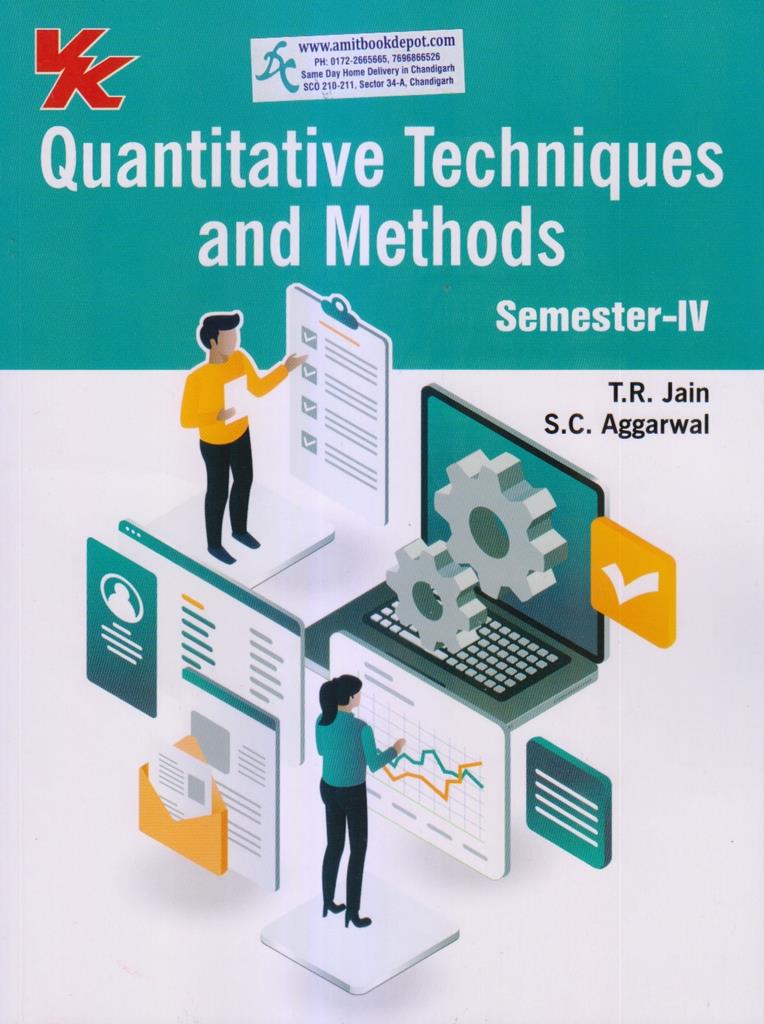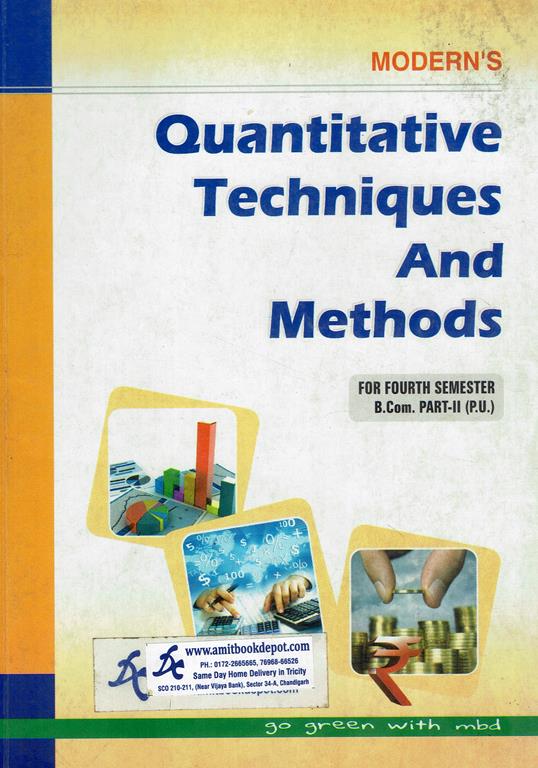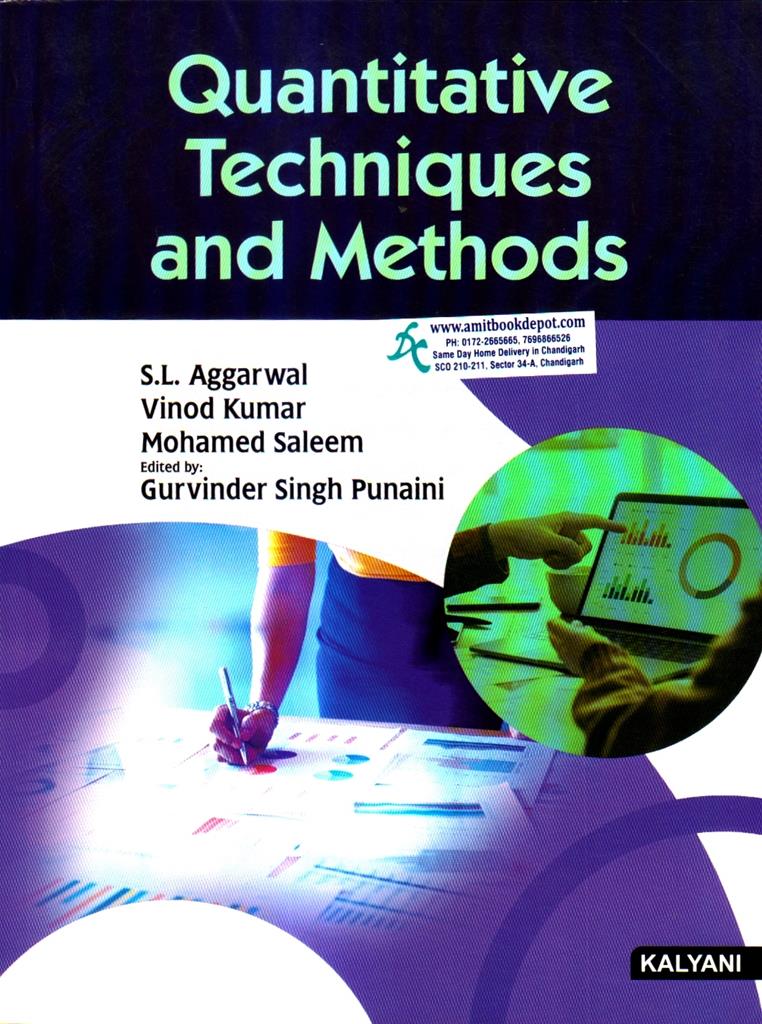
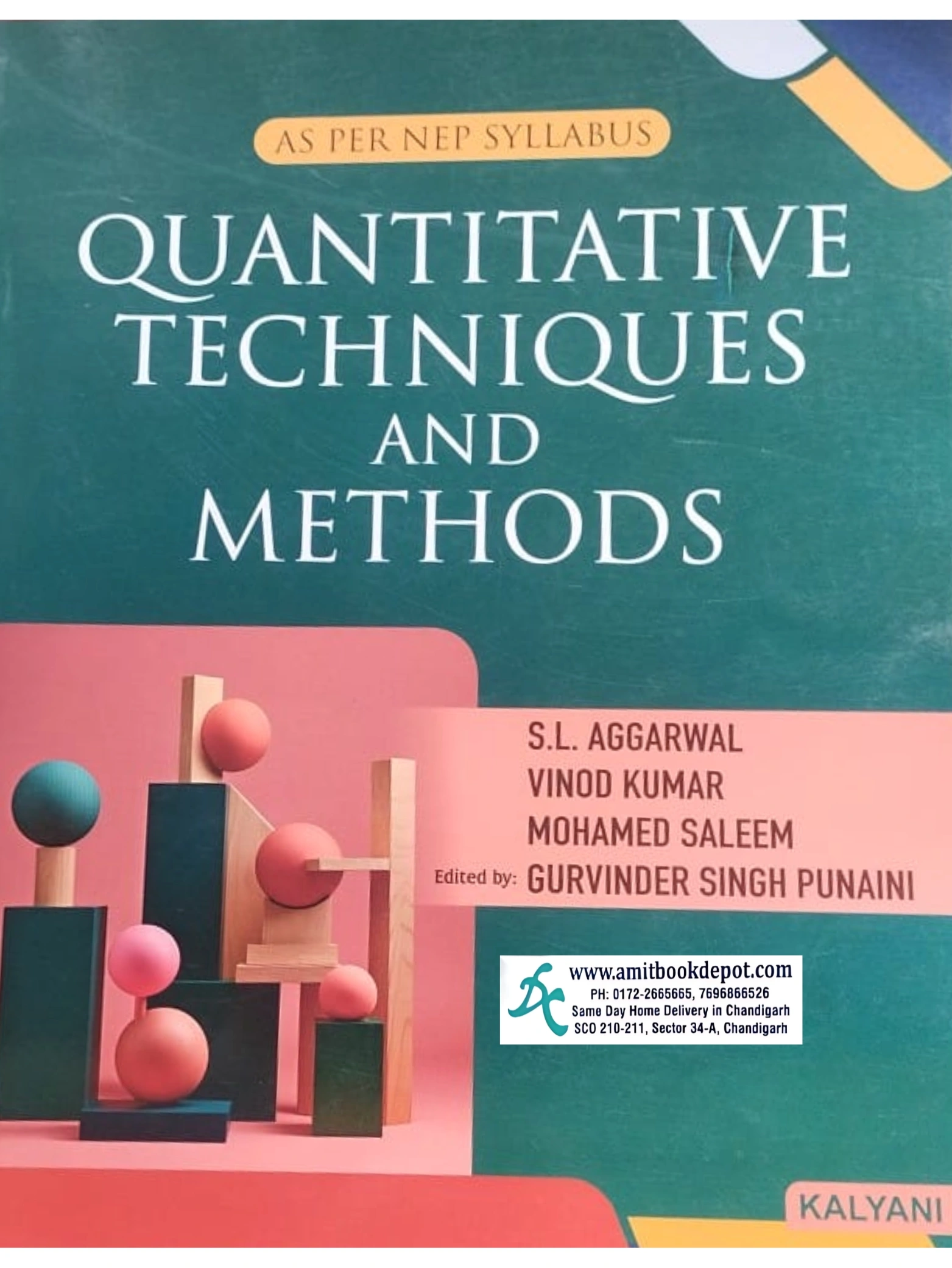

Yes, this book is meticulously crafted to cover 100% of the prescribed syllabus for Course Code NBCM 403 under the CBCS pattern for Panjab University, Chandigarh.
Yes, the book is divided into two main sections that comprehensively cover all topics from Unit I (Quantitative Techniques, Probability, Distributions, Linear Programming) and Unit II (Interpolation, Correlation, Regression).
Yes, the book includes explained numerical problems and solutions, especially for application-oriented topics like Linear Programming (graphical method), Correlation, and Regression.
No, the book is designed for B.Com students and explains quantitative techniques from a business application perspective, building concepts from a foundational level.
While tailored for Panjab University, the core content on Quantitative Techniques, Probability, LP, Correlation, and Regression makes it a useful reference for business students of other universities with similar syllabi.
This book is specifically structured for the B.Com syllabus, integrates practical Excel usage, and focuses on business applications of quantitative techniques, unlike generic statistics books.
Yes, each theoretical concept, such as Linear Programming or Probability Distributions, is discussed alongside its advantages, limitations, and business applications.
Yes, with its clear explanations, solved examples, practical work section, and sample paper, it is well-suited for self-study alongside classroom teaching.
Yes, the book covers the basic terminology, formulation, and graphical solution of Linear Programming Problems in detail.
Yes, it includes appendices with relevant statistical tables required for solving problems in probability distributions and hypothesis testing.
No Description Added
Yes, this book is meticulously crafted to cover 100% of the prescribed syllabus for Course Code NBCM 403 under the CBCS pattern for Panjab University, Chandigarh.
Yes, the book is divided into two main sections that comprehensively cover all topics from Unit I (Quantitative Techniques, Probability, Distributions, Linear Programming) and Unit II (Interpolation, Correlation, Regression).
Yes, the book includes explained numerical problems and solutions, especially for application-oriented topics like Linear Programming (graphical method), Correlation, and Regression.
No, the book is designed for B.Com students and explains quantitative techniques from a business application perspective, building concepts from a foundational level.
While tailored for Panjab University, the core content on Quantitative Techniques, Probability, LP, Correlation, and Regression makes it a useful reference for business students of other universities with similar syllabi.
This book is specifically structured for the B.Com syllabus, integrates practical Excel usage, and focuses on business applications of quantitative techniques, unlike generic statistics books.
Yes, each theoretical concept, such as Linear Programming or Probability Distributions, is discussed alongside its advantages, limitations, and business applications.
Yes, with its clear explanations, solved examples, practical work section, and sample paper, it is well-suited for self-study alongside classroom teaching.
Yes, the book covers the basic terminology, formulation, and graphical solution of Linear Programming Problems in detail.
Yes, it includes appendices with relevant statistical tables required for solving problems in probability distributions and hypothesis testing.