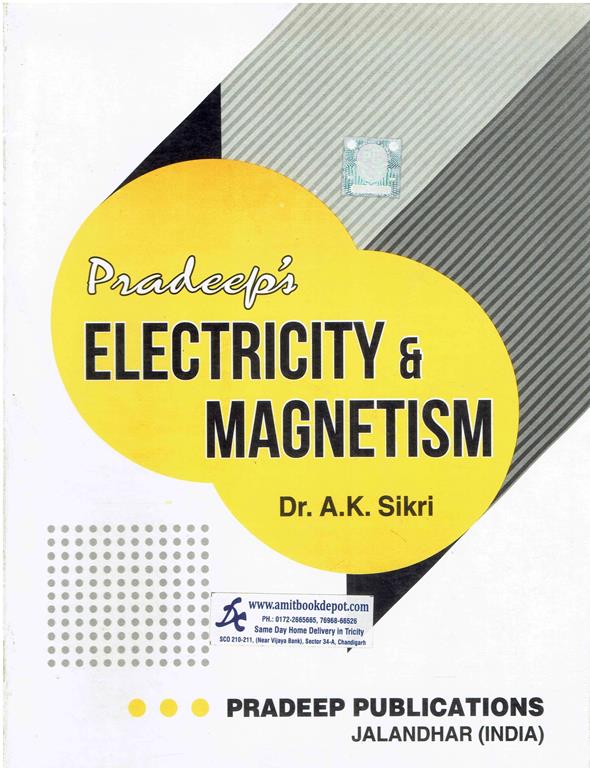
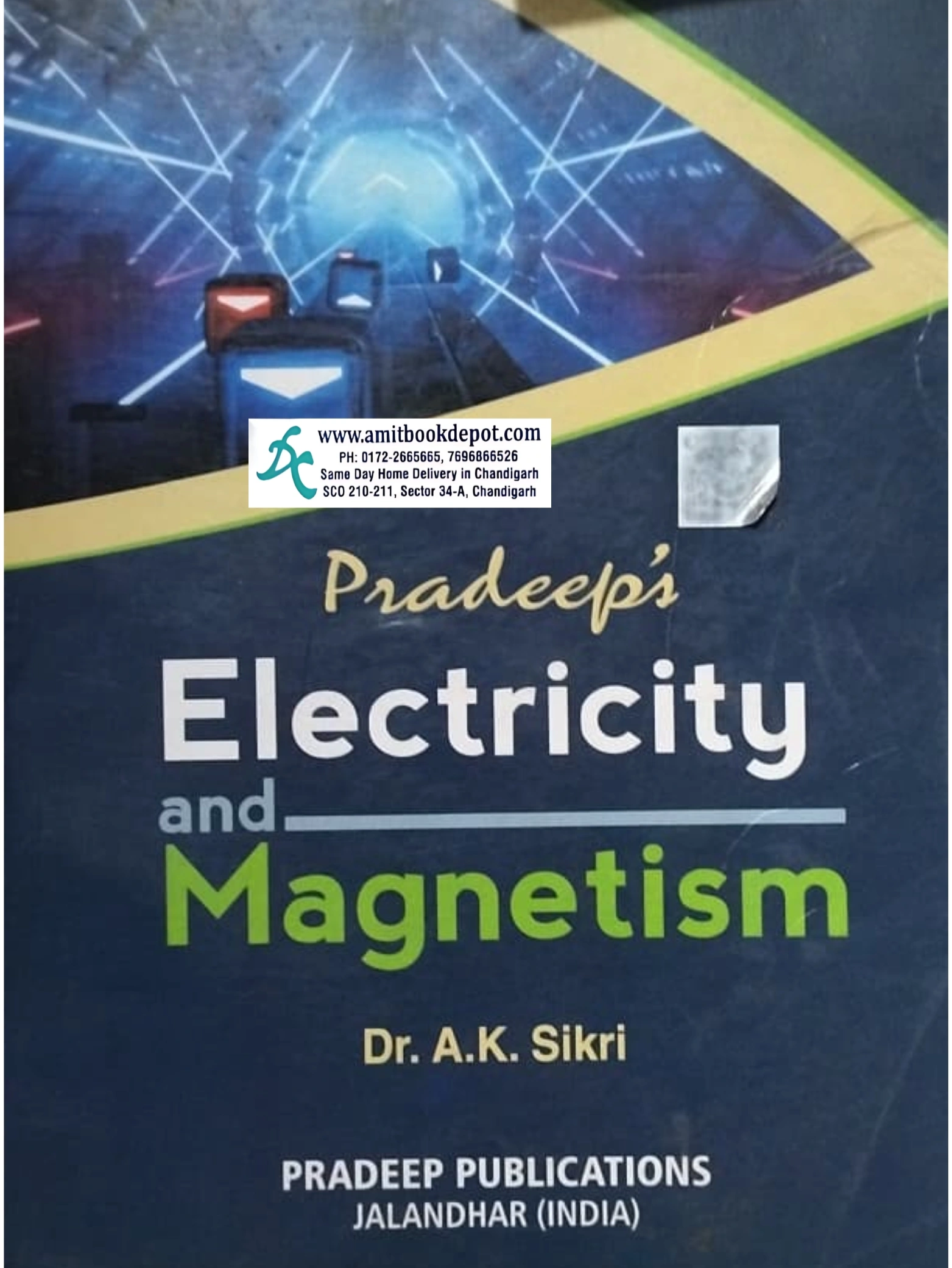
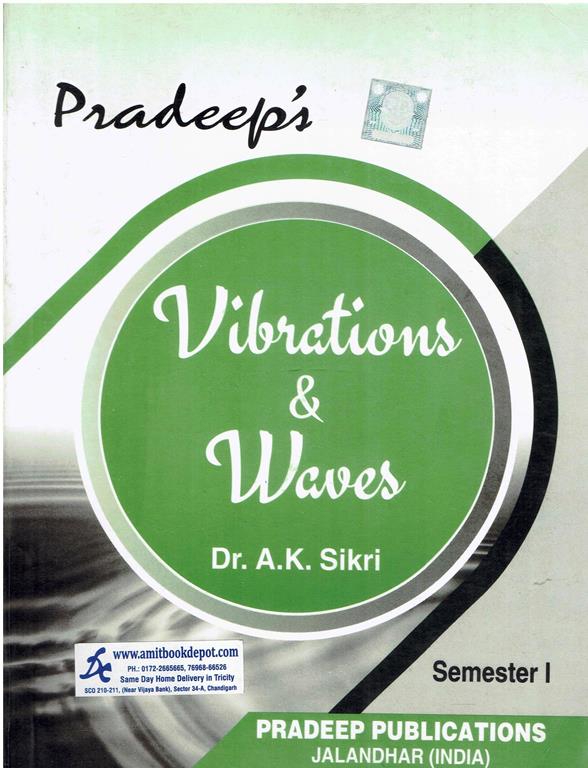
Yes, this single volume is designed to comprehensively cover the Electricity and Magnetism syllabus typically taught across the first and second semesters for BSc Physics at the listed universities.
It is explicitly tailored for Panjab University Chandigarh, Punjabi University Patiala, and Guru Nanak Dev University (G.N.D.U.) Amritsar. It is also beneficial for students from other Indian universities with similar undergraduate physics curricula.
Absolutely. Part I begins with a dedicated chapter on Calculus of Vectors, covering gradient, divergence, curl, and key theorems (Stokes', Gauss's Divergence), which are essential for understanding the physics that follows.
Yes, the book covers the method of Electrical Images and provides a detailed treatment of Poisson's and Laplace's Equations as per the prescribed syllabus.
Yes, the final chapter of Part II is dedicated to Electromagnetic Waves, deriving them from Maxwell's Equations, which is a crucial culmination of the subject.
While its primary focus is the BSc university syllabus, the strong foundational concepts and clear explanations make it a good starting resource for building the core knowledge required for competitive exams in physics.
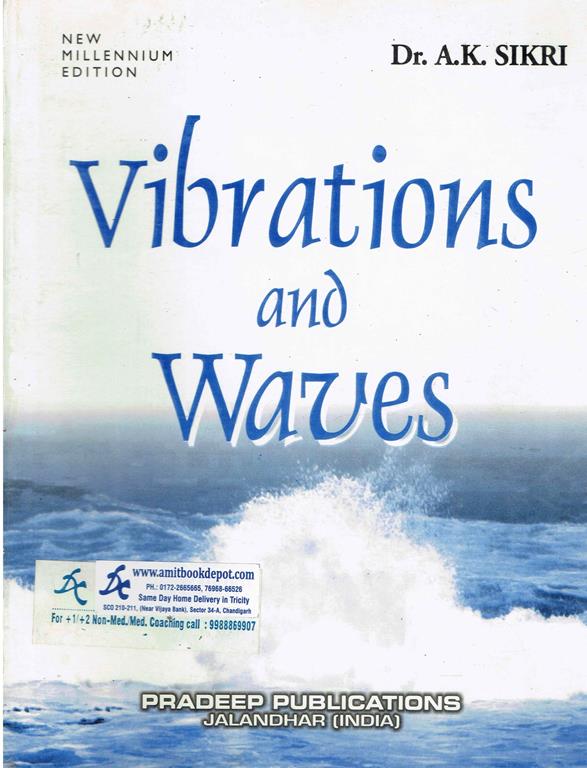
Yes, Dr. Sikri presents complex topics in a structured and step-by-step manner, making the content accessible to students beginning their undergraduate studies in physics.
Yes, it explains both the integral and differential forms of fundamental laws such as Gauss's Law, providing a complete understanding.
Yes, the "Magnetic Induction" chapter in Part II deals with magnetic materials, covering concepts related to magnetization, completing the study of fields in matter alongside dielectrics.
Yes, the initial chapter on vector calculus emphasizes the physical significance and applications of these operators, which are repeatedly used in the context of electric and magnetic fields.
No Description Added
Yes, this single volume is designed to comprehensively cover the Electricity and Magnetism syllabus typically taught across the first and second semesters for BSc Physics at the listed universities.
It is explicitly tailored for Panjab University Chandigarh, Punjabi University Patiala, and Guru Nanak Dev University (G.N.D.U.) Amritsar. It is also beneficial for students from other Indian universities with similar undergraduate physics curricula.
Absolutely. Part I begins with a dedicated chapter on Calculus of Vectors, covering gradient, divergence, curl, and key theorems (Stokes', Gauss's Divergence), which are essential for understanding the physics that follows.
Yes, the book covers the method of Electrical Images and provides a detailed treatment of Poisson's and Laplace's Equations as per the prescribed syllabus.
Yes, the final chapter of Part II is dedicated to Electromagnetic Waves, deriving them from Maxwell's Equations, which is a crucial culmination of the subject.
While its primary focus is the BSc university syllabus, the strong foundational concepts and clear explanations make it a good starting resource for building the core knowledge required for competitive exams in physics.
Yes, Dr. Sikri presents complex topics in a structured and step-by-step manner, making the content accessible to students beginning their undergraduate studies in physics.
Yes, it explains both the integral and differential forms of fundamental laws such as Gauss's Law, providing a complete understanding.
Yes, the "Magnetic Induction" chapter in Part II deals with magnetic materials, covering concepts related to magnetization, completing the study of fields in matter alongside dielectrics.
Yes, the initial chapter on vector calculus emphasizes the physical significance and applications of these operators, which are repeatedly used in the context of electric and magnetic fields.