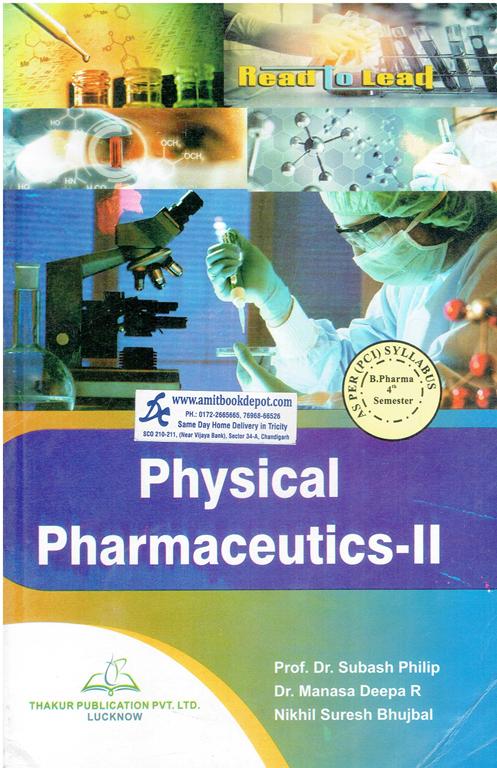
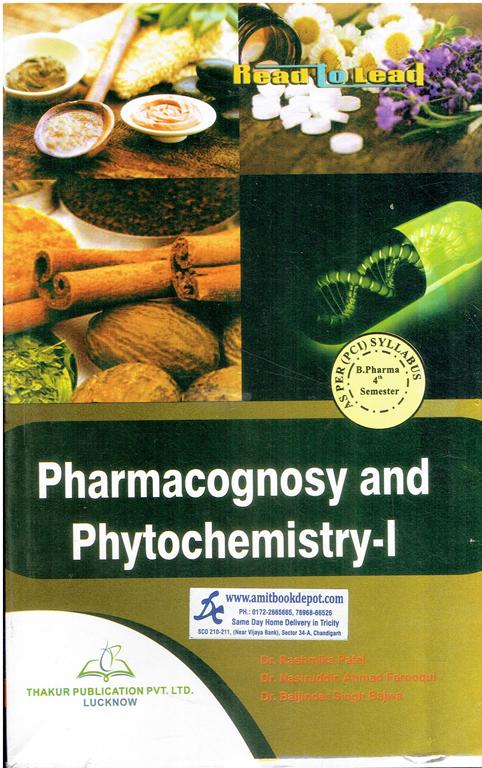
Physical Pharmaceutics 2 is the essential book for B Pharmacy 4th Semester PTU students, authored by Prof. Dr. Subash Philip, Dr. Manasa Deepa R, and Nikhil Suresh Bhujbal and published by Thakur Publishers. It comprehensively covers the PTU syllabus, including Colloidal Dispersions, Rheology, Coarse Dispersions (Suspensions & Emulsions), Micromeretics, and Drug Stability & Kinetics. Designed to clarify complex physicochemical principles, the book bridges theory with practical pharmaceutical applications in formulation development and stability testing. With chapter summaries and exercises, it is the perfect resource for academic success and building a strong foundation in physical pharmaceutics.
Yes, this textbook is meticulously crafted to cover all units and topics specified in the latest PTU syllabus for BP 403 T, ensuring complete syllabus compliance.
Yes, Unit-V on Drug Stability includes a section on "Numerical Problems" to help students understand and apply kinetic equations for shelf-life and stability calculations.
The book provides a dedicated sub-section on "Emulsion Formulation by HLB Method" within Chapter 4, explaining its practical use in selecting emulsifying agents.
While focusing on foundational principles, Chapter 5 on Micromeretics covers key methods like optical microscopy, sieving, and sedimentation. It emphasizes the derived properties crucial for formulation.
Definitely. Chapter 5 covers powder flow properties extensively, including the angle of repose, Carr's Consolidation Index (Compressibility Index), and Hausner's Ratio.
Yes, Unit-V has a comprehensive section on Accelerated Stability Testing that covers its objectives, profile, shelf-life prediction, and limitations, directly relevant to industrial practices.
Chapter 4 provides a clear comparative analysis and detailed formulation strategies for both flocculated and deflocculated suspensions.
Yes, Chapter 1 on Colloidal Dispersions includes a section on "Protective Action," which is a key concept often queried in exams.
Yes, each chapter ends with an "Exercise" section, allowing students to test their understanding of the covered material.
Chapter 3 is entirely dedicated to "Deformation of Solids," covering plastic/elastic deformation, stress, strain, elastic modulus, and the Heckel equation as per the syllabus.
Chapter 1: Colloidal Dispersions
1.1. Dispersion System
1.1.1. Introduction
1.1.2. Classification of Dispersed Systems and Their General Characteristics
1.1.3. Colloidal Dispersions
1.1.4. Size of Colloidal Particles
1.1.5. Shape of Colloidal Particles
1.1.6. Classification of Colloids
1.1.6.1. Based on the State of the Dispersed Phase and the Dispersion Medium
1.1.6.2. Based on the Interaction Between the Phases
1.1.6.3. Based on the Molecular Size or Types of Dispersed Phase Particles
1.1.7. Comparative Account of the General Properties of Colloids
1.1.8. Optical Properties
1.1.9. Kinetic Properties
1.1.10. Electrical Properties
1.1.10.1. Electrical Double Layer
1.1.10.2. Nernst and Zeta Potential
1.1.10.3. Donnan Membrane Equilibrium
1.1.11. Preparation of Colloids
1.1.11.1. Condensation Methods
1.1.11.2. Dispersion Methods
1.1.12. Purification of Colloids
1.1.12.1. Dialysis
1.1.12.2. Electrodialysis
1.1.12.3. Ultrafiltration
1.1.13. Instability of Colloids
1.1.13.1. Effect of Electrolytes on Lyophilic Colloids
1.1.13.2. Effect of Electrolytes on Lyophobic Colloids
1.1.14. Stabilization of Colloids—Coacervation
1.1.15. Protective Action
1.1.16. Application of Colloids in Pharmacy
1.2. Summary
1.3. Exercise
Chapter 2: Rheology
2.1. Rheology
2.1.1. Introduction
2.1.2. Concept of Viscosity
2.1.3. Types of Viscosity
2.1.3.1. Kinematic Viscosity
2.1.3.2. Relative Viscosity
2.1.3.3. Intrinsic Viscosity
2.1.3.4. Reduced Viscosity
2.1.4. Effect of Temperature on Viscosity
2.1.5. Law of Flow/Newtonian's Law of Flow
2.1.6. Newtonian System/Flow
2.1.7. Non-Newtonian System/Flow
2.1.7.1. Plastic Flow
2.1.7.2. Pseudo-Plastic Flow
2.1.7.3. Dilatant Flow
2.1.8. Thixotropy
2.1.8.1. Phenomena Related to Thixotropy
2.1.8.2. Measurement of Thixotropy
2.1.8.3. Thixotropy in Formulation
2.1.9. Determination of Viscosity
2.1.9.1. Capillary Viscometers
2.1.9.2. Falling Sphere Viscometer
2.1.9.3. Rotational Viscometers
2.2. Summary
2.3. Exercise
Chapter 3: Deformation of Solids
3.1. Deformation of Solids
3.1.1. Introduction
3.1.2. Plastic Deformation
3.1.3. Elastic Deformation
3.1.3.1. Stress and Strain
3.1.3.2. Heckel Equation
3.1.3.3. Elastic Modulus
3.2. Summary
3.3. Exercise
Chapter 4: Coarse Dispersion
4.1. Suspensions
4.1.1. Introduction
4.1.2. Classification
4.1.3. Flocculated and Deflocculated Suspensions
4.1.4. Interfacial Properties of Suspended Particles
4.1.4.1. Surface Free Energy
4.1.4.2. Surface Potential
4.1.5. Settling in Suspensions
4.1.5.1. Theory of Brownian Movement
4.1.5.2. Theory of Sedimentation
4.1.6. Formulations of Flocculated and Deflocculated Suspensions
4.1.6.1. Dispersion of Solids
4.1.6.2. Structured Vehicles—Deflocculated Suspension
4.1.6.3. Controlled Flocculation Flocculated Suspension
4.1.6.4. Flocculation in Structured Vehicles
4.1.7. Pharmaceutical Applications
4.2. Emulsions
4.2.1. Introduction
4.2.2. Classification
4.2.3. Theories of Emulsification
4.2.3.1. Electrical Double Layer Theory
4.2.3.2. Phase-Volume Theory
4.2.3.3. Hydration Theory of Emulsions
4.2.3.4. Oriented Wedge Theory
4.2.3.5. Adsorbed Film and Interfacial Tension Theory
4.2.4. Emulsion Formulation by HLB Method
4.2.5. Stability of Emulsions
4.2.6. Preservation of Emulsions
4.2.7. Rheological Properties of Emulsions
4.2.8. Pharmaceutical Applications
4.3. Summary
4.4. Exercise
Chapter 5: Micromeritics
5.1. Micromeritics
5.1.1. Introduction
5.1.2. Characteristics of Particles
5.1.2.1. Particle Size
5.1.2.2. Particle Size Distribution
5.1.2.3. Mean Particle Size
5.1.2.4. Particle Number
5.1.2.5. Number and Weight Distribution
5.1.2.6. Particle Shape
5.1.2.7. Specific Surface
5.1.3. Methods for Determining Particle Size (Counting and Separation Methods)
5.1.3.1. Optical Microscopy
5.1.3.2. Sieving Method
5.1.3.3. Sedimentation Method
5.1.4. Method for Determining Particle Volume
5.1.5. Methods for Determining Surface Area
5.1.5.1. Air Permeability Method
5.1.5.2. Adsorption Method
5.1.6. Derived Properties of Powders
5.1.6.1. Porosity
5.1.6.2. Packing Arrangement
5.1.6.3. Densities
5.1.6.4. Bulkiness
5.1.7. Flow Properties
5.1.7.1. Angle of Repose
5.1.7.2. Dispersibility
5.1.7.3. Carr's Consolidation Index (Compressibility Index) and Hausner's Ratio
5.1.8. Pharmaceutical Applications of Micromeritics
5.2. Summary
5.3. Exercise
Chapter 6: Drug Stability
6.1. Reaction Kinetics
6.1.1. Introduction
6.1.2. Order of Reaction
6.1.2.1. Zero-Order Reaction
6.1.2.2. Pseudo-Zero Order Reaction
6.1.2.3. First-Order Reaction
6.1.2.4. Pseudo-First Order Reaction
6.1.2.5. Second-Order Reaction
6.1.3. Rate Constant
6.1.4. Units of Basic Rate Constant
6.1.5. Determination of Reaction Order
6.2. Drug Stability
6.2.1. Introduction
6.2.2. Physical and Chemical Factors Influencing the Chemical Degradation of Pharmaceutical Products
6.2.2.1. Temperature
6.2.2.2. Solvent
6.2.2.3. Ionic Strength
6.2.2.4. Dielectric Constant
6.2.2.5. Specific and General Acid-Base Catalysis
6.2.3. Numerical Problems
6.2.4. Stabilization of Medicinal Agents Against Common Reactions
6.2.4.1. Hydrolysis
6.2.4.2. Oxidation
6.2.5. Photolytic Degradation and Its Prevention
6.2.6. Accelerated Stability Testing in Expiration Dating of Pharmaceutical Dosage Forms
6.2.6.1. Objectives of Accelerated Stability Studies
6.2.6.2. Expiration Dating
6.2.6.3. Accelerated Stability Study Profile
6.2.6.4. Prediction of Shelf Life from Accelerated Stability Data
6.2.6.5. Limitations of Accelerated Stability Studies
6.3. Summary
6.4. Exercise

Chapter 1: Colloidal Dispersions
1.1. Dispersion System
1.1.1. Introduction
1.1.2. Classification of Dispersed Systems and Their General Characteristics
1.1.3. Colloidal Dispersions
1.1.4. Size of Colloidal Particles
1.1.5. Shape of Colloidal Particles
1.1.6. Classification of Colloids
1.1.6.1. Based on the State of the Dispersed Phase and the Dispersion Medium
1.1.6.2. Based on the Interaction Between the Phases
1.1.6.3. Based on the Molecular Size or Types of Dispersed Phase Particles
1.1.7. Comparative Account of the General Properties of Colloids
1.1.8. Optical Properties
1.1.9. Kinetic Properties
1.1.10. Electrical Properties
1.1.10.1. Electrical Double Layer
1.1.10.2. Nernst and Zeta Potential
1.1.10.3. Donnan Membrane Equilibrium
1.1.11. Preparation of Colloids
1.1.11.1. Condensation Methods
1.1.11.2. Dispersion Methods
1.1.12. Purification of Colloids
1.1.12.1. Dialysis
1.1.12.2. Electrodialysis
1.1.12.3. Ultrafiltration
1.1.13. Instability of Colloids
1.1.13.1. Effect of Electrolytes on Lyophilic Colloids
1.1.13.2. Effect of Electrolytes on Lyophobic Colloids
1.1.14. Stabilization of Colloids—Coacervation
1.1.15. Protective Action
1.1.16. Application of Colloids in Pharmacy
1.2. Summary
1.3. Exercise
Chapter 2: Rheology
2.1. Rheology
2.1.1. Introduction
2.1.2. Concept of Viscosity
2.1.3. Types of Viscosity
2.1.3.1. Kinematic Viscosity
2.1.3.2. Relative Viscosity
2.1.3.3. Intrinsic Viscosity
2.1.3.4. Reduced Viscosity
2.1.4. Effect of Temperature on Viscosity
2.1.5. Law of Flow/Newtonian's Law of Flow
2.1.6. Newtonian System/Flow
2.1.7. Non-Newtonian System/Flow
2.1.7.1. Plastic Flow
2.1.7.2. Pseudo-Plastic Flow
2.1.7.3. Dilatant Flow
2.1.8. Thixotropy
2.1.8.1. Phenomena Related to Thixotropy
2.1.8.2. Measurement of Thixotropy
2.1.8.3. Thixotropy in Formulation
2.1.9. Determination of Viscosity
2.1.9.1. Capillary Viscometers
2.1.9.2. Falling Sphere Viscometer
2.1.9.3. Rotational Viscometers
2.2. Summary
2.3. Exercise
Chapter 3: Deformation of Solids
3.1. Deformation of Solids
3.1.1. Introduction
3.1.2. Plastic Deformation
3.1.3. Elastic Deformation
3.1.3.1. Stress and Strain
3.1.3.2. Heckel Equation
3.1.3.3. Elastic Modulus
3.2. Summary
3.3. Exercise
Chapter 4: Coarse Dispersion
4.1. Suspensions
4.1.1. Introduction
4.1.2. Classification
4.1.3. Flocculated and Deflocculated Suspensions
4.1.4. Interfacial Properties of Suspended Particles
4.1.4.1. Surface Free Energy
4.1.4.2. Surface Potential
4.1.5. Settling in Suspensions
4.1.5.1. Theory of Brownian Movement
4.1.5.2. Theory of Sedimentation
4.1.6. Formulations of Flocculated and Deflocculated Suspensions
4.1.6.1. Dispersion of Solids
4.1.6.2. Structured Vehicles—Deflocculated Suspension
4.1.6.3. Controlled Flocculation Flocculated Suspension
4.1.6.4. Flocculation in Structured Vehicles
4.1.7. Pharmaceutical Applications
4.2. Emulsions
4.2.1. Introduction
4.2.2. Classification
4.2.3. Theories of Emulsification
4.2.3.1. Electrical Double Layer Theory
4.2.3.2. Phase-Volume Theory
4.2.3.3. Hydration Theory of Emulsions
4.2.3.4. Oriented Wedge Theory
4.2.3.5. Adsorbed Film and Interfacial Tension Theory
4.2.4. Emulsion Formulation by HLB Method
4.2.5. Stability of Emulsions
4.2.6. Preservation of Emulsions
4.2.7. Rheological Properties of Emulsions
4.2.8. Pharmaceutical Applications
4.3. Summary
4.4. Exercise
Chapter 5: Micromeritics
5.1. Micromeritics
5.1.1. Introduction
5.1.2. Characteristics of Particles
5.1.2.1. Particle Size
5.1.2.2. Particle Size Distribution
5.1.2.3. Mean Particle Size
5.1.2.4. Particle Number
5.1.2.5. Number and Weight Distribution
5.1.2.6. Particle Shape
5.1.2.7. Specific Surface
5.1.3. Methods for Determining Particle Size (Counting and Separation Methods)
5.1.3.1. Optical Microscopy
5.1.3.2. Sieving Method
5.1.3.3. Sedimentation Method
5.1.4. Method for Determining Particle Volume
5.1.5. Methods for Determining Surface Area
5.1.5.1. Air Permeability Method
5.1.5.2. Adsorption Method
5.1.6. Derived Properties of Powders
5.1.6.1. Porosity
5.1.6.2. Packing Arrangement
5.1.6.3. Densities
5.1.6.4. Bulkiness
5.1.7. Flow Properties
5.1.7.1. Angle of Repose
5.1.7.2. Dispersibility
5.1.7.3. Carr's Consolidation Index (Compressibility Index) and Hausner's Ratio
5.1.8. Pharmaceutical Applications of Micromeritics
5.2. Summary
5.3. Exercise
Chapter 6: Drug Stability
6.1. Reaction Kinetics
6.1.1. Introduction
6.1.2. Order of Reaction
6.1.2.1. Zero-Order Reaction
6.1.2.2. Pseudo-Zero Order Reaction
6.1.2.3. First-Order Reaction
6.1.2.4. Pseudo-First Order Reaction
6.1.2.5. Second-Order Reaction
6.1.3. Rate Constant
6.1.4. Units of Basic Rate Constant
6.1.5. Determination of Reaction Order
6.2. Drug Stability
6.2.1. Introduction
6.2.2. Physical and Chemical Factors Influencing the Chemical Degradation of Pharmaceutical Products
6.2.2.1. Temperature
6.2.2.2. Solvent
6.2.2.3. Ionic Strength
6.2.2.4. Dielectric Constant
6.2.2.5. Specific and General Acid-Base Catalysis
6.2.3. Numerical Problems
6.2.4. Stabilization of Medicinal Agents Against Common Reactions
6.2.4.1. Hydrolysis
6.2.4.2. Oxidation
6.2.5. Photolytic Degradation and Its Prevention
6.2.6. Accelerated Stability Testing in Expiration Dating of Pharmaceutical Dosage Forms
6.2.6.1. Objectives of Accelerated Stability Studies
6.2.6.2. Expiration Dating
6.2.6.3. Accelerated Stability Study Profile
6.2.6.4. Prediction of Shelf Life from Accelerated Stability Data
6.2.6.5. Limitations of Accelerated Stability Studies
6.3. Summary
6.4. Exercise
Yes, this textbook is meticulously crafted to cover all units and topics specified in the latest PTU syllabus for BP 403 T, ensuring complete syllabus compliance.
Yes, Unit-V on Drug Stability includes a section on "Numerical Problems" to help students understand and apply kinetic equations for shelf-life and stability calculations.
The book provides a dedicated sub-section on "Emulsion Formulation by HLB Method" within Chapter 4, explaining its practical use in selecting emulsifying agents.
While focusing on foundational principles, Chapter 5 on Micromeretics covers key methods like optical microscopy, sieving, and sedimentation. It emphasizes the derived properties crucial for formulation.
Definitely. Chapter 5 covers powder flow properties extensively, including the angle of repose, Carr's Consolidation Index (Compressibility Index), and Hausner's Ratio.
Yes, Unit-V has a comprehensive section on Accelerated Stability Testing that covers its objectives, profile, shelf-life prediction, and limitations, directly relevant to industrial practices.
Chapter 4 provides a clear comparative analysis and detailed formulation strategies for both flocculated and deflocculated suspensions.
Yes, Chapter 1 on Colloidal Dispersions includes a section on "Protective Action," which is a key concept often queried in exams.
Yes, each chapter ends with an "Exercise" section, allowing students to test their understanding of the covered material.
Chapter 3 is entirely dedicated to "Deformation of Solids," covering plastic/elastic deformation, stress, strain, elastic modulus, and the Heckel equation as per the syllabus.