Categories
College Bookssss >
BA PU Chandigarh
BSC PU Chandigarh
MSC PU Chandigarh
BBA PU Chandigarh
MA PU Chandigarh
Medical Books
Engineering Books
Management Books
PGDCA Books
BCOM PU Chandigarh
MCOM PU Chandigarh
BCA PU Chandigarh
MCA PU Chandigarh
animate-books

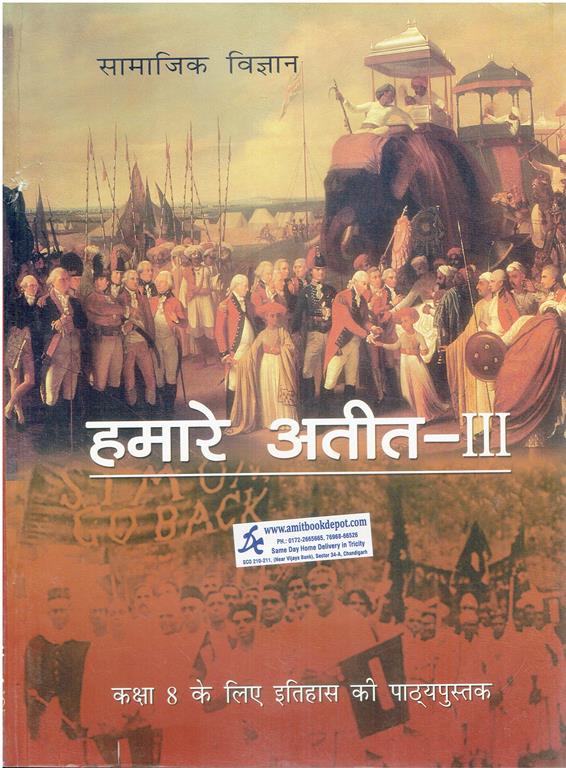
NCERT Hamare Atit Bhag 3 for Class 8th (Hindi Edition)

by Madhurima
₹65 ₹65.00(-/ off)

Rating & Reviews

23 Customer Review

NCERT History Our Pasts-III, a comprehensive textbook published by NCERT for 8th-grade students. This engaging resource explores pivotal events from the emergence of the East India Company to the rise of the National Movement, helping students understand the socio-economic dynamics of the time. Through themes of resistance, reform, and unity, the book illuminates the diverse voices that shaped India's past. Designed in accessible English, it encourages critical thinking and connects historical events to contemporary society, making it an essential companion for young learners eager to explore their nation's rich history.

Have Doubts Regarding This Product ? Ask Your Question

  • Q1
    What is this book for?
    A1

    This book is designed for 8th-grade students, making it an essential companion for every student eager to explore India's history.

  • Q2
    What is the main theme of this book?
    A2

    The main theme of this book is to explore the layers of Indian history, starting from the emergence of the East India Company and its gradual establishment of power.

  • Q3
    What makes this book unique?
    A3

    The book is designed with an accessible approach, engaging students with thought-provoking questions and interactive elements that enhance their learning experience.

  • Q4
    Is this book suitable for self-study or classroom use?
    A4

    Yes, this book is suitable for both self-study and classroom use, making it an excellent resource for students and teachers

  • Q5
    What kind of content can I expect to find in the book?
    A5

    The book provides a detailed exploration of the socio-economic dynamics of the time, highlighting the rural landscape and the lives of tribals, as well as their aspirations and challenges.

  • Q6
    Is this book aligned with the NCERT curriculum?
    A6

    Yes, the book is part of the NCERT curriculum and aligns with the learning objectives and outcomes for 8th-grade history students.

  • Q7
    Does this book focus on specific events or time periods?
    A7

    Yes, it covers the period from when the East India Company emerged, explores the subsequent establishment of its power, and delves into the events of the 1857 Revolt. The book then continues to trace the National Movement up to the 1947, providing a complete, integrated narrative of the time.

  • Q8
    Does the book help in understanding the impact of the past on our present society?
    A8

    Yes, the book encourages students to connect past events to present-day issues by including thought-provoking questions and interactive elements that enhance their learning experience.

  • Q9
    What is the significance of the title "Our Pasts"?
    A9

    It reflects a focus on the multiple perspectives of the past, encouraging students to see that history isn't a single, monolithic narrative, but a collection of stories and experiences. The "Our" in the title emphasizes a sense of shared heritage.

0.00

0 Overall Rating
  • 5
    0
  • 4
    0
  • 3
    0
  • 2
    0
  • 1
    0

Try this product & share your review & thoughts

1. Introduction: How, When and Where 
2. From Trade to Territory The Company Establishes Power 
3. Ruling the Countryside 
4. Tribals, Dikus and the Vision of a Golden Age 
5. When People Revolt 1857 and After 
6. Civilising the “Native”, Educating the Nation 
7. Women, Caste and Reform 
8. The Making of the National Movement: 1870s-–1947
CBSE SYLLABUS : NCERT Social Science Our Pasts 3 History for Class 8th

1. Where, When, How
(a) An overview of the period.
(b) Introduction to the new geographical categories.
(c) An outline of the time frame.
(d) An introduction to the sources.

2. The Establishment of Company Power
(a) Mercantilism and trade wars.
(b) Struggle for territory, wars with Indian rulers.
(c) The growth of the colonial army and civilian administration. Regional focus: Tamil Nadu.

3. Rural Life and Society
(a) Colonial agrarian policies: their effect on peasants and landlords.
(b) Growth of commercial crops.
(c) Peasant revolts: focus on indigo rebellions.
Regional focus: Bengal and Bihar. Some comparison with later developments in Punjab.

4. Colonialism and Tribal Societies
(a) Changes within tribal economies and societies in the nineteenth century.
(b) Tribal revolts: focus on Birsa Munda.
Regional focus: Chotanagpur and North-East.

5. The Revolt of 1857-58
(a) The rebellion in the army and the spread of the movement.
(b) The nature of elite and peasant participation. Regional focus: Awadh.

6. Education and British rule
(a) The new education system—schools, syllabi, colleges, universities, technical training.
(b) Changes in the indigenous systems.
(c) Growth of ‘National education.’.
Case studies: Baroda, Aligarh.

7. Women and reform
(a) Debates around sati, widow remarriage, child marriage, and age of consent.
(b) Ideas of different reformers on the position of women and women’s education.
Regional focus: Maharashtra and Bengal

8. The Nationalist Movement
(a) Overview of the nationalist movement from the 1870s to the 1940s.
(b) Diverse trends within the movement and different social groups involved.
(c) Links with constitutional changes.
Case study: Khilafat to Non-Cooperation.

NCERT History Our Pasts-III invites students to uncover the layers of Indian history, starting from the emergence of the East India Company and its gradual establishment of power. It provides a detailed exploration of the socio-economic dynamics of the time, shedding light on the rural landscape and the lives of tribals, highlighting their aspirations and challenges. The narrative is designed to foster a deeper appreciation of historical context, making connections between past events and their implications for contemporary society.

The text also artfully addresses critical events such as the Revolt of 1857, offering insights into the struggles of the masses against colonial rule. This section is particularly significant, as it empowers students to understand the roots of resistance and the collective quest for independence that emerged in the following decades. 

An essential feature of the book is its focus on the transformative ideologies that emerged during the period. Students will encounter discussions on gender, caste, and reform, providing a comprehensive understanding of how these elements intertwined to reshape societal norms and values. The book emphasizes the role of women in activism and reform movements, challenging students to consider the diverse voices that contributed to India's national narrative.

Moreover, "NCERT History Our Pasts-III" includes a thorough examination of the National Movement, tracing its evolution from the 1870s to 1947. This section not only outlines key figures and events but also inspires students to reflect on the importance of unity and resilience in the pursuit of freedom. 

Designed with an accessible approach, the textbook engages students with thought-provoking questions and interactive elements that enhance their learning experience. Whether used in the classroom or for independent study, this book fosters curiosity about India's history and encourages students to connect past events to present-day issues. 

In summary, "NCERT History Our Pasts-III" is more than just a textbook; it is a gateway to understanding the rich, multifaceted history of India. With its well-researched content and engaging narrative, this book is an essential companion for every 8th-grade student eager to explore the past and its influence on the future.

1. Introduction: How, When and Where 
2. From Trade to Territory The Company Establishes Power 
3. Ruling the Countryside 
4. Tribals, Dikus and the Vision of a Golden Age 
5. When People Revolt 1857 and After 
6. Civilising the “Native”, Educating the Nation 
7. Women, Caste and Reform 
8. The Making of the National Movement: 1870s-–1947

Have Doubts Regarding This Product ? Ask Your Question

  • Q1
    What is this book for?
    A1

    This book is designed for 8th-grade students, making it an essential companion for every student eager to explore India's history.

  • Q2
    What is the main theme of this book?
    A2

    The main theme of this book is to explore the layers of Indian history, starting from the emergence of the East India Company and its gradual establishment of power.

  • Q3
    What makes this book unique?
    A3

    The book is designed with an accessible approach, engaging students with thought-provoking questions and interactive elements that enhance their learning experience.

  • Q4
    Is this book suitable for self-study or classroom use?
    A4

    Yes, this book is suitable for both self-study and classroom use, making it an excellent resource for students and teachers

  • Q5
    What kind of content can I expect to find in the book?
    A5

    The book provides a detailed exploration of the socio-economic dynamics of the time, highlighting the rural landscape and the lives of tribals, as well as their aspirations and challenges.

  • Q6
    Is this book aligned with the NCERT curriculum?
    A6

    Yes, the book is part of the NCERT curriculum and aligns with the learning objectives and outcomes for 8th-grade history students.

  • Q7
    Does this book focus on specific events or time periods?
    A7

    Yes, it covers the period from when the East India Company emerged, explores the subsequent establishment of its power, and delves into the events of the 1857 Revolt. The book then continues to trace the National Movement up to the 1947, providing a complete, integrated narrative of the time.

  • Q8
    Does the book help in understanding the impact of the past on our present society?
    A8

    Yes, the book encourages students to connect past events to present-day issues by including thought-provoking questions and interactive elements that enhance their learning experience.

  • Q9
    What is the significance of the title "Our Pasts"?
    A9

    It reflects a focus on the multiple perspectives of the past, encouraging students to see that history isn't a single, monolithic narrative, but a collection of stories and experiences. The "Our" in the title emphasizes a sense of shared heritage.

CBSE SYLLABUS : NCERT Social Science Our Pasts 3 History for Class 8th

1. Where, When, How
(a) An overview of the period.
(b) Introduction to the new geographical categories.
(c) An outline of the time frame.
(d) An introduction to the sources.

2. The Establishment of Company Power
(a) Mercantilism and trade wars.
(b) Struggle for territory, wars with Indian rulers.
(c) The growth of the colonial army and civilian administration. Regional focus: Tamil Nadu.

3. Rural Life and Society
(a) Colonial agrarian policies: their effect on peasants and landlords.
(b) Growth of commercial crops.
(c) Peasant revolts: focus on indigo rebellions.
Regional focus: Bengal and Bihar. Some comparison with later developments in Punjab.

4. Colonialism and Tribal Societies
(a) Changes within tribal economies and societies in the nineteenth century.
(b) Tribal revolts: focus on Birsa Munda.
Regional focus: Chotanagpur and North-East.

5. The Revolt of 1857-58
(a) The rebellion in the army and the spread of the movement.
(b) The nature of elite and peasant participation. Regional focus: Awadh.

6. Education and British rule
(a) The new education system—schools, syllabi, colleges, universities, technical training.
(b) Changes in the indigenous systems.
(c) Growth of ‘National education.’.
Case studies: Baroda, Aligarh.

7. Women and reform
(a) Debates around sati, widow remarriage, child marriage, and age of consent.
(b) Ideas of different reformers on the position of women and women’s education.
Regional focus: Maharashtra and Bengal

8. The Nationalist Movement
(a) Overview of the nationalist movement from the 1870s to the 1940s.
(b) Diverse trends within the movement and different social groups involved.
(c) Links with constitutional changes.
Case study: Khilafat to Non-Cooperation.

0.00

0 Overall Rating
  • 5
    0
  • 4
    0
  • 3
    0
  • 2
    0
  • 1
    0

Try this product & share your review & thoughts

Top Trending Product

Related Product

Related Product

Related Blog Posts

Latest Blogs

Latest Blogs

blog-img
Classic Literature Reimagined: Discuss modern twists on classic novels.
Lorem ipsum dolor sit amet, consectetur adipiscing elit, sed do eiusmod tempor incididunt ut labore et dolore magna aliqua. Ut enim ad minim veniam, quis nostrud exercitation ullamco Lorem ipsum dolor sit amet, consectetur adipiscing elit, sed do eiusmod tempor incididunt ut labore et dolore magna aliqua. Utenim ad minim veniam, quis nostrud exercitation ullamco Lorem ipsum dolor sit amet, consecte...
Read more
Author name | 10 jan, 2025
blog-img
Classic Literature Reimagined: Discuss modern twists on classic novels.
Lorem ipsum dolor sit amet, consectetur adipiscing elit, sed do eiusmod tempor incididunt ut labore et dolore magna aliqua. Ut enim ad minim veniam, quis nostrud exercitation ullamco Lorem ipsum dolor sit amet, consectetur adipiscing elit, sed do eiusmod tempor incididunt ut labore et dolore magna aliqua. Utenim ad minim veniam, quis nostrud exercitation ullamco Lorem ipsum dolor sit amet, consecte...
Read more
Author name | 10 jan, 2025
blog-img
Classic Literature Reimagined: Discuss modern twists on classic novels.
Lorem ipsum dolor sit amet, consectetur adipiscing elit, sed do eiusmod tempor incididunt ut labore et dolore magna aliqua. Ut enim ad minim veniam, quis nostrud exercitation ullamco Lorem ipsum dolor sit amet, consectetur adipiscing elit, sed do eiusmod tempor incididunt ut labore et dolore magna aliqua. Utenim ad minim veniam, quis nostrud exercitation ullamco Lorem ipsum dolor sit amet, consecte...
Read more
Author name | 10 jan, 2025
blog-img
Classic Literature Reimagined: Discuss modern twists on classic novels.
Lorem ipsum dolor sit amet, consectetur adipiscing elit...
Read more
Author Name | 10 Jan, 2025
blog-img
Classic Literature Reimagined: Discuss modern twists on classic novels.
Lorem ipsum dolor sit amet, consectetur adipiscing elit...
Read more
Author Name | 10 Jan, 2025
blog-img
Classic Literature Reimagined: Discuss modern twists on classic novels.
Lorem ipsum dolor sit amet, consectetur adipiscing elit...
Read more
Author Name | 10 Jan, 2025
blog-img
Classic Literature Reimagined: Discuss modern twists on classic novels.
Lorem ipsum dolor sit amet, consectetur adipiscing elit...
Read more
Author Name | 10 Jan, 2025
blog-img
Classic Literature Reimagined: Discuss modern twists on classic novels.
Lorem ipsum dolor sit amet, consectetur adipiscing elit...
Read more
Author Name | 10 Jan, 2025
blog-img
Classic Literature Reimagined: Discuss modern twists on classic novels.
Lorem ipsum dolor sit amet, consectetur adipiscing elit...
Read more
Author Name | 10 Jan, 2025
blog-img
Classic Literature Reimagined: Discuss modern twists on classic novels.
Lorem ipsum dolor sit amet, consectetur adipiscing elit...
Read more
Author Name | 10 Jan, 2025
blog-img
Classic Literature Reimagined: Discuss modern twists on classic novels.
Lorem ipsum dolor sit amet, consectetur adipiscing elit...
Read more
Author Name | 10 Jan, 2025
blog-img
Classic Literature Reimagined: Discuss modern twists on classic novels.
Lorem ipsum dolor sit amet, consectetur adipiscing elit...
Read more
Author Name | 10 Jan, 2025