-
Mon-Fri: 10AM to 8PM 01722665665
-
My Account
-
-
0
Total :
₹ 0.00

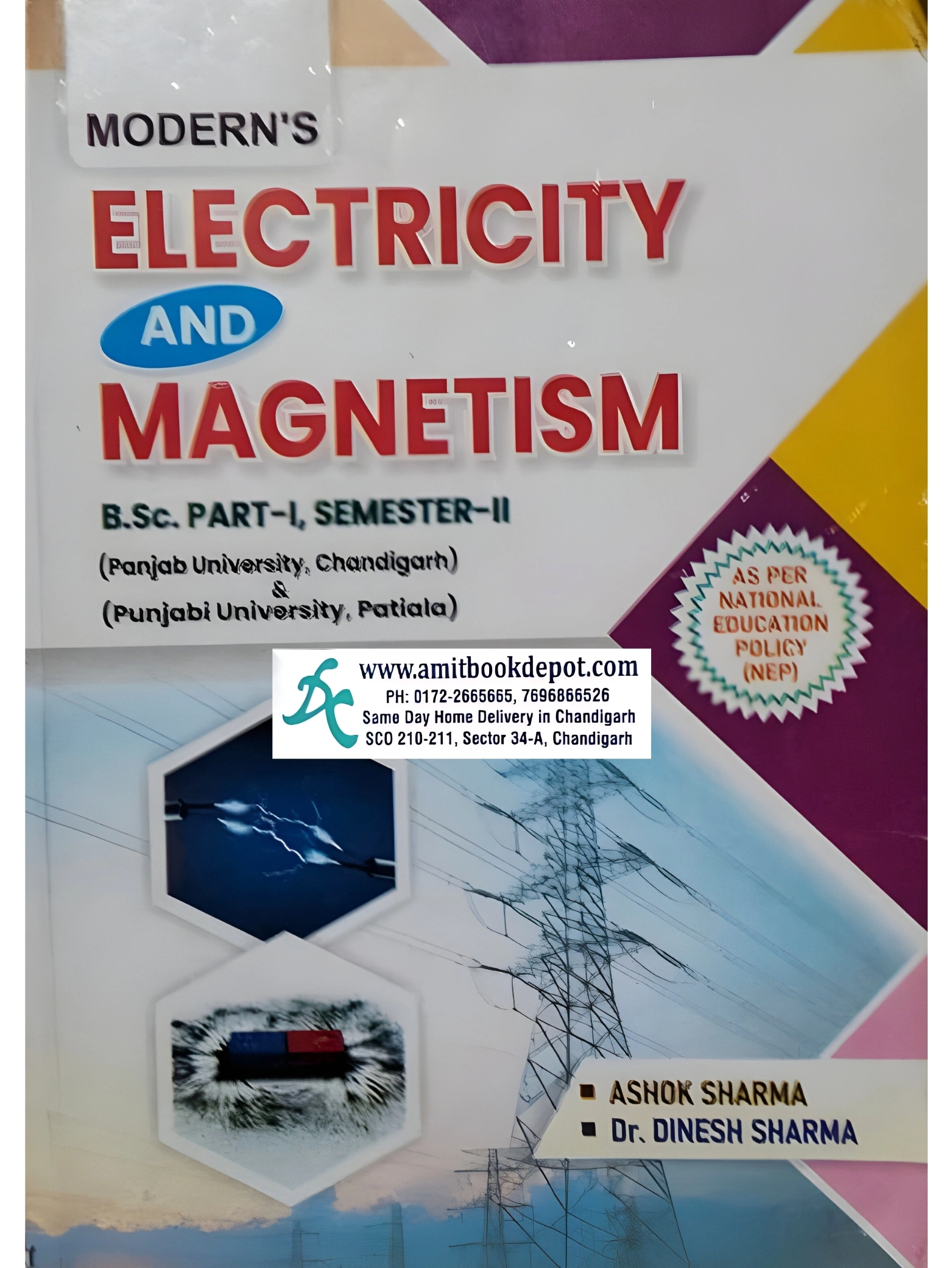
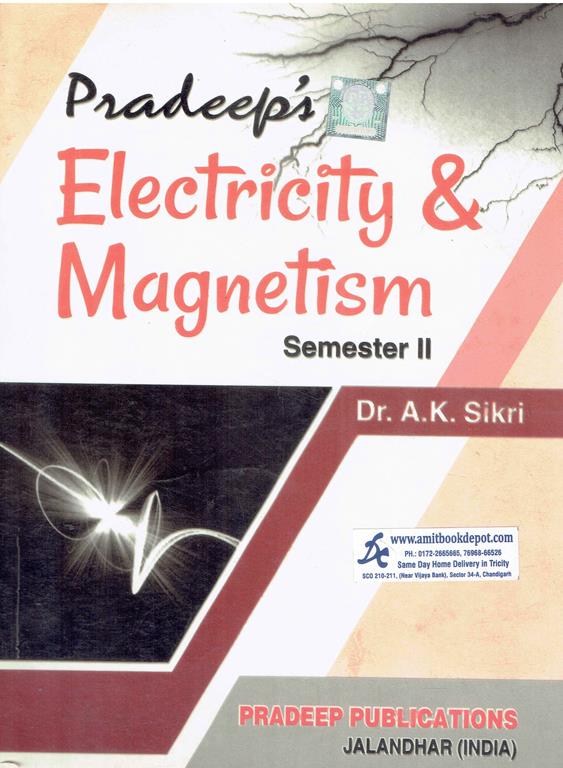
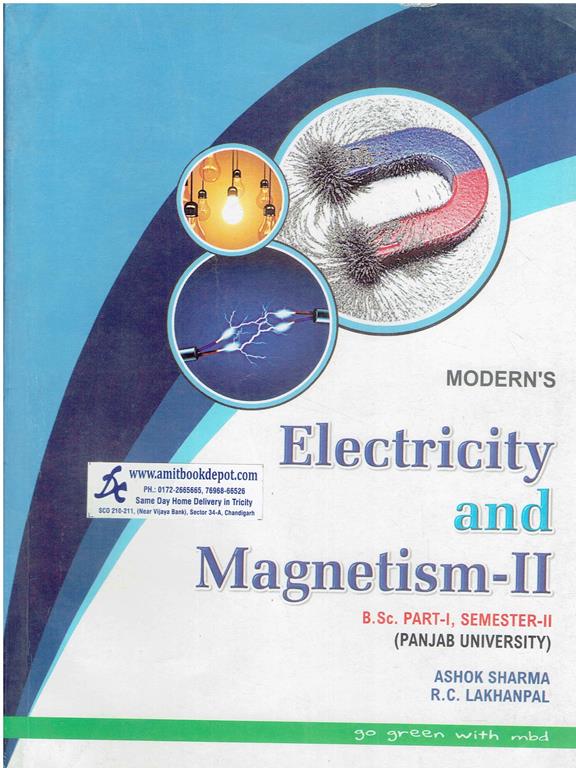
Yes, this book is meticulously crafted to cover the entire latest syllabus for the PHYDSC2: Electricity and Magnetism course as prescribed by Panjab University, Chandigarh, and is updated as per NEP-2020 guidelines.
Absolutely. The book begins with a dedicated section on the Basic Ideas of Vector Calculus, including Gradient, Divergence, Curl, Stoke's Theorem, and Gauss's Divergence Theorem, which are essential for understanding the physics that follows.
The book places a strong emphasis on problem-solving. Concepts are illustrated with applications, and the content is structured to reflect the exam pattern where 25-30% of the marks are allocated to numerical problems.
Yes, the book provides detailed applications of Coulomb's Law and Gauss's Law for various charge distributions, including a point charge, dipole, line charge, charged ring, and circular disc.
Yes, the book details the Biot-Savart Law and its applications to standard configurations like a long straight wire, a circular current loop, and a solenoid.
Yes, Unit-II clearly defines the magnetic vectors M (Magnetization) and H (Magnetic Field Strength), explaining their relationship with free and bound currents, along with the concepts of permeability and susceptibility.
Yes, the book provides a thorough treatment of Electromagnetic Induction, Faraday's Law, the concept of Displacement Current, and both mutual and self-inductance.
The syllabus and content are divided logically into units that mirror the structure of the question paper, which has three units, including a compulsory question with short answer-type parts. The book's organization helps in targeted preparation for this format.
Yes, Unit-II includes a discussion on current density, the microscopic form of Ohm's Law (J=σE), the failure of Ohm's law, and the invariance of charge in different reference frames.
Yes, the book covers the energy stored in a dielectric medium (Unit-I) as well as the energy stored in a magnetic field (Unit-II).
No Description Added
Yes, this book is meticulously crafted to cover the entire latest syllabus for the PHYDSC2: Electricity and Magnetism course as prescribed by Panjab University, Chandigarh, and is updated as per NEP-2020 guidelines.
Absolutely. The book begins with a dedicated section on the Basic Ideas of Vector Calculus, including Gradient, Divergence, Curl, Stoke's Theorem, and Gauss's Divergence Theorem, which are essential for understanding the physics that follows.
The book places a strong emphasis on problem-solving. Concepts are illustrated with applications, and the content is structured to reflect the exam pattern where 25-30% of the marks are allocated to numerical problems.
Yes, the book provides detailed applications of Coulomb's Law and Gauss's Law for various charge distributions, including a point charge, dipole, line charge, charged ring, and circular disc.
Yes, the book details the Biot-Savart Law and its applications to standard configurations like a long straight wire, a circular current loop, and a solenoid.
Yes, Unit-II clearly defines the magnetic vectors M (Magnetization) and H (Magnetic Field Strength), explaining their relationship with free and bound currents, along with the concepts of permeability and susceptibility.
Yes, the book provides a thorough treatment of Electromagnetic Induction, Faraday's Law, the concept of Displacement Current, and both mutual and self-inductance.
The syllabus and content are divided logically into units that mirror the structure of the question paper, which has three units, including a compulsory question with short answer-type parts. The book's organization helps in targeted preparation for this format.
Yes, Unit-II includes a discussion on current density, the microscopic form of Ohm's Law (J=σE), the failure of Ohm's law, and the invariance of charge in different reference frames.
Yes, the book covers the energy stored in a dielectric medium (Unit-I) as well as the energy stored in a magnetic field (Unit-II).