Categories
College Bookssss >
BA PU Chandigarh
BSC PU Chandigarh
MSC PU Chandigarh
BBA PU Chandigarh
MA PU Chandigarh
Medical Books
Engineering Books
Management Books
PGDCA Books
BCOM PU Chandigarh
MCOM PU Chandigarh
BCA PU Chandigarh
MCA PU Chandigarh
animate-books

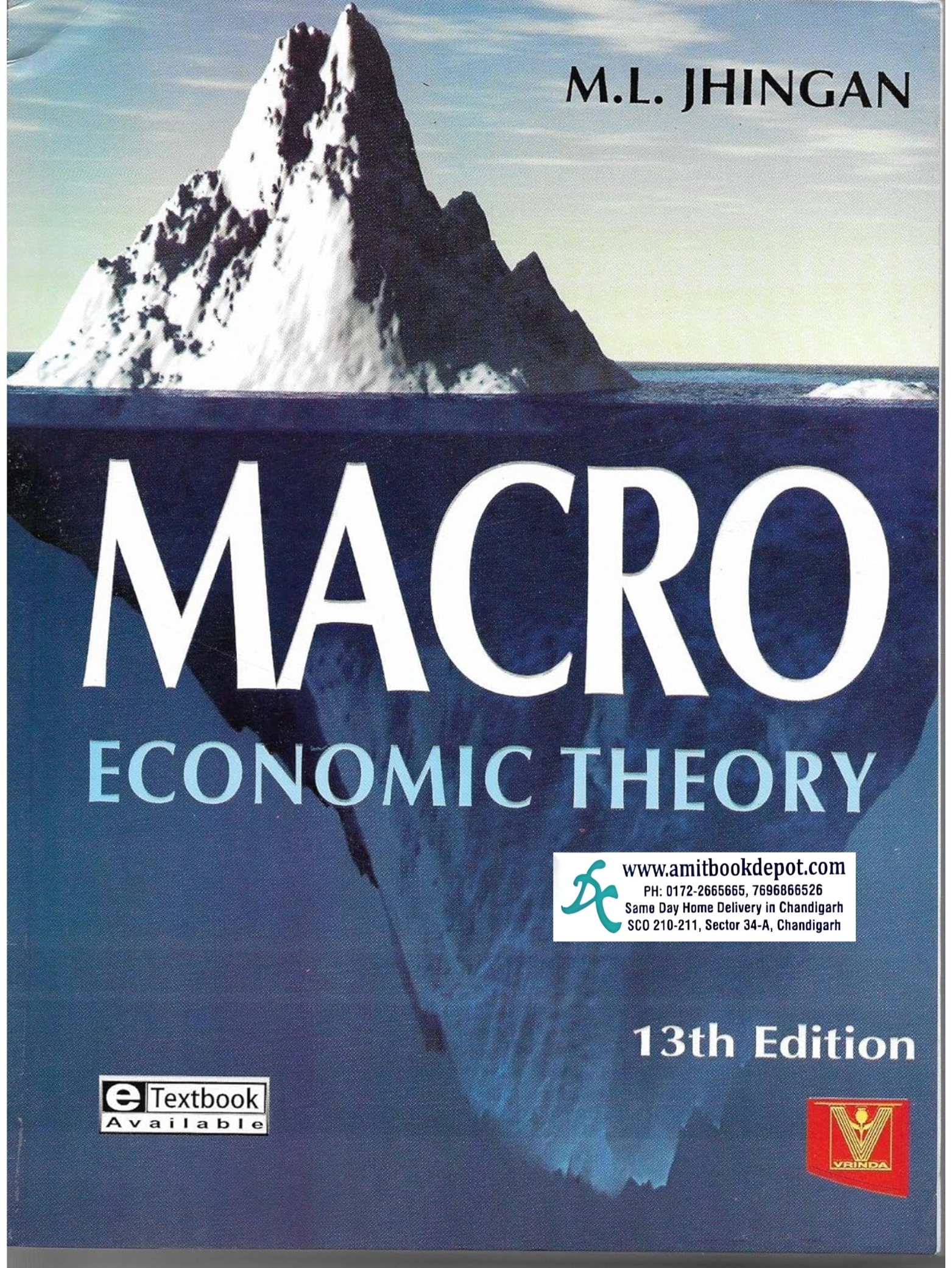
Vrinda Macro Economics Theory

by Madhurima
₹440 ₹440.00(-/ off)

Rating & Reviews

23 Customer Review

Vrinda Macro Economics Theory by M. L. Jhingan and B. K. Jhingan is a comprehensive and authoritative book for advanced economics students and competitive exam aspirants. Published by Vrinda Publications, it exhaustively covers core principles, from National Income and Keynesian Theory (Effective Demand, Multiplier, Consumption Function) to Monetary Theory, Inflation, Business Cycles, and Growth Models (Harrod-Domar, Solow-Swan). It provides in-depth analysis of macroeconomic policies (monetary & fiscal), the IS-LM model, modern macroeconomics (rational expectations, new Keynesian economics), and open economy macroeconomics. With clear explanations and chapter exercises, it is an indispensable resource for mastering macroeconomic theory and its applications.

Have Doubts Regarding This Product ? Ask Your Question

  • Q1
    What is the primary target audience for this macroeconomics book?
    A1

    This book is designed for advanced undergraduate and postgraduate students of economics, aspirants of competitive exams like UPSC, UGC NET, SET, and various Indian university courses, as well as researchers and teachers seeking a comprehensive reference text.

  • Q2
    Does this book cover both classical and modern macroeconomic theories?
    A2

    Yes, it provides a balanced and detailed analysis, starting from Classical and Keynesian economics, progressing through Monetarism, and extensively covering Modern Macroeconomics including New Classical, New Keynesian, Real Business Cycle, and Endogenous Growth theories.

  • Q3
    Is the IS-LM model analysis included in this textbook?
    A3

    Absolutely. Part Seven includes dedicated chapters on the IS-LM functions for general equilibrium, extensions of the IS-LM model, and its application in analyzing the effectiveness of monetary and fiscal policy.

  • Q4
    Are there chapters dedicated to economic growth models?
    A4

    Yes, Part Six is entirely devoted to Growth Models, including detailed explanations of the Harrod-Domar models, the Solow-Swan model, the Endogenous Growth Theory, and concepts like steady-state growth and the golden rule.

  • Q5
    Is open economy macroeconomics covered?
    A5

    Yes, Part Nine is dedicated to Macroeconomics in an Open Economy, covering Balance of Payments adjustment mechanisms, the Mundell-Fleming Model, foreign exchange rate determination and policies, and international capital movements.

  • Q6
    Is the debate between Classical and Keynesian economics clearly presented?
    A6

    Yes, the book provides a clear, comparative analysis in dedicated chapters, summarizing both theories, highlighting Keynes's criticisms of the classical model, and directly comparing their models of income and employment.

  • Q7
    Does it explain the concept of the Multiplier in various contexts?
    A7

    Yes, it covers the basic investment multiplier, complex multipliers (government expenditure, tax, balanced budget), the foreign trade multiplier, and the interaction of the multiplier with the acceleration principle in the Super Multiplier.

  • Q8
    How recent is the content and theoretical coverage?
    A8

    he book covers macroeconomic thought up to and including late-20th and early-21st century developments, such as New Keynesian Economics, Real Business Cycle Theory, and Endogenous Growth Theory, making it relevant for current academic syllabi.

  • Q9
    Is the financial system and role of banks covered?
    A9

    Yes, the Monetary Theory section includes chapters on the supply of money, credit creation by commercial banks, central banking functions, and credit control methods.

  • Q10
    Is this book suitable for someone preparing for the UGC NET/JRF in Economics?
    A10

    Yes, its comprehensive coverage of both core and advanced topics, structured presentation, and chapter-end exercises make it an excellent and highly recommended resource for UGC NET/JRF and similar competitive examination preparation.

0.00

0 Overall Rating
  • 5
    0
  • 4
    0
  • 3
    0
  • 2
    0
  • 1
    0

Try this product & share your review & thoughts

PART ONE—INTRODUCTION

Chapter 1
The Nature and Scope of Macroeconomics
Introduction; Nature of Macroeconomics; Difference Between Microeconomics and Macroeconomics; Dependence of Microeconomic Theory on Macroeconomics; Dependence of Macroeconomics on Microeconomic Theory; Macro Statics, Macro Dynamics, and Comparative Statics; Transition from Microeconomics to Macroeconomics; Stock and Flow Concepts; Selected Readings; Exercises

PART TWO-NATIONAL INCOME

Chapter 2
National Income: Meaning and Measurement
Introduction; Definitions of National Income; Concepts of National Income; Methods of Measuring National Income; Difficulties or Limitations in Measuring National Income; Importance of National Income Analysis; Inter-Relationships Among Different Concepts of National Income; Exercises

Chapter 3
Economic Welfare and National Income
What is Economic Welfare?; Relation between Economic Welfare and National Income; National Income as a Measure of Economic Welfare; Selected Readings; Exercises

Chapter 4
National Income Accounting
Social Accounting; Components of Social Accounting; Input-Output Accounting; Flow of Funds Accounts; Difference between Flow of Funds Accounts and National Income Accounts; Balance of Payments Accounts; Is the balance of payments always in equilibrium? Measuring Deficit or Surplus in Balance of Payments; Selected Readings; Exercises

Chapter 5
The Circular Flow of Income
Meaning, Circular Flow in a Two-Sector Economy, Circular Flow in a Three-Sector Closed Economy, Adding Foreign Sector: Circular Flow in a Four-Sector Open Economy, Importance of the Circular Flow; Exercises,

PART THREE-MACROECONOMIC THEORY

Chapter 6
The Classical Theory of Employment
Introduction; The Classical Theory of Employment; Complete Classical Model—A Summary: Keynes's Criticism of Classical Theory; Selected Readings; Exercises;

Chapter 7
Say's Law of Market
Say's Law; Propositions and Implications of the Law; Criticisms of Say's Law; Exercises;

Chapter 8
The Principle of Effective Demand: Aggregate Demand and Aggregate Supply
Introduction; Effective Demand; Importance of Effective Demand; Selected Readings; Exercises;

Chapter 9
The Consumption Function
Introduction; Meaning of Consumption Function; Properties or Technical Attributes of the Consumption Function; Keynes's Psychological Law of Consumption; Implications of Keynes's Law (or Importance of the Consumption Function); Determinants of the Consumption Function; Measures to Raise the Propensity to Consume; Selected Readings; Exercises

Chapter 10
Theories of the Consumption Function
Introduction; Keynes' Consumption Function: The Absolute Income Hypothesis; The Consumption Puzzle; The Drift Theory of Consumption; The Relative Income Hypothesis; The Permanent Income Hypothesis; The Life Cycle Hypothesis; Selected Readings; Exercises

Chapter 11
The Investment Function
Meaning of Capital and Investment; Types of Investment; The Present Value (PV)
Criterion of Investment; Determinants of the Level of Investment, Factors Other Than the Interest Rate Affecting Inducement to Invest, Exercises;

Chapter 12
The Concept of Multiplier
Introduction; The Investment Multiplier; The Dynamic or Period Multiplier; The Employment Multiplier; Selected Readings; Exercises

Chapter 13
Complex Multipliers
Introduction; Government Expenditure Multiplier; Tax Multipliers; Balanced Budget Multiplier; Exercises;

Chapter 14
Foreign Trade Multiplier
Meaning: Foreign Repercussion or Backwash Effect; Implications of Foreign Repercussion; Selected Readings; Exercises

Chapter 15
The Principle of Acceleration and the Super Multiplier
Introduction; The Principle of Acceleration; The Super-Multiplier or the Multiplier-Accelerator Interaction; Use of Multiplier-Accelerator Interaction in Business Cycles; Selected Readings; Exercises

Chapter 16
Some New Theories of Investment
Introduction; The Accelerator Theory of Investment; The Flexible Accelerator Theory or Lags in Investment; The Profits Theory of Investment; Duesenberry's Accelerator Theory of Investment; The Financial Theory of Investment; Jorgenson's Neoclassical Theory of Investment; Tobin's q Theory of Investment; Selected Readings; Exercises

Chapter 17
The Saving Function
Meaning of Saving Function; Determinants of Savings; The Paradox of Thrift; Exercises

Chapter 18
Saving and Investment Equality
The Classical View; The Keynesian View; Other Views; Selected Readings; Exercises

Chapter 19
The Model of National Income Determination
Introduction; Two-Sector Model; Three-Sector Model; Four-Sector Model: Income Determination in Open Economy; Exercises

Chapter 20
The Keynesian Theory of Income, Output, and Employment: A Summary
Introduction; The Keynesian Theory of Income, Output, and Employment; Selected Readings; Exercises

Chapter 21
The Classical vs. Keynesian Models of Income and Employment
General Theory: Evolutionary or Revolutionary, Criticisms of Keynesian Theory; Selected Readings, Exercises

Chapter 22
Unemployment and Full Employment
Introduction; Types of Unemployment; Meaning of Full Employment; Measures to Achieve and Maintain Full Employment; Exercises

Chapter 23
Applicability of Keynes's Theory to Underdeveloped Countries
Introduction; Keynesian Assumptions and Underdeveloped Countries; The Keynesian Tools and Underdeveloped Countries; Selected Readings; Exercises

PART FOUR-MONETARY THEORY

Chapter 24
Money
Nature and Definition of Money; Theoretical and Empirical Definitions of Money; Money and Near Money; Inside Money and Outside Money; Neutrality and Non-Neutrality of Money, Functions of Money; Selected Readings; Exercises

Chapter 25
Changes in the Value of Money: The Quantity Theory of Money and Its Variants
Meaning of Value of Money, Fisher's Quantity Theory of Money: The Cash Transactions Approach; The Cambridge Equations: The Cash Balances Approach; Transactions Approach vs. Cash Balances Approach; Superiority of Cash Balances Approach over Transactions Approach; Exercises

Chapter 26
The Keynesian Theory of Money and Prices
Introduction; Keynes's Reformulated Quantity Theory of Money; Superiority of the Keynesian Theory Over the Traditional Quantity Theory of Money; Criticisms of Keynes' Theory of Money and Prices; Exercises

Chapter 27
Friedman's Restatement of the Quantity Theory of Money
Introduction; Friedman's Theory; Friedman vs. Keynes; Exercises

Chapter 28
The Supply of Money
Definitions of Money Supply; Determinants of Money Supply; High-Powered Money and the Money Multiplier; Measures of Money Supply in India; Money Supply and Liquidity; Derivation of Money Multipliers; Exercises

Chapter 29
Credit Creation by Commercial Banks
Do Banks Create Credit?; The Process of Credit Creation; Limitations on the Power of Banks to Create Credit; Exercises

Chapter 30
Central Banking: Functions and Credit Control
Introduction; Definition of a Central Bank; Functions of a Central Bank; Central Bank as the Controller of Credit; Exercises

Chapter 31
The Monetarist Revolution
Meaning, Main Features, Criticisms, Exercises

Chapter 32
The Demand for Money
Introduction; The Classical Approach; The Keynesian Approach: Liquidity Preference; The Post-Keynesian Approaches; Exercises

Chapter 33
Theories of Interest Rate
Introduction; The Classical Theory of Interest; The Loanable Funds Theory of Interest; Keynes's Liquidity Preference Theory of Interest; Indeterminacy of the Classical, the Loanable Funds, and the Keynesian Theories of Interest; Modern Theory of Interest; Natural and Market Rate of Interest; Exercises

Chapter 34
Term Structure of Interest Rate
Menning, Pactres Determining the Term Structure of Interest Rates, Theories of Term Structure of Interest Rates, Exercises

Chapter 35
The Real Balance Effect and Pigou Effect
Patinkin's Integration of Monetary Theory and Value Theory: The Real Balance Effect, The Pigou Effect, Differences Between the Pigou Effect and the Real Balance Effect, Exercises

Chapter 36
Wage-Price Flexibility and Full Employment
Introduction, The Classical View, The Keynesian View, The Keynes Effect, Flexible Wage Policy vs. Flexible Monetary Policy, Selected Readings, Exercises

PART FIVE—INFLATION AND BUSINESS CYCLES

Chapter 37
Inflation and Deflation
Introduction; Meaning of Inflation; The Inflationary Gap; Demand-Pull or Monetary Theories of Inflation; Cost-Push Inflation; Demand-Pull Versus Cost-Push Inflation; Mixed Demand-Pull Cost-Push Inflation; Sectoral or Demand-shift Inflation; Structural Inflation; Markup Inflation; Open and Suppressed Inflation; The Phillips Curve: The Relation between Unemployment and Inflation; Rational Expectations and the Long-Run Phillips Curve; Policy Implications of the Phillips Curve; Stagflation; Causes of Inflation; Measures to Control Inflation; Effects of Inflation; Inflation as a Tax, Costs of Inflation, Deflation, Comparison between Inflation and Deflation, Control of Deflation, Exercises

Chapter 38
The Natural Rate of Unemployment
Meaning, Its Determination; How to Reduce the Natural Rate of Unemployment?; Non-accelerating Inflation Rate of Unemployment, or NAIRU; Exercises

Chapter 39
Business Cycles
Meaning: Types of Business Cycles; Characteristics of Business Cycles; Phases of a Business Cycle; Causes of Business Cycles; Effects of Business Cycles; Theories of Business Cycles; Measures to Control Business Cycles or Stabilization Policies; Selected Readings; Exercises

PART SIX-GROWTH MODELS

Chapter 40
The Harrod-Domar Models
Introduction; Requirements of Steady Growth; The Domar Model; The Harrod Model; Limitations of these Models; Exercises

Chapter 41
The Solow Model of Growth
Introduction; Assumptions: The Model; Exercises

Chapter 42
The Solow-Swan Model of Economic Growth
The Solow-Swan Model; Implications of the Model; Exercises

Chapter 43
The Endogenous Growth Theory
Introduction; The Endogenous Growth Models; Policy Implications of Endogenous Growth Theory; Exercises

Chapter 44
Steady-State Growth
Meaning: Properties of Steady State Growth; Exercises

Chapter 45
The Golden Rule of Accumulation
Meaning: Golden Age and Golden Rule of Accumulation; Exercises

PART SEVEN-MACROECONOMIC POLICIES

Chapter 46
Macroeconomic Policy
Meaning: Policy Targets and Instruments; Objectives of Macroeconomic Policy; Conflicts or Trade-Offs in Policy Objectives; Problem of Coordination of Macroeconomic Policy Objectives; The Swan Model; The Assignment Problem: The Mundellian Model; Rules vs. Discretion in Economic Policy; Lags in Effects of Economic Policy; Selected Readings; Exercises

Chapter 47
Monetary Policy
Meaning of Monetary Policy; Objectives or Goals of Monetary Policy; Instruments of Monetary Policy; Expansionary Monetary Policy; Restrictive Monetary Policy; Exercises

Chapter 48
Classical, Keynesian, and Modern Views on Monetary Policy
The Classical View, The Keynesian View, The Modern View, Exercises

Chapter 49
The Liquidity Theory of Money
Introduction: The Radcliffe Committee View Radcliffe Sayers Thesis, The Gurley. Shaw View Exercises

Chapter 50
Fiscal Policy
Meaning: Objectives of Fiscal Policy, Instruments of Fiscal Policy, Crowding Out and Fiscal Policy, Exercises

Chapter 51
Monetarism versus Keynesianism
Introduction; Theoretical Differences; Policy Differences; Conclusion; Exercises

Chapter 52
IS and LM Functions: General Equilibrium of Product and Money Market
Introduction; The Product Market Equilibrium; The Money Market Equilibrium; General Equilibrium of Product and Money Market; Changes in General Equilibrium; Exercises

Chapter 53
Extensions of the IS-LM Model
Introduction; Effects of Changes in Monetary and Fiscal Policies by the Government; Effects of Changes in Fiscal Policy; Monetary-Fiscal Policy Mix; IS-LM model with labor market and flexible prices; IS-LM Model with Flexible Wages and Prices: The Neo-Classical Analysis; IS-LM Model in the Keynesian Analysis with Flexible Prices and Fixed Money Wages; Selected Readings; Exercises

Chapter 54
Effectiveness of Monetary and Fiscal Policy
Introduction; Monetary Policy; Fiscal Policy; The Synthesist View: Three-Range Analysis; Monetary Policy; Fiscal Policy; Monetary-Fiscal Mix; Exercises

PART EIGHT—MODERN MACROECONOMICS

Chapter 55
The Adaptive and Rational Expectations Hypothesis
Introduction; Adaptive Expectations; Rational Expectations; Selected Readings; Exercises

Chapter 56
Supply-side Economics
Introduction; Main Features of Supply-Side Economics; Policy Prescriptions of Supply-Side Economics; Selected Readings; Exercises

Chapter 57
The New Classical Macroeconomics
Introduction; The New Classical Macroeconomics; The Labor Market Policy Implications of New Classical Macroeconomics; Empirical Evidence; Selected Readings; Exercises

Chapter 58
The Real Business Cycle Theory
Introduction; Role of Technological Shocks; Criticisms of the Real Business Cycle Theory; Selected Readings; Exercises

Chapter 59
New Keynesian Economics
Introduction; Differences between New Classical and New Keynesian Macroeconomics; Main Features of New Keynesian Economics; Sticky Nominal Wages; Sticky Nominal Prices: Menu Costs Hypothesis; Sticky Real Wages; Coordination Failure; Policy Implications of New Keynesian Economics; Criticisms of New Keynesian Economics; Selected Readings; Exercises

Chapter 60
Kaldor's Theory of Macro-Distribution
Introduction; Its Assumptions; The Theory;

PART NINE-MACROECONOMICS IN AN OPEN ECONOMY

Chapter 61
Balance of Payments: Meaning and Components
Meaning: Structure of Balance of Payments Accounts; Is Balance of Payments Always in Equilibrium? Measuring Deficit or Surplus in Balance of Payments; Balance of Trade and Balance of Payments; Disequilibrium in Balance of Payments; Measures to Correct Deficit in Balance of Payments; Exercises

Chapter 62
Adjustment Mechanisms of Balance of Payments
Introduction; Automatic Price Adjustment Under Gold Standard; Automatic Price Adjustment Under Flexible Exchange Rates (Price Effect); The Elasticity Approach; The Absorption Approach; The Monetary Approach; Exercises

Chapter 63
Balance of Payments Policies: Internal and External Balance
Introduction; Expenditure Changing Monetary and Fiscal Policies; Monetary-Fiscal Mix: Internal and External Balance Policies Mundell-Fleming Model; Monetary and Fiscal Policies for Achieving Internal and External Balance Simultaneously - Swan Model; The Assignment Problem: The Mundellian Model of Monetary-Fiscal Policies for Internal and External Balance; Expenditure Switching Policies; Exercises

Chapter 64
Foreign Exchange Rate
Meaning of Foreign Exchange Rate; Determination of Equilibrium Exchange Rate; Theories of Foreign Exchange Rate; Causes of Changes in the Exchange Rate; Exercises

Chapter 65
Foreign Exchange Rate Policy
Introduction; Fixed Exchange Rates; Flexible Exchange Rates; Hybrid or Intermediate Exchange Rate Systems; Multiple Exchange Rate Systems; Exchange Rate Regimes in Practice; Exercises

Chapter 66
International Capital Movements
Meaning; Types of International Capital Movements; Factors Affecting International Capital Movements; Exercises

Vrinda Macro Economics Theory by M. L. Jhingan and B. K. Jhingan stands as a definitive and comprehensive academic book, meticulously crafted for in-depth study of macroeconomic principles. Published by Vrinda Publications Pvt Ltd, this authoritative volume is an indispensable resource for advanced undergraduate and postgraduate students, competitive exam aspirants (including UPSC, UGC NET, SET, and various public service commissions), researchers, and economics educators seeking a robust foundation in macroeconomic theory and its applications.

This exhaustive book systematically unravels the complex landscape of modern macroeconomics. It begins by establishing a solid foundation in the Introduction to Macroeconomics, clearly differentiating it from microeconomics and explaining fundamental concepts like stock and flow variables and macroeconomic statics and dynamics. The book then delves into the core of National Income Analysis, providing a thorough examination of its meaning, measurement methods, accounting systems (including social accounting and input-output analysis), and the pivotal concept of the Circular Flow of Income across different economic sectors.

The heart of the book lies in its expansive coverage of macroeconomic theory. It offers a critical and balanced presentation, starting with the Classical Theory of Employment and Say's Law of Market before transitioning into a detailed exposition of Keynesian Economics. This includes the Principle of Effective Demand, the Consumption Function (covering various hypotheses like Absolute Income, Permanent Income, and Life Cycle), the Investment Function, and the pivotal Multiplier Concept (including complex, foreign trade, and the Super Multiplier with the Acceleration Principle). It meticulously compares classical and Keynesian models of income and employment determination, providing a clear summary of Keynesian theory and its relevance to underdeveloped economies.

A significant portion is dedicated to monetary theory, exploring the nature of money, the quantity theory of money (Fisher and Cambridge approaches), Keynesian and Friedman's monetarist perspectives, money supply determination, credit creation, central banking, and the demand for money. It thoroughly investigates various theories of interest rate, including the classical, loanable funds, and liquidity preference theories, along with the term structure of interest rates. Concepts like the real balance effect and wage-price flexibility debates are also elucidated.

The text provides rigorous analysis of critical macroeconomic issues in sections on Inflation and Business Cycles. It examines different types of inflation (demand-pull, cost-push, and structural), the Phillips Curve, stagflation, and the Natural Rate of Unemployment (NAIRU). Business cycle theories, characteristics, and stabilization policies are covered in detail. Furthermore, the book includes an essential segment on growth models, explaining the Harrod-Domar models, the neoclassical Solow-Swan model, and modern endogenous growth theory, including concepts like steady-state growth and the golden rule.

An extensive part on macroeconomic policies equips readers to evaluate real-world economic management. It contrasts monetary policy and fiscal policy tools and objectives and delves into the classic debate of monetarism vs. Keynesianism. The IS-LM model is presented as a fundamental tool for understanding the general equilibrium of product and money markets, with extensions analyzing policy effectiveness and the synthesis of different viewpoints.

Keeping pace with contemporary developments, the book dedicates a section to modern macroeconomics. It introduces Adaptive and Rational Expectations, Supply-Side Economics, New Classical Macroeconomics, the Real Business Cycle Theory, and New Keynesian Economics, providing a balanced view of modern theoretical advancements.

Finally, it extends the analysis to an open economy context, covering balance of payments adjustment mechanisms, the Mundell-Fleming Model, foreign exchange rate determination and policies (fixed and flexible), and international capital movements.

Structured with pedagogical excellence, each chapter is reinforced with selected readings and a comprehensive set of exercises, making it ideal for both self-study and classroom instruction. Vrinda Macroeconomics Theory is more than a book; it is a complete reference guide that empowers readers to master macroeconomic analysis, from its classical roots to its most modern and debated frontiers.

PART ONE—INTRODUCTION

Chapter 1
The Nature and Scope of Macroeconomics
Introduction; Nature of Macroeconomics; Difference Between Microeconomics and Macroeconomics; Dependence of Microeconomic Theory on Macroeconomics; Dependence of Macroeconomics on Microeconomic Theory; Macro Statics, Macro Dynamics, and Comparative Statics; Transition from Microeconomics to Macroeconomics; Stock and Flow Concepts; Selected Readings; Exercises

PART TWO-NATIONAL INCOME

Chapter 2
National Income: Meaning and Measurement
Introduction; Definitions of National Income; Concepts of National Income; Methods of Measuring National Income; Difficulties or Limitations in Measuring National Income; Importance of National Income Analysis; Inter-Relationships Among Different Concepts of National Income; Exercises

Chapter 3
Economic Welfare and National Income
What is Economic Welfare?; Relation between Economic Welfare and National Income; National Income as a Measure of Economic Welfare; Selected Readings; Exercises

Chapter 4
National Income Accounting
Social Accounting; Components of Social Accounting; Input-Output Accounting; Flow of Funds Accounts; Difference between Flow of Funds Accounts and National Income Accounts; Balance of Payments Accounts; Is the balance of payments always in equilibrium? Measuring Deficit or Surplus in Balance of Payments; Selected Readings; Exercises

Chapter 5
The Circular Flow of Income
Meaning, Circular Flow in a Two-Sector Economy, Circular Flow in a Three-Sector Closed Economy, Adding Foreign Sector: Circular Flow in a Four-Sector Open Economy, Importance of the Circular Flow; Exercises,

PART THREE-MACROECONOMIC THEORY

Chapter 6
The Classical Theory of Employment
Introduction; The Classical Theory of Employment; Complete Classical Model—A Summary: Keynes's Criticism of Classical Theory; Selected Readings; Exercises;

Chapter 7
Say's Law of Market
Say's Law; Propositions and Implications of the Law; Criticisms of Say's Law; Exercises;

Chapter 8
The Principle of Effective Demand: Aggregate Demand and Aggregate Supply
Introduction; Effective Demand; Importance of Effective Demand; Selected Readings; Exercises;

Chapter 9
The Consumption Function
Introduction; Meaning of Consumption Function; Properties or Technical Attributes of the Consumption Function; Keynes's Psychological Law of Consumption; Implications of Keynes's Law (or Importance of the Consumption Function); Determinants of the Consumption Function; Measures to Raise the Propensity to Consume; Selected Readings; Exercises

Chapter 10
Theories of the Consumption Function
Introduction; Keynes' Consumption Function: The Absolute Income Hypothesis; The Consumption Puzzle; The Drift Theory of Consumption; The Relative Income Hypothesis; The Permanent Income Hypothesis; The Life Cycle Hypothesis; Selected Readings; Exercises

Chapter 11
The Investment Function
Meaning of Capital and Investment; Types of Investment; The Present Value (PV)
Criterion of Investment; Determinants of the Level of Investment, Factors Other Than the Interest Rate Affecting Inducement to Invest, Exercises;

Chapter 12
The Concept of Multiplier
Introduction; The Investment Multiplier; The Dynamic or Period Multiplier; The Employment Multiplier; Selected Readings; Exercises

Chapter 13
Complex Multipliers
Introduction; Government Expenditure Multiplier; Tax Multipliers; Balanced Budget Multiplier; Exercises;

Chapter 14
Foreign Trade Multiplier
Meaning: Foreign Repercussion or Backwash Effect; Implications of Foreign Repercussion; Selected Readings; Exercises

Chapter 15
The Principle of Acceleration and the Super Multiplier
Introduction; The Principle of Acceleration; The Super-Multiplier or the Multiplier-Accelerator Interaction; Use of Multiplier-Accelerator Interaction in Business Cycles; Selected Readings; Exercises

Chapter 16
Some New Theories of Investment
Introduction; The Accelerator Theory of Investment; The Flexible Accelerator Theory or Lags in Investment; The Profits Theory of Investment; Duesenberry's Accelerator Theory of Investment; The Financial Theory of Investment; Jorgenson's Neoclassical Theory of Investment; Tobin's q Theory of Investment; Selected Readings; Exercises

Chapter 17
The Saving Function
Meaning of Saving Function; Determinants of Savings; The Paradox of Thrift; Exercises

Chapter 18
Saving and Investment Equality
The Classical View; The Keynesian View; Other Views; Selected Readings; Exercises

Chapter 19
The Model of National Income Determination
Introduction; Two-Sector Model; Three-Sector Model; Four-Sector Model: Income Determination in Open Economy; Exercises

Chapter 20
The Keynesian Theory of Income, Output, and Employment: A Summary
Introduction; The Keynesian Theory of Income, Output, and Employment; Selected Readings; Exercises

Chapter 21
The Classical vs. Keynesian Models of Income and Employment
General Theory: Evolutionary or Revolutionary, Criticisms of Keynesian Theory; Selected Readings, Exercises

Chapter 22
Unemployment and Full Employment
Introduction; Types of Unemployment; Meaning of Full Employment; Measures to Achieve and Maintain Full Employment; Exercises

Chapter 23
Applicability of Keynes's Theory to Underdeveloped Countries
Introduction; Keynesian Assumptions and Underdeveloped Countries; The Keynesian Tools and Underdeveloped Countries; Selected Readings; Exercises

PART FOUR-MONETARY THEORY

Chapter 24
Money
Nature and Definition of Money; Theoretical and Empirical Definitions of Money; Money and Near Money; Inside Money and Outside Money; Neutrality and Non-Neutrality of Money, Functions of Money; Selected Readings; Exercises

Chapter 25
Changes in the Value of Money: The Quantity Theory of Money and Its Variants
Meaning of Value of Money, Fisher's Quantity Theory of Money: The Cash Transactions Approach; The Cambridge Equations: The Cash Balances Approach; Transactions Approach vs. Cash Balances Approach; Superiority of Cash Balances Approach over Transactions Approach; Exercises

Chapter 26
The Keynesian Theory of Money and Prices
Introduction; Keynes's Reformulated Quantity Theory of Money; Superiority of the Keynesian Theory Over the Traditional Quantity Theory of Money; Criticisms of Keynes' Theory of Money and Prices; Exercises

Chapter 27
Friedman's Restatement of the Quantity Theory of Money
Introduction; Friedman's Theory; Friedman vs. Keynes; Exercises

Chapter 28
The Supply of Money
Definitions of Money Supply; Determinants of Money Supply; High-Powered Money and the Money Multiplier; Measures of Money Supply in India; Money Supply and Liquidity; Derivation of Money Multipliers; Exercises

Chapter 29
Credit Creation by Commercial Banks
Do Banks Create Credit?; The Process of Credit Creation; Limitations on the Power of Banks to Create Credit; Exercises

Chapter 30
Central Banking: Functions and Credit Control
Introduction; Definition of a Central Bank; Functions of a Central Bank; Central Bank as the Controller of Credit; Exercises

Chapter 31
The Monetarist Revolution
Meaning, Main Features, Criticisms, Exercises

Chapter 32
The Demand for Money
Introduction; The Classical Approach; The Keynesian Approach: Liquidity Preference; The Post-Keynesian Approaches; Exercises

Chapter 33
Theories of Interest Rate
Introduction; The Classical Theory of Interest; The Loanable Funds Theory of Interest; Keynes's Liquidity Preference Theory of Interest; Indeterminacy of the Classical, the Loanable Funds, and the Keynesian Theories of Interest; Modern Theory of Interest; Natural and Market Rate of Interest; Exercises

Chapter 34
Term Structure of Interest Rate
Menning, Pactres Determining the Term Structure of Interest Rates, Theories of Term Structure of Interest Rates, Exercises

Chapter 35
The Real Balance Effect and Pigou Effect
Patinkin's Integration of Monetary Theory and Value Theory: The Real Balance Effect, The Pigou Effect, Differences Between the Pigou Effect and the Real Balance Effect, Exercises

Chapter 36
Wage-Price Flexibility and Full Employment
Introduction, The Classical View, The Keynesian View, The Keynes Effect, Flexible Wage Policy vs. Flexible Monetary Policy, Selected Readings, Exercises

PART FIVE—INFLATION AND BUSINESS CYCLES

Chapter 37
Inflation and Deflation
Introduction; Meaning of Inflation; The Inflationary Gap; Demand-Pull or Monetary Theories of Inflation; Cost-Push Inflation; Demand-Pull Versus Cost-Push Inflation; Mixed Demand-Pull Cost-Push Inflation; Sectoral or Demand-shift Inflation; Structural Inflation; Markup Inflation; Open and Suppressed Inflation; The Phillips Curve: The Relation between Unemployment and Inflation; Rational Expectations and the Long-Run Phillips Curve; Policy Implications of the Phillips Curve; Stagflation; Causes of Inflation; Measures to Control Inflation; Effects of Inflation; Inflation as a Tax, Costs of Inflation, Deflation, Comparison between Inflation and Deflation, Control of Deflation, Exercises

Chapter 38
The Natural Rate of Unemployment
Meaning, Its Determination; How to Reduce the Natural Rate of Unemployment?; Non-accelerating Inflation Rate of Unemployment, or NAIRU; Exercises

Chapter 39
Business Cycles
Meaning: Types of Business Cycles; Characteristics of Business Cycles; Phases of a Business Cycle; Causes of Business Cycles; Effects of Business Cycles; Theories of Business Cycles; Measures to Control Business Cycles or Stabilization Policies; Selected Readings; Exercises

PART SIX-GROWTH MODELS

Chapter 40
The Harrod-Domar Models
Introduction; Requirements of Steady Growth; The Domar Model; The Harrod Model; Limitations of these Models; Exercises

Chapter 41
The Solow Model of Growth
Introduction; Assumptions: The Model; Exercises

Chapter 42
The Solow-Swan Model of Economic Growth
The Solow-Swan Model; Implications of the Model; Exercises

Chapter 43
The Endogenous Growth Theory
Introduction; The Endogenous Growth Models; Policy Implications of Endogenous Growth Theory; Exercises

Chapter 44
Steady-State Growth
Meaning: Properties of Steady State Growth; Exercises

Chapter 45
The Golden Rule of Accumulation
Meaning: Golden Age and Golden Rule of Accumulation; Exercises

PART SEVEN-MACROECONOMIC POLICIES

Chapter 46
Macroeconomic Policy
Meaning: Policy Targets and Instruments; Objectives of Macroeconomic Policy; Conflicts or Trade-Offs in Policy Objectives; Problem of Coordination of Macroeconomic Policy Objectives; The Swan Model; The Assignment Problem: The Mundellian Model; Rules vs. Discretion in Economic Policy; Lags in Effects of Economic Policy; Selected Readings; Exercises

Chapter 47
Monetary Policy
Meaning of Monetary Policy; Objectives or Goals of Monetary Policy; Instruments of Monetary Policy; Expansionary Monetary Policy; Restrictive Monetary Policy; Exercises

Chapter 48
Classical, Keynesian, and Modern Views on Monetary Policy
The Classical View, The Keynesian View, The Modern View, Exercises

Chapter 49
The Liquidity Theory of Money
Introduction: The Radcliffe Committee View Radcliffe Sayers Thesis, The Gurley. Shaw View Exercises

Chapter 50
Fiscal Policy
Meaning: Objectives of Fiscal Policy, Instruments of Fiscal Policy, Crowding Out and Fiscal Policy, Exercises

Chapter 51
Monetarism versus Keynesianism
Introduction; Theoretical Differences; Policy Differences; Conclusion; Exercises

Chapter 52
IS and LM Functions: General Equilibrium of Product and Money Market
Introduction; The Product Market Equilibrium; The Money Market Equilibrium; General Equilibrium of Product and Money Market; Changes in General Equilibrium; Exercises

Chapter 53
Extensions of the IS-LM Model
Introduction; Effects of Changes in Monetary and Fiscal Policies by the Government; Effects of Changes in Fiscal Policy; Monetary-Fiscal Policy Mix; IS-LM model with labor market and flexible prices; IS-LM Model with Flexible Wages and Prices: The Neo-Classical Analysis; IS-LM Model in the Keynesian Analysis with Flexible Prices and Fixed Money Wages; Selected Readings; Exercises

Chapter 54
Effectiveness of Monetary and Fiscal Policy
Introduction; Monetary Policy; Fiscal Policy; The Synthesist View: Three-Range Analysis; Monetary Policy; Fiscal Policy; Monetary-Fiscal Mix; Exercises

PART EIGHT—MODERN MACROECONOMICS

Chapter 55
The Adaptive and Rational Expectations Hypothesis
Introduction; Adaptive Expectations; Rational Expectations; Selected Readings; Exercises

Chapter 56
Supply-side Economics
Introduction; Main Features of Supply-Side Economics; Policy Prescriptions of Supply-Side Economics; Selected Readings; Exercises

Chapter 57
The New Classical Macroeconomics
Introduction; The New Classical Macroeconomics; The Labor Market Policy Implications of New Classical Macroeconomics; Empirical Evidence; Selected Readings; Exercises

Chapter 58
The Real Business Cycle Theory
Introduction; Role of Technological Shocks; Criticisms of the Real Business Cycle Theory; Selected Readings; Exercises

Chapter 59
New Keynesian Economics
Introduction; Differences between New Classical and New Keynesian Macroeconomics; Main Features of New Keynesian Economics; Sticky Nominal Wages; Sticky Nominal Prices: Menu Costs Hypothesis; Sticky Real Wages; Coordination Failure; Policy Implications of New Keynesian Economics; Criticisms of New Keynesian Economics; Selected Readings; Exercises

Chapter 60
Kaldor's Theory of Macro-Distribution
Introduction; Its Assumptions; The Theory;

PART NINE-MACROECONOMICS IN AN OPEN ECONOMY

Chapter 61
Balance of Payments: Meaning and Components
Meaning: Structure of Balance of Payments Accounts; Is Balance of Payments Always in Equilibrium? Measuring Deficit or Surplus in Balance of Payments; Balance of Trade and Balance of Payments; Disequilibrium in Balance of Payments; Measures to Correct Deficit in Balance of Payments; Exercises

Chapter 62
Adjustment Mechanisms of Balance of Payments
Introduction; Automatic Price Adjustment Under Gold Standard; Automatic Price Adjustment Under Flexible Exchange Rates (Price Effect); The Elasticity Approach; The Absorption Approach; The Monetary Approach; Exercises

Chapter 63
Balance of Payments Policies: Internal and External Balance
Introduction; Expenditure Changing Monetary and Fiscal Policies; Monetary-Fiscal Mix: Internal and External Balance Policies Mundell-Fleming Model; Monetary and Fiscal Policies for Achieving Internal and External Balance Simultaneously - Swan Model; The Assignment Problem: The Mundellian Model of Monetary-Fiscal Policies for Internal and External Balance; Expenditure Switching Policies; Exercises

Chapter 64
Foreign Exchange Rate
Meaning of Foreign Exchange Rate; Determination of Equilibrium Exchange Rate; Theories of Foreign Exchange Rate; Causes of Changes in the Exchange Rate; Exercises

Chapter 65
Foreign Exchange Rate Policy
Introduction; Fixed Exchange Rates; Flexible Exchange Rates; Hybrid or Intermediate Exchange Rate Systems; Multiple Exchange Rate Systems; Exchange Rate Regimes in Practice; Exercises

Chapter 66
International Capital Movements
Meaning; Types of International Capital Movements; Factors Affecting International Capital Movements; Exercises
Have Doubts Regarding This Product ? Ask Your Question

  • Q1
    What is the primary target audience for this macroeconomics book?
    A1

    This book is designed for advanced undergraduate and postgraduate students of economics, aspirants of competitive exams like UPSC, UGC NET, SET, and various Indian university courses, as well as researchers and teachers seeking a comprehensive reference text.

  • Q2
    Does this book cover both classical and modern macroeconomic theories?
    A2

    Yes, it provides a balanced and detailed analysis, starting from Classical and Keynesian economics, progressing through Monetarism, and extensively covering Modern Macroeconomics including New Classical, New Keynesian, Real Business Cycle, and Endogenous Growth theories.

  • Q3
    Is the IS-LM model analysis included in this textbook?
    A3

    Absolutely. Part Seven includes dedicated chapters on the IS-LM functions for general equilibrium, extensions of the IS-LM model, and its application in analyzing the effectiveness of monetary and fiscal policy.

  • Q4
    Are there chapters dedicated to economic growth models?
    A4

    Yes, Part Six is entirely devoted to Growth Models, including detailed explanations of the Harrod-Domar models, the Solow-Swan model, the Endogenous Growth Theory, and concepts like steady-state growth and the golden rule.

  • Q5
    Is open economy macroeconomics covered?
    A5

    Yes, Part Nine is dedicated to Macroeconomics in an Open Economy, covering Balance of Payments adjustment mechanisms, the Mundell-Fleming Model, foreign exchange rate determination and policies, and international capital movements.

  • Q6
    Is the debate between Classical and Keynesian economics clearly presented?
    A6

    Yes, the book provides a clear, comparative analysis in dedicated chapters, summarizing both theories, highlighting Keynes's criticisms of the classical model, and directly comparing their models of income and employment.

  • Q7
    Does it explain the concept of the Multiplier in various contexts?
    A7

    Yes, it covers the basic investment multiplier, complex multipliers (government expenditure, tax, balanced budget), the foreign trade multiplier, and the interaction of the multiplier with the acceleration principle in the Super Multiplier.

  • Q8
    How recent is the content and theoretical coverage?
    A8

    he book covers macroeconomic thought up to and including late-20th and early-21st century developments, such as New Keynesian Economics, Real Business Cycle Theory, and Endogenous Growth Theory, making it relevant for current academic syllabi.

  • Q9
    Is the financial system and role of banks covered?
    A9

    Yes, the Monetary Theory section includes chapters on the supply of money, credit creation by commercial banks, central banking functions, and credit control methods.

  • Q10
    Is this book suitable for someone preparing for the UGC NET/JRF in Economics?
    A10

    Yes, its comprehensive coverage of both core and advanced topics, structured presentation, and chapter-end exercises make it an excellent and highly recommended resource for UGC NET/JRF and similar competitive examination preparation.
No Syllabus Added

0.00

0 Overall Rating
  • 5
    0
  • 4
    0
  • 3
    0
  • 2
    0
  • 1
    0

Try this product & share your review & thoughts

Top Trending Product

Related Product

Related Product

Related Blog Posts

Latest Blogs

Latest Blogs

blog-img
Classic Literature Reimagined: Discuss modern twists on classic novels.
Lorem ipsum dolor sit amet, consectetur adipiscing elit, sed do eiusmod tempor incididunt ut labore et dolore magna aliqua. Ut enim ad minim veniam, quis nostrud exercitation ullamco Lorem ipsum dolor sit amet, consectetur adipiscing elit, sed do eiusmod tempor incididunt ut labore et dolore magna aliqua. Utenim ad minim veniam, quis nostrud exercitation ullamco Lorem ipsum dolor sit amet, consecte...
Read more
Author name | 10 jan, 2025
blog-img
Classic Literature Reimagined: Discuss modern twists on classic novels.
Lorem ipsum dolor sit amet, consectetur adipiscing elit, sed do eiusmod tempor incididunt ut labore et dolore magna aliqua. Ut enim ad minim veniam, quis nostrud exercitation ullamco Lorem ipsum dolor sit amet, consectetur adipiscing elit, sed do eiusmod tempor incididunt ut labore et dolore magna aliqua. Utenim ad minim veniam, quis nostrud exercitation ullamco Lorem ipsum dolor sit amet, consecte...
Read more
Author name | 10 jan, 2025
blog-img
Classic Literature Reimagined: Discuss modern twists on classic novels.
Lorem ipsum dolor sit amet, consectetur adipiscing elit, sed do eiusmod tempor incididunt ut labore et dolore magna aliqua. Ut enim ad minim veniam, quis nostrud exercitation ullamco Lorem ipsum dolor sit amet, consectetur adipiscing elit, sed do eiusmod tempor incididunt ut labore et dolore magna aliqua. Utenim ad minim veniam, quis nostrud exercitation ullamco Lorem ipsum dolor sit amet, consecte...
Read more
Author name | 10 jan, 2025
blog-img
Classic Literature Reimagined: Discuss modern twists on classic novels.
Lorem ipsum dolor sit amet, consectetur adipiscing elit...
Read more
Author Name | 10 Jan, 2025
blog-img
Classic Literature Reimagined: Discuss modern twists on classic novels.
Lorem ipsum dolor sit amet, consectetur adipiscing elit...
Read more
Author Name | 10 Jan, 2025
blog-img
Classic Literature Reimagined: Discuss modern twists on classic novels.
Lorem ipsum dolor sit amet, consectetur adipiscing elit...
Read more
Author Name | 10 Jan, 2025
blog-img
Classic Literature Reimagined: Discuss modern twists on classic novels.
Lorem ipsum dolor sit amet, consectetur adipiscing elit...
Read more
Author Name | 10 Jan, 2025
blog-img
Classic Literature Reimagined: Discuss modern twists on classic novels.
Lorem ipsum dolor sit amet, consectetur adipiscing elit...
Read more
Author Name | 10 Jan, 2025
blog-img
Classic Literature Reimagined: Discuss modern twists on classic novels.
Lorem ipsum dolor sit amet, consectetur adipiscing elit...
Read more
Author Name | 10 Jan, 2025
blog-img
Classic Literature Reimagined: Discuss modern twists on classic novels.
Lorem ipsum dolor sit amet, consectetur adipiscing elit...
Read more
Author Name | 10 Jan, 2025
blog-img
Classic Literature Reimagined: Discuss modern twists on classic novels.
Lorem ipsum dolor sit amet, consectetur adipiscing elit...
Read more
Author Name | 10 Jan, 2025
blog-img
Classic Literature Reimagined: Discuss modern twists on classic novels.
Lorem ipsum dolor sit amet, consectetur adipiscing elit...
Read more
Author Name | 10 Jan, 2025