-
Mon-Fri: 10AM to 8PM 01722665665
-
My Account
-
-
0
Total :
₹ 0.00

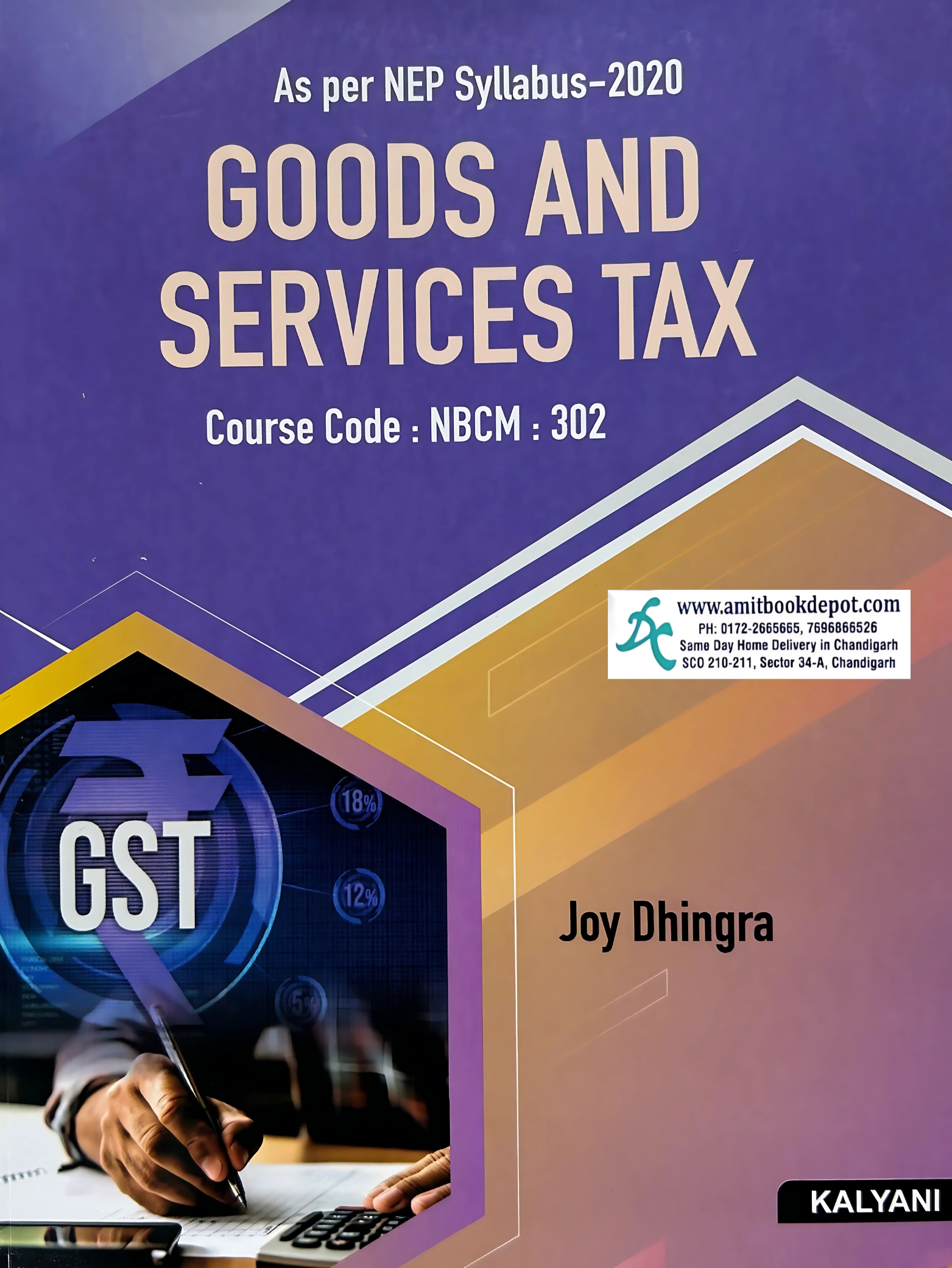
Yes, the book features a dedicated "Chapter 0: Latest Amendments with Notification in GST" to ensure the content is current up to the required period before your exams.
Absolutely. The book is uniquely designed to cover the syllabi for both B.Com (Course Code NBCM 302) and BBA (Course Code NBBA 304), making it a versatile resource.
Yes, the book contains numerous illustrations and solved numerical problems, which are crucial for attempting the mandatory numerical questions in Sections A, B, and C of the PU exam paper.
The content is structured to help you answer short-answer questions for Section A and detailed essay-type questions for Sections B & C. It also includes previous year papers to familiarize you with the pattern.
Yes, for BBA students, Chapter 22 "Technology & GST" covers the GST ecosystem and portal, and the practical work section guides you on filing registration and returns online.
Yes, dedicated chapters on "Composition Levy Scheme" (Ch. 12) and "Input Tax Credit" (Ch. 16) provide clear explanations supported by illustrations, as required by the syllabus.
Yes, the book has detailed chapters on "Taxable Event & Supply Under GST" (Ch. 7) and "Supplies in the Course of Interstate & Intrastate Trade" (Ch. 8), which are core topics for Unit-I.
The author, Joy Dhingra, has presented the complex subject of GST in a student-friendly manner with a clear, explanatory style and structured content for easy comprehension.
Yes, Chapter 21 "Authorities Under GST & Their Powers" and Chapter 20 "Offences, Penalties & Prosecution" comprehensively cover these topics as per the syllabus.
Chapter 10 "Place of Supply" provides a dedicated and detailed explanation of these critical rules, which are essential for determining whether IGST or CGST/SGST applies.
No Description Added
Yes, the book features a dedicated "Chapter 0: Latest Amendments with Notification in GST" to ensure the content is current up to the required period before your exams.
Absolutely. The book is uniquely designed to cover the syllabi for both B.Com (Course Code NBCM 302) and BBA (Course Code NBBA 304), making it a versatile resource.
Yes, the book contains numerous illustrations and solved numerical problems, which are crucial for attempting the mandatory numerical questions in Sections A, B, and C of the PU exam paper.
The content is structured to help you answer short-answer questions for Section A and detailed essay-type questions for Sections B & C. It also includes previous year papers to familiarize you with the pattern.
Yes, for BBA students, Chapter 22 "Technology & GST" covers the GST ecosystem and portal, and the practical work section guides you on filing registration and returns online.
Yes, dedicated chapters on "Composition Levy Scheme" (Ch. 12) and "Input Tax Credit" (Ch. 16) provide clear explanations supported by illustrations, as required by the syllabus.
Yes, the book has detailed chapters on "Taxable Event & Supply Under GST" (Ch. 7) and "Supplies in the Course of Interstate & Intrastate Trade" (Ch. 8), which are core topics for Unit-I.
The author, Joy Dhingra, has presented the complex subject of GST in a student-friendly manner with a clear, explanatory style and structured content for easy comprehension.
Yes, Chapter 21 "Authorities Under GST & Their Powers" and Chapter 20 "Offences, Penalties & Prosecution" comprehensively cover these topics as per the syllabus.
Chapter 10 "Place of Supply" provides a dedicated and detailed explanation of these critical rules, which are essential for determining whether IGST or CGST/SGST applies.