Categories
College Bookssss >
BA PU Chandigarh
BSC PU Chandigarh
MSC PU Chandigarh
BBA PU Chandigarh
MA PU Chandigarh
Medical Books
Engineering Books
Management Books
PGDCA Books
BCOM PU Chandigarh
MCOM PU Chandigarh
BCA PU Chandigarh
MCA PU Chandigarh
animate-books

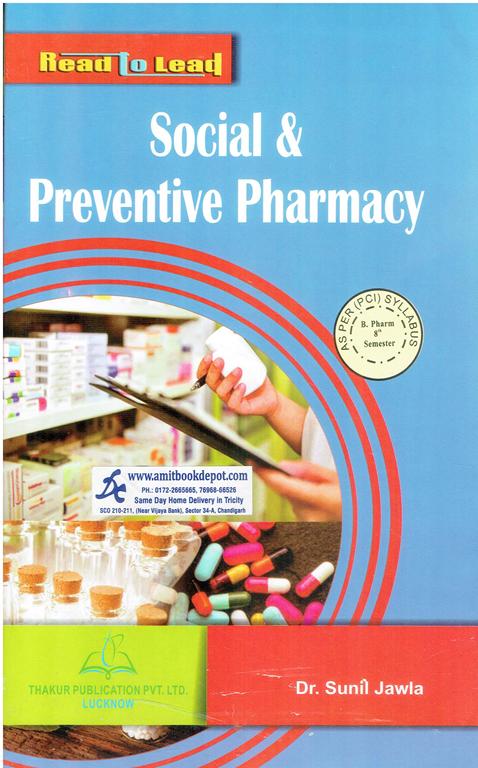
Social and Preventive Pharmacy B Pharma Semester 8 PTU

by Madhurima
₹165 ₹165.00(-/ off)

Rating & Reviews

23 Customer Review

"Social and Preventive Pharmacy" by Dr. Sunil Jawla (Thakur Publishers) is the prescribed book for B.Pharma Semester 8, Punjab Technical University (PTU). It comprehensively covers the PTU syllabus (BP 802T), including concepts of health and disease, preventive medicine for illnesses like malaria, dengue, TB, diabetes, and cancer, nutrition, and sociology in health. The book provides detailed insights into major Indian National Health Programs like NHM, NTCP, and UIP, and community health services. Designed for exam success, it equips pharmacy students with essential knowledge for a career in community pharmacy, public health, and healthcare.

Have Doubts Regarding This Product ? Ask Your Question

  • Q1
    Is this book strictly aligned with the latest PTU B.Pharma Semester 8 syllabus?
    A1

    Yes, this textbook by Dr. Sunil Jawla is meticulously crafted to provide 100% coverage of the latest PTU Semester 8 syllabus for Social and Preventive Pharmacy (Subject Code BP 802T).

  • Q2
    Does it cover both communicable and non-communicable diseases?
    A2

    Absolutely. Unit 5 details communicable diseases like Cholera, Malaria, Dengue, and SARS, while Unit 6 covers non-communicable diseases (NCDs) such as Hypertension, Diabetes Mellitus, and Cancer.

  • Q3
    How extensively are National Health Programs covered?
    A3

    The book dedicates three full units (Units 7, 8, and 9) to National Health Programs, including their objectives, functioning, and outcomes, covering everything from NTCP and RNTCP to NPCDCS and NRHM/NUHM.

  • Q4
    Does this book discuss the role of a pharmacist in public health?
    A4

    Yes, throughout the text, especially in chapters on National Health Programs and Community Services, the implicit and explicit roles and opportunities for pharmacists in public health are highlighted.

  • Q5
    Does it include information on newer public health challenges?
    A5

    Yes, it covers topics like the impact of urbanization, substance abuse, and environmental pollution on health, as well as diseases like Ebola and SARS.

  • Q6
    Is the Universal Immunization Programme (UIP) and Mission Indradhanush covered?
    A6

    Yes, UIP, Pulse Polio, Pentavalent vaccine, and Mission Indradhanush are discussed in detail in Unit 7.

  • Q7
    How does this book help in understanding community pharmacy practice?
    A7

    By covering hygiene, preventive care, disease education, and national programs, it provides the foundational knowledge a pharmacist needs to effectively serve and educate the community in a retail or clinical setting.

  • Q8
    Does the book contain information about the National Mental Health Program (NMHP)?
    A8

    Yes, the National Mental Health Program (NMHP) is covered in Unit 7, discussing its objectives and functioning.

  • Q9
    Is this book useful for competitive exams after B.Pharma?
    A9

    The comprehensive coverage of public health topics and National Health Programs makes it a valuable reference for various pharmacy competitive exams and interviews where community and preventive pharmacy knowledge is tested.

  • Q10
    What is the main difference between this book and general pharmacy textbooks?
    A10

    This book is specifically tailored for the PTU Semester 8 Social and Preventive Pharmacy syllabus. It uniquely combines core public health concepts with detailed, program-specific insights into India's healthcare infrastructure, which general textbooks often lack.

0.00

0 Overall Rating
  • 5
    0
  • 4
    0
  • 3
    0
  • 2
    0
  • 1
    0

Try this product & share your review & thoughts

Unit 1: Concept of Health and Disease

1.1. Concept of Health
1.1.1. Introduction
1.1.2. Dimensions of Health
1.1.2.1. Physical Health
1.1.2.2. Mental Health
1.1.2.3. Social Health
1.1.2.4. Spiritual Health
1.1.3. Determinants of Health

1.2. Concepts of Public Health
1.2.1. Introduction and Definition
1.2.2. Historical Perspectives
1.2.3. Prevention and Public Health
1.2.4. Evaluation of Public Health

1.3. Concept of Disease
1.3.1. Introduction
1.3.2. Natural History of Diseases
1.3.2.1. Phases of Natural History
1.3.2.2. Theories of Disease Causation
1.3.3. The Disease-Causing Agents
1.3.4. Social Causes of Diseases
1.3.5. Social Problems of the Sick 

1.4. Concept of Prevention of Diseases
1.4.1. Introduction
1.4.2. Levels of Prevention
1.4.2.1. Primordial Prevention
1.4.2.2. Primary Prevention (Pre-Pathogenesis)
1.4.2.3. Secondary Prevention (Initial Stage of Pathogenesis)
1.4.2.4. Tertiary Prevention (Late Stage of Pathogenesis)
1.4.3. Approaches to Prevention
1.4.3.1. High-Risk Strategy
1.4.3.2. Mass Strategy

1.5. Concept of Control of Diseases
1.5.1. Introduction
1.5.2. Disease Elimination
1.5.3. Disease Eradication
1.5.4. Monitoring
1.5.5. Surveillance
1.5.6. Evaluation of Control
1.6. Summary
1.7. Exercise

Unit 2: Social and Health Education

2.1. Food, Nutrition, and Health
2.1.1. Introduction
2.1.2. Food in Relation to Nutrition and Health
2.1.3. Classification of Foods

2.2. Balanced Diet
2.2.1. Introduction
2.2.2. Nutritional Requirements
2.2.3. Recommended Dietary Allowance
2.2.4. Food Guide Pyramid

2.3. Nutritional Deficiencies
2.3.1. Introduction
2.3.2. Protein Deficiency
2.3.3. Vitamin Deficiency
2.3.4. Mineral Deficiency
2.3.5. Malnutrition and Its Prevention
2.4. Summary
2.5. Exercise

Unit 3: Sociology and Health

3.1. Sociology and Health
3.1.1. Introduction
3.1.2. Socio-Cultural Factors Related to Health and Disease
3.1.2.1. Concept of Etiology and Cure
3.1.2.2. Environmental Sanitation
3.1.2.3. Food Habits
3.1.2.4. Mother and Child Health
3.1.2.5. Personal Hygiene
3.1.2.6. Sex and Marriage

3.2. Impact of Urbanization on Health and Disease
3.2.1. Introduction
3.2.2. Infectious Disease Prevalence
3.2.3. Non-Communicable Disease Prevalence
3.2.4. Substance Abuse
3.2.5. Road Traffic Accidents, Injuries, Violence, and Crime
3.2.6. Housing, Security, and Sanitation
3.2.7. Water, Food, and Nutrition Crisis
3.2.8. Indoor, Outdoor Pollution, and Climate Change
3.2.9. Social Services and Environment

3.3. Poverty and Health
3.3.1. Introduction
3.3.2. Rationale for Investing in the Health of the Poor
3.3.3. Pro-Poor Health Approach
3.3.4. Reproductive Health and Poverty Reduction
3.3. Summary
3.4. Exercise

Unit 4: Hygiene and Health

4.1. Hygiene and Health
4.1.1. Introduction
4.1.2. Personal Hygiene
4.1.3. Domestic Hygiene
4.1.4. Community Hygiene
4.1.5. Environmental Hygiene
4.1.6. Avoidable Habits

4.2. Concept of Health Care
4.2.1. Introduction
4.2.2. Health System
4.2.3. Levels of Health Care
4.2.3.1. Primary Care Level
4.2.3.2. Secondary Care Level
4.2.3.3. Tertiary Care Level
4.2.4. Changing Concepts
4.2.4.1. Comprehensive Health Care
4.2.4.2. Basic Health Services
4.2.4.3. Primary Health Care
4.3. Summary
4.4. Exercise

Unit 5: Preventive Medicine - I

5.1. Preventive Medicine - I
5.1.1. Introduction
5.1.2. Communicable Diseases
5.1.3. Classification of Communicable Diseases

5.2. Cholera
5.2.1. Introduction
5.2.2. Causative Agent
5.2.3. Mode of Transmission
5.2.4. Symptoms
5.2.5. General Principles of Prevention
5.2.6. General Principles of Control

5.3. SARS (Severe Acute Respiratory Syndrome)
5.3.1. Introduction
5.3.2. Causative Agent
5.3.3. Mode of Transmission
5.3.4. Symptoms
5.3.5. General Principles of Prevention and Control

5.4. Ebola Virus
5.4.1. Introduction
5.4.2. Causative Agent
5.4.3. Mode of Transmission
5.4.4. Symptoms
5.4.5. General Principles of Prevention and Control

5.5. Influenza
5.5.1. Introduction
5.5.2. Causative Agent
5.5.3. Mode of Transmission
5.5.4. Symptoms
5.5.5. General Principles of Prevention and Control

5.6. Acute Respiratory Infections
5.6.1. Introduction
5.6.2. Mode of Transmission
5.6.3. Symptoms
5.6.4 General Principles of Prevention and Control

5.7. Malaria
5.7.1. Introduction
5.7.2. Causative Agents
5.7.3. Mode of Transmission
5.7.4. Symptoms
5.7.5. General Principles of Prevention and Control

5.8. Chicken Guinea
5.8.1. Introduction
5.8.2. Causative Agent
5.8.3. Symptoms
5.8.4: General Principles of Prevention and Control

5.9. Dengue
5.9.1. Introduction
5.9.2. Causative Agent
5.9.3. Mode of Transmission
5.9.4. Symptoms

5.9.5. General Principles of Prevention and Control

5.10. Lymphatic Filariasis
5.10.1. Introduction
5.10.2. Causative Agent
5.10.3. Mode of Transmission
5.10.4. Symptoms
5.10.5. General Principles of Prevention and Control

5.11. Pneumonia
5.11.1. Introduction
5.11.2. Causative Agent
5.11.3. Mode of Transmission
5.11.4. Symptoms
5.11.5. General Principles of Prevention and Control
5.12. Summary
5.13. Exercise

Unit 6: Preventive Medicine—II

6.1. Preventive Medicine - II
6.1.1. Non-Communicable Diseases 

6.2. Hypertension 
6.2.1. Introduction
6.2.2. Causative Agents 
6.2.3. Symptoms 
6.2.4. General Principles of Prevention and Control 

6.3. diabetes mellitus
6.3.1. Introduction 
6.3.2. Causative Agents 
6.3.3. Symptoms 
6.3.4 General Principles of Prevention and Control

6.4. Cancer
6.4.1. Introduction
6.4.2. Causative Agents
6.4.3. Symptoms
6.4.4. General Principles of Prevention and Control

6.5. Drug Addiction—Drug Substance Abuse
6.5.1. Introduction
6.5.2. Causes
6.5.3. Symptoms
6.5.4. General Principles of Prevention and Control
6.6. Summary
6.7. Exercise

Unit 7: National Health Programs - I

7.1. National Health Programs
7.1.1. Introduction
7.1.2. Individual Programs

7.2. HIV and AIDS Control Program
7.2.1. Introduction
7.2.2. Objectives
7.2.3. Functioning and Outcome
7.2.3.1. Integrated Counseling and Testing Centres (ICTC)
7.2.3.2. Prevention of Parent-To-Child Transmission of HIV (PPTCT)
7.2.3.3. HIV/Tuberculosis Collaborative Activities
7.2.4. Care, Support, and Treatment (CST)
7.2.4.1. First-Line ART
7.2.4.2. Alternative First-Line ART
7.2.4.3. Second-Line ART
7.2.4.4. National Paediatric HIV/AIDS Initiative
7.2.4.5. Pediatric Second-Line ART
7.2.4.6. Early Infant Diagnosis
7.2.4.7. Targeted Interventions (TI) for High-Risk Groups
7.2.4.8. STD Control Programme
7.2.4.9. Pre-Packed STI/RTI Color-Coded Kits

7.3. National Tuberculosis Program (NTP)
7.3.1. Introduction
7.3.2. Objectives
7.3.3. Organization
7.3.4. Functioning and Outcome
7.3.4.1. Pediatric Tuberculosis
7.3.4.2. Drug Resistance Surveillance (DRS) under RNTCP
7.3.4.3 Programmatic Management of Drug-Resistant TB (PMDT)

7.4. Integrated Disease Surveillance Program (IDSP)
7.4.1. Introduction
7.4.2. Objectives
7.4.3. Organization Structure
7.4.4. Functioning and Outcome
7.4.4.1. Diseases Under the Surveillance Project
7.4.4.2. Syndromes Under Surveillance
7.4.4.3. Methods of Surveillance
7.4.4.4. Collection and Transmission of Data
7.4.4.5. Feedback and Sharing Information
7.4.4.6. Analysis
7.4.4.7. Response to the Surveillance Information

7.5. National Leprosy Control Programme (NLCP)
7.5.1. Introduction
7.5.2. Objectives
7.5.3. Functioning and Outcome
7.5.3.1. Disability Prevention and Medical Rehabilitation (DPMR)
7.5.3.2 Services in the Urban Areas
7.5.3.3. ASHA Involvement
7.5.3.4. Incentive to Patient

7.6. National Mental Health Program (NMHP)
7.6.1. Introduction
7.6.2. Objectives
7.6.3. Puncturing and Outcome

7.7. National Program for Prevention and Control of Deafness (NPPCD)
7.7.1. Introduction
7.7.2. Objectives
7.7.3. Functioning and Outcome
7.7.3.1. Ear Screening Camps
7.7.3.2. Treatment
7.7.3.3. Rehabilitation and Hearing Aid Provision

7.8. National Programme for Control of Blindness (NPCB)
7.8.1. Introduction
7.8.2. Objectives
7.8.3. Functioning and Outcome

7.9. Universal Immunization Programme (UIP)
7.9.1. Introduction
7.9.2. Objectives
7.9.3. Pulse Polio Programme
7.9.4. Hepatitis-B Vaccine
7.9.5. Japanese Encephalitis (JE) Vaccine
7.9.6. Measles Vaccine Second Opportunity
7.9.7. Pentavalent Vaccine (DPT + Hep-B + Hib)
7.9.8. Mission Indradhanush
7.10. Summary
7.11. Exercise

Unit 8: National Health Programs—II

8.1. National Health Intervention Programme for Mother and Child
8.1.1. Introduction
8.1.2. Objectives
8.1.3. Functioning and Outcome
8.1.3.1. Pre-Conceptual
8.1.3.2. Antenatal Care
8.1.3.3. Natal Care
8.1.3.4. Postnatal Care
8.1.3.5. Family Planning
8.1.3.6. Infant Care
8.1.3.7. Preschool or Toddler Care
8.1.3.8. School Health Services
8.1.3.9. Care of the Handicapped

8.2. National Family Welfare Programme
8.2.1. Introduction
8.2.2. Objectives
8.2.3. Functioning and Outcome
8.2.3.1. Motivation of Eligible Couples
8.2.3.2. Contraceptive Methods
8.3. Summary
8.4. Exercise

Unit 9: National Health Programs—III

9.1. National Tobacco Control Programme (NTCP)
9.1.1. Introduction
9.1.2. Objectives
9.1.3. Functioning and Outcome

9.2. National Malaria Prevention Program
9.2.1. Introduction
9.2.2. Objectives
9.2.3. Functioning and Outcome
9.2.3.1. Surveillance and Case Detection
9.2.3.2. Sentinel Surveillance
9.2.3.3. Diagnosis and Treatment of Malaria

9.3. (NPHCE) National Programme for the Health Care for the Elderly
9.3.1. Introduction
9.3.2. Objectives
9.3.3. Functioning and Outcome

9.4. Social Health Program
9.4.1. Introduction
9.4.2. National Programme for Prevention and Control of Cancer, Diabetes, Cardiovascular Disease, and Stroke (NPCDCS)
9.4.3. National Programme for Prevention and Control of Fluorosis (NPPCF)
9.4.4. Capacity Building for Developing Trauma Care Facilities in Government Hospitals
9.4.5. National Programme on Prevention and Management of Burn Injuries (NPPMBI)
9.4.6. National Organ Transplant Programme (NOTP)

9.5. Role of WHO in Indian National Program
9.5.1. Medical Rehabilitation (Nov. 1963–Feb. 1964; April–June 1967; Feb.–June 1969; UNICEF Oct. 1969; June 1970)
9.5.2. Nursing Administration (July 1968 - Dec. 1976)
9.5.3. National Institute of Health Administration and Education (NIHAE) (Sept. 1965–May 1967; March 1968; Dec. 1968–Jan. 1971; Nov. 1971; Jan. 1973)
9.5.4. Development of Community Health Nursing Services (April 1975)
9.5.5. Strengthening of Departments of Pediatrics, Obstetrics, and Preventive and Social Medicine in Indian Medical UNICEF Colleges (Aug. 1958)
9.5.6. Strengthening of the Teaching of Human Reproduction, UNFPA Family Planning, and Population Dynamics in Medical Colleges (May - Sept. 1971; Dec. 1971; April 1973)
9.5.7. Applied Nutrition Programme (Oct. 1964)
9.5.8. Training of Dieticians (Dec. 1974)
9.5.9. Nutrition Training (Dec. 1970; May 1971; July-Sept. 1973; Jan.-Feb. 1974; Sept. 1974; Dec. 1974-Jan. 1975)
9.6. Summary
9.7. Exercise

Unit 10: Community Services in Rural, Urban, and School Health

10.1. National Rural Health Mission (NRHM)
10.1.1. Introduction
10.1.2. Plan of Action to Strengthen Infrastructure
10.1.3. Improvement in Rural Sanitation—Rural Sanitation Programs
10.1.3.1. Planning for Rural Sanitation
10.1.3.2. Central Rural Sanitation Programme (CRSP)
10.1.3.3. Total Sanitation Campaign (TSC)

10.2. National Urban Health Mission (NUHM)—
10.2.1. Introduction
10.2.2. Urban Health Care Facilities

10.3. Health Promotion and Education in School
10.3.1. Components of Health Promotion
10.3.2. Disease Prevention Strategies

10.4. Primary Health Care (PHC)
10.4.1. Introduction
10.4.2. Characteristics of PHC
10.4.3. Components of PHC
10.4.4. Functions of PHC
10.4.4.1. Medical Care, Referral, and Laboratory Services
10.4.4.2. Control of Communicable Diseases
10.4.4.3. Environmental Sanitation and Safe Water Supply
10.4.4.4. MCH Services
10.4.4.5. Family Planning
10.4.4.6. School Health Service
10.4.4.7. Health Education 2
10.4.4.8. Vital Statistics
10.4.4.9. National Health Programs
10.4.4.10. Training of Personnel
10.5. Summary
10.6. Exercise

Latest Syllabus of Social and Preventive Pharmacy For  B Pharma Semester 8th PTU


BP 802T SOCIAL AND PREVENTIVE PHARMACY Hours: 45

Scope:

The purpose of this course is to introduce to students a number of health issues and their challenges. This course also introduced a number of national health programs. The roles of the pharmacist in these contexts are also discussed.

Objectives:

After the successful completion of this course, the student shall be able to: 
- Acquire high consciousness/realization of current issues related to health and pharmaceutical problems within the country and worldwide. 
- Have a critical way of thinking based on current healthcare development. 
- Evaluate alternative ways of solving problems related to health and pharmaceutical issues

Course content:
Unit I: 10 Hours

- Concept of health and disease: Definition, concepts, and evaluation of public health. Understanding the concept of prevention and control of disease, social causes of diseases, and social problems of the sick.
- Social and health education: Food in relation to nutrition and health, balanced diet, nutritional deficiencies, vitamin deficiencies, malnutrition, and its prevention.
- Sociology and health: Sociocultural factors related to health and disease, Impact of urbanization on health and disease, Poverty and health
- Hygiene and health: personal hygiene and health care; avoidable habits

Unit II: 10 Hours

Preventive medicine: General principles of prevention and control of diseases such as cholera, SARS, Ebola virus, influenza, acute respiratory infections, malaria, chicken guinea, dengue, lymphatic filariasis, pneumonia, hypertension, diabetes mellitus, cancer, and drug addiction/drug substance abuse

Unit III: 10 Hours

National health programs, their objectives, functioning, and outcomes of the following: HIV and AIDS control program, TB, Integrated Disease Surveillance Program (IDSP), National Leprosy Control Program, National Mental Health Program, National Program for Prevention and Control of Deafness, Universal Immunization Program, National Program for Control of Blindness, and Pulse Polio Program. 

Unit IV: 08 Hours

National health intervention program for mother and child, National Family Welfare Programme, National Tobacco Control Programme, National Malaria Prevention Program, National Programme for the Health Care of the Elderly, Social health program; role of WHO in Indian national program

Unit V: 07 Hours

Community services in rural, urban, and school health: functions of PHC, improvement in rural sanitation, national urban health mission, and health promotion and education in school.

Title: Social and Preventive Pharmacy for B.Pharma Semester 8th (PTU) by Dr. Sunil Jawla | Thakur Publishers

Master Your PTU B.Pharmacy Semester 8 Curriculum with This Comprehensive Guide

This book, "Social and Preventive Pharmacy," authored by Dr. Sunil Jawla and published by Thakur Publishers, is the definitive and meticulously crafted resource designed explicitly for the B.Pharma Semester 8 syllabus of Punjab Technical University (PTU). It provides an exhaustive exploration of the intersection between pharmacy, public health, and societal well-being, equipping future pharmacists with the knowledge essential for a holistic healthcare approach.

Aligned perfectly with the latest PTU syllabus (BP 802T), this book systematically covers all critical units. It begins by establishing a strong foundation in the concept of health and disease, detailing dimensions of health, determinants, disease causation, and the core principles of prevention and control. This foundational knowledge is crucial for understanding the pharmacist's role beyond dispensing, focusing on wellness and preventive medicine.

The content delves into vital areas of social and health education, including nutrition, balanced diet, and nutritional deficiencies, and examines sociology and health, analyzing the impact of urbanization, poverty, and socio-cultural factors on disease patterns. A dedicated unit on hygiene and health reinforces the importance of personal, domestic, and community hygiene in disease prevention.

A significant portion of the book is devoted to preventive medicine, offering detailed insights into both communicable and non-communicable diseases. It covers the etiology, transmission, symptoms, and principles of prevention and control for diseases such as malaria, dengue, tuberculosis, HIV/AIDS, cholera, SARS, Ebola, hypertension, diabetes mellitus, cancer, and drug addiction. This knowledge is indispensable for pharmacists involved in patient counseling and public health initiatives.

The book provides an unparalleled, in-depth analysis of National Health Programs in India. It spans three detailed units covering programs like the National Health Mission (NRHM & NUHM), National Tuberculosis Program (NTP), Integrated Disease Surveillance Program (IDSP), National Mental Health Program (NMHP), Universal Immunization Programme (UIP), National Family Welfare Programme, and National Tobacco Control Programme (NTCP), among others. Each program's objectives, functioning, and outcomes are clearly explained, highlighting the potential role of the pharmacist within these frameworks.

Finally, the book explores community services in rural, urban, and school health, detailing the structure and functions of primary health care (PHC) and initiatives like the Total Sanitation Campaign.

Key Features of this PTU B.Pharma Semester 8 Social and Preventive Pharmacy Book:

1. 100% Syllabus Coverage: Fully compliant with the latest PTU Semester 8 Syllabus (BP 802T).
2. Structured Learning: Content is organized into 10 logical units with clear introductions, summaries, and exercises for effective revision.
3. Exam-Oriented Presentation: Complex public health concepts are explained in a clear, concise, and student-friendly manner.
4. Authoritative Content: Authored by the subject expert Dr. Sunil Jawla, ensuring accuracy and relevance.
5. Comprehensive Disease Coverage: From communicable diseases like cholera and dengue to non-communicable diseases (NCDs) like diabetes and cancer.
6. Detailed National Program Analysis: Serves as a complete reference for all major Indian National Health Programs.
7. Focus on Application: Bridges the gap between pharmaceutical science and its application in public health, preventive care, and community pharmacy.

This book is an essential purchase for every PTU B.Pharmacy final-year student aiming to excel in their Semester 8 examinations and build a strong foundation for a career in community pharmacy, hospital pharmacy, public health, or the pharmaceutical industry. It is more than a book; it's a guide to understanding the critical social and preventive responsibilities of a modern healthcare professional.

Unit 1: Concept of Health and Disease

1.1. Concept of Health
1.1.1. Introduction
1.1.2. Dimensions of Health
1.1.2.1. Physical Health
1.1.2.2. Mental Health
1.1.2.3. Social Health
1.1.2.4. Spiritual Health
1.1.3. Determinants of Health

1.2. Concepts of Public Health
1.2.1. Introduction and Definition
1.2.2. Historical Perspectives
1.2.3. Prevention and Public Health
1.2.4. Evaluation of Public Health

1.3. Concept of Disease
1.3.1. Introduction
1.3.2. Natural History of Diseases
1.3.2.1. Phases of Natural History
1.3.2.2. Theories of Disease Causation
1.3.3. The Disease-Causing Agents
1.3.4. Social Causes of Diseases
1.3.5. Social Problems of the Sick 

1.4. Concept of Prevention of Diseases
1.4.1. Introduction
1.4.2. Levels of Prevention
1.4.2.1. Primordial Prevention
1.4.2.2. Primary Prevention (Pre-Pathogenesis)
1.4.2.3. Secondary Prevention (Initial Stage of Pathogenesis)
1.4.2.4. Tertiary Prevention (Late Stage of Pathogenesis)
1.4.3. Approaches to Prevention
1.4.3.1. High-Risk Strategy
1.4.3.2. Mass Strategy

1.5. Concept of Control of Diseases
1.5.1. Introduction
1.5.2. Disease Elimination
1.5.3. Disease Eradication
1.5.4. Monitoring
1.5.5. Surveillance
1.5.6. Evaluation of Control
1.6. Summary
1.7. Exercise

Unit 2: Social and Health Education

2.1. Food, Nutrition, and Health
2.1.1. Introduction
2.1.2. Food in Relation to Nutrition and Health
2.1.3. Classification of Foods

2.2. Balanced Diet
2.2.1. Introduction
2.2.2. Nutritional Requirements
2.2.3. Recommended Dietary Allowance
2.2.4. Food Guide Pyramid

2.3. Nutritional Deficiencies
2.3.1. Introduction
2.3.2. Protein Deficiency
2.3.3. Vitamin Deficiency
2.3.4. Mineral Deficiency
2.3.5. Malnutrition and Its Prevention
2.4. Summary
2.5. Exercise

Unit 3: Sociology and Health

3.1. Sociology and Health
3.1.1. Introduction
3.1.2. Socio-Cultural Factors Related to Health and Disease
3.1.2.1. Concept of Etiology and Cure
3.1.2.2. Environmental Sanitation
3.1.2.3. Food Habits
3.1.2.4. Mother and Child Health
3.1.2.5. Personal Hygiene
3.1.2.6. Sex and Marriage

3.2. Impact of Urbanization on Health and Disease
3.2.1. Introduction
3.2.2. Infectious Disease Prevalence
3.2.3. Non-Communicable Disease Prevalence
3.2.4. Substance Abuse
3.2.5. Road Traffic Accidents, Injuries, Violence, and Crime
3.2.6. Housing, Security, and Sanitation
3.2.7. Water, Food, and Nutrition Crisis
3.2.8. Indoor, Outdoor Pollution, and Climate Change
3.2.9. Social Services and Environment

3.3. Poverty and Health
3.3.1. Introduction
3.3.2. Rationale for Investing in the Health of the Poor
3.3.3. Pro-Poor Health Approach
3.3.4. Reproductive Health and Poverty Reduction
3.3. Summary
3.4. Exercise

Unit 4: Hygiene and Health

4.1. Hygiene and Health
4.1.1. Introduction
4.1.2. Personal Hygiene
4.1.3. Domestic Hygiene
4.1.4. Community Hygiene
4.1.5. Environmental Hygiene
4.1.6. Avoidable Habits

4.2. Concept of Health Care
4.2.1. Introduction
4.2.2. Health System
4.2.3. Levels of Health Care
4.2.3.1. Primary Care Level
4.2.3.2. Secondary Care Level
4.2.3.3. Tertiary Care Level
4.2.4. Changing Concepts
4.2.4.1. Comprehensive Health Care
4.2.4.2. Basic Health Services
4.2.4.3. Primary Health Care
4.3. Summary
4.4. Exercise

Unit 5: Preventive Medicine - I

5.1. Preventive Medicine - I
5.1.1. Introduction
5.1.2. Communicable Diseases
5.1.3. Classification of Communicable Diseases

5.2. Cholera
5.2.1. Introduction
5.2.2. Causative Agent
5.2.3. Mode of Transmission
5.2.4. Symptoms
5.2.5. General Principles of Prevention
5.2.6. General Principles of Control

5.3. SARS (Severe Acute Respiratory Syndrome)
5.3.1. Introduction
5.3.2. Causative Agent
5.3.3. Mode of Transmission
5.3.4. Symptoms
5.3.5. General Principles of Prevention and Control

5.4. Ebola Virus
5.4.1. Introduction
5.4.2. Causative Agent
5.4.3. Mode of Transmission
5.4.4. Symptoms
5.4.5. General Principles of Prevention and Control

5.5. Influenza
5.5.1. Introduction
5.5.2. Causative Agent
5.5.3. Mode of Transmission
5.5.4. Symptoms
5.5.5. General Principles of Prevention and Control

5.6. Acute Respiratory Infections
5.6.1. Introduction
5.6.2. Mode of Transmission
5.6.3. Symptoms
5.6.4 General Principles of Prevention and Control

5.7. Malaria
5.7.1. Introduction
5.7.2. Causative Agents
5.7.3. Mode of Transmission
5.7.4. Symptoms
5.7.5. General Principles of Prevention and Control

5.8. Chicken Guinea
5.8.1. Introduction
5.8.2. Causative Agent
5.8.3. Symptoms
5.8.4: General Principles of Prevention and Control

5.9. Dengue
5.9.1. Introduction
5.9.2. Causative Agent
5.9.3. Mode of Transmission
5.9.4. Symptoms

5.9.5. General Principles of Prevention and Control

5.10. Lymphatic Filariasis
5.10.1. Introduction
5.10.2. Causative Agent
5.10.3. Mode of Transmission
5.10.4. Symptoms
5.10.5. General Principles of Prevention and Control

5.11. Pneumonia
5.11.1. Introduction
5.11.2. Causative Agent
5.11.3. Mode of Transmission
5.11.4. Symptoms
5.11.5. General Principles of Prevention and Control
5.12. Summary
5.13. Exercise

Unit 6: Preventive Medicine—II

6.1. Preventive Medicine - II
6.1.1. Non-Communicable Diseases 

6.2. Hypertension 
6.2.1. Introduction
6.2.2. Causative Agents 
6.2.3. Symptoms 
6.2.4. General Principles of Prevention and Control 

6.3. diabetes mellitus
6.3.1. Introduction 
6.3.2. Causative Agents 
6.3.3. Symptoms 
6.3.4 General Principles of Prevention and Control

6.4. Cancer
6.4.1. Introduction
6.4.2. Causative Agents
6.4.3. Symptoms
6.4.4. General Principles of Prevention and Control

6.5. Drug Addiction—Drug Substance Abuse
6.5.1. Introduction
6.5.2. Causes
6.5.3. Symptoms
6.5.4. General Principles of Prevention and Control
6.6. Summary
6.7. Exercise

Unit 7: National Health Programs - I

7.1. National Health Programs
7.1.1. Introduction
7.1.2. Individual Programs

7.2. HIV and AIDS Control Program
7.2.1. Introduction
7.2.2. Objectives
7.2.3. Functioning and Outcome
7.2.3.1. Integrated Counseling and Testing Centres (ICTC)
7.2.3.2. Prevention of Parent-To-Child Transmission of HIV (PPTCT)
7.2.3.3. HIV/Tuberculosis Collaborative Activities
7.2.4. Care, Support, and Treatment (CST)
7.2.4.1. First-Line ART
7.2.4.2. Alternative First-Line ART
7.2.4.3. Second-Line ART
7.2.4.4. National Paediatric HIV/AIDS Initiative
7.2.4.5. Pediatric Second-Line ART
7.2.4.6. Early Infant Diagnosis
7.2.4.7. Targeted Interventions (TI) for High-Risk Groups
7.2.4.8. STD Control Programme
7.2.4.9. Pre-Packed STI/RTI Color-Coded Kits

7.3. National Tuberculosis Program (NTP)
7.3.1. Introduction
7.3.2. Objectives
7.3.3. Organization
7.3.4. Functioning and Outcome
7.3.4.1. Pediatric Tuberculosis
7.3.4.2. Drug Resistance Surveillance (DRS) under RNTCP
7.3.4.3 Programmatic Management of Drug-Resistant TB (PMDT)

7.4. Integrated Disease Surveillance Program (IDSP)
7.4.1. Introduction
7.4.2. Objectives
7.4.3. Organization Structure
7.4.4. Functioning and Outcome
7.4.4.1. Diseases Under the Surveillance Project
7.4.4.2. Syndromes Under Surveillance
7.4.4.3. Methods of Surveillance
7.4.4.4. Collection and Transmission of Data
7.4.4.5. Feedback and Sharing Information
7.4.4.6. Analysis
7.4.4.7. Response to the Surveillance Information

7.5. National Leprosy Control Programme (NLCP)
7.5.1. Introduction
7.5.2. Objectives
7.5.3. Functioning and Outcome
7.5.3.1. Disability Prevention and Medical Rehabilitation (DPMR)
7.5.3.2 Services in the Urban Areas
7.5.3.3. ASHA Involvement
7.5.3.4. Incentive to Patient

7.6. National Mental Health Program (NMHP)
7.6.1. Introduction
7.6.2. Objectives
7.6.3. Puncturing and Outcome

7.7. National Program for Prevention and Control of Deafness (NPPCD)
7.7.1. Introduction
7.7.2. Objectives
7.7.3. Functioning and Outcome
7.7.3.1. Ear Screening Camps
7.7.3.2. Treatment
7.7.3.3. Rehabilitation and Hearing Aid Provision

7.8. National Programme for Control of Blindness (NPCB)
7.8.1. Introduction
7.8.2. Objectives
7.8.3. Functioning and Outcome

7.9. Universal Immunization Programme (UIP)
7.9.1. Introduction
7.9.2. Objectives
7.9.3. Pulse Polio Programme
7.9.4. Hepatitis-B Vaccine
7.9.5. Japanese Encephalitis (JE) Vaccine
7.9.6. Measles Vaccine Second Opportunity
7.9.7. Pentavalent Vaccine (DPT + Hep-B + Hib)
7.9.8. Mission Indradhanush
7.10. Summary
7.11. Exercise

Unit 8: National Health Programs—II

8.1. National Health Intervention Programme for Mother and Child
8.1.1. Introduction
8.1.2. Objectives
8.1.3. Functioning and Outcome
8.1.3.1. Pre-Conceptual
8.1.3.2. Antenatal Care
8.1.3.3. Natal Care
8.1.3.4. Postnatal Care
8.1.3.5. Family Planning
8.1.3.6. Infant Care
8.1.3.7. Preschool or Toddler Care
8.1.3.8. School Health Services
8.1.3.9. Care of the Handicapped

8.2. National Family Welfare Programme
8.2.1. Introduction
8.2.2. Objectives
8.2.3. Functioning and Outcome
8.2.3.1. Motivation of Eligible Couples
8.2.3.2. Contraceptive Methods
8.3. Summary
8.4. Exercise

Unit 9: National Health Programs—III

9.1. National Tobacco Control Programme (NTCP)
9.1.1. Introduction
9.1.2. Objectives
9.1.3. Functioning and Outcome

9.2. National Malaria Prevention Program
9.2.1. Introduction
9.2.2. Objectives
9.2.3. Functioning and Outcome
9.2.3.1. Surveillance and Case Detection
9.2.3.2. Sentinel Surveillance
9.2.3.3. Diagnosis and Treatment of Malaria

9.3. (NPHCE) National Programme for the Health Care for the Elderly
9.3.1. Introduction
9.3.2. Objectives
9.3.3. Functioning and Outcome

9.4. Social Health Program
9.4.1. Introduction
9.4.2. National Programme for Prevention and Control of Cancer, Diabetes, Cardiovascular Disease, and Stroke (NPCDCS)
9.4.3. National Programme for Prevention and Control of Fluorosis (NPPCF)
9.4.4. Capacity Building for Developing Trauma Care Facilities in Government Hospitals
9.4.5. National Programme on Prevention and Management of Burn Injuries (NPPMBI)
9.4.6. National Organ Transplant Programme (NOTP)

9.5. Role of WHO in Indian National Program
9.5.1. Medical Rehabilitation (Nov. 1963–Feb. 1964; April–June 1967; Feb.–June 1969; UNICEF Oct. 1969; June 1970)
9.5.2. Nursing Administration (July 1968 - Dec. 1976)
9.5.3. National Institute of Health Administration and Education (NIHAE) (Sept. 1965–May 1967; March 1968; Dec. 1968–Jan. 1971; Nov. 1971; Jan. 1973)
9.5.4. Development of Community Health Nursing Services (April 1975)
9.5.5. Strengthening of Departments of Pediatrics, Obstetrics, and Preventive and Social Medicine in Indian Medical UNICEF Colleges (Aug. 1958)
9.5.6. Strengthening of the Teaching of Human Reproduction, UNFPA Family Planning, and Population Dynamics in Medical Colleges (May - Sept. 1971; Dec. 1971; April 1973)
9.5.7. Applied Nutrition Programme (Oct. 1964)
9.5.8. Training of Dieticians (Dec. 1974)
9.5.9. Nutrition Training (Dec. 1970; May 1971; July-Sept. 1973; Jan.-Feb. 1974; Sept. 1974; Dec. 1974-Jan. 1975)
9.6. Summary
9.7. Exercise

Unit 10: Community Services in Rural, Urban, and School Health

10.1. National Rural Health Mission (NRHM)
10.1.1. Introduction
10.1.2. Plan of Action to Strengthen Infrastructure
10.1.3. Improvement in Rural Sanitation—Rural Sanitation Programs
10.1.3.1. Planning for Rural Sanitation
10.1.3.2. Central Rural Sanitation Programme (CRSP)
10.1.3.3. Total Sanitation Campaign (TSC)

10.2. National Urban Health Mission (NUHM)—
10.2.1. Introduction
10.2.2. Urban Health Care Facilities

10.3. Health Promotion and Education in School
10.3.1. Components of Health Promotion
10.3.2. Disease Prevention Strategies

10.4. Primary Health Care (PHC)
10.4.1. Introduction
10.4.2. Characteristics of PHC
10.4.3. Components of PHC
10.4.4. Functions of PHC
10.4.4.1. Medical Care, Referral, and Laboratory Services
10.4.4.2. Control of Communicable Diseases
10.4.4.3. Environmental Sanitation and Safe Water Supply
10.4.4.4. MCH Services
10.4.4.5. Family Planning
10.4.4.6. School Health Service
10.4.4.7. Health Education 2
10.4.4.8. Vital Statistics
10.4.4.9. National Health Programs
10.4.4.10. Training of Personnel
10.5. Summary
10.6. Exercise

Have Doubts Regarding This Product ? Ask Your Question

  • Q1
    Is this book strictly aligned with the latest PTU B.Pharma Semester 8 syllabus?
    A1

    Yes, this textbook by Dr. Sunil Jawla is meticulously crafted to provide 100% coverage of the latest PTU Semester 8 syllabus for Social and Preventive Pharmacy (Subject Code BP 802T).

  • Q2
    Does it cover both communicable and non-communicable diseases?
    A2

    Absolutely. Unit 5 details communicable diseases like Cholera, Malaria, Dengue, and SARS, while Unit 6 covers non-communicable diseases (NCDs) such as Hypertension, Diabetes Mellitus, and Cancer.

  • Q3
    How extensively are National Health Programs covered?
    A3

    The book dedicates three full units (Units 7, 8, and 9) to National Health Programs, including their objectives, functioning, and outcomes, covering everything from NTCP and RNTCP to NPCDCS and NRHM/NUHM.

  • Q4
    Does this book discuss the role of a pharmacist in public health?
    A4

    Yes, throughout the text, especially in chapters on National Health Programs and Community Services, the implicit and explicit roles and opportunities for pharmacists in public health are highlighted.

  • Q5
    Does it include information on newer public health challenges?
    A5

    Yes, it covers topics like the impact of urbanization, substance abuse, and environmental pollution on health, as well as diseases like Ebola and SARS.

  • Q6
    Is the Universal Immunization Programme (UIP) and Mission Indradhanush covered?
    A6

    Yes, UIP, Pulse Polio, Pentavalent vaccine, and Mission Indradhanush are discussed in detail in Unit 7.

  • Q7
    How does this book help in understanding community pharmacy practice?
    A7

    By covering hygiene, preventive care, disease education, and national programs, it provides the foundational knowledge a pharmacist needs to effectively serve and educate the community in a retail or clinical setting.

  • Q8
    Does the book contain information about the National Mental Health Program (NMHP)?
    A8

    Yes, the National Mental Health Program (NMHP) is covered in Unit 7, discussing its objectives and functioning.

  • Q9
    Is this book useful for competitive exams after B.Pharma?
    A9

    The comprehensive coverage of public health topics and National Health Programs makes it a valuable reference for various pharmacy competitive exams and interviews where community and preventive pharmacy knowledge is tested.

  • Q10
    What is the main difference between this book and general pharmacy textbooks?
    A10

    This book is specifically tailored for the PTU Semester 8 Social and Preventive Pharmacy syllabus. It uniquely combines core public health concepts with detailed, program-specific insights into India's healthcare infrastructure, which general textbooks often lack.

Latest Syllabus of Social and Preventive Pharmacy For  B Pharma Semester 8th PTU


BP 802T SOCIAL AND PREVENTIVE PHARMACY Hours: 45

Scope:

The purpose of this course is to introduce to students a number of health issues and their challenges. This course also introduced a number of national health programs. The roles of the pharmacist in these contexts are also discussed.

Objectives:

After the successful completion of this course, the student shall be able to: 
- Acquire high consciousness/realization of current issues related to health and pharmaceutical problems within the country and worldwide. 
- Have a critical way of thinking based on current healthcare development. 
- Evaluate alternative ways of solving problems related to health and pharmaceutical issues

Course content:
Unit I: 10 Hours

- Concept of health and disease: Definition, concepts, and evaluation of public health. Understanding the concept of prevention and control of disease, social causes of diseases, and social problems of the sick.
- Social and health education: Food in relation to nutrition and health, balanced diet, nutritional deficiencies, vitamin deficiencies, malnutrition, and its prevention.
- Sociology and health: Sociocultural factors related to health and disease, Impact of urbanization on health and disease, Poverty and health
- Hygiene and health: personal hygiene and health care; avoidable habits

Unit II: 10 Hours

Preventive medicine: General principles of prevention and control of diseases such as cholera, SARS, Ebola virus, influenza, acute respiratory infections, malaria, chicken guinea, dengue, lymphatic filariasis, pneumonia, hypertension, diabetes mellitus, cancer, and drug addiction/drug substance abuse

Unit III: 10 Hours

National health programs, their objectives, functioning, and outcomes of the following: HIV and AIDS control program, TB, Integrated Disease Surveillance Program (IDSP), National Leprosy Control Program, National Mental Health Program, National Program for Prevention and Control of Deafness, Universal Immunization Program, National Program for Control of Blindness, and Pulse Polio Program. 

Unit IV: 08 Hours

National health intervention program for mother and child, National Family Welfare Programme, National Tobacco Control Programme, National Malaria Prevention Program, National Programme for the Health Care of the Elderly, Social health program; role of WHO in Indian national program

Unit V: 07 Hours

Community services in rural, urban, and school health: functions of PHC, improvement in rural sanitation, national urban health mission, and health promotion and education in school.

0.00

0 Overall Rating
  • 5
    0
  • 4
    0
  • 3
    0
  • 2
    0
  • 1
    0

Try this product & share your review & thoughts

Top Trending Product

Related Product

Related Product

Related Blog Posts

Latest Blogs

Latest Blogs

blog-img
Classic Literature Reimagined: Discuss modern twists on classic novels.
Lorem ipsum dolor sit amet, consectetur adipiscing elit, sed do eiusmod tempor incididunt ut labore et dolore magna aliqua. Ut enim ad minim veniam, quis nostrud exercitation ullamco Lorem ipsum dolor sit amet, consectetur adipiscing elit, sed do eiusmod tempor incididunt ut labore et dolore magna aliqua. Utenim ad minim veniam, quis nostrud exercitation ullamco Lorem ipsum dolor sit amet, consecte...
Read more
Author name | 10 jan, 2025
blog-img
Classic Literature Reimagined: Discuss modern twists on classic novels.
Lorem ipsum dolor sit amet, consectetur adipiscing elit, sed do eiusmod tempor incididunt ut labore et dolore magna aliqua. Ut enim ad minim veniam, quis nostrud exercitation ullamco Lorem ipsum dolor sit amet, consectetur adipiscing elit, sed do eiusmod tempor incididunt ut labore et dolore magna aliqua. Utenim ad minim veniam, quis nostrud exercitation ullamco Lorem ipsum dolor sit amet, consecte...
Read more
Author name | 10 jan, 2025
blog-img
Classic Literature Reimagined: Discuss modern twists on classic novels.
Lorem ipsum dolor sit amet, consectetur adipiscing elit, sed do eiusmod tempor incididunt ut labore et dolore magna aliqua. Ut enim ad minim veniam, quis nostrud exercitation ullamco Lorem ipsum dolor sit amet, consectetur adipiscing elit, sed do eiusmod tempor incididunt ut labore et dolore magna aliqua. Utenim ad minim veniam, quis nostrud exercitation ullamco Lorem ipsum dolor sit amet, consecte...
Read more
Author name | 10 jan, 2025
blog-img
Classic Literature Reimagined: Discuss modern twists on classic novels.
Lorem ipsum dolor sit amet, consectetur adipiscing elit...
Read more
Author Name | 10 Jan, 2025
blog-img
Classic Literature Reimagined: Discuss modern twists on classic novels.
Lorem ipsum dolor sit amet, consectetur adipiscing elit...
Read more
Author Name | 10 Jan, 2025
blog-img
Classic Literature Reimagined: Discuss modern twists on classic novels.
Lorem ipsum dolor sit amet, consectetur adipiscing elit...
Read more
Author Name | 10 Jan, 2025
blog-img
Classic Literature Reimagined: Discuss modern twists on classic novels.
Lorem ipsum dolor sit amet, consectetur adipiscing elit...
Read more
Author Name | 10 Jan, 2025
blog-img
Classic Literature Reimagined: Discuss modern twists on classic novels.
Lorem ipsum dolor sit amet, consectetur adipiscing elit...
Read more
Author Name | 10 Jan, 2025
blog-img
Classic Literature Reimagined: Discuss modern twists on classic novels.
Lorem ipsum dolor sit amet, consectetur adipiscing elit...
Read more
Author Name | 10 Jan, 2025
blog-img
Classic Literature Reimagined: Discuss modern twists on classic novels.
Lorem ipsum dolor sit amet, consectetur adipiscing elit...
Read more
Author Name | 10 Jan, 2025
blog-img
Classic Literature Reimagined: Discuss modern twists on classic novels.
Lorem ipsum dolor sit amet, consectetur adipiscing elit...
Read more
Author Name | 10 Jan, 2025
blog-img
Classic Literature Reimagined: Discuss modern twists on classic novels.
Lorem ipsum dolor sit amet, consectetur adipiscing elit...
Read more
Author Name | 10 Jan, 2025