Categories
College Bookssss >
BA PU Chandigarh
BSC PU Chandigarh
MSC PU Chandigarh
BBA PU Chandigarh
MA PU Chandigarh
Medical Books
Engineering Books
Management Books
PGDCA Books
BCOM PU Chandigarh
MCOM PU Chandigarh
BCA PU Chandigarh
MCA PU Chandigarh
animate-books

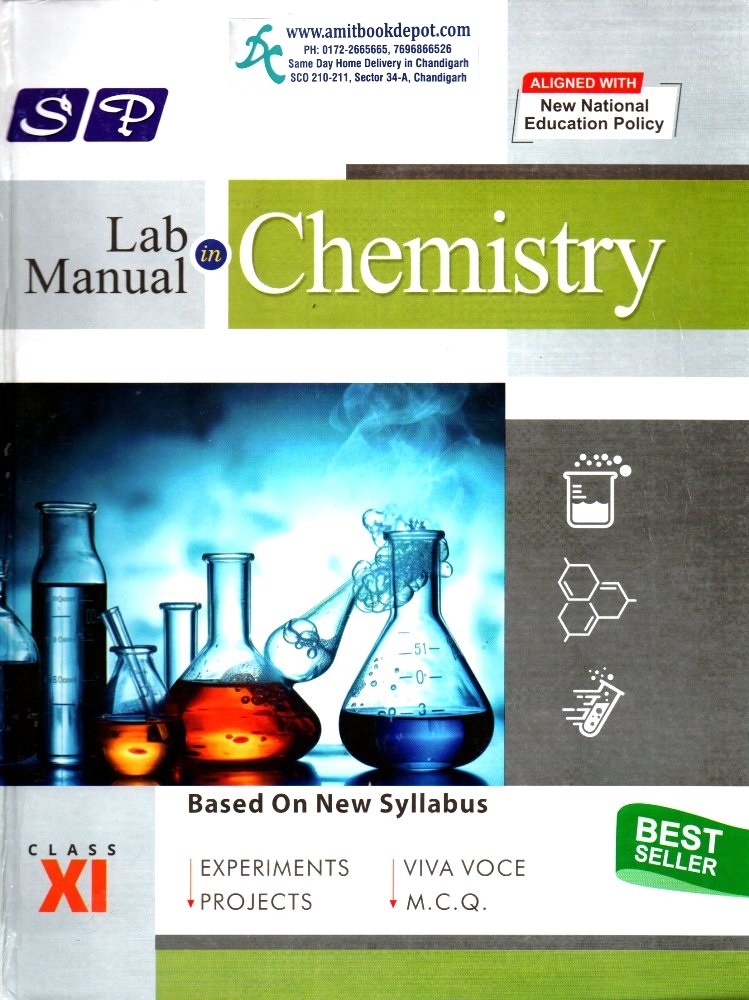
SP Laboratory Manual Chemistry for Class 11th

by Madhurima
₹425 ₹425.00(-/ off)

Rating & Reviews

23 Customer Review

SP Laboratory Manual Chemistry for Class 11th by SP Books is a complete practical guide aligned with the latest CBSE/NCERT syllabus. This manual covers all essential experiments, from basic laboratory techniques (glass tube cutting/bending) to quantitative estimation (titration and standard solution preparation). Students learn characterisation and purification of chemical substances, including crystallisation of copper sulphate and benzoic acid. The book provides detailed procedures for pH experiments using pH paper and universal indicator, chemical equilibrium studies, and qualitative analysis of inorganic salts (anion and cation identification).

Have Doubts Regarding This Product ? Ask Your Question

  • Q1
    What basic glassworking skill is taught in this manual?
    A1

    Cutting and bending glass tubes, drawing a glass jet, and boring a cork are covered in the basic laboratory techniques section.

  • Q2
    How does the manual teach purification of copper sulphate?
    A2

    Experiment 2.3 provides steps to prepare pure CuSO₄·5H₂O crystals from an impure sample of blue vitriol via recrystallization.

  • Q3
    Which indicators are used for pH determination experiments?
    A3

    Both pH paper and universal indicator solution are used to determine pH of acids, bases, salt solutions, and fruit juices.

  • Q4
    Does the manual compare strong and weak acids?
    A4

    Yes, Experiment 3.5 compares pH values of hydrochloric acid (strong) and acetic acid (weak) at the same concentration.

  • Q5
    What volumetric analysis skill is included?
    A5

    Preparing 250 ml of 0.1 M oxalic acid standard solution and titrating it against sodium hydroxide to determine its strength.

  • Q6
    Which organic compound purification is covered besides copper sulphate?
    A6

    Preparation of pure benzoic acid (C₆H₅COOH) crystals from its impure sample is described in Experiment 2.5.

  • Q7
    Are organic compound detection methods included?
    A7

    Yes, detection of nitrogen, sulphur, and halogens (chlorine, bromine, iodine) in organic compounds is covered in Experiment 6.2.

  • Q8
    Does the manual study effect of sodium carbonate on soap?
    A8

    Yes, comparing foaming capacity of different soaps and effect of adding sodium carbonate (washing soda) on foaming.

  • Q9
    What factors affecting evaporation rate are explored?
    A9

    Effect of surface area, temperature, and air current on evaporation rate of acetone is studied systematically.

  • Q10
    Does the manual include fibre tensile strength tests?
    A10

    Yes, comparing cotton, silk, and nylon tensile strength and studying effects of acids/bases on wool, cotton, and nylon.

0.00

0 Overall Rating
  • 5
    0
  • 4
    0
  • 3
    0
  • 2
    0
  • 1
    0

Try this product & share your review & thoughts

 EXPERIMENTS

BASIC LABORATORY TECHNIQUES

1.1 Cutting glass tube and glass rod.
1.2 Bending a glass tube.
1.3 Drawing out a glass jet.
1.4 Boring a cork.

CHARACTERISATION AND PURIFICATION OF CHEMICAL SUBSTANCES

2.1 To determine the melting point of an organic compound.
2.2 To determine the boiling point of an organic compound
2.3 To prepare crystals of pure copper sulphate (CuSO₄·5H₂O) from the given impure sample of blue vitriol.
2.4 To prepare the crystals of potash alum [K₂SO₄.Al₂(SO₄)₃.24H₂O], 4) [3.24H₂O] from its crude sample.
2.5 To prepare crystals of pure benzoic acid (C₆H₅COOH) from its impure sample.

EXPERIMENTS BASED ON PH

3.1 To determine the pH values of hydrochloric acid of different strengths using the following:
(i) pH papers and (ii) universal indicator solution.
3.2 To determine the pH values of various samples of NaOH solutions using:
(i)pH paper and (ii) universal indicator solution.
3.3 Determine the pH values of some vegetable juices and fruit juices using:
(i)pH paper, and (ii) universal indicator solution.
3.4 Determine the pH values of given salt solutions using:
(i)pH paper, and (ii) universal indicator solution.
3.5 To compare the pH values of solutions of hydrochloric acid and acetic acid having the same concentration (strong and weak acid).
3.6 To determine the change in pH value of acetic acid solution on the addition of sodium acetate solution.
3.7 To determine the change in pH value of ammonium hydroxide (NH₄OH) solution on addition of ammonium. chloride solution. 29
3.8. To study the pH change in the titration of 0.1 M HCl with 0.1 M NaOH using universal indicator, 30

CHEMICAL EQUILIBRIUM

4.1. To study the shift in equilibrium between ferric ions and thiocyanate ions by increasing/decreasing the concentration of either of the ions.
4.2. To study the shift in equilibrium between [Co(H₂O)] and chloride ions (Cl⁻ ions) by changing the concentration of either of the ions. 35

QUANTITATIVE ESTIMATION (VOLUMETRIC ANALYSIS)

5.1. Using a mechanical balance/electronic balance.
5.2. To prepare a standard solution (250 ml of 0.1 M) of oxalic acid.
5.3 To determine the strength of a given solution of sodium hydroxide (NaOH) solution by titrating it against 0.1 M oxalic acid solution. 44
5.4 To prepare a standard solution (250 ml of M/10) of sodium carbonate.
5.5 To determine the strength of a given solution of hydrochloric acid by titrating it against a standard (0.1M) sodium carbonate solution.

QUALITATIVE ANALYSIS OF INORGANIC COMPOUNDS

6.1. To determine one anion and one cation in a given salt.
6.2. To detect the presence of nitrogen, sulphur and halogens (chlorine, bromine, iodine, etc.) in the given organic compound.

INVESTIGATORY PROJECTS

1. To check the bacterial contamination in drinking water by testing sulphide ions.
2. To study the methods of purification of water.
3. To test the hardness, presence of iron, chloride, fluoride, etc., depending upon the regional variation in drinking water and to study the causes of the presence of these ions above the permissible limit (if any).
4. Investigation of the foaming capacity of different washing soaps and the effect of the addition of sodium carbonate on them. 90
4.1 To compare the foaming capacities of different samples of soaps.
4.2 To study the effect of the addition of sodium carbonate (washing soda) on the foaming capacity of a soap.
5. Study of acidity of different samples of tea leaves and reason for variation in their tastes.
5.1 To study the acidity of different samples of tea leaves as an index of their tastes.
6. Determination of the rates of evaporation of different liquids.
6.1 To compare the rates of evaporation of different liquids.
6.2 To study the effect of surface area on the rate of evaporation of acetone.
6.3 To study the effect of temperature on the rate of evaporation of acetone.
6.4 To study the effect of air current on the rate of evaporation of acetone.
7. Study of the affects of acids and bases on the tensile strength of fibres.
7.1 To determine the relative tensile strength of cotton, silk and nylon fibres.
7.2 To study the effect of acids and bases on the tensile strengths of wool, cotton and nylon fibres.
8. Analysis of fruit and vegetable juices for their acidity.
8.1 To study the acidity of fruit and vegetable juices.

- Questions From NCERT Laboratory Manual
- Multiple Choice Questions
- Tables

The SP Laboratory Manual Chemistry for Class 11 is a comprehensive, curriculum-aligned resource designed to facilitate hands-on learning of core chemistry concepts. Published by SP Books, this manual serves as an essential guide for students to master basic laboratory techniques, volumetric analysis, and qualitative salt analysis as prescribed by the NCERT/CBSE framework for the academic session.

This chemistry lab manual systematically organises experiments into distinct sections, ensuring clarity and progressive skill development. The initial chapters focus on basic laboratory techniques, including instructions on cutting and bending glass tubes, drawing glass jets, and boring corks—fundamental skills for safe and efficient lab work. Subsequent sections cover the characterisation and purification of chemical substances, providing step-by-step protocols for determining melting and boiling points of organic compounds, as well as preparing crystals of pure copper sulphate (CuSO₄·5H₂O), potash alum, and benzoic acid from impure samples.

The manual includes a dedicated unit on experiments based on pH, where students learn to determine pH values of acids (HCl), bases (NaOH), salt solutions, and fruit/vegetable juices using pH paper and universal indicator solutions. Key exercises compare strong vs. weak acids and study pH changes during acid-base titrations. The chemical equilibrium section demonstrates Le Chatelier’s principle through shifts in ferric-thiocyanate and cobalt-chloride ion equilibria.

A significant portion is allocated to quantitative estimation (volumetric analysis), guiding learners to prepare standard solutions of oxalic acid and sodium carbonate, followed by titration against sodium hydroxide and hydrochloric acid, respectively. All procedures include proper use of mechanical and electronic balances.

The qualitative analysis of inorganic compounds section provides a systematic scheme for identifying one anion and one cation in a given salt, along with tests for nitrogen, sulphur, and halogens in organic compounds. The manual also features investigatory projects such as checking bacterial contamination in water, studying water purification methods, testing drinking water hardness, comparing soap foaming capacity, analysing tea leaf acidity, evaporation rate studies, the effect of acids/bases on fibre tensile strength, and fruit juice acidity analysis.

Additional academic support includes questions derived from the NCERT Laboratory Manual, multiple-choice questions (MCQs), and data tables. This practical book for Class 11 chemistry is indispensable for CBSE practical exams and internal assessments.

 EXPERIMENTS

BASIC LABORATORY TECHNIQUES

1.1 Cutting glass tube and glass rod.
1.2 Bending a glass tube.
1.3 Drawing out a glass jet.
1.4 Boring a cork.

CHARACTERISATION AND PURIFICATION OF CHEMICAL SUBSTANCES

2.1 To determine the melting point of an organic compound.
2.2 To determine the boiling point of an organic compound
2.3 To prepare crystals of pure copper sulphate (CuSO₄·5H₂O) from the given impure sample of blue vitriol.
2.4 To prepare the crystals of potash alum [K₂SO₄.Al₂(SO₄)₃.24H₂O], 4) [3.24H₂O] from its crude sample.
2.5 To prepare crystals of pure benzoic acid (C₆H₅COOH) from its impure sample.

EXPERIMENTS BASED ON PH

3.1 To determine the pH values of hydrochloric acid of different strengths using the following:
(i) pH papers and (ii) universal indicator solution.
3.2 To determine the pH values of various samples of NaOH solutions using:
(i)pH paper and (ii) universal indicator solution.
3.3 Determine the pH values of some vegetable juices and fruit juices using:
(i)pH paper, and (ii) universal indicator solution.
3.4 Determine the pH values of given salt solutions using:
(i)pH paper, and (ii) universal indicator solution.
3.5 To compare the pH values of solutions of hydrochloric acid and acetic acid having the same concentration (strong and weak acid).
3.6 To determine the change in pH value of acetic acid solution on the addition of sodium acetate solution.
3.7 To determine the change in pH value of ammonium hydroxide (NH₄OH) solution on addition of ammonium. chloride solution. 29
3.8. To study the pH change in the titration of 0.1 M HCl with 0.1 M NaOH using universal indicator, 30

CHEMICAL EQUILIBRIUM

4.1. To study the shift in equilibrium between ferric ions and thiocyanate ions by increasing/decreasing the concentration of either of the ions.
4.2. To study the shift in equilibrium between [Co(H₂O)] and chloride ions (Cl⁻ ions) by changing the concentration of either of the ions. 35

QUANTITATIVE ESTIMATION (VOLUMETRIC ANALYSIS)

5.1. Using a mechanical balance/electronic balance.
5.2. To prepare a standard solution (250 ml of 0.1 M) of oxalic acid.
5.3 To determine the strength of a given solution of sodium hydroxide (NaOH) solution by titrating it against 0.1 M oxalic acid solution. 44
5.4 To prepare a standard solution (250 ml of M/10) of sodium carbonate.
5.5 To determine the strength of a given solution of hydrochloric acid by titrating it against a standard (0.1M) sodium carbonate solution.

QUALITATIVE ANALYSIS OF INORGANIC COMPOUNDS

6.1. To determine one anion and one cation in a given salt.
6.2. To detect the presence of nitrogen, sulphur and halogens (chlorine, bromine, iodine, etc.) in the given organic compound.

INVESTIGATORY PROJECTS

1. To check the bacterial contamination in drinking water by testing sulphide ions.
2. To study the methods of purification of water.
3. To test the hardness, presence of iron, chloride, fluoride, etc., depending upon the regional variation in drinking water and to study the causes of the presence of these ions above the permissible limit (if any).
4. Investigation of the foaming capacity of different washing soaps and the effect of the addition of sodium carbonate on them. 90
4.1 To compare the foaming capacities of different samples of soaps.
4.2 To study the effect of the addition of sodium carbonate (washing soda) on the foaming capacity of a soap.
5. Study of acidity of different samples of tea leaves and reason for variation in their tastes.
5.1 To study the acidity of different samples of tea leaves as an index of their tastes.
6. Determination of the rates of evaporation of different liquids.
6.1 To compare the rates of evaporation of different liquids.
6.2 To study the effect of surface area on the rate of evaporation of acetone.
6.3 To study the effect of temperature on the rate of evaporation of acetone.
6.4 To study the effect of air current on the rate of evaporation of acetone.
7. Study of the affects of acids and bases on the tensile strength of fibres.
7.1 To determine the relative tensile strength of cotton, silk and nylon fibres.
7.2 To study the effect of acids and bases on the tensile strengths of wool, cotton and nylon fibres.
8. Analysis of fruit and vegetable juices for their acidity.
8.1 To study the acidity of fruit and vegetable juices.

- Questions From NCERT Laboratory Manual
- Multiple Choice Questions
- Tables

Have Doubts Regarding This Product ? Ask Your Question

  • Q1
    What basic glassworking skill is taught in this manual?
    A1

    Cutting and bending glass tubes, drawing a glass jet, and boring a cork are covered in the basic laboratory techniques section.

  • Q2
    How does the manual teach purification of copper sulphate?
    A2

    Experiment 2.3 provides steps to prepare pure CuSO₄·5H₂O crystals from an impure sample of blue vitriol via recrystallization.

  • Q3
    Which indicators are used for pH determination experiments?
    A3

    Both pH paper and universal indicator solution are used to determine pH of acids, bases, salt solutions, and fruit juices.

  • Q4
    Does the manual compare strong and weak acids?
    A4

    Yes, Experiment 3.5 compares pH values of hydrochloric acid (strong) and acetic acid (weak) at the same concentration.

  • Q5
    What volumetric analysis skill is included?
    A5

    Preparing 250 ml of 0.1 M oxalic acid standard solution and titrating it against sodium hydroxide to determine its strength.

  • Q6
    Which organic compound purification is covered besides copper sulphate?
    A6

    Preparation of pure benzoic acid (C₆H₅COOH) crystals from its impure sample is described in Experiment 2.5.

  • Q7
    Are organic compound detection methods included?
    A7

    Yes, detection of nitrogen, sulphur, and halogens (chlorine, bromine, iodine) in organic compounds is covered in Experiment 6.2.

  • Q8
    Does the manual study effect of sodium carbonate on soap?
    A8

    Yes, comparing foaming capacity of different soaps and effect of adding sodium carbonate (washing soda) on foaming.

  • Q9
    What factors affecting evaporation rate are explored?
    A9

    Effect of surface area, temperature, and air current on evaporation rate of acetone is studied systematically.

  • Q10
    Does the manual include fibre tensile strength tests?
    A10

    Yes, comparing cotton, silk, and nylon tensile strength and studying effects of acids/bases on wool, cotton, and nylon.

No Syllabus Added

0.00

0 Overall Rating
  • 5
    0
  • 4
    0
  • 3
    0
  • 2
    0
  • 1
    0

Try this product & share your review & thoughts

Top Trending Product

Related Product

Related Product

Related Blog Posts

Latest Blogs

Latest Blogs

blog-img
Classic Literature Reimagined: Discuss modern twists on classic novels.
Lorem ipsum dolor sit amet, consectetur adipiscing elit, sed do eiusmod tempor incididunt ut labore et dolore magna aliqua. Ut enim ad minim veniam, quis nostrud exercitation ullamco Lorem ipsum dolor sit amet, consectetur adipiscing elit, sed do eiusmod tempor incididunt ut labore et dolore magna aliqua. Utenim ad minim veniam, quis nostrud exercitation ullamco Lorem ipsum dolor sit amet, consecte...
Read more
Author name | 10 jan, 2025
blog-img
Classic Literature Reimagined: Discuss modern twists on classic novels.
Lorem ipsum dolor sit amet, consectetur adipiscing elit, sed do eiusmod tempor incididunt ut labore et dolore magna aliqua. Ut enim ad minim veniam, quis nostrud exercitation ullamco Lorem ipsum dolor sit amet, consectetur adipiscing elit, sed do eiusmod tempor incididunt ut labore et dolore magna aliqua. Utenim ad minim veniam, quis nostrud exercitation ullamco Lorem ipsum dolor sit amet, consecte...
Read more
Author name | 10 jan, 2025
blog-img
Classic Literature Reimagined: Discuss modern twists on classic novels.
Lorem ipsum dolor sit amet, consectetur adipiscing elit, sed do eiusmod tempor incididunt ut labore et dolore magna aliqua. Ut enim ad minim veniam, quis nostrud exercitation ullamco Lorem ipsum dolor sit amet, consectetur adipiscing elit, sed do eiusmod tempor incididunt ut labore et dolore magna aliqua. Utenim ad minim veniam, quis nostrud exercitation ullamco Lorem ipsum dolor sit amet, consecte...
Read more
Author name | 10 jan, 2025
blog-img
Classic Literature Reimagined: Discuss modern twists on classic novels.
Lorem ipsum dolor sit amet, consectetur adipiscing elit...
Read more
Author Name | 10 Jan, 2025
blog-img
Classic Literature Reimagined: Discuss modern twists on classic novels.
Lorem ipsum dolor sit amet, consectetur adipiscing elit...
Read more
Author Name | 10 Jan, 2025
blog-img
Classic Literature Reimagined: Discuss modern twists on classic novels.
Lorem ipsum dolor sit amet, consectetur adipiscing elit...
Read more
Author Name | 10 Jan, 2025
blog-img
Classic Literature Reimagined: Discuss modern twists on classic novels.
Lorem ipsum dolor sit amet, consectetur adipiscing elit...
Read more
Author Name | 10 Jan, 2025
blog-img
Classic Literature Reimagined: Discuss modern twists on classic novels.
Lorem ipsum dolor sit amet, consectetur adipiscing elit...
Read more
Author Name | 10 Jan, 2025
blog-img
Classic Literature Reimagined: Discuss modern twists on classic novels.
Lorem ipsum dolor sit amet, consectetur adipiscing elit...
Read more
Author Name | 10 Jan, 2025
blog-img
Classic Literature Reimagined: Discuss modern twists on classic novels.
Lorem ipsum dolor sit amet, consectetur adipiscing elit...
Read more
Author Name | 10 Jan, 2025
blog-img
Classic Literature Reimagined: Discuss modern twists on classic novels.
Lorem ipsum dolor sit amet, consectetur adipiscing elit...
Read more
Author Name | 10 Jan, 2025
blog-img
Classic Literature Reimagined: Discuss modern twists on classic novels.
Lorem ipsum dolor sit amet, consectetur adipiscing elit...
Read more
Author Name | 10 Jan, 2025