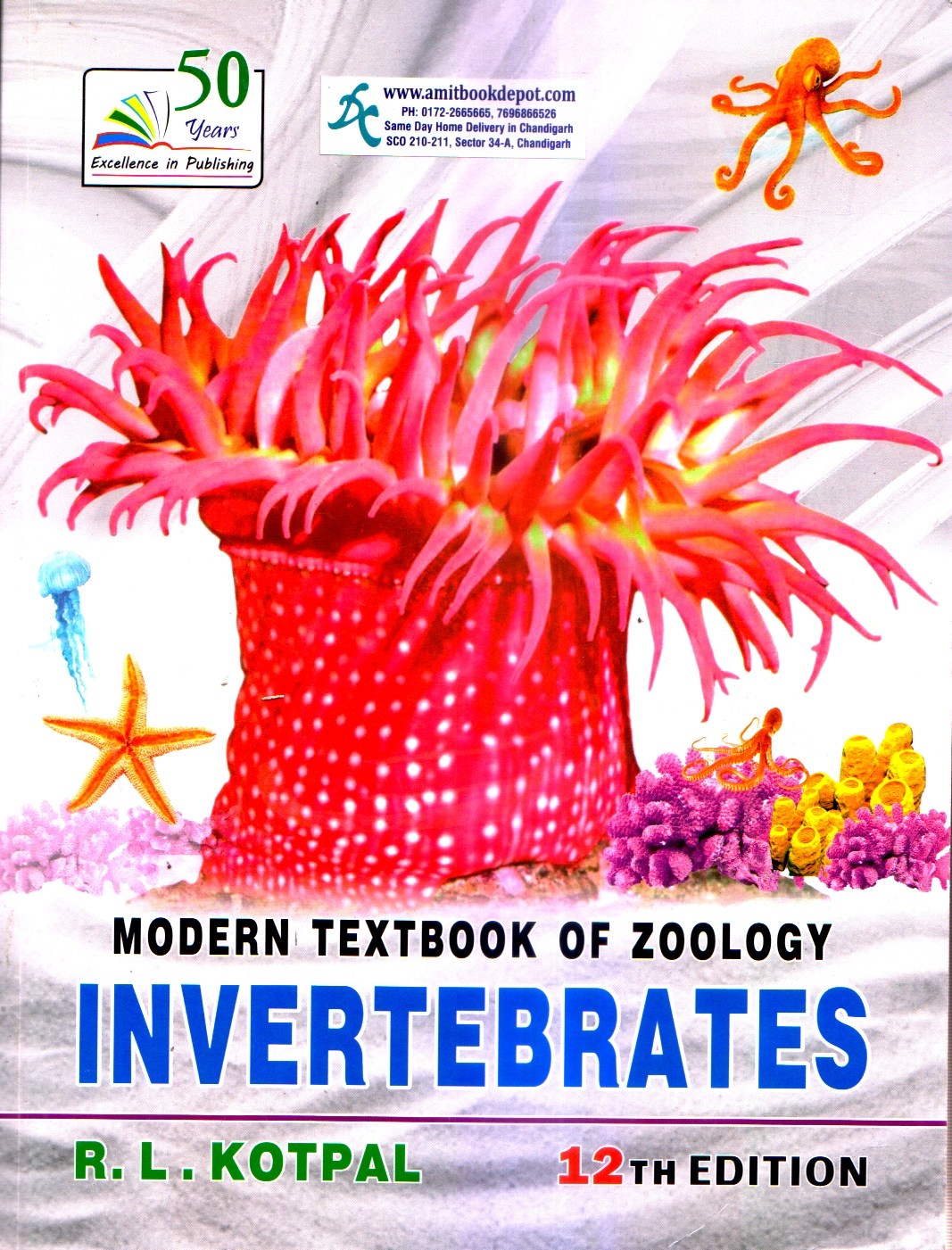
Modern Textbook of Zoology: Invertebrates by R. L. Kotpal covers Plasmodium life cycle, sporogony, and schizogony in chapter 9.
Yes, chapter 50 separately describes Culex and Anopheles with focus on morphology, breeding sites, and disease transmission.
Yes, chapter 55 exclusively treats Peripatus, highlighting its annelid-like and arthropod-like characters for evolutionary understanding.
Yes, each major phylum (Protozoa, Porifera, Coelenterata, Platyhelminthes, Annelida, Arthropoda, Mollusca, Echinodermata) includes dedicated classification chapters.
Chapter 52 covers Bombyx mori, including life cycle, silk gland structure, and economic importance in sericulture.
Yes, chapter 29 is exclusively on Ctenophora, covering comb plates, bioluminescence, and distinct classification.
Chapter 41 details Pheretima posthuma, the Indian earthworm, including digestive, circulatory, and excretory systems.
Yes, chapter 58 describes Neopilina, highlighting its segmented nature and importance in molluscan evolution.
Chapter 17 (Origin of Metazoa) discusses theories like colonial flagellate hypothesis and syncytial hypothesis.
Yes, chapter 37 covers Wuchereria bancrofti, its life cycle, vector (mosquito), and pathological effects of filariasis.
No Description Added
Modern Textbook of Zoology: Invertebrates by R. L. Kotpal covers Plasmodium life cycle, sporogony, and schizogony in chapter 9.
Yes, chapter 50 separately describes Culex and Anopheles with focus on morphology, breeding sites, and disease transmission.
Yes, chapter 55 exclusively treats Peripatus, highlighting its annelid-like and arthropod-like characters for evolutionary understanding.
Yes, each major phylum (Protozoa, Porifera, Coelenterata, Platyhelminthes, Annelida, Arthropoda, Mollusca, Echinodermata) includes dedicated classification chapters.
Chapter 52 covers Bombyx mori, including life cycle, silk gland structure, and economic importance in sericulture.
Yes, chapter 29 is exclusively on Ctenophora, covering comb plates, bioluminescence, and distinct classification.
Chapter 41 details Pheretima posthuma, the Indian earthworm, including digestive, circulatory, and excretory systems.
Yes, chapter 58 describes Neopilina, highlighting its segmented nature and importance in molluscan evolution.
Chapter 17 (Origin of Metazoa) discusses theories like colonial flagellate hypothesis and syncytial hypothesis.
Yes, chapter 37 covers Wuchereria bancrofti, its life cycle, vector (mosquito), and pathological effects of filariasis.