-
Mon-Fri: 10AM to 8PM 01722665665
-
My Account
-
-
0
Total :
₹ 0.00

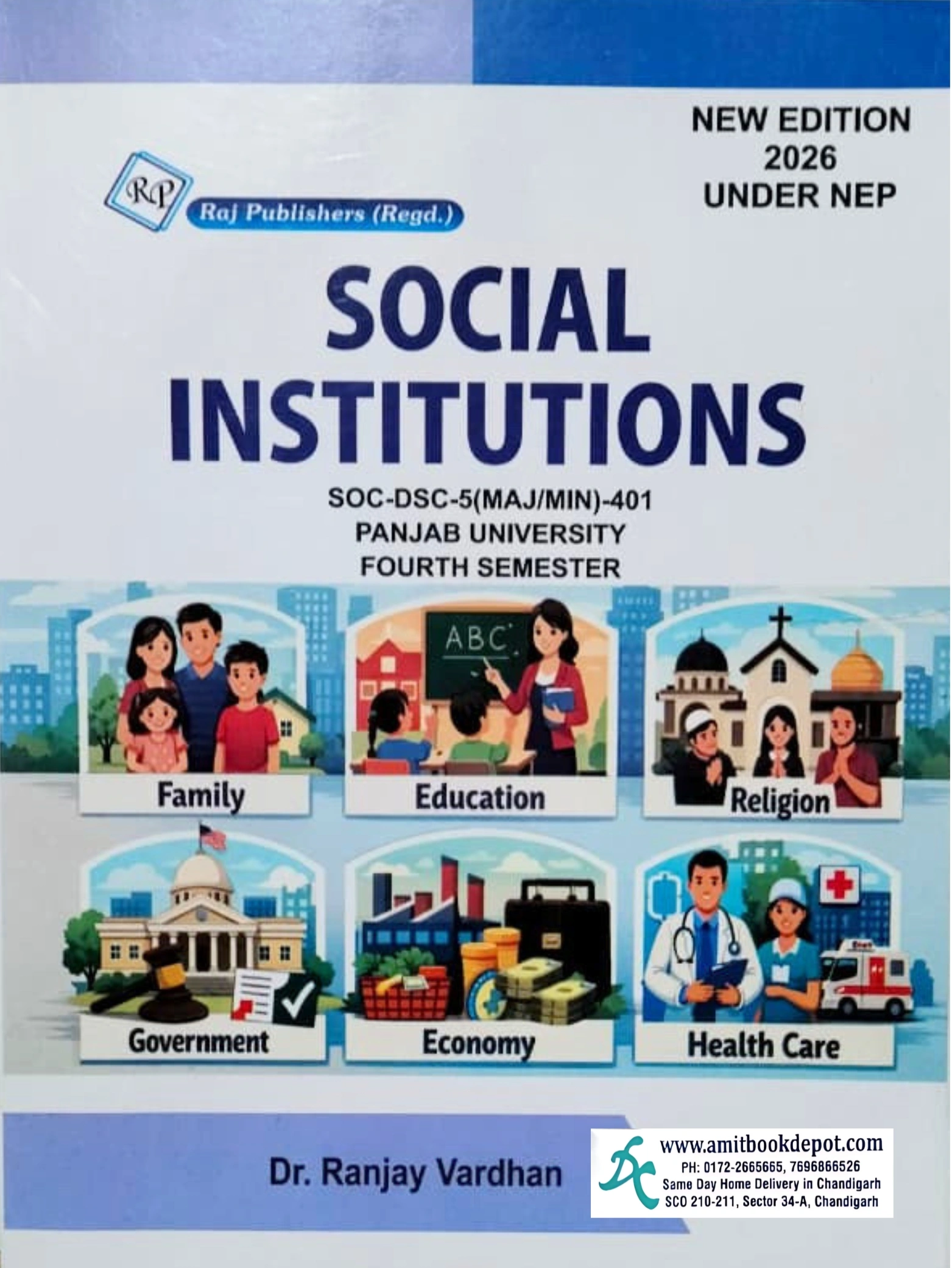
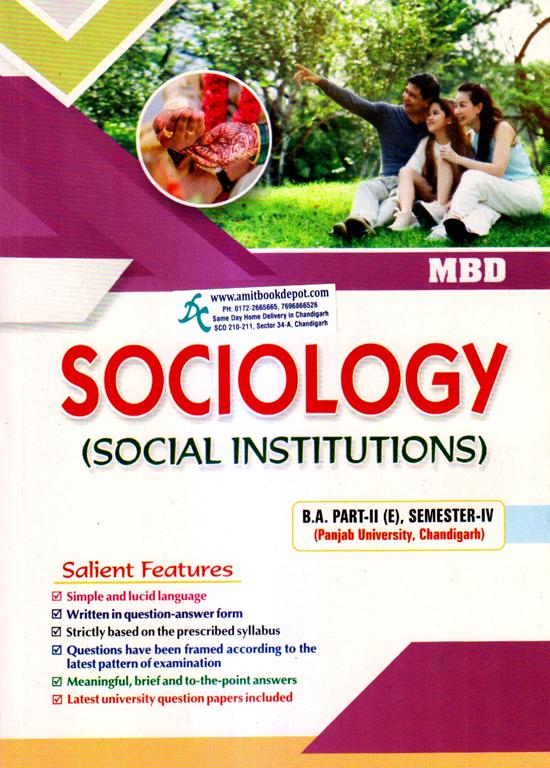
Yes, this book is meticulously crafted to align 100% with the latest syllabus for "Social Institutions" (HSS-SOC-DSC5) under the New Education Policy (NEP) for Panjab University, Chandigarh.
Absolutely. The book is designed for both Major and Minor students of Sociology in Semester IV, as per the course offering.
Yes, the book is divided into four precise units: I. Institutions, II. Social Institutions, III. Political & Economic Institutions, and IV. Cultural Institutions, matching the university's outline.
It includes a dedicated section for Short Answer Type Questions crucial for the compulsory 20-mark question, and the long chapters are structured to help students attempt the 15-mark essay questions from each unit.
Yes, it covers the relevant perspectives of key theorists like Emile Durkheim (on Division of Labour and Religion) and Max Weber (on Religion), as mandated in the syllabus.
Yes, Unit II on Social Institutions includes dedicated sections on the contemporary trends and changing patterns in both marriage and the family structure.
The comprehensive coverage of topics aids in preparing for internal assessments like written assignments, term papers, presentations, and class discussions.
Yes, it is a complete standalone resource that covers the entire theory syllabus, making it highly useful for reappear/improvement candidates.
The content is updated to reflect both classical theories and modern interpretations, especially in sections discussing contemporary trends in social institutions.
Definitely. This textbook is designed to be comprehensive and self-sufficient, serving as your primary and most reliable study material for the Social Institutions paper.
No Description Added
Yes, this book is meticulously crafted to align 100% with the latest syllabus for "Social Institutions" (HSS-SOC-DSC5) under the New Education Policy (NEP) for Panjab University, Chandigarh.
Absolutely. The book is designed for both Major and Minor students of Sociology in Semester IV, as per the course offering.
Yes, the book is divided into four precise units: I. Institutions, II. Social Institutions, III. Political & Economic Institutions, and IV. Cultural Institutions, matching the university's outline.
It includes a dedicated section for Short Answer Type Questions crucial for the compulsory 20-mark question, and the long chapters are structured to help students attempt the 15-mark essay questions from each unit.
Yes, it covers the relevant perspectives of key theorists like Emile Durkheim (on Division of Labour and Religion) and Max Weber (on Religion), as mandated in the syllabus.
Yes, Unit II on Social Institutions includes dedicated sections on the contemporary trends and changing patterns in both marriage and the family structure.
The comprehensive coverage of topics aids in preparing for internal assessments like written assignments, term papers, presentations, and class discussions.
Yes, it is a complete standalone resource that covers the entire theory syllabus, making it highly useful for reappear/improvement candidates.
The content is updated to reflect both classical theories and modern interpretations, especially in sections discussing contemporary trends in social institutions.
Definitely. This textbook is designed to be comprehensive and self-sufficient, serving as your primary and most reliable study material for the Social Institutions paper.