-
Mon-Fri: 10AM to 8PM 01722665665
-
My Account
-
-
0
Total :
₹ 0.00

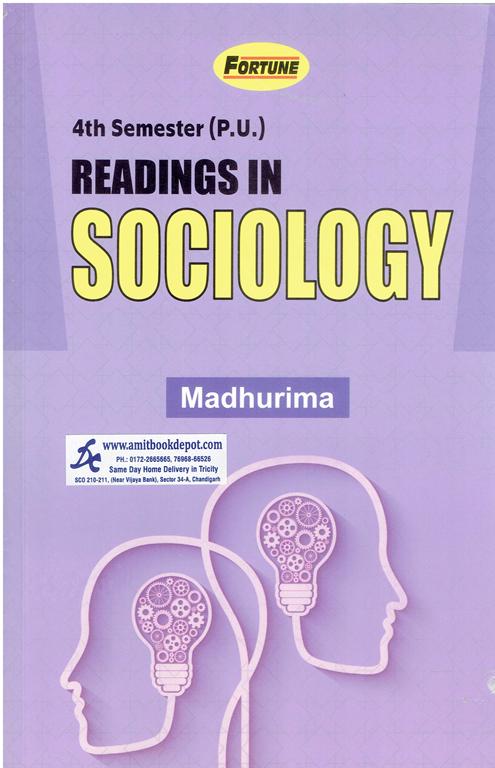
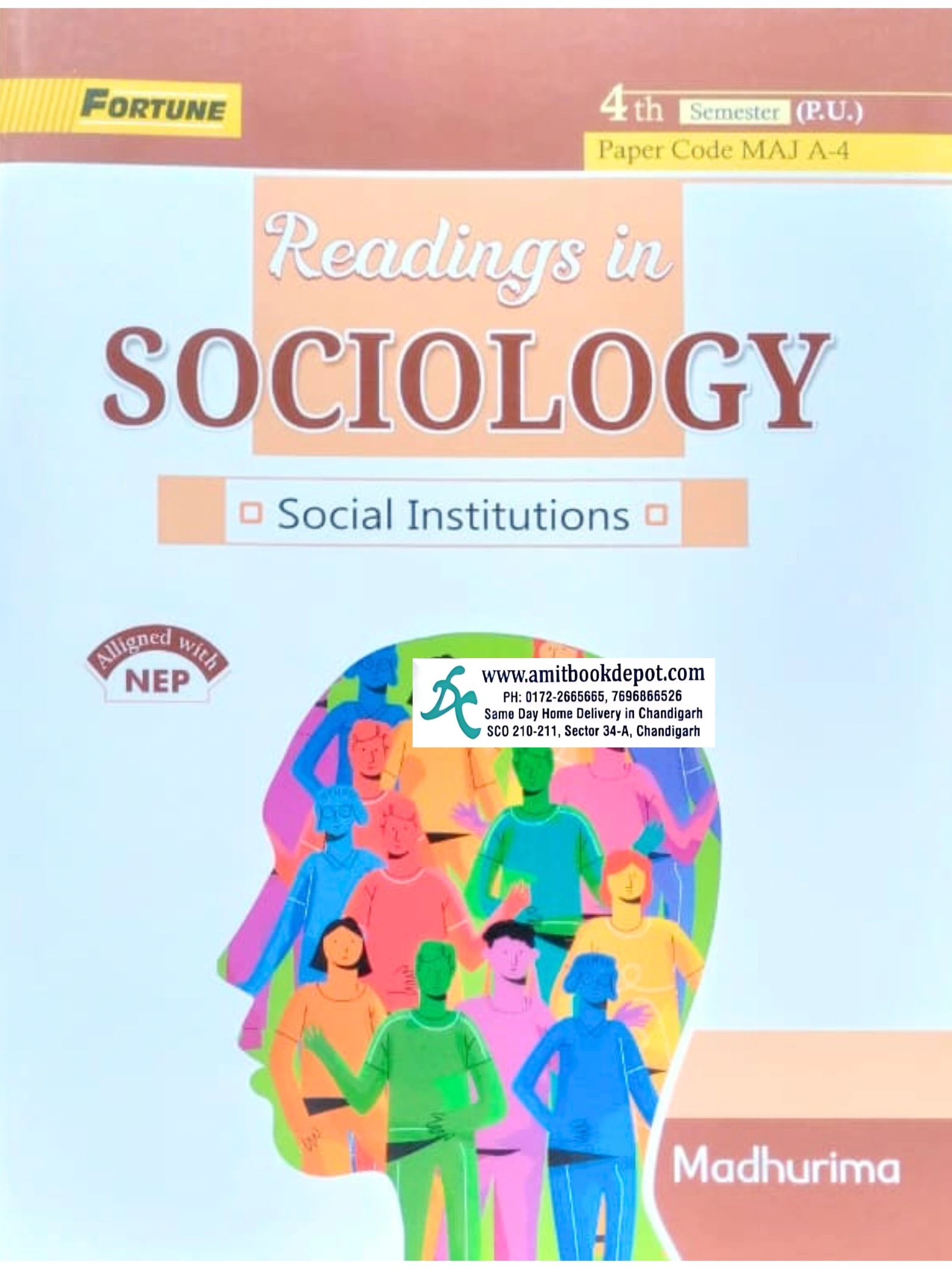

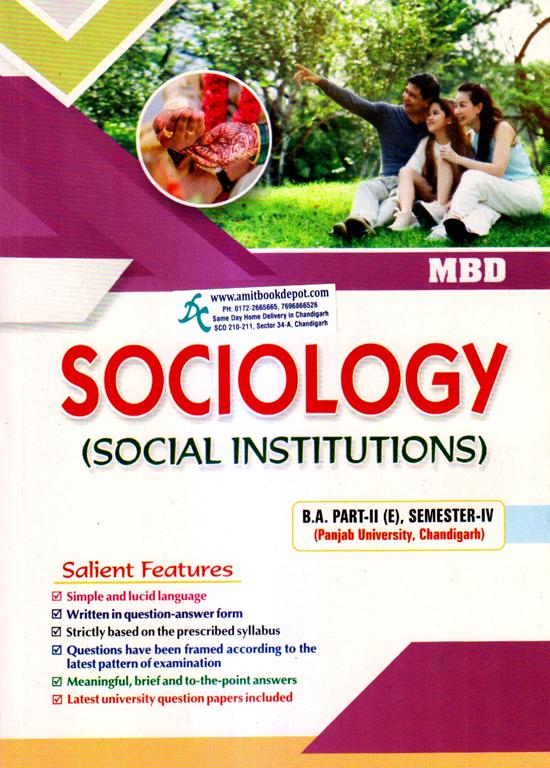
It is exclusively designed for Panjab University, Chandigarh. It strictly follows the syllabus for BA 4th Semester (NEP) , course code HSS-SOC-DSC5(MAJ/MIN)-401, and is not a generic introductory text.
Yes. It features dedicated sections on Emile Durkheim’s theory of the Division of Labor in economic institutions and the sociological perspectives of both Durkheim and Weber on the functions of religion.
The book dedicates specific sub-sections to Contemporary Trends within Unit II, analyzing modern shifts in mate selection, changing family structures, declining joint family systems, and evolving kinship patterns.
Yes. It is designed to support the NEP pedagogy of collaborative learning. The content structure aids in preparing for group discussions, assignments, and term papers, which are key components of the internal assessment.
The book clearly delineates Normative Aspects (the rules, values, and expected patterns of behavior) from Relational Aspects (the actual patterns of relationships and interactions between individuals within the institution).
Yes. The kinship section provides detailed definitions and sociological distinctions between Clan and Lineage, supported by illustrative examples to help students differentiate these often-confused concepts.
Yes. The marriage institution chapter provides a balanced, objective analysis of both Monogamy and Polygamy, including their subtypes and the sociological reasons for their prevalence in different societies.
Absolutely. The course HSS-SOC-DSC5(MAJ/MIN)-401 is explicitly designed for both Major and Minor students, and this textbook covers the complete syllabus required for both categories.
Yes. Beyond the Division of Labor, the Unit on Economic Institutions includes a thorough analysis of Property, examining its forms and its role as a foundational economic institution.
While the theoretical frameworks are rooted in classical Western sociology, the application of contemporary trends, particularly in marriage and family, includes relevant Indian social contexts and examples pertinent to PU students.
No Description Added
It is exclusively designed for Panjab University, Chandigarh. It strictly follows the syllabus for BA 4th Semester (NEP) , course code HSS-SOC-DSC5(MAJ/MIN)-401, and is not a generic introductory text.
Yes. It features dedicated sections on Emile Durkheim’s theory of the Division of Labor in economic institutions and the sociological perspectives of both Durkheim and Weber on the functions of religion.
The book dedicates specific sub-sections to Contemporary Trends within Unit II, analyzing modern shifts in mate selection, changing family structures, declining joint family systems, and evolving kinship patterns.
Yes. It is designed to support the NEP pedagogy of collaborative learning. The content structure aids in preparing for group discussions, assignments, and term papers, which are key components of the internal assessment.
The book clearly delineates Normative Aspects (the rules, values, and expected patterns of behavior) from Relational Aspects (the actual patterns of relationships and interactions between individuals within the institution).
Yes. The kinship section provides detailed definitions and sociological distinctions between Clan and Lineage, supported by illustrative examples to help students differentiate these often-confused concepts.
Yes. The marriage institution chapter provides a balanced, objective analysis of both Monogamy and Polygamy, including their subtypes and the sociological reasons for their prevalence in different societies.
Absolutely. The course HSS-SOC-DSC5(MAJ/MIN)-401 is explicitly designed for both Major and Minor students, and this textbook covers the complete syllabus required for both categories.
Yes. Beyond the Division of Labor, the Unit on Economic Institutions includes a thorough analysis of Property, examining its forms and its role as a foundational economic institution.
While the theoretical frameworks are rooted in classical Western sociology, the application of contemporary trends, particularly in marriage and family, includes relevant Indian social contexts and examples pertinent to PU students.