-
Mon-Fri: 10AM to 8PM 01722665665
-
My Account
-
-
0
Total :
₹ 0.00

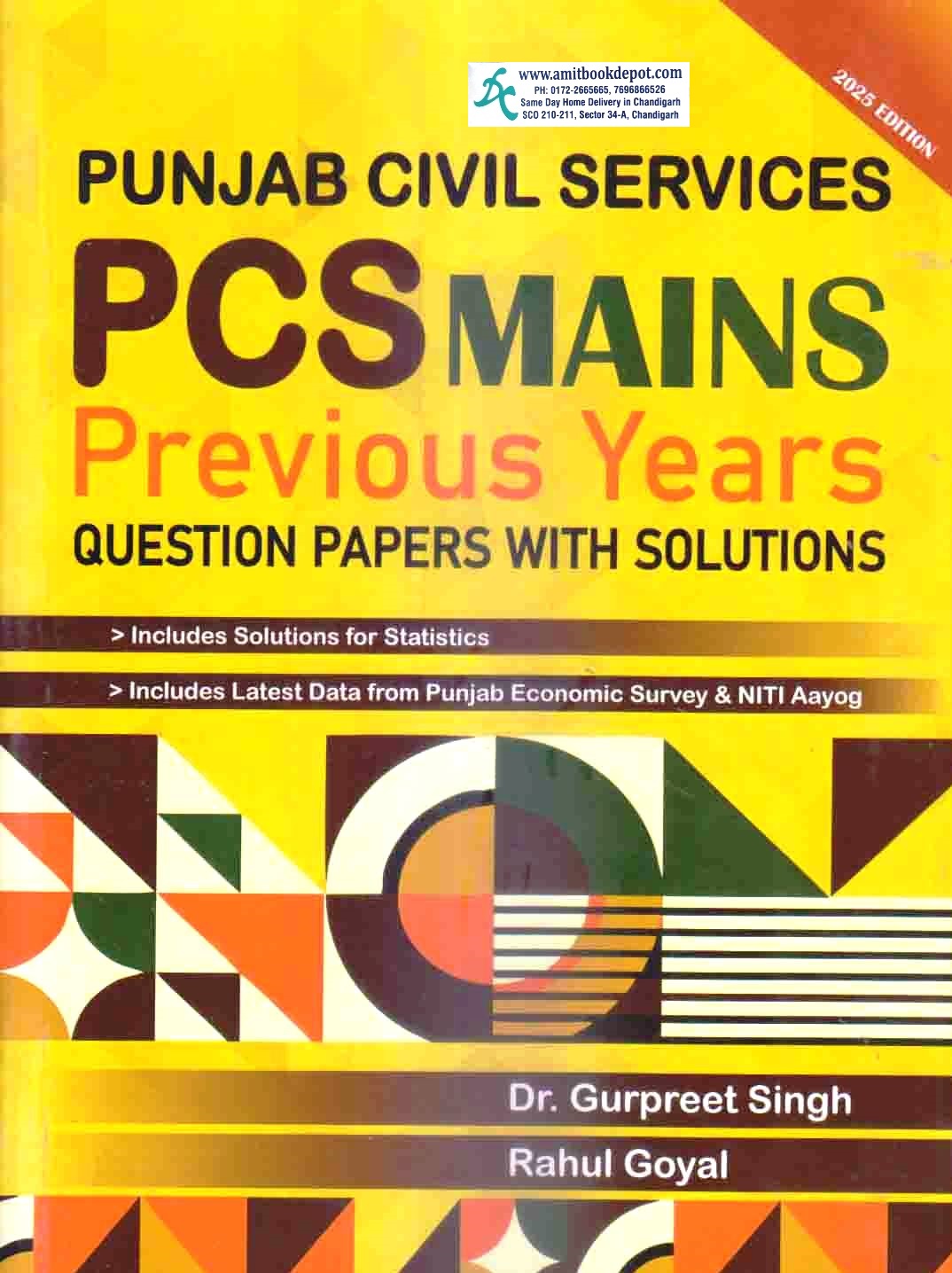
PCS Mains Previous Year Question Papers With Solutions by Dr. Gurpreet Singh & Rahul Goyal. This definitive guide from HHH Publishing Pvt Ltd provides solved papers from PCS Mains 2013, 2015, 2018, and 2020 across all four General Studies papers. Designed for UPPSC and other state PCS aspirants, it offers authentic exam patterns, model answers, and strategic insights for effective mains preparation. This book is an essential resource for mastering answer writing, understanding the demand of questions, and enhancing scores. Optimize your revision and approach the exam with confidence using this comprehensive volume of previous years solved papers.



Yes, the solutions are tailored to meet UPPSC and state PCS marking schemes, ensuring that your practice aligns with the expectations of the examiners.
Yes, the book offers structured and detailed model answers for Ethics, Integrity & Aptitude papers, including case study approaches to help aspirants craft well-structured responses.
The book provides model answers for each question, enabling aspirants to compare their responses, learn effective structuring, and develop concise, impactful writing within time limits.
The question papers from 2013, 2015, 2018, and 2020 reveal patterns and frequently tested topics, helping aspirants focus on relevant themes and current trends.
Absolutely, the collection of previous papers serves as an excellent revision resource, helping you recall important topics and refine your answer writing under exam-like conditions.
Yes, each year's papers include all four GS papers with detailed solutions, covering diverse topics such as Indian polity, economy, history, geography, science, ethics, and internal security.
The book emphasizes timed answer writing and self-assessment, helping aspirants develop effective time management strategies through practice.
Yes, beginners can use it to understand question patterns, develop answer structuring skills, and build confidence by analyzing model answers and practicing under exam conditions.
Yes, the model answers demonstrate effective presentation techniques. Wherever appropriate, the solutions suggest the inclusion of simple diagrams (e.g., for geography questions), flowcharts (for governance processes), or tabular comparisons. They also emphasize headings, sub-headings, and judicious underlining of key terms—all crucial for making your answer script visually appealing and easy to evaluate.
The solutions are framed with two layers. First, they address the question contextually as per the exam year. Crucially, they are enhanced with contemporary relevance where applicable, adding recent data, outcomes of schemes, or updated policies (like NEP 2020, recent amendments) in footnotes or as "current context." This teaches you how to integrate dynamic knowledge into static core answers.
Yes, the solutions are tailored to meet UPPSC and state PCS marking schemes, ensuring that your practice aligns with the expectations of the examiners.
Yes, the book offers structured and detailed model answers for Ethics, Integrity & Aptitude papers, including case study approaches to help aspirants craft well-structured responses.
The book provides model answers for each question, enabling aspirants to compare their responses, learn effective structuring, and develop concise, impactful writing within time limits.
The question papers from 2013, 2015, 2018, and 2020 reveal patterns and frequently tested topics, helping aspirants focus on relevant themes and current trends.
Absolutely, the collection of previous papers serves as an excellent revision resource, helping you recall important topics and refine your answer writing under exam-like conditions.
Yes, each year's papers include all four GS papers with detailed solutions, covering diverse topics such as Indian polity, economy, history, geography, science, ethics, and internal security.
The book emphasizes timed answer writing and self-assessment, helping aspirants develop effective time management strategies through practice.
Yes, beginners can use it to understand question patterns, develop answer structuring skills, and build confidence by analyzing model answers and practicing under exam conditions.
Yes, the model answers demonstrate effective presentation techniques. Wherever appropriate, the solutions suggest the inclusion of simple diagrams (e.g., for geography questions), flowcharts (for governance processes), or tabular comparisons. They also emphasize headings, sub-headings, and judicious underlining of key terms—all crucial for making your answer script visually appealing and easy to evaluate.
The solutions are framed with two layers. First, they address the question contextually as per the exam year. Crucially, they are enhanced with contemporary relevance where applicable, adding recent data, outcomes of schemes, or updated policies (like NEP 2020, recent amendments) in footnotes or as "current context." This teaches you how to integrate dynamic knowledge into static core answers.