-
Mon-Fri: 10AM to 8PM 01722665665
-
My Account
-
-
0
Total :
₹ 0.00

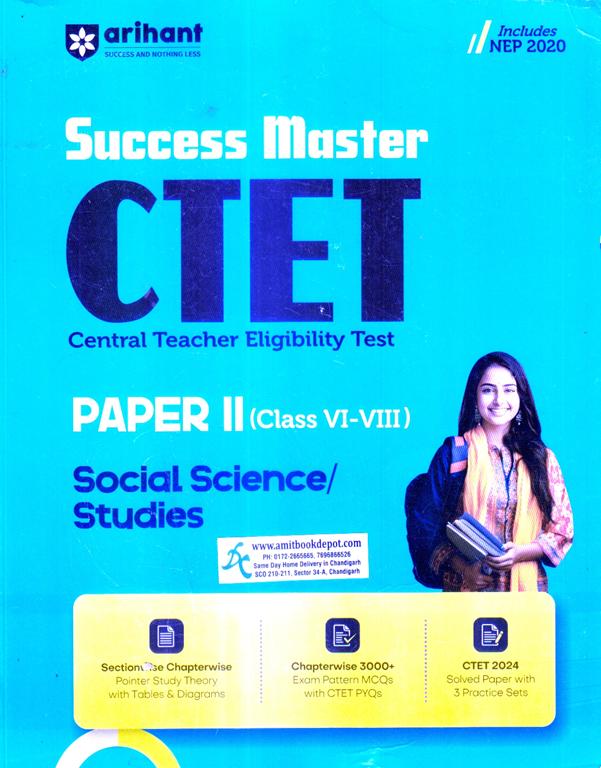
Yes, the book is meticulously updated to align with the latest CTET Paper-I syllabus and exam pattern prescribed by the CBSE, including pedagogical shifts highlighted in NEP 2020.
Absolutely. The Child Development and Pedagogy section has dedicated chapters integrating perspectives from both NCF 2005 and NEP 2020, ensuring relevance to current educational policies.
Yes, it provides distinct and detailed Pedagogy (शिक्षाशास्त्र) sections for both English Language and हिन्दी भाषा, addressing language acquisition, teaching principles, and classroom challenges specifically.
Yes, both the English and Hindi sections include dedicated chapters for Unseen Passage/अपठित गद्यांश and Unseen Poem/अपठित पद्यांश to build comprehension and analytical skills.
The Mathematics & Pedagogy section not only covers content but also explains how to teach it, covering Error Analysis, Diagnostic & Remedial Teaching, and the use of Community Mathematics.
Yes, the EVS content covers all prescribed themes like Plants & Animals, Food & Nutrition, Shelter, Travel, etc., and its pedagogy section focuses on activity-based teaching methods suitable for young learners.
Yes, the book concludes with Two Full-Length Practice Sets designed to mirror the actual CTET exam, allowing for effective self-assessment and time management practice.
Remedial Teaching is covered as a dedicated sub-topic within the pedagogy sections of Languages and Mathematics, providing strategies to address common learning gaps among students.
Yes, Chapter 5 in Child Development provides detailed constructs and critical perspectives on Piaget, Kohlberg, and Vygotsky, which are frequently asked in the exam.
The book is written in clear, concise, and exam-oriented language. Complex concepts are broken down into easily digestible points, making it accessible for all aspirants.
No Description Added
Yes, the book is meticulously updated to align with the latest CTET Paper-I syllabus and exam pattern prescribed by the CBSE, including pedagogical shifts highlighted in NEP 2020.
Absolutely. The Child Development and Pedagogy section has dedicated chapters integrating perspectives from both NCF 2005 and NEP 2020, ensuring relevance to current educational policies.
Yes, it provides distinct and detailed Pedagogy (शिक्षाशास्त्र) sections for both English Language and हिन्दी भाषा, addressing language acquisition, teaching principles, and classroom challenges specifically.
Yes, both the English and Hindi sections include dedicated chapters for Unseen Passage/अपठित गद्यांश and Unseen Poem/अपठित पद्यांश to build comprehension and analytical skills.
The Mathematics & Pedagogy section not only covers content but also explains how to teach it, covering Error Analysis, Diagnostic & Remedial Teaching, and the use of Community Mathematics.
Yes, the EVS content covers all prescribed themes like Plants & Animals, Food & Nutrition, Shelter, Travel, etc., and its pedagogy section focuses on activity-based teaching methods suitable for young learners.
Yes, the book concludes with Two Full-Length Practice Sets designed to mirror the actual CTET exam, allowing for effective self-assessment and time management practice.
Remedial Teaching is covered as a dedicated sub-topic within the pedagogy sections of Languages and Mathematics, providing strategies to address common learning gaps among students.
Yes, Chapter 5 in Child Development provides detailed constructs and critical perspectives on Piaget, Kohlberg, and Vygotsky, which are frequently asked in the exam.
The book is written in clear, concise, and exam-oriented language. Complex concepts are broken down into easily digestible points, making it accessible for all aspirants.