-
Mon-Fri: 10AM to 8PM 01722665665
-
My Account
-
-
0
Total :
₹ 0.00

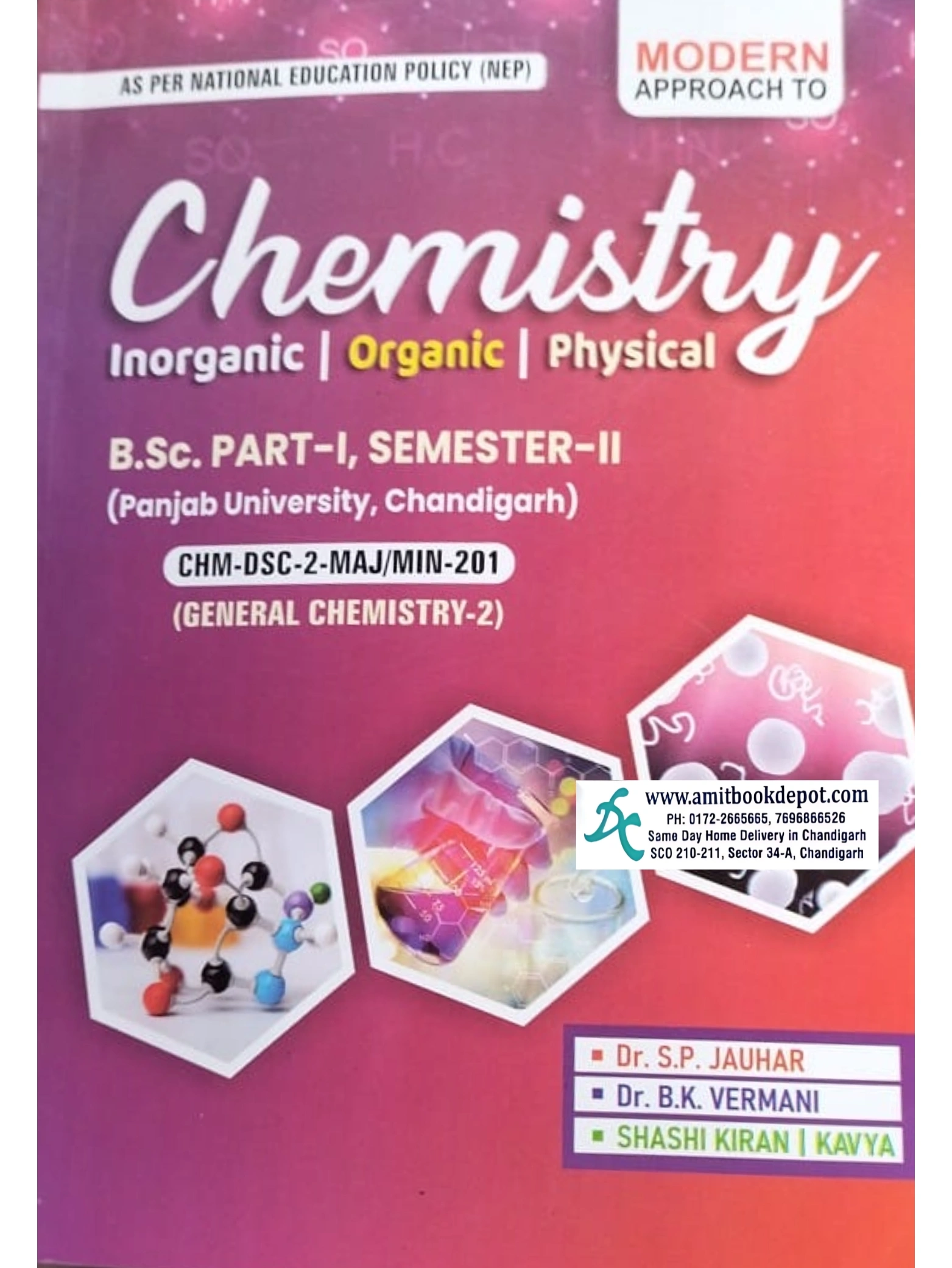

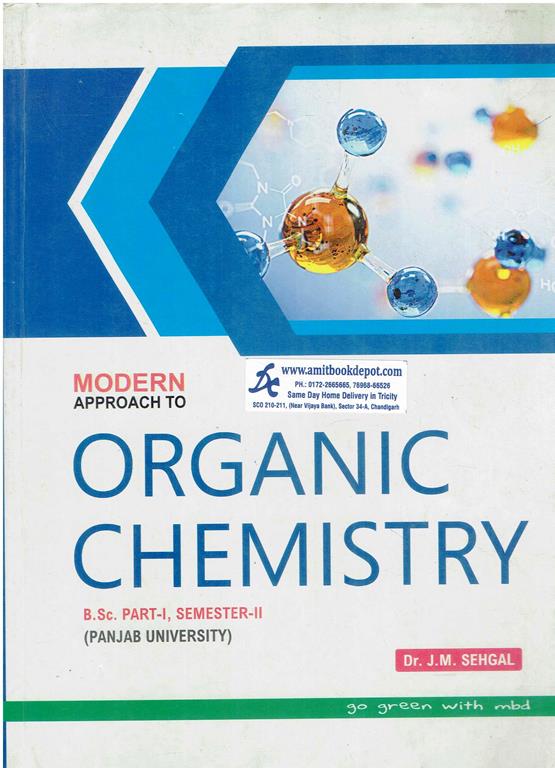
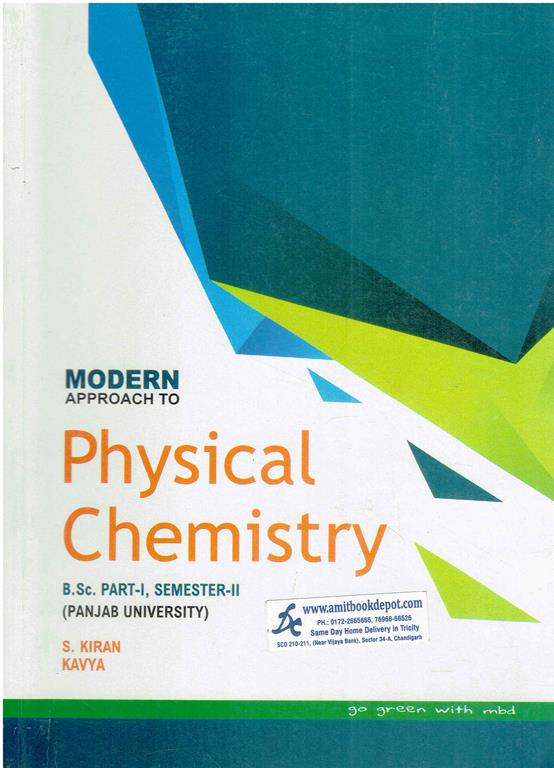
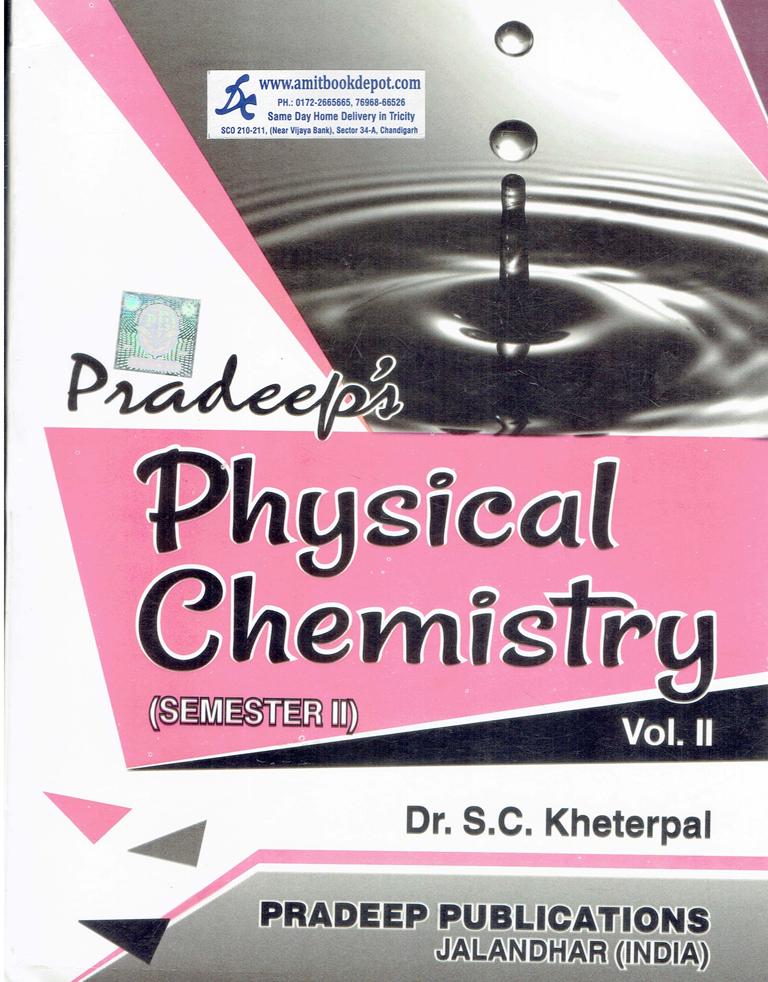
Yes, this book is meticulously compiled to align 100% with the latest prescribed syllabus for Paper Code CHM-DSC-2-MAJ/MIN-201 under the New Education Policy.
Absolutely. The syllabus and content are applicable to students who have opted for Chemistry as either a major or a minor subject in their course structure.
Yes, the included Logarithmic and Other Mathematical Tables are specifically designed to assist students in solving numerical problems in the Physical Chemistry sections, such as those in Thermodynamics.
The book breaks down complex topics with systematic explanations, diagrams (like Fischer projections), and step-by-step concepts, making advanced theories like MO Theory for diatomic molecules and R/S nomenclature easier to grasp.
Yes, the Organic Chemistry unit on Alkanes covers the mechanism of halogenation in detail, including discussions on relative reactivity, orientation, and selectivity.
The chapters on Gaseous State and Thermodynamics are structured to explain the concepts alongside their mathematical applications, preparing students for numerical problems.
While its primary focus is the university semester exam, the strong foundational coverage of core topics like Chemical Bonding, Stereochemistry, and Thermodynamics makes it a good starting base for higher competitive exams.
Yes, it includes essential diagrams and illustrations for molecular geometries as per VSEPR theory, organic reaction mechanisms, and representations like Sawhorse and Newman projections.
The book is written in clear, concise, and academic English, aimed at making complex chemical principles accessible to undergraduate students.
Yes, its structured syllabus alignment, detailed content, and inclusion of a question paper make it a reliable resource for self-study and thorough revision.
No Description Added
Yes, this book is meticulously compiled to align 100% with the latest prescribed syllabus for Paper Code CHM-DSC-2-MAJ/MIN-201 under the New Education Policy.
Absolutely. The syllabus and content are applicable to students who have opted for Chemistry as either a major or a minor subject in their course structure.
Yes, the included Logarithmic and Other Mathematical Tables are specifically designed to assist students in solving numerical problems in the Physical Chemistry sections, such as those in Thermodynamics.
The book breaks down complex topics with systematic explanations, diagrams (like Fischer projections), and step-by-step concepts, making advanced theories like MO Theory for diatomic molecules and R/S nomenclature easier to grasp.
Yes, the Organic Chemistry unit on Alkanes covers the mechanism of halogenation in detail, including discussions on relative reactivity, orientation, and selectivity.
The chapters on Gaseous State and Thermodynamics are structured to explain the concepts alongside their mathematical applications, preparing students for numerical problems.
While its primary focus is the university semester exam, the strong foundational coverage of core topics like Chemical Bonding, Stereochemistry, and Thermodynamics makes it a good starting base for higher competitive exams.
Yes, it includes essential diagrams and illustrations for molecular geometries as per VSEPR theory, organic reaction mechanisms, and representations like Sawhorse and Newman projections.
The book is written in clear, concise, and academic English, aimed at making complex chemical principles accessible to undergraduate students.
Yes, its structured syllabus alignment, detailed content, and inclusion of a question paper make it a reliable resource for self-study and thorough revision.