-
Mon-Fri: 10AM to 8PM 01722665665
-
My Account
-
-
0
Total :
₹ 0.00

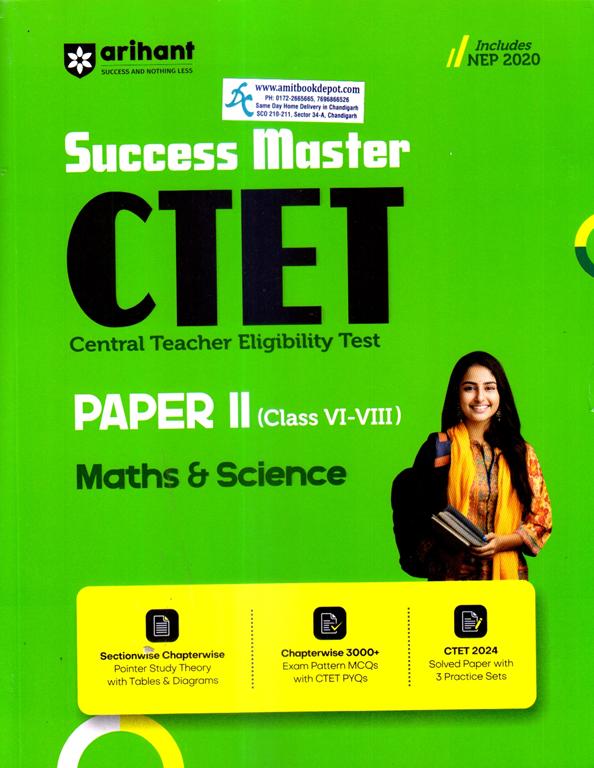
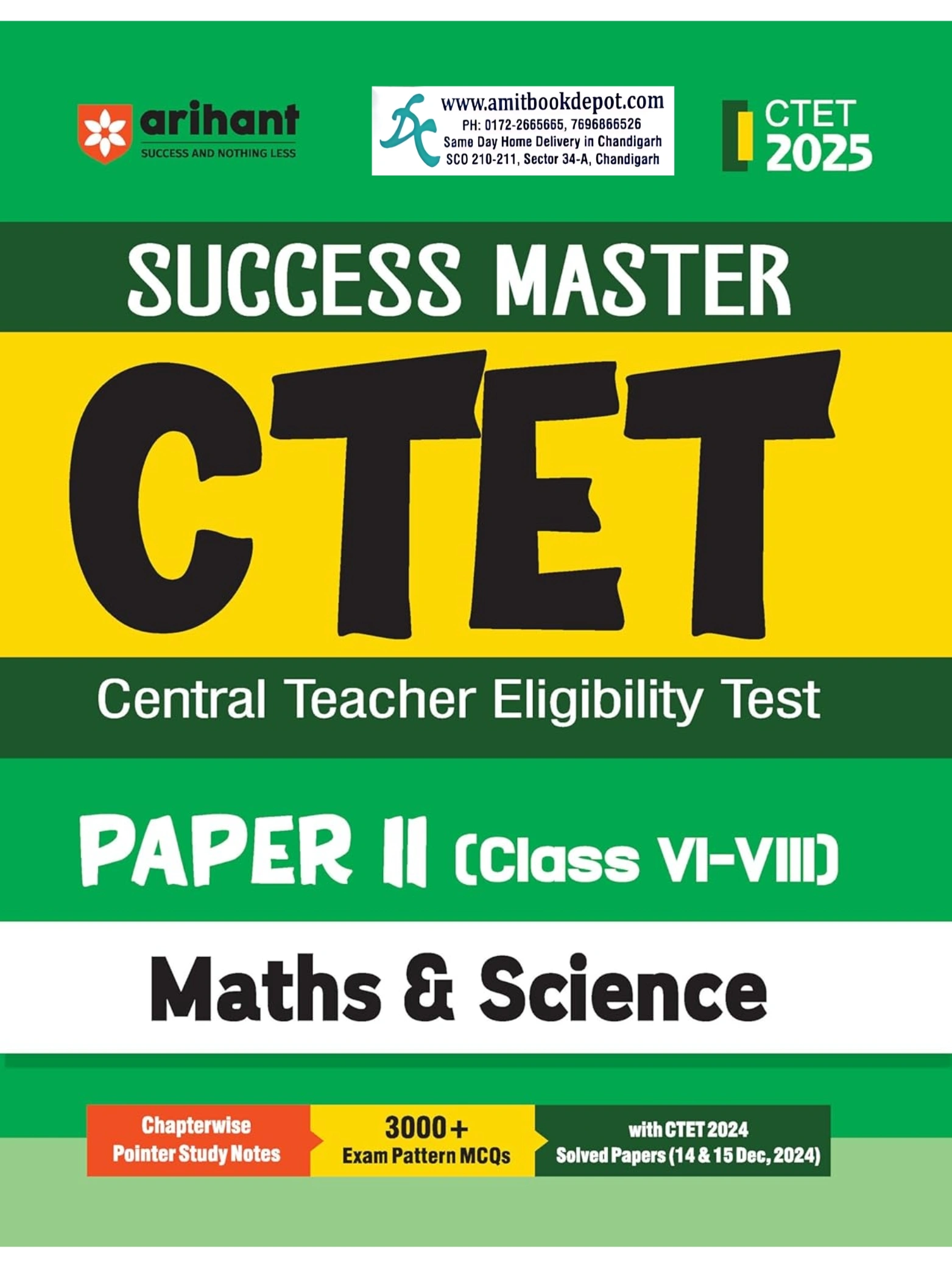
Yes, the book includes a dedicated section on the National Education Policy (NEP) within the Child Development and Pedagogy unit, ensuring content relevance to current educational reforms.
Absolutely. It has distinct and comprehensive Pedagogy sections for both Mathematics and Science, covering teaching methods, error analysis, aims of teaching, and remedial strategies specific to each subject.
Yes, the English Language and Pedagogy section is designed to build proficiency. It includes unseen passages and poems for practice, along with pedagogy that addresses language acquisition challenges, making it suitable for diverse learners.
Yes, it has specific chapters on Inclusive Education, identifying and addressing disabled and learning-disabled children, as well as gifted learners, which are high-weightage areas in the CTET.
Yes, it covers these critical theorists' constructs and provides critical perspectives, focusing on their application in classroom teaching and learning scenarios, which is essential for answering CTET's case-based questions.
Yes, "Language of Mathematics" is a dedicated topic within the Mathematics Pedagogy section, addressing how mathematical communication and terminology are used in teaching.
Yes, the Science Pedagogy unit includes chapters on Teaching Methods of Science and Innovation, which discuss various engaging and effective approaches for teaching scientific concepts.
While specifically tailored for the Central Teacher Eligibility Test (CTET), the syllabus for most State TETs (like UPTET, HP TET, etc.) for Upper Primary Mathematics & Science is similar. Therefore, this book serves as an excellent core resource for various state-level TET preparations.
Yes, the National Curriculum Framework 2005 is covered in detail within the Child Development and Pedagogy section, highlighting its principles and implications for teaching.
Yes, "Community Mathematics" is a specific topic covered in the Mathematics Pedagogy section, linking mathematical learning to community and real-life contexts.
No Description Added
Yes, the book includes a dedicated section on the National Education Policy (NEP) within the Child Development and Pedagogy unit, ensuring content relevance to current educational reforms.
Absolutely. It has distinct and comprehensive Pedagogy sections for both Mathematics and Science, covering teaching methods, error analysis, aims of teaching, and remedial strategies specific to each subject.
Yes, the English Language and Pedagogy section is designed to build proficiency. It includes unseen passages and poems for practice, along with pedagogy that addresses language acquisition challenges, making it suitable for diverse learners.
Yes, it has specific chapters on Inclusive Education, identifying and addressing disabled and learning-disabled children, as well as gifted learners, which are high-weightage areas in the CTET.
Yes, it covers these critical theorists' constructs and provides critical perspectives, focusing on their application in classroom teaching and learning scenarios, which is essential for answering CTET's case-based questions.
Yes, "Language of Mathematics" is a dedicated topic within the Mathematics Pedagogy section, addressing how mathematical communication and terminology are used in teaching.
Yes, the Science Pedagogy unit includes chapters on Teaching Methods of Science and Innovation, which discuss various engaging and effective approaches for teaching scientific concepts.
While specifically tailored for the Central Teacher Eligibility Test (CTET), the syllabus for most State TETs (like UPTET, HP TET, etc.) for Upper Primary Mathematics & Science is similar. Therefore, this book serves as an excellent core resource for various state-level TET preparations.
Yes, the National Curriculum Framework 2005 is covered in detail within the Child Development and Pedagogy section, highlighting its principles and implications for teaching.
Yes, "Community Mathematics" is a specific topic covered in the Mathematics Pedagogy section, linking mathematical learning to community and real-life contexts.