-
Mon-Fri: 10AM to 8PM 01722665665
-
My Account
-
-
0
Total :
₹ 0.00

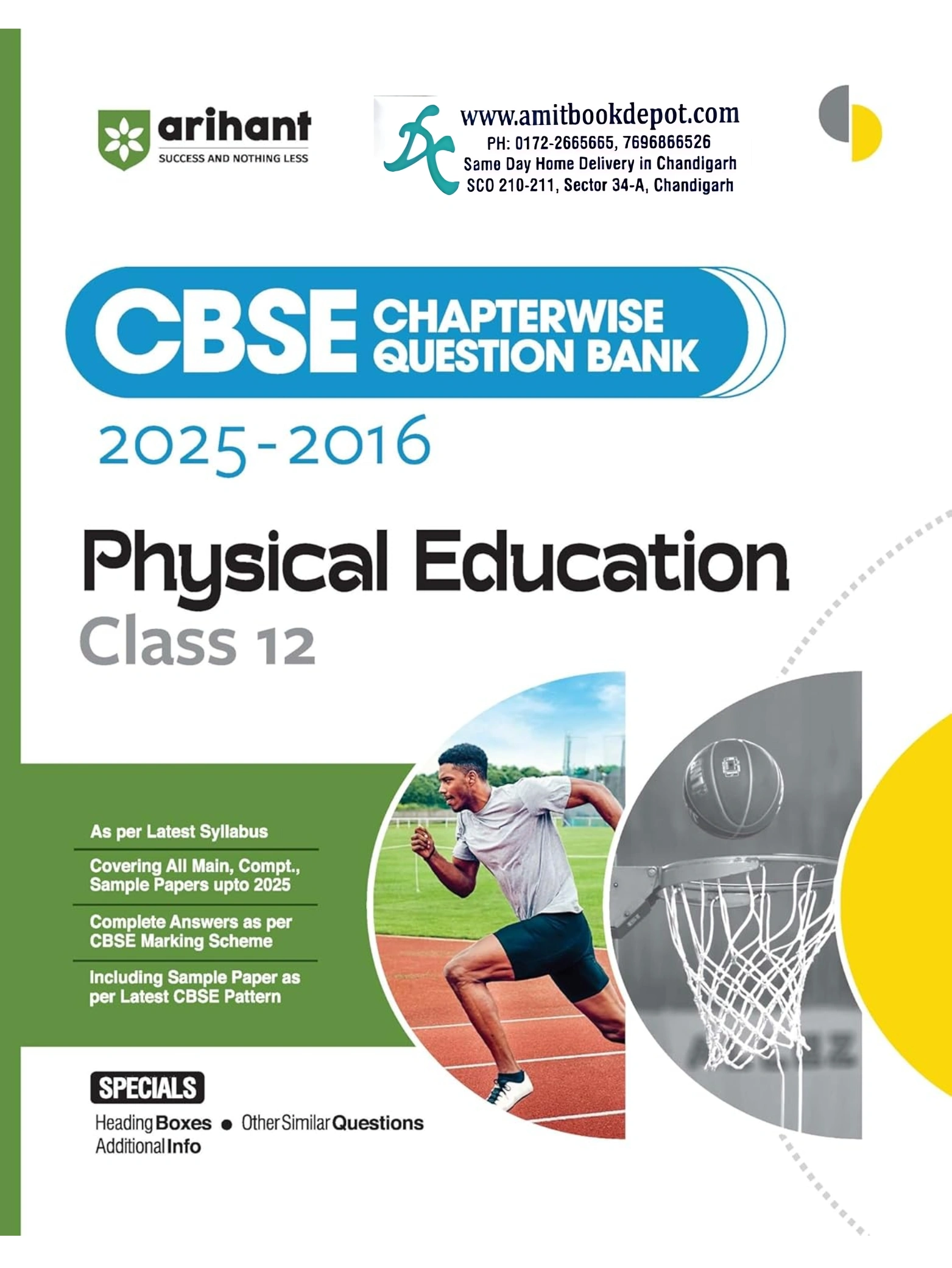
Yes, this book is meticulously compiled based on the latest CBSE syllabus and covers all 10 prescribed units in detail, ensuring complete syllabus coverage for the 2024-2025 academic session.
Absolutely. All answers, including Very Short, Short, Long, and Case-Based questions, are solved with step-by-step explanations that strictly adhere to the CBSE marking scheme and word-limit guidelines.
Yes, Unit 3 on 'Yoga and Lifestyle' provides detailed descriptions of asanas, including their precise procedure, benefits, and specific contraindications for managing conditions like obesity, diabetes, asthma, hypertension, and back pain.
While the book is primarily a theory question bank focused on the 70-mark exam, it provides strong theoretical support for practical topics like fitness tests (SAI Khelo India, Harvard Step Test), calculating BMR, and understanding training methods, which are essential for viva and project understanding.
Yes, Unit 6 (Test & Measurement in Sports) comprehensively covers the SAI Khelo India Fitness Test for different age groups and the complete Rikli & Jones Senior Citizen Fitness Test, as per the CBSE syllabus.
Unit 4 (Physical Education & Sports for CWSN) covers crucial aspects like organizations (Special Olympics, Paralympics), the concept of inclusion, classification in sports, and strategies for making physical activities accessible, presented in a clear, sensitive, and informative manner.
Yes, concepts from Units 7 and 8, such as Newton's Laws of Motion, types of levers, centre of gravity, physiological factors of fitness, and effects of exercise, are explained with relevant applications and examples from various sports for easier comprehension.
Unit 10 (Training in Sports) effectively covers both the concepts (like talent identification, micro-meso-macro cycles) and the practical methods to develop specific components like strength, endurance, speed, flexibility, and coordinative abilities.
Yes, these important topics are covered in detail in Unit 2 (Children & Women in Sports), including the components of the Female Athlete Triad (osteoporosis, amenorrhea, eating disorders) and WHO exercise guidelines.
Unit 5 (Sports & Nutrition) covers contemporary concepts of a balanced diet, macro/micronutrients, food myths, and the crucial importance of pre-, during, and post-competition dietary requirements for athletes.
No Description Added
Yes, this book is meticulously compiled based on the latest CBSE syllabus and covers all 10 prescribed units in detail, ensuring complete syllabus coverage for the 2024-2025 academic session.
Absolutely. All answers, including Very Short, Short, Long, and Case-Based questions, are solved with step-by-step explanations that strictly adhere to the CBSE marking scheme and word-limit guidelines.
Yes, Unit 3 on 'Yoga and Lifestyle' provides detailed descriptions of asanas, including their precise procedure, benefits, and specific contraindications for managing conditions like obesity, diabetes, asthma, hypertension, and back pain.
While the book is primarily a theory question bank focused on the 70-mark exam, it provides strong theoretical support for practical topics like fitness tests (SAI Khelo India, Harvard Step Test), calculating BMR, and understanding training methods, which are essential for viva and project understanding.
Yes, Unit 6 (Test & Measurement in Sports) comprehensively covers the SAI Khelo India Fitness Test for different age groups and the complete Rikli & Jones Senior Citizen Fitness Test, as per the CBSE syllabus.
Unit 4 (Physical Education & Sports for CWSN) covers crucial aspects like organizations (Special Olympics, Paralympics), the concept of inclusion, classification in sports, and strategies for making physical activities accessible, presented in a clear, sensitive, and informative manner.
Yes, concepts from Units 7 and 8, such as Newton's Laws of Motion, types of levers, centre of gravity, physiological factors of fitness, and effects of exercise, are explained with relevant applications and examples from various sports for easier comprehension.
Unit 10 (Training in Sports) effectively covers both the concepts (like talent identification, micro-meso-macro cycles) and the practical methods to develop specific components like strength, endurance, speed, flexibility, and coordinative abilities.
Yes, these important topics are covered in detail in Unit 2 (Children & Women in Sports), including the components of the Female Athlete Triad (osteoporosis, amenorrhea, eating disorders) and WHO exercise guidelines.
Unit 5 (Sports & Nutrition) covers contemporary concepts of a balanced diet, macro/micronutrients, food myths, and the crucial importance of pre-, during, and post-competition dietary requirements for athletes.