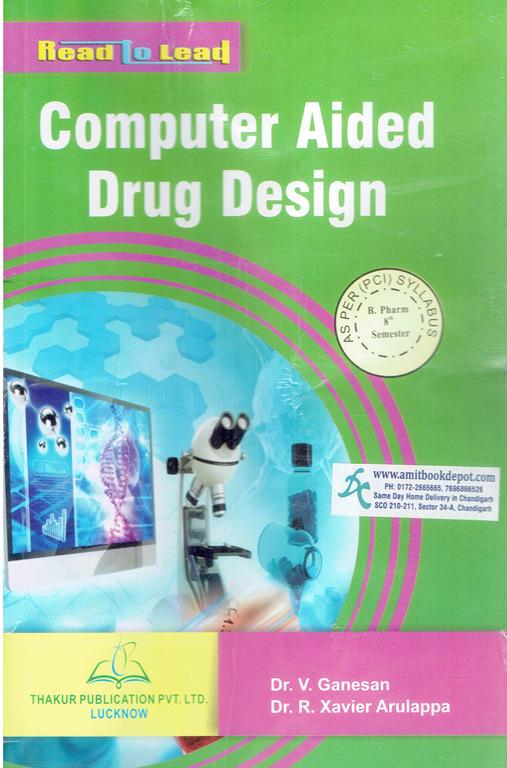
Module-1
Chapter 1: Introduction to Drug Discovery and Development
1.1. Stages of Drug Discovery and Development
1.1.1. Introduction
1.1.2. Discovery and Development
1.1.2.1. Target Discovery
1.1.2.2. Target Validation
1.1.2.3. Lead Compound Identification
1.1.2.4. Lead Optimization
1.1.2.5. Active Pharmaceutical Ingredients (APIs)
1.1.3. Pre-Clinical Studies
1.1.3.1. Absorption, Distribution, Metabolism, and Excretion
1.1.3.2. Proof of Principle / Proof of Concept
1.1.3.3. In Vivo, In Vitro, and Ex Vivo Assays
1.1.3.4. In Silico Assays
1.1.3.5. Drug Delivery
1.1.3.6. Formulation Optimization and Improving Bioavailability
1.1.4. Clinical Studies/Development
1.1.4.1. Biological Samples Collection, Storage, and Shipment of Biological Samples
1.1.4.2. Patient Protection (GCP, HIPAA, and Adverse Event Reporting)
1.1.4.3. Pharmacodynamic (PD) Biomarkers
1.1.4.4. Clinical Trials
1.1.5. FDA/Development (Non-Clinical Activities)
1.1.6. Post-Marketing Monitoring
1.2. Summary
1.3. Exercise
Chapter 2: Lead Discovery
2.1. Lead Discovery
2.1.1. Introduction
2.1.2. Methods of Lead Discovery
2.1.2.1. Advanced Technologies Involved in Drug Discovery
2.1.2.2. Rational Approaches to Lead Discovery Based on Traditional Medicine
2.1.2.3. Serendipitous Drug Discovery
2.1.2.4. Lead Discovery Based on Drug Metabolism
2.1.2.5. Lead Discovery Based on Clinical Observation
2.1.2.6. Random Screening
2.1.2.7. Non-Random Screening
2.1.3. Lead Optimization
2.1.3.1. Characterizing Leads
2.1.3.2. Methods of Lead Optimization in Analog Design
2.2. Summary
2.3. Exercise
Chapter 3: Analogue-Based Drug Design
3.1. Analog-Based Drug Design
3.1.1. Introduction
3.1.2. Goals of Analog Design
3.1.3. Categories of Analogs
3.1.4. Bioisosterism
3.1.4.1. Classification of Bioisosterism
3.1.4.2. Bioisosteric Replacement
3.1.5. Case Studies
3.1.5.1. I Case Study
3.1.5.2. II Case Study
3.1.5.3. III Case Study
3.2. Summary
3.3. Exercise
Module-2
Chapter 4: Quantitative Structure Activity Relationships
4.1. Quantitative Structure Activity Relationships (QSAR)
4.1.1. Introduction
4.1.2. Objective of QSAR
4.1.3. History and Development of QSAR
4.1.4. Classification of QSAR Methodologies
4.1.5. Advantages of QSAR
4.1.6. Disadvantages of QSAR
4.1.7. SAR Versus QSAR
4.2. Types of Physicochemical Parameters
4.2.1. Introduction
4.2.2. Lipophilic Parameters
4.2.2.1. Partition Coefficient (P): Experimental and Theoretical Approaches for Determination
4.2.2.2. Lipophilic Substituent Constants (π): Experimental and Theoretical Approaches for Determination
4.2.2.3. Distribution Coefficient (D)
4.2.3. Hammett's Substituent Constant (σ) (Electronic Parameters): Experimental and Theoretical Approaches for Determination
4.2.4. Steric Factors
4.2.4.1. Taft's Steric Constant (Es): Experimental and Theoretical Approaches for Determination
4.2.4.2. Molar Refractivity [MR]
4.2.4.3. Verloop Steric Parameter
4.2.5. Hansch Equation
4.2.6. 2D-QSAR Approaches
4.2.6.1. Hansch Analysis
4.2.6.2. Free Wilson Analysis
4.2.7. 3D-QSAR Approaches
4.2.7.1. COMFA (Comparative Molecular Field Analysis)
4.2.7.2. COMSIA (Comparative Molecular Similarity Indices Analysis)
4.3. Summary
4.4. Exercise
Module-3
Chapter 5: Virtual Screening Techniques
5.1. Virtual Screening Techniques
5.1.1. Introduction
5.1.2. Ligand-Based Virtual Screening (LBVS)
5.1.3. Structure-Based Virtual Screening (SBVS)
5.1.4. Drug-Likeness Screening
5.2. Pharmacophore
5.2.1. Introduction
5.2.2. Pharmacophore Mapping
5.2.3. Concept of Pharmacophore Mapping
5.2.4. Pharmacophore-Based Screening
5.2.4.1. Classification
5.2.4.2. Mapping Software
5.2.4.3. Application
5.2.5. Pharmacophore Modelling
5.2.5.1. Classification
5.2.5.2. Pharmacophore Modelling in Virtual Screening
5.3. Summary
5.4. Exercise
Chapter 6: Molecular Docking
6.1. Molecular Docking
6.1.1. Introduction
6.1.2. Approaches of Molecular Docking
6.1.3. Classification
6.1.4. Applications of Molecular Docking
6.1.5. Basic Challenges in Molecular Docking
6.1.6. Rigid Docking
6.1.7. Flexible Docking
6.1.7.1. Flexible Docking Using a Genetic Algorithm (GA)
6.1.7.2. Approaches in Flexible Docking
6.1.7.3. Methods for Handling Ligand Flexibility
6.1.8. Manual Docking
6.1.9. Docking-Based Screening
6.1.10. De novo Drug Design
6.1.10.1. Principles of De Novo Drug Design
6.1.10.2. Applications
6.1. Summary
6.2. Exercise
Module-4
Chapter 7: Informatics and Methods in Drug Design
7.1. Informatics
7.1.1. Bioinformatics
7.1.1.1. Aim
7.1.1.2. Goal
7.1.1.3. Application
7.1.2. Chemoinformatics
7.1.2.1. Objective
7.1.2.2. Chemoinformatics Tasks
7.1.2.3. Need of Chemoinformatics
7.1.2.4. Role of Chemoinformatics in Modern Drug Discovery
7.1.2.5. Modules of Chemoinformatics
7.1.2.6. Applications of Chemoinformatics
7.1.3. Methods in Drug Design
7.1.3.1. Ligand-Based Drug Design
7.1.3.2. Structure-Based Drug Design
7.1.3.3. Rational Drug Design
7.1.3.4. Computer-Aided Drug Design
7.2. Databases
7.2.1. ADME Databases
7.2.2. Chemical Databases
7.2.3. Biochemical Databases
7.2.4. Pharmaceutical Databases
7.3. Summary
7.4. Exercise
Module-5
Chapter 8: Molecular Modelling
8.1. Molecular Modeling
8.1.1. Introduction
8.1.2. Molecular Modelling Tools
8.1.3. Molecular Modelling Strategies
8.1.4. Molecular Modelling Methods
8.1.5. Molecular Modelling Applications
8.1.6. Molecular Mechanics
8.1.6.1. Methods Used to Study Molecular Mechanics
8.1.6.2. Molecular Mechanics Models
8.1.6.3. Applications of Molecular Mechanism
8.1.7. Quantum Mechanics
8.1.7.1. Principles of Quantum Mechanics
8.1.7.2. Methods of Quantum Mechanics
8.1.7.3. Applications of Quantum Mechanics
8.1.8. Molecular Mechanics vs. Quantum Mechanics
8.1.9. Energy Minimization Method
8.1.9.1. Non-Derivative Methods
8.1.9.2. Derivative Methods
8.1.10. Conformational Analysis
8.1.10.1. History of Conformational Analysis
8.1.10.2. Process of Conformational Analysis
8.1.10.3. Applications
8.1.11. Global Conformational Minima Determination
8.2. Summary
8.3. Exercise

















.jpg)