-
Mon-Fri: 10AM to 8PM 01722665665
-
My Account
-
-
0
Total :
₹ 0.00

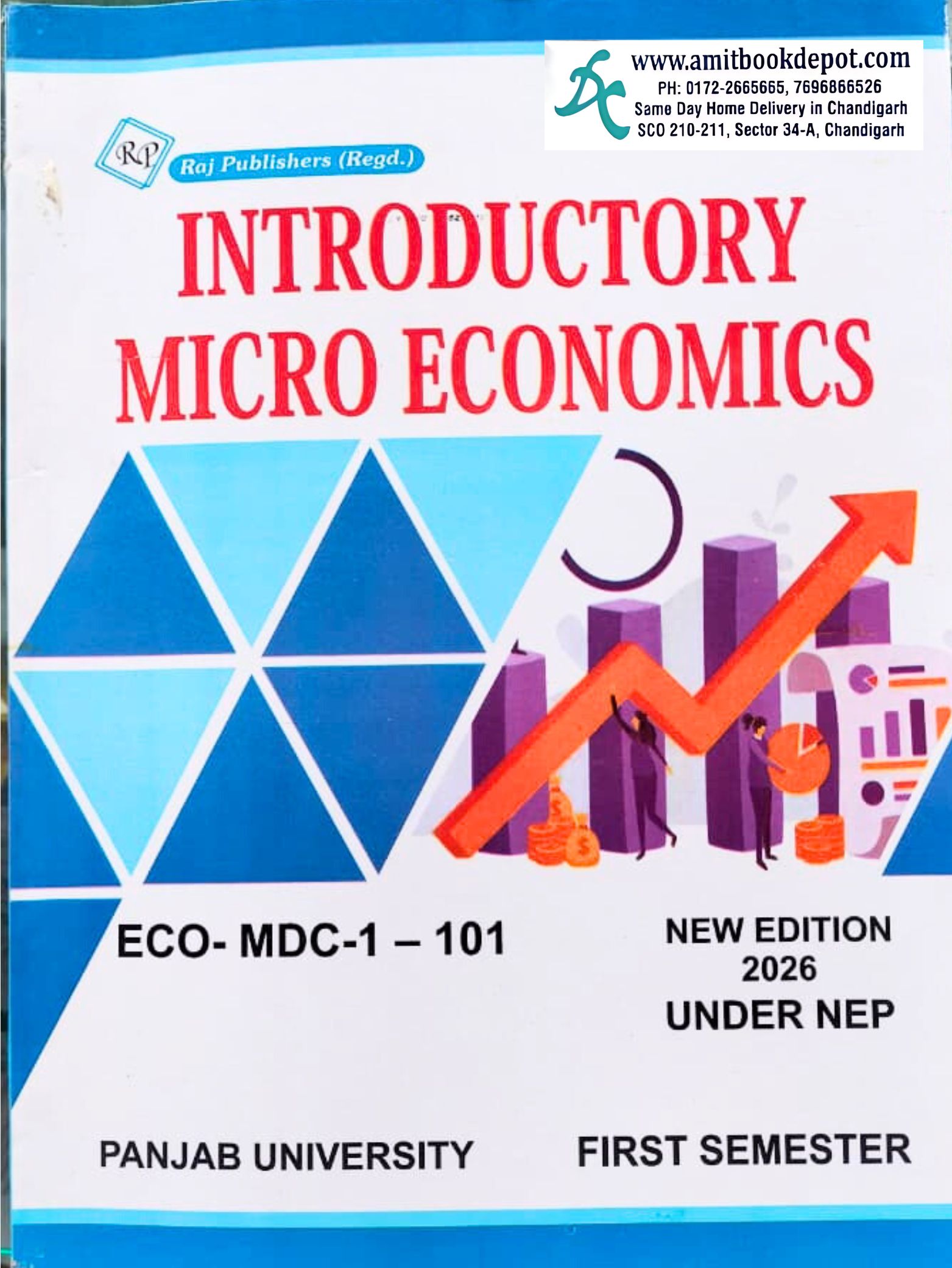

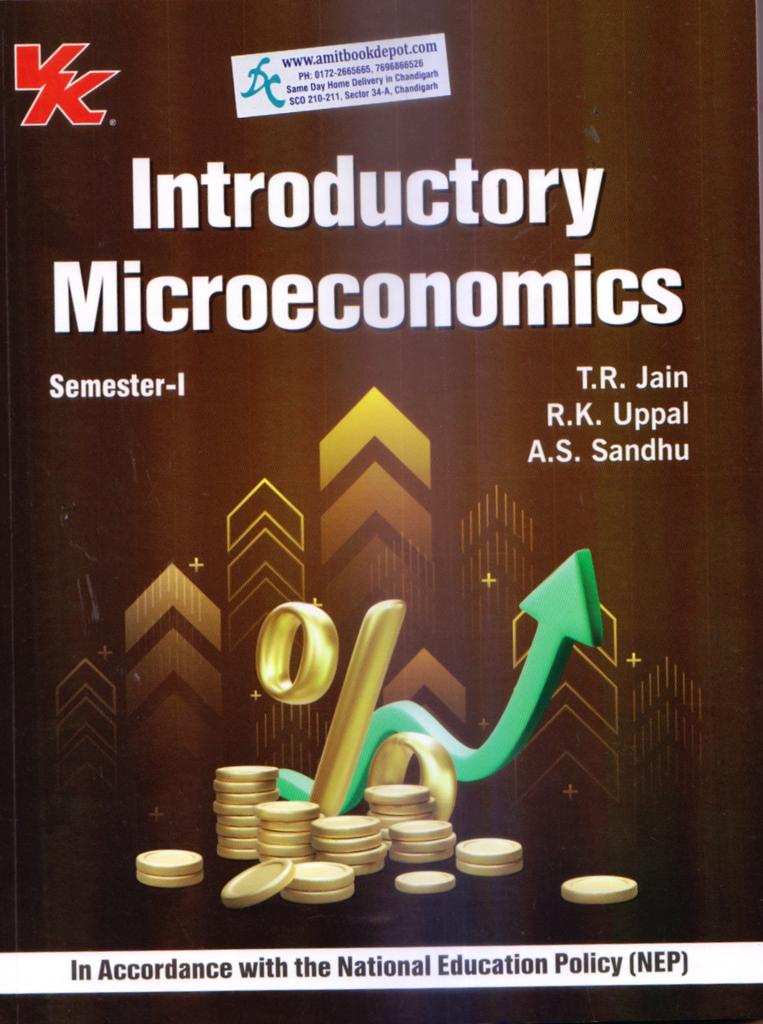
Yes, this book is meticulously crafted to cover 100% of the latest prescribed syllabus for the ECO-MDC-1101 multidisciplinary course.
As per the PU CHD syllabus for this introductory course, the focus is primarily on theoretical concepts. The book provides detailed theoretical explanations as required.
The content is organized by unit, mirroring the exam structure. This helps students practice answering 18-mark questions from each unit and prepares them for the short-answer questions from the entire syllabus.
Absolutely. As a 100-level course book, it is designed for beginners, introducing fundamental concepts in a simple and structured manner.
Yes, Unit I of the book comprehensively covers the Circular Flow of Economic Activity as part of the "Functions of an Economic System."
Yes, the book includes and clearly explains all necessary graphs, diagrams, and curves related to demand, production, cost, and market equilibrium to aid visual learning.
While the book covers the core theoretical content (68 marks), specific internal assessment activities are typically designed by the college faculty. The book's solid conceptual foundation will help students perform well in those assessments.
This book provides a strong foundational knowledge of microeconomics. However, competitive exams have a wider and deeper syllabus, so you would need specialized resources tailored for those exams.
Yes, Unit II of the book clearly distinguishes between these two important production concepts, explaining "Returns to a Factor" (short-run) and "Returns to Scale" (long-run) with appropriate examples.
Yes, the chapter on the Theory of Demand in Unit I includes a detailed discussion on the various exceptions to the Law of Demand.
No Description Added
Yes, this book is meticulously crafted to cover 100% of the latest prescribed syllabus for the ECO-MDC-1101 multidisciplinary course.
As per the PU CHD syllabus for this introductory course, the focus is primarily on theoretical concepts. The book provides detailed theoretical explanations as required.
The content is organized by unit, mirroring the exam structure. This helps students practice answering 18-mark questions from each unit and prepares them for the short-answer questions from the entire syllabus.
Absolutely. As a 100-level course book, it is designed for beginners, introducing fundamental concepts in a simple and structured manner.
Yes, Unit I of the book comprehensively covers the Circular Flow of Economic Activity as part of the "Functions of an Economic System."
Yes, the book includes and clearly explains all necessary graphs, diagrams, and curves related to demand, production, cost, and market equilibrium to aid visual learning.
While the book covers the core theoretical content (68 marks), specific internal assessment activities are typically designed by the college faculty. The book's solid conceptual foundation will help students perform well in those assessments.
This book provides a strong foundational knowledge of microeconomics. However, competitive exams have a wider and deeper syllabus, so you would need specialized resources tailored for those exams.
Yes, Unit II of the book clearly distinguishes between these two important production concepts, explaining "Returns to a Factor" (short-run) and "Returns to Scale" (long-run) with appropriate examples.
Yes, the chapter on the Theory of Demand in Unit I includes a detailed discussion on the various exceptions to the Law of Demand.