-
Mon-Fri: 10AM to 8PM 01722665665
-
My Account
-
-
0
Total :
₹ 0.00

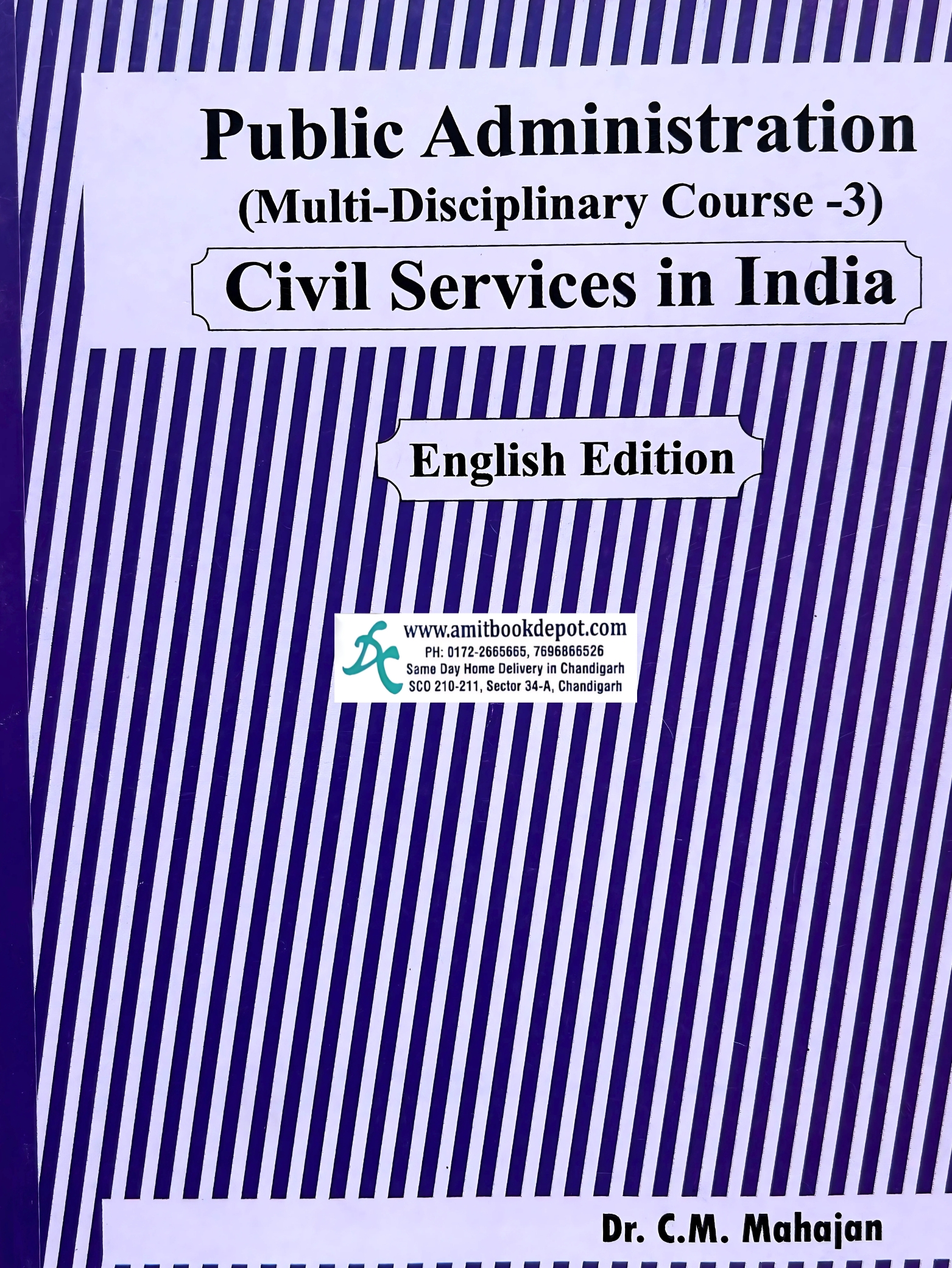

Yes, this book is specifically written to cover the entire syllabus for the MDC-3: Civil Services in India paper as prescribed by Panjab University, Chandigarh.
While it is tailored for a university syllabus, the book covers fundamental topics like the Constitution, UPSC, and Civil Services structure, which are directly relevant for GS Paper II (Governance, Constitution, Polity). It can serve as excellent foundational reading.
The book explains the general pattern and stages of the Civil Services Examination. For highly specific, year-to-year changes in the pattern, it is always recommended to refer to the latest UPSC notification alongside this book.
Yes, the book dedicates a chapter to the constitutional provisions, explaining the relevant articles from the Indian Constitution that form the legal basis for the civil services.
Absolutely. The book has dedicated chapters for both the Union Public Service Commission (UPSC) and State Public Service Commissions (SPSC), detailing their distinct structures, functions, and roles.
Yes, the chapter on the training of Civil Services in India covers the foundational training provided at institutions like LBSNAA for IAS officers and other respective academies for IPS and IFS, outlining the commonalities and distinctions.
The book has a dedicated final chapter on Administrative Ethics, discussing its importance, the challenges faced by civil servants, and the ethical frameworks required for good governance.
Yes, Dr. Mahajan writes with clarity, starting with the basic meaning and features of concepts, making it accessible for beginners while providing the depth required for university-level examinations.
The book covers the "changing role of civil services," which inherently involves a discussion of contemporary challenges and the evolving context of administration in India.
Yes, the sections on constitutional provisions, codes of conduct, and the legal framework governing public servants make it a valuable supplementary text for administrative law students.
No Description Added
Yes, this book is specifically written to cover the entire syllabus for the MDC-3: Civil Services in India paper as prescribed by Panjab University, Chandigarh.
While it is tailored for a university syllabus, the book covers fundamental topics like the Constitution, UPSC, and Civil Services structure, which are directly relevant for GS Paper II (Governance, Constitution, Polity). It can serve as excellent foundational reading.
The book explains the general pattern and stages of the Civil Services Examination. For highly specific, year-to-year changes in the pattern, it is always recommended to refer to the latest UPSC notification alongside this book.
Yes, the book dedicates a chapter to the constitutional provisions, explaining the relevant articles from the Indian Constitution that form the legal basis for the civil services.
Absolutely. The book has dedicated chapters for both the Union Public Service Commission (UPSC) and State Public Service Commissions (SPSC), detailing their distinct structures, functions, and roles.
Yes, the chapter on the training of Civil Services in India covers the foundational training provided at institutions like LBSNAA for IAS officers and other respective academies for IPS and IFS, outlining the commonalities and distinctions.
The book has a dedicated final chapter on Administrative Ethics, discussing its importance, the challenges faced by civil servants, and the ethical frameworks required for good governance.
Yes, Dr. Mahajan writes with clarity, starting with the basic meaning and features of concepts, making it accessible for beginners while providing the depth required for university-level examinations.
The book covers the "changing role of civil services," which inherently involves a discussion of contemporary challenges and the evolving context of administration in India.
Yes, the sections on constitutional provisions, codes of conduct, and the legal framework governing public servants make it a valuable supplementary text for administrative law students.