-
Mon-Fri: 10AM to 8PM 01722665665
-
My Account
-
-
0
Total :
₹ 0.00

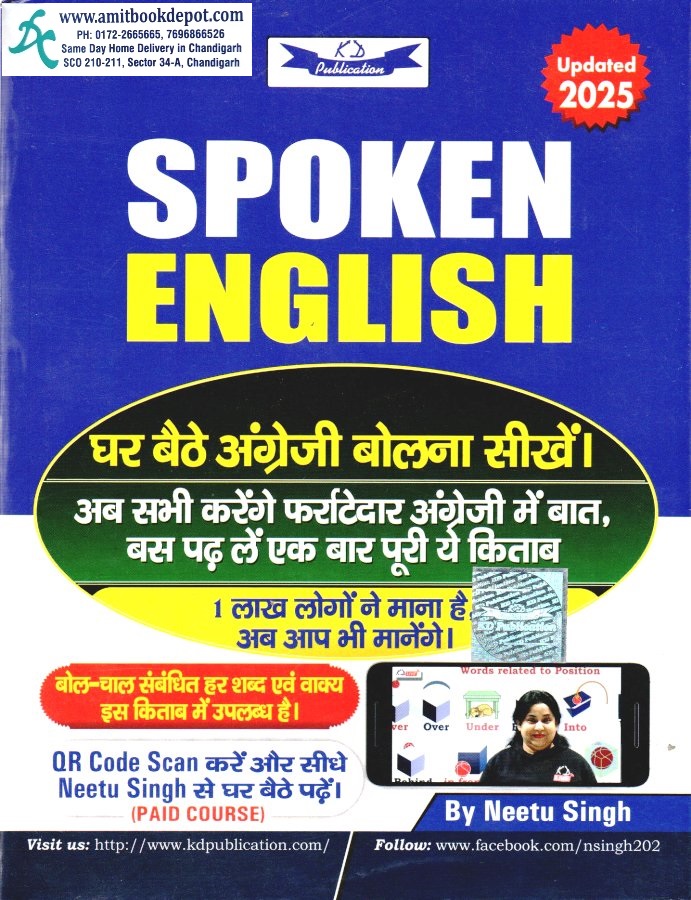


Yes, it starts with English Alphabets & Phonetics, ensuring beginners learn correct sounds before moving to words, sentences, and fluent conversation.
Absolutely. Chapter 19 provides real-life conditional sentence structures—If you practice daily, you will speak fluently—with practical usage scenarios.
Yes, separate chapters on Telephonic Conversation and Situational Conversations (Restaurant, School, Bus Station) prepare you for all real-world speaking contexts.
It dedicates full chapters to Tense and Combined Sentences of Tense, showing how tenses mix naturally in everyday spoken English.
Yes, a dedicated chapter on Forced Action helps you frame sentences like “I had to finish the work,” expressing compulsion naturally.
Chapter 34 contains numerous interesting stories in simple English, helping you retell events confidently and improve sentence flow.
Chapter 21 clarifies get, make, have, and help with examples like “I got my hair cut” — common in daily spoken English.
Yes, Chapter 44 lists most common opposite words, helping you describe contrasts and expand expressive range instantly.
Yes, detailed chapters on Determiners and Articles teach correct use of a, an, the, this, these—avoiding common speaking errors.
Yes, Situational Conversation chapter includes a dedicated “In School” section with student-teacher dialogues and peer interactions.
Yes, it starts with English Alphabets & Phonetics, ensuring beginners learn correct sounds before moving to words, sentences, and fluent conversation.
Absolutely. Chapter 19 provides real-life conditional sentence structures—If you practice daily, you will speak fluently—with practical usage scenarios.
Yes, separate chapters on Telephonic Conversation and Situational Conversations (Restaurant, School, Bus Station) prepare you for all real-world speaking contexts.
It dedicates full chapters to Tense and Combined Sentences of Tense, showing how tenses mix naturally in everyday spoken English.
Yes, a dedicated chapter on Forced Action helps you frame sentences like “I had to finish the work,” expressing compulsion naturally.
Chapter 34 contains numerous interesting stories in simple English, helping you retell events confidently and improve sentence flow.
Chapter 21 clarifies get, make, have, and help with examples like “I got my hair cut” — common in daily spoken English.
Yes, Chapter 44 lists most common opposite words, helping you describe contrasts and expand expressive range instantly.
Yes, detailed chapters on Determiners and Articles teach correct use of a, an, the, this, these—avoiding common speaking errors.
Yes, Situational Conversation chapter includes a dedicated “In School” section with student-teacher dialogues and peer interactions.