-
Mon-Fri: 10AM to 8PM 01722665665
-
My Account
-
-
0
Total :
₹ 0.00

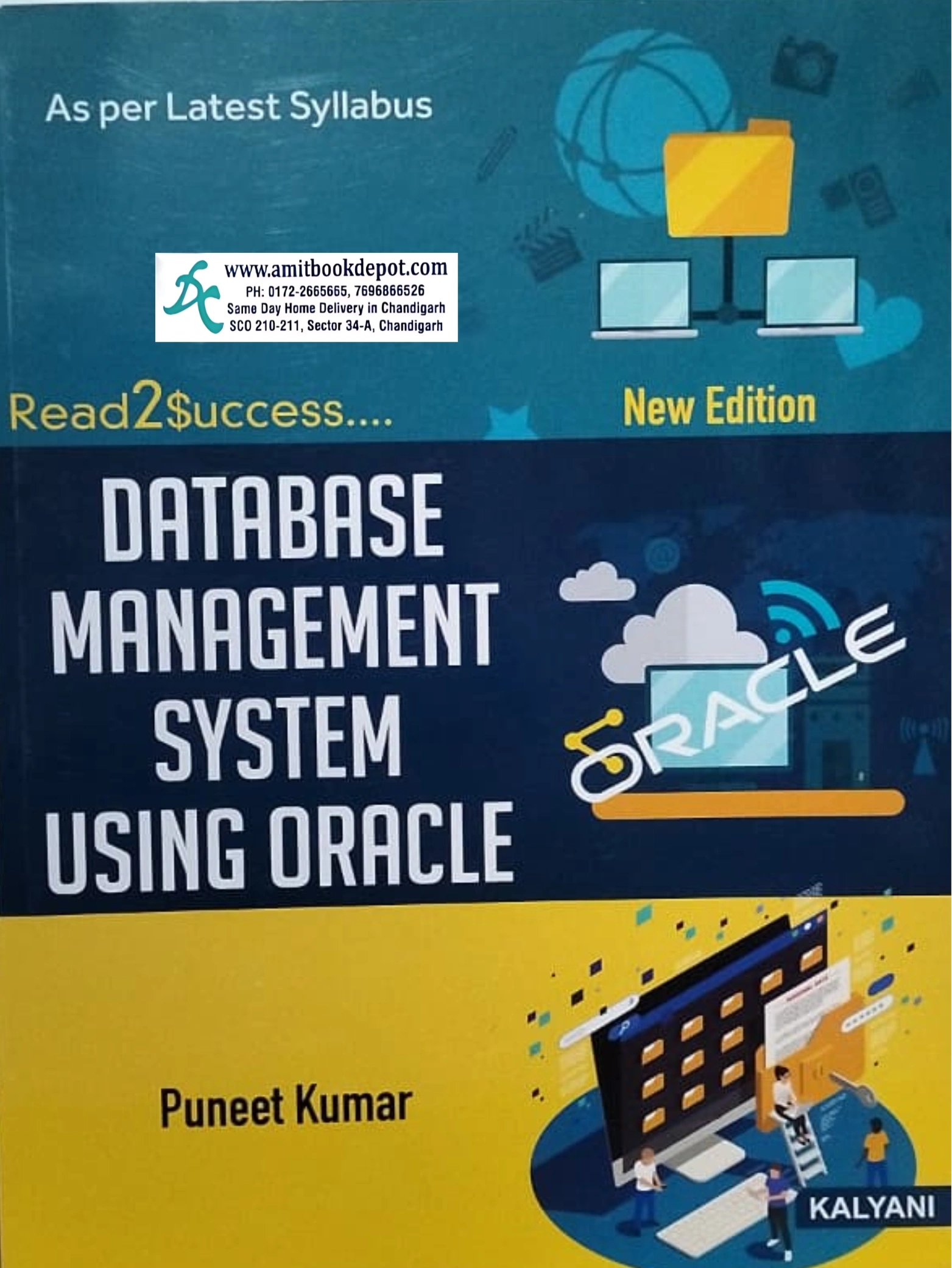
Yes, this book is meticulously crafted to align 100% with the latest Panjab University Chandigarh syllabus for Paper Code CSA-DSC-6(Maj)-402 under the New Education Policy (NEP), covering all four units in detail.
Absolutely. The book provides a balanced approach, starting with fundamental database concepts and normalization and progressing to comprehensive, practical coverage of Oracle SQL and PL/SQL programming.
Yes, the book includes numerous examples throughout the chapters. Additionally, Appendix I is dedicated to SQL Queries Practice Session, and Appendix II focuses on PL/SQL Programs Practice Session for hands-on learning.
It offers detailed, dedicated chapters on Cursor Management in PL/SQL (implicit and explicit) and Exception Handling in PL/SQL, covering attributes, predefined exceptions, and user-defined exceptions with examples.
Yes, Unit III thoroughly covers querying multiple tables using Equi-Joins, Cartesian Joins, Outer Joins, Self-Joins, and SET Operators (Union, Intersect, Minus).
Yes, it covers essential transaction control commands like COMMIT and ROLLBACK in Unit III, along with privilege management using GRANT and REVOKE.
Definitely. It is designed for undergraduate students and starts with the basics of data types and creating tables, making it suitable for beginners with no prior knowledge of Oracle.
This book is uniquely syllabus-specific for Panjab University B.A./B.Sc. (Hons) 4th Semester. It excludes irrelevant topics and focuses precisely on the mandated curriculum, making it a targeted and efficient study tool.
Yes, Unit I includes detailed explanations of database architecture, terminology, and Codd's 12 Rules for an RDBMS, providing a strong theoretical foundation.
Yes, a full chapter is devoted to SQL Functions, detailing arithmetic, character, date, and group functions with examples for effective data manipulation.
No Description Added
Yes, this book is meticulously crafted to align 100% with the latest Panjab University Chandigarh syllabus for Paper Code CSA-DSC-6(Maj)-402 under the New Education Policy (NEP), covering all four units in detail.
Absolutely. The book provides a balanced approach, starting with fundamental database concepts and normalization and progressing to comprehensive, practical coverage of Oracle SQL and PL/SQL programming.
Yes, the book includes numerous examples throughout the chapters. Additionally, Appendix I is dedicated to SQL Queries Practice Session, and Appendix II focuses on PL/SQL Programs Practice Session for hands-on learning.
It offers detailed, dedicated chapters on Cursor Management in PL/SQL (implicit and explicit) and Exception Handling in PL/SQL, covering attributes, predefined exceptions, and user-defined exceptions with examples.
Yes, Unit III thoroughly covers querying multiple tables using Equi-Joins, Cartesian Joins, Outer Joins, Self-Joins, and SET Operators (Union, Intersect, Minus).
Yes, it covers essential transaction control commands like COMMIT and ROLLBACK in Unit III, along with privilege management using GRANT and REVOKE.
Definitely. It is designed for undergraduate students and starts with the basics of data types and creating tables, making it suitable for beginners with no prior knowledge of Oracle.
This book is uniquely syllabus-specific for Panjab University B.A./B.Sc. (Hons) 4th Semester. It excludes irrelevant topics and focuses precisely on the mandated curriculum, making it a targeted and efficient study tool.
Yes, Unit I includes detailed explanations of database architecture, terminology, and Codd's 12 Rules for an RDBMS, providing a strong theoretical foundation.
Yes, a full chapter is devoted to SQL Functions, detailing arithmetic, character, date, and group functions with examples for effective data manipulation.