-
Mon-Fri: 10AM to 8PM 01722665665
-
My Account
-
-
0
Total :
₹ 0.00

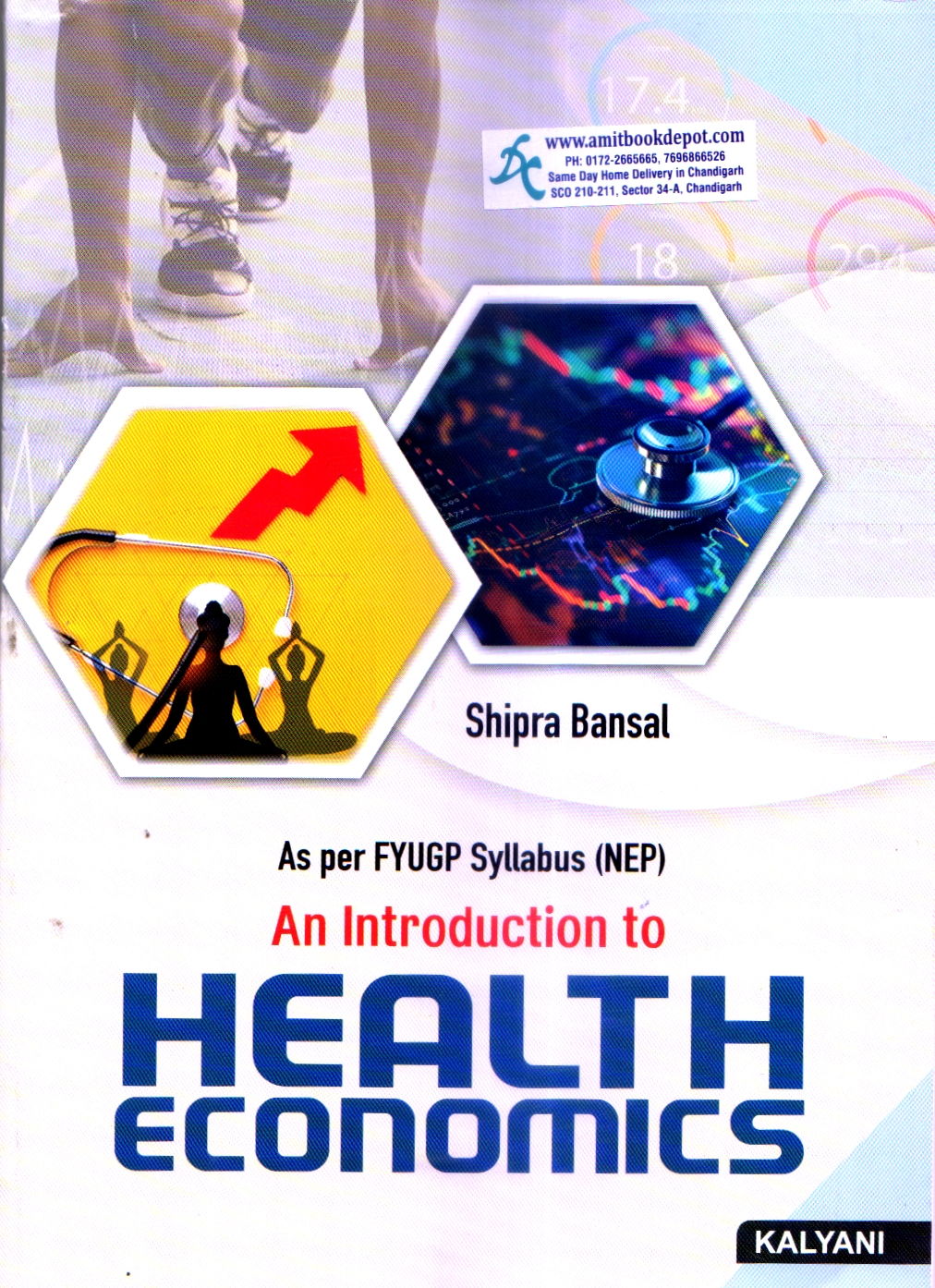

Yes, this book is meticulously crafted to align 100% with the prescribed syllabus for the Financial Literacy/Introduction to Health Economics paper for B.Com and BBA Semester 1 under Panjab University, Chandigarh (PU CHD).
Absolutely. The book is specifically designed to incorporate the pedagogical structure and learning outcomes mandated by the NEP 2020, ensuring a modern and relevant educational approach.
Yes, the book covers the ECO-VAC paper "Introduction to Health Economics" for B.A. 1st Semester, making it perfectly suitable for B.A. students as well.
Chapter 4, "Health Insurance," dedicates a section to explaining the importance and benefits of health insurance plans tailored for students, helping them make informed decisions.
Chapter 6 is entirely dedicated to "Ayushman Bharat—National Health Protection Mission," providing a comprehensive analysis of its meaning, components, benefits, and limitations as required by the syllabus.
Yes, Chapter 3, "Determinants of Health Economics," explores the various factors influencing health economics with relevant examples to aid in practical understanding.
Yes, Chapter 5, "Health System in India," offers a clear and structured overview of the country's healthcare framework, its functioning, and its challenges.
Yes, the book is written in clear, concise, and student-friendly language to ensure complex concepts in health economics are accessible to beginners.
While it provides detailed knowledge about the schemes' features and benefits, the procedural aspects of enrollment are dynamic and best checked on the official government portals. The book gives you the foundational knowledge to understand these schemes.
This book is unique because it is not a generic text. It is a specialized resource tailored specifically to the unit-by-unit syllabus of PU CHD, ensuring no extra or irrelevant information.
No Description Added
Yes, this book is meticulously crafted to align 100% with the prescribed syllabus for the Financial Literacy/Introduction to Health Economics paper for B.Com and BBA Semester 1 under Panjab University, Chandigarh (PU CHD).
Absolutely. The book is specifically designed to incorporate the pedagogical structure and learning outcomes mandated by the NEP 2020, ensuring a modern and relevant educational approach.
Yes, the book covers the ECO-VAC paper "Introduction to Health Economics" for B.A. 1st Semester, making it perfectly suitable for B.A. students as well.
Chapter 4, "Health Insurance," dedicates a section to explaining the importance and benefits of health insurance plans tailored for students, helping them make informed decisions.
Chapter 6 is entirely dedicated to "Ayushman Bharat—National Health Protection Mission," providing a comprehensive analysis of its meaning, components, benefits, and limitations as required by the syllabus.
Yes, Chapter 3, "Determinants of Health Economics," explores the various factors influencing health economics with relevant examples to aid in practical understanding.
Yes, Chapter 5, "Health System in India," offers a clear and structured overview of the country's healthcare framework, its functioning, and its challenges.
Yes, the book is written in clear, concise, and student-friendly language to ensure complex concepts in health economics are accessible to beginners.
While it provides detailed knowledge about the schemes' features and benefits, the procedural aspects of enrollment are dynamic and best checked on the official government portals. The book gives you the foundational knowledge to understand these schemes.
This book is unique because it is not a generic text. It is a specialized resource tailored specifically to the unit-by-unit syllabus of PU CHD, ensuring no extra or irrelevant information.