Categories
College Bookssss >
BA PU Chandigarh
BSC PU Chandigarh
MSC PU Chandigarh
BBA PU Chandigarh
MA PU Chandigarh
Medical Books
Engineering Books
Management Books
PGDCA Books
BCOM PU Chandigarh
MCOM PU Chandigarh
BCA PU Chandigarh
MCA PU Chandigarh
animate-books

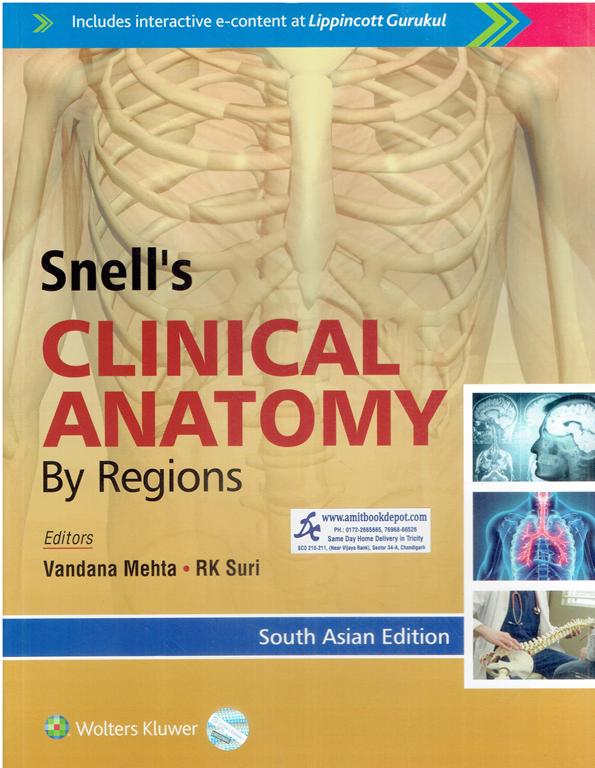
WK Clinical Anatomy By Regions

by Madhurima
₹3230 ₹3,799.00(-/ off)

Rating & Reviews

23 Customer Review

WK Clinical Anatomy By Regions by Vandana Mehta & RK Suri (Wolters Kluwer) is a student-friendly book that presents gross anatomy by body regions—thorax, abdomen, pelvis, perineum, limbs, head & neck, and back. Each chapter is split into wall and cavity sections for spatial clarity. Designed for medical undergraduates, the book integrates clinical anatomy, surface marking, and radiological anatomy with every region. Key features include Appendix A: Clinical Cases in Anatomy for problem-based learning and Appendix B: Useful Anatomic Data for quick revision. High-yield topics such as the brachial plexus, inguinal canal, mediastinum, and pelvic viscera are covered with tables, illustrations, and review questions.

Have Doubts Regarding This Product ? Ask Your Question

  • Q1
    How does this book differ from system-based anatomy texts?
    A1

    It organizes anatomy by body regions (thorax, abdomen, limb) rather than organ systems, mirroring dissection hall sequence and surgical topography for easier spatial recall.

  • Q2
    Are clinical cases included for self-assessment?
    A2

    Yes, Appendix A provides dedicated clinical cases in anatomy, presenting problem-based scenarios to test diagnostic reasoning and anatomical knowledge application.

  • Q3
    Does it cover surface marking and radiology?
    A3

    Yes, each region includes surface marking projections, palpable landmarks, and correlating radiological anatomy (X-ray, CT) essential for clinical exams.

  • Q4
    Which nerve injuries are discussed in the upper limb chapter?
    A4

    Brachial plexus injuries, wrist drop (radial nerve), claw hand (ulnar nerve), and ape thumb deformity (median nerve) are detailed with clinical correlates.

  • Q5
    Does the book cover pelvic viscera for obstetrics?
    A5

    Yes, pelvic cavity chapter details uterus, ovaries, rectum, and urinary bladder, emphasizing ligamentous support and relationships relevant to gynecology.

  • Q6
    Are there review questions after chapters?
    A6

    Each chapter ends with multiple-choice and short-answer questions, aiding rapid revision for MBBS, NEXT, and USMLE Step 1 preparation.

  • Q7
    Is the perineum covered in sufficient depth?
    A7

    Yes, a dedicated chapter details perineal pouches, urogenital triangle, anal triangle, and ischioanal fossa—critical for rectal and urogenital exams.

  • Q8
    Does it include the back and vertebral column?
    A8

    Chapter 12 exclusively covers back muscles, vertebral column, spinal cord coverings, and clinical conditions like disc herniation.

  • Q9
    Are the triangles of the neck explained?
    A9

    Yes, head and neck chapter details anterior, posterior, and submental triangles, their boundaries, contents, and clinical importance for carotid surgery.

  • Q10
    Does it support problem-based learning (PBL)?
    A10

    Appendix A’s clinical cases are designed for PBL small groups, linking anatomical facts to patient symptoms and differential diagnosis.


0.00

0 Overall Rating
  • 5
    0
  • 4
    0
  • 3
    0
  • 2
    0
  • 1
    0

Try this product & share your review & thoughts

Chapter 1. Introduction
Chapter 2. The Thorax: Part I - The Thoracic Wall
Chapter 3: The Thorax: Part II - The Thoracic Cavity
Chapter 4. The Abdomen: Part I - The Abdominal Wall
Chapter 5. The Abdomen: Part II - The Abdominal Cavity
Chapter 6. The Pelvis: Part I - The Pelvic Walls
Chapter 7. The Pelvis: Part II - The Pelvic Cavity
Chapter 8. The Perineum
Chapter 9. The Upper Limb
Chapter 10. The Lower Limb
Chapter 11. The Head and Neck
Chapter 12. The Back

- Appendix A: Clinical Cases in Anatomy
- Appendix B: Useful Anatomic Data of Clinical Significance
Index

WK Clinical Anatomy By Regions by Vandana Mehta and RK Suri, published by Wolters Kluwer, offers a comprehensive, region-wise approach to human anatomy designed specifically for medical undergraduates, postgraduate aspirants, and allied health sciences students. This book bridges the gap between theoretical anatomical knowledge and clinical application, making it an indispensable resource for exam preparation and practical bedside teaching.

The book adopts a clear, systematic organisation of the human body into logical regions: Thorax, Abdomen, Pelvis, Perineum, Upper Limb, Lower Limb, Head and Neck, and The Back. Each chapter is subdivided into two logical parts—first, the regional wall (e.g., thoracic wall) and second, the cavity contents (e.g., thoracic cavity)—allowing learners to build a three-dimensional understanding of spatial relationships. The initial chapter on Introduction establishes foundational terminology, while the final chapter on The Back ensures complete coverage.

A standout feature is the integration of clinical anatomy at every step. The authors have embedded clinical correlates directly within the regional descriptions, emphasising surface marking, palpation, and radiological anatomy. Two dedicated appendices further enhance clinical utility: Appendix A: Clinical Cases in Anatomy presents problem-based learning scenarios to test diagnostic reasoning, and Appendix B: Useful Anatomic Data of Clinical Significance offers a quick-reference compilation of nerve root values, dermatomes, lymphatic drainage, and clinically relevant measurements.

High-yield keywords incorporated throughout include: regional anatomy, clinical correlations, surface marking, medical education, Wolters Kluwer standard text, gross anatomy dissection guide, thoracic cavity, abdominal wall layers, pelvic viscera, perineal pouches, upper limb brachial plexus, lower limb nerve injuries, head and neck triangles, back muscles, radiological anatomy, anatomy MCQs, and problem-based learning (PBL). The text emphasises ligamentous and muscular attachments alongside neurovascular pathways, ensuring readiness for both theory examinations and cadaveric dissection.

The book’s layout prioritises readability: labelled illustrations, tables summarising origin-insertion-nerve supply-action (OINA), and bulleted clinical boxes break down complex information. Each chapter concludes with multiple-choice questions and short-answer-type review exercises. For the thorax, coverage includes the intercostal spaces, mediastinum, heart, lungs, and great vessels. The abdomen is meticulously detailed from the anterior abdominal wall (inguinal canal, rectus sheath) to the peritoneal cavity (stomach, liver, spleen, intestines, kidneys). The pelvis and perineum sections are particularly strong for urogenital and rectal anatomy, essential for surgery and obstetrics-gynaecology rotations.

Upper and lower limb chapters cover the brachial plexus, axilla, arm, forearm, hand, gluteal region, thigh, leg, and foot, with emphasis on common nerve injuries (e.g., wrist drop and foot drop). The head and neck chapter includes the cranial fossae, orbit, temporal and infratemporal regions, triangles of the neck, thyroid gland, and pharynx. The back chapter details the vertebral column, spinal cord, and deep back muscles.

WK Clinical Anatomy by Regions aligns with the latest competency-based medical education (CBME) curriculum. It serves not merely as a dissection manual but as a clinical reasoning primer. Whether preparing for the National Exit Test (NEXT), USMLE Step 1, or professional MBBS examinations, students benefit from the authoritative content provided by Wolters Kluwer. The appendix of clinical cases is ideal for viva voce and small-group discussions. For faculty, this book provides a reliable framework for teaching anatomy by regions rather than systems, mirroring the modern integrated curriculum.

Chapter 1. Introduction
Chapter 2. The Thorax: Part I - The Thoracic Wall
Chapter 3: The Thorax: Part II - The Thoracic Cavity
Chapter 4. The Abdomen: Part I - The Abdominal Wall
Chapter 5. The Abdomen: Part II - The Abdominal Cavity
Chapter 6. The Pelvis: Part I - The Pelvic Walls
Chapter 7. The Pelvis: Part II - The Pelvic Cavity
Chapter 8. The Perineum
Chapter 9. The Upper Limb
Chapter 10. The Lower Limb
Chapter 11. The Head and Neck
Chapter 12. The Back

- Appendix A: Clinical Cases in Anatomy
- Appendix B: Useful Anatomic Data of Clinical Significance
Index

Have Doubts Regarding This Product ? Ask Your Question

  • Q1
    How does this book differ from system-based anatomy texts?
    A1

    It organizes anatomy by body regions (thorax, abdomen, limb) rather than organ systems, mirroring dissection hall sequence and surgical topography for easier spatial recall.

  • Q2
    Are clinical cases included for self-assessment?
    A2

    Yes, Appendix A provides dedicated clinical cases in anatomy, presenting problem-based scenarios to test diagnostic reasoning and anatomical knowledge application.

  • Q3
    Does it cover surface marking and radiology?
    A3

    Yes, each region includes surface marking projections, palpable landmarks, and correlating radiological anatomy (X-ray, CT) essential for clinical exams.

  • Q4
    Which nerve injuries are discussed in the upper limb chapter?
    A4

    Brachial plexus injuries, wrist drop (radial nerve), claw hand (ulnar nerve), and ape thumb deformity (median nerve) are detailed with clinical correlates.

  • Q5
    Does the book cover pelvic viscera for obstetrics?
    A5

    Yes, pelvic cavity chapter details uterus, ovaries, rectum, and urinary bladder, emphasizing ligamentous support and relationships relevant to gynecology.

  • Q6
    Are there review questions after chapters?
    A6

    Each chapter ends with multiple-choice and short-answer questions, aiding rapid revision for MBBS, NEXT, and USMLE Step 1 preparation.

  • Q7
    Is the perineum covered in sufficient depth?
    A7

    Yes, a dedicated chapter details perineal pouches, urogenital triangle, anal triangle, and ischioanal fossa—critical for rectal and urogenital exams.

  • Q8
    Does it include the back and vertebral column?
    A8

    Chapter 12 exclusively covers back muscles, vertebral column, spinal cord coverings, and clinical conditions like disc herniation.

  • Q9
    Are the triangles of the neck explained?
    A9

    Yes, head and neck chapter details anterior, posterior, and submental triangles, their boundaries, contents, and clinical importance for carotid surgery.

  • Q10
    Does it support problem-based learning (PBL)?
    A10

    Appendix A’s clinical cases are designed for PBL small groups, linking anatomical facts to patient symptoms and differential diagnosis.

No Syllabus Added

0.00

0 Overall Rating
  • 5
    0
  • 4
    0
  • 3
    0
  • 2
    0
  • 1
    0

Try this product & share your review & thoughts

Top Trending Product

Related Product

Related Product

Related Blog Posts

Latest Blogs

Latest Blogs

blog-img
Classic Literature Reimagined: Discuss modern twists on classic novels.
Lorem ipsum dolor sit amet, consectetur adipiscing elit, sed do eiusmod tempor incididunt ut labore et dolore magna aliqua. Ut enim ad minim veniam, quis nostrud exercitation ullamco Lorem ipsum dolor sit amet, consectetur adipiscing elit, sed do eiusmod tempor incididunt ut labore et dolore magna aliqua. Utenim ad minim veniam, quis nostrud exercitation ullamco Lorem ipsum dolor sit amet, consecte...
Read more
Author name | 10 jan, 2025
blog-img
Classic Literature Reimagined: Discuss modern twists on classic novels.
Lorem ipsum dolor sit amet, consectetur adipiscing elit, sed do eiusmod tempor incididunt ut labore et dolore magna aliqua. Ut enim ad minim veniam, quis nostrud exercitation ullamco Lorem ipsum dolor sit amet, consectetur adipiscing elit, sed do eiusmod tempor incididunt ut labore et dolore magna aliqua. Utenim ad minim veniam, quis nostrud exercitation ullamco Lorem ipsum dolor sit amet, consecte...
Read more
Author name | 10 jan, 2025
blog-img
Classic Literature Reimagined: Discuss modern twists on classic novels.
Lorem ipsum dolor sit amet, consectetur adipiscing elit, sed do eiusmod tempor incididunt ut labore et dolore magna aliqua. Ut enim ad minim veniam, quis nostrud exercitation ullamco Lorem ipsum dolor sit amet, consectetur adipiscing elit, sed do eiusmod tempor incididunt ut labore et dolore magna aliqua. Utenim ad minim veniam, quis nostrud exercitation ullamco Lorem ipsum dolor sit amet, consecte...
Read more
Author name | 10 jan, 2025
blog-img
Classic Literature Reimagined: Discuss modern twists on classic novels.
Lorem ipsum dolor sit amet, consectetur adipiscing elit...
Read more
Author Name | 10 Jan, 2025
blog-img
Classic Literature Reimagined: Discuss modern twists on classic novels.
Lorem ipsum dolor sit amet, consectetur adipiscing elit...
Read more
Author Name | 10 Jan, 2025
blog-img
Classic Literature Reimagined: Discuss modern twists on classic novels.
Lorem ipsum dolor sit amet, consectetur adipiscing elit...
Read more
Author Name | 10 Jan, 2025
blog-img
Classic Literature Reimagined: Discuss modern twists on classic novels.
Lorem ipsum dolor sit amet, consectetur adipiscing elit...
Read more
Author Name | 10 Jan, 2025
blog-img
Classic Literature Reimagined: Discuss modern twists on classic novels.
Lorem ipsum dolor sit amet, consectetur adipiscing elit...
Read more
Author Name | 10 Jan, 2025
blog-img
Classic Literature Reimagined: Discuss modern twists on classic novels.
Lorem ipsum dolor sit amet, consectetur adipiscing elit...
Read more
Author Name | 10 Jan, 2025
blog-img
Classic Literature Reimagined: Discuss modern twists on classic novels.
Lorem ipsum dolor sit amet, consectetur adipiscing elit...
Read more
Author Name | 10 Jan, 2025
blog-img
Classic Literature Reimagined: Discuss modern twists on classic novels.
Lorem ipsum dolor sit amet, consectetur adipiscing elit...
Read more
Author Name | 10 Jan, 2025
blog-img
Classic Literature Reimagined: Discuss modern twists on classic novels.
Lorem ipsum dolor sit amet, consectetur adipiscing elit...
Read more
Author Name | 10 Jan, 2025